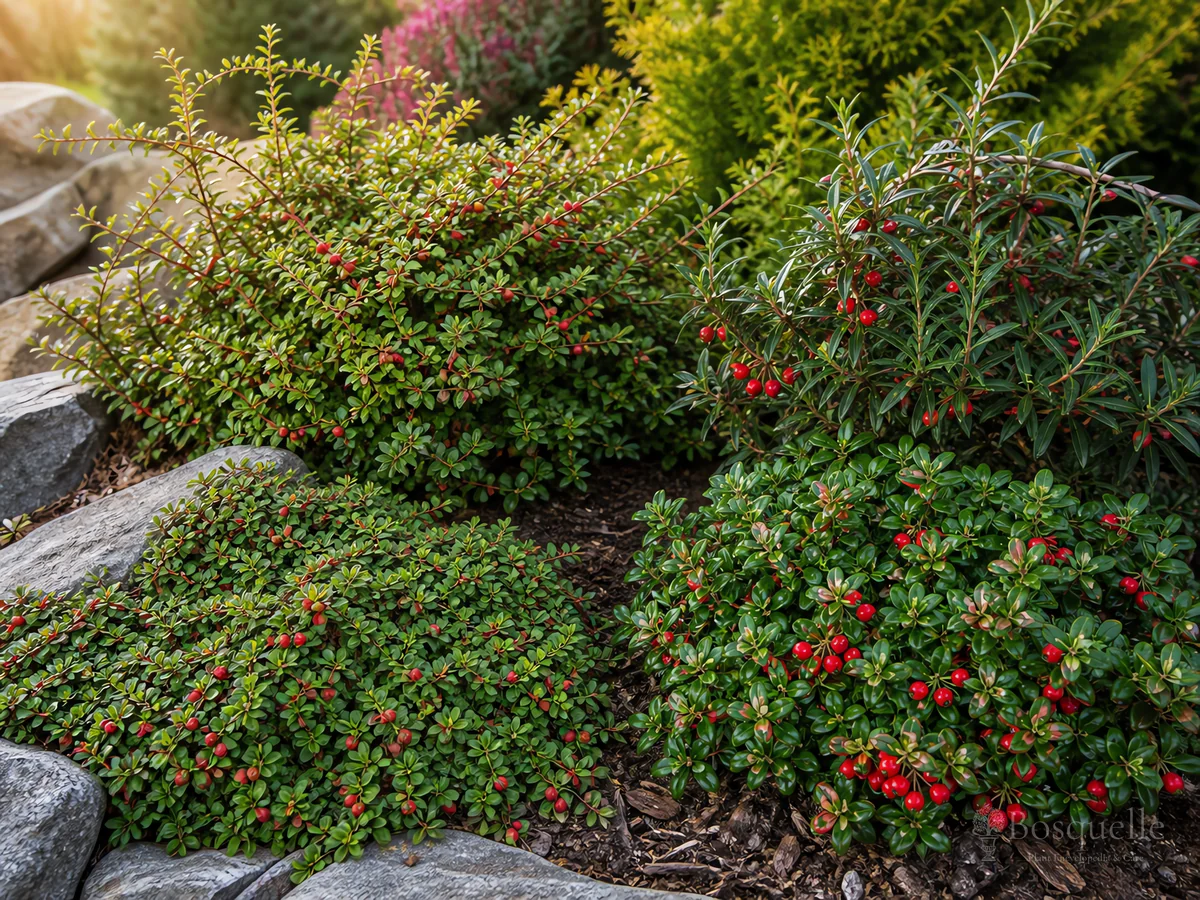
Grow cotoneaster in full sun and soil that drains. It is a rose-family shrub with small spring flowers and red berries that hang into winter. Rockspray is another name for the herringbone wall kinds. It has no thorns; firethorn is Pyracantha.
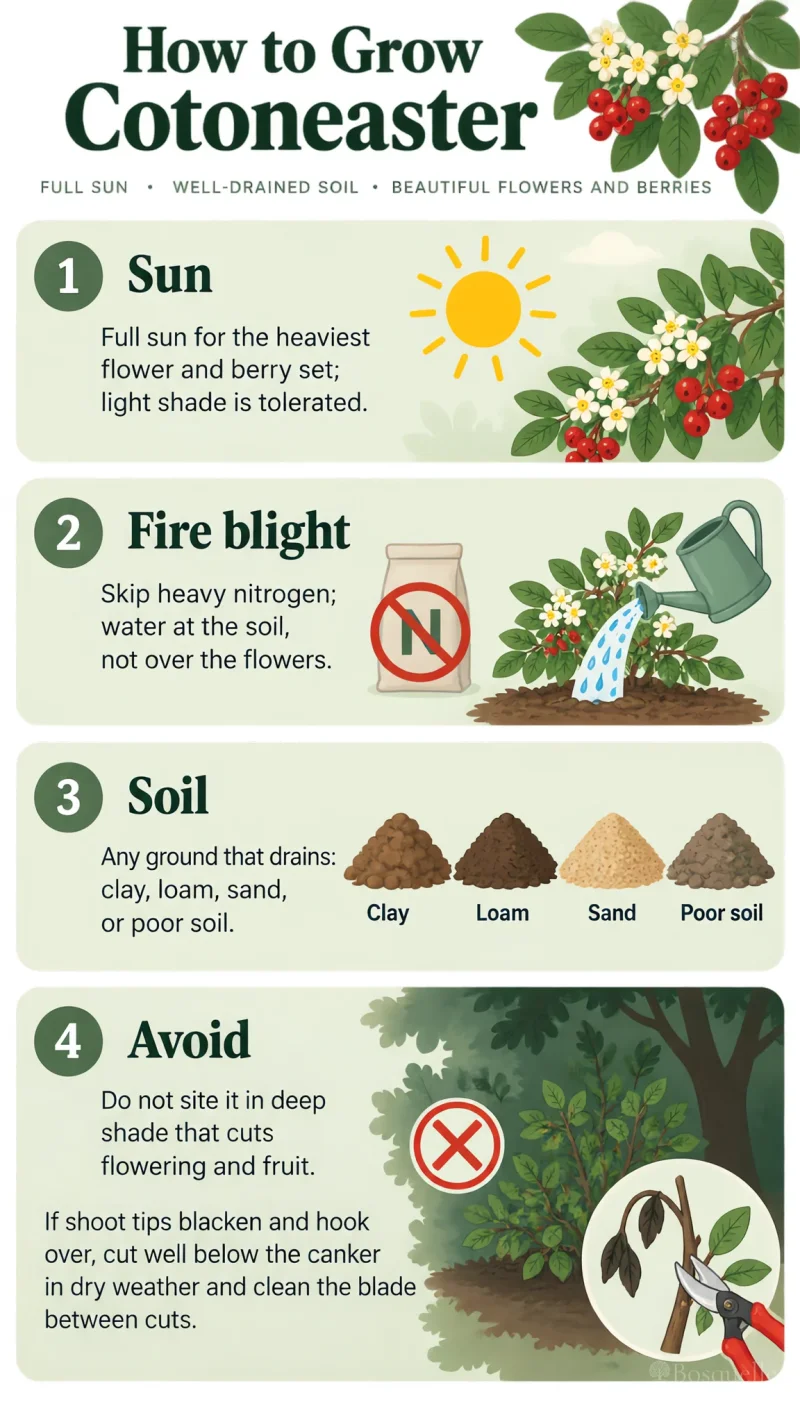
Give it full sun and soil that drains
| Factor | Recommended | Avoid |
|---|---|---|
| Sun | Full sun for the heaviest flower and berry set; light shade is tolerated | Do not site it in deep shade that cuts flowering and fruit |
| Soil | Any ground that drains: clay, loam, sand, or poor soil | Do not plant in a low pocket that holds water after rain |
| Water | Keep the soil moist for the first two growing seasons, then water only in a long dry spell | Do not keep the crown soggy, and do not skip water the first two summers |
| Use | Match the plant to the job: a creeping groundcover for a bank, or an upright kind for a hedge | Do not put a 10 ft hedge plant in a 6 in rock-garden slot, or a creeper where you need a screen |
| Fire blight | Skip heavy nitrogen; water at the soil, not over the flowers | Do not push soft, rank new shoots or run overhead irrigation in bloom |
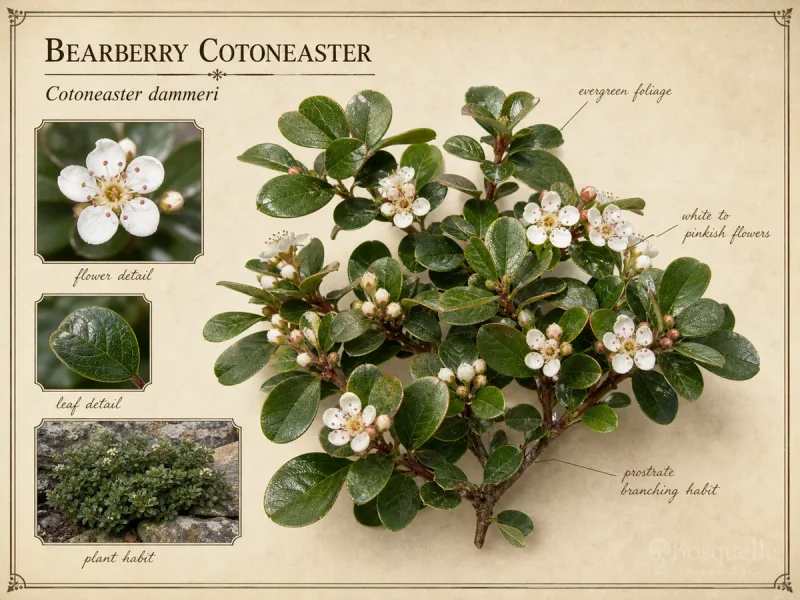
Cotoneaster rots in standing water, not in lean ground. [1] Once the roots are in, most kinds take ordinary drought. Creeping kinds also struggle through long, hot, humid summers. [2] Creeping Cotoneaster and Bearberry Cotoneaster share that sun and drain rule.
- Water thoroughly at planting to settle the soil.
- Through the first two summers, water when the top few inches are drying out. Keep the soil moist, not soggy.
- Water at the soil line. Wet flowers and soft shoots spread fire blight.
- Once established, water only in a prolonged dry spell.
How much sun does cotoneaster need?
Full sun gives the heaviest berries. It grows in light shade, but expect fewer flowers and fruit.
How often should I water cotoneaster?
Water a new plant whenever the top few inches are drying out, for about two growing seasons. After that, water only in a long dry spell.
Does cotoneaster get fire blight?
Yes. Infected shoot tips blacken and hook over like a shepherd’s crook. Cut well below the damaged wood in dry weather and clean the blade between cuts. Do not run a spray program from this grow page. [3]
Grow a small kind in a draining pot
A creeping or dwarf kind can live in a pot at least 30 cm (12 in) wide and deep, with a working drain hole. A hedge plant belongs in the ground. The mix dries faster than garden soil, so check it more often than a bed plant, especially in heat.
- Choose a pot at least 30 cm (12 in) wide, or large enough for the rootball, with a drain hole.
- Fill with a soil-based potting mix that drains. Do not use a closed decorative pot with no hole.
- Water when the top inch is dry. In a hot spell, check daily.
- If a hard freeze will hit the roots, move the pot to a sheltered wall or an unheated garage, or sink it in a larger tub of mulch. Repot every three to five years in spring.
What size pot does cotoneaster need?
At least 30 cm (12 in) wide and deep for a small creeping kind. A hedge or screen plant is not a patio-pot plant.
Grow a new plant from a cutting
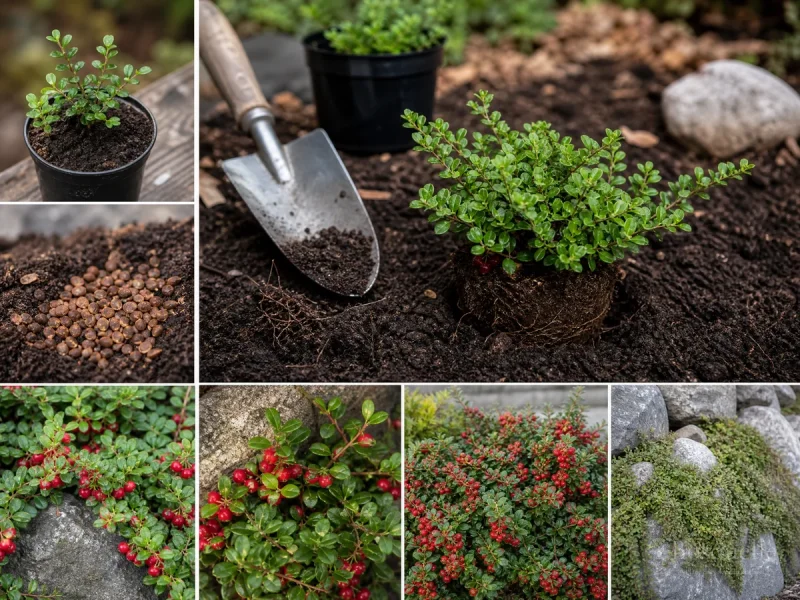
A nursery plant is the usual start. Cuttings beat seed because seed can take many months and often does not match the parent. [4] Low stems on a groundcover also root where they touch soil, and you can peg one down on purpose.
- For evergreen kinds, take a 10–15 cm (4–6 in) semi-ripe cutting in mid to late summer. For deciduous kinds, take a softwood cutting in early summer.
- Strip the lower leaves. Lightly scrape the bottom inch of bark, dip the cut in rooting hormone, and insert it into a gritty mix.
- Keep the mix moist and out of hot sun until roots form. Plant out the following spring.
- To layer a groundcover stem, wound it where it touches soil, peg it down, and keep that spot moist. Cut it free once it has its own roots.
In-ground plant-out — wall offset, hole, and spacing — lives on Planting Cotoneaster. For when to cut, see Pruning Cotoneaster.
Can I grow cotoneaster from a cutting?
Yes. Semi-ripe cuttings of evergreen kinds in mid to late summer, or softwood cuttings of deciduous kinds earlier in summer, are the usual home method.
Not firethorn — cotoneaster has no thorns
Firethorn is the usual mix-up: both carry red or orange berries on woody branches. Run a gloved hand along a stem. If there are sharp thorns, it is firethorn (Pyracantha), not cotoneaster. Cotoneaster leaves are usually smooth-edged; firethorn leaves are often serrated. See How to Grow Firethorn. Hawthorn is Crataegus — it has thorns and often lobed leaves; its care lives on How to Grow Hawthorn. Kinnikinnick, or bearberry, is Arctostaphylos uva-ursi — a native groundcover, not bearberry cotoneaster.
Is cotoneaster the same as firethorn?
No. Cotoneaster has no thorns. Firethorn (Pyracantha) has long, sharp thorns. Both carry berries in fall.
If shoot tips blacken and hook over, cut well below the canker in dry weather and clean the blade between cuts.
FAQ
Are cotoneaster berries poisonous?
The pomes contain cyanogenic glycosides. A few berries usually cause only mild stomach upset; a large amount is more serious, especially for children and pets. Birds eat them without the same problem. Keep pets from grazing the shrub.
Is cotoneaster invasive?
Some species have escaped gardens in parts of the West, including rock cotoneaster and late cotoneaster. Check your local invasive-plant list before you plant those kinds, especially near wild land. Birds spread the seeds.
Does cotoneaster need fertilizer?
Not as a routine. A spring mulch of compost is enough. Heavy nitrogen pushes soft shoots that fire blight hits first.
Is cotoneaster good for wildlife?
Yes. The late-spring flowers feed bees. The berries hold into winter and feed songbirds when little else is left.
Related guides
Recommended plants



References
- [1] Royal Horticultural Society -
https://www.rhs.org.uk/plants/cotoneaster/growing-guide - [2] NC State Extension Gardener -
https://plants.ces.ncsu.edu/plants/cotoneaster-adpressus/ - [3] Homes and Gardens -
https://www.homesandgardens.com/gardens/how-to-grow-cotoneaster - [4] Gardener's Path -
https://gardenerspath.com/plants/ornamentals/grow-cotoneaster/
This note is part of Cotoneaster Guides.
More first-season notes by plant are gathered in How to Grow Guides.
Updated: Reviewed by Bosquelle Editors