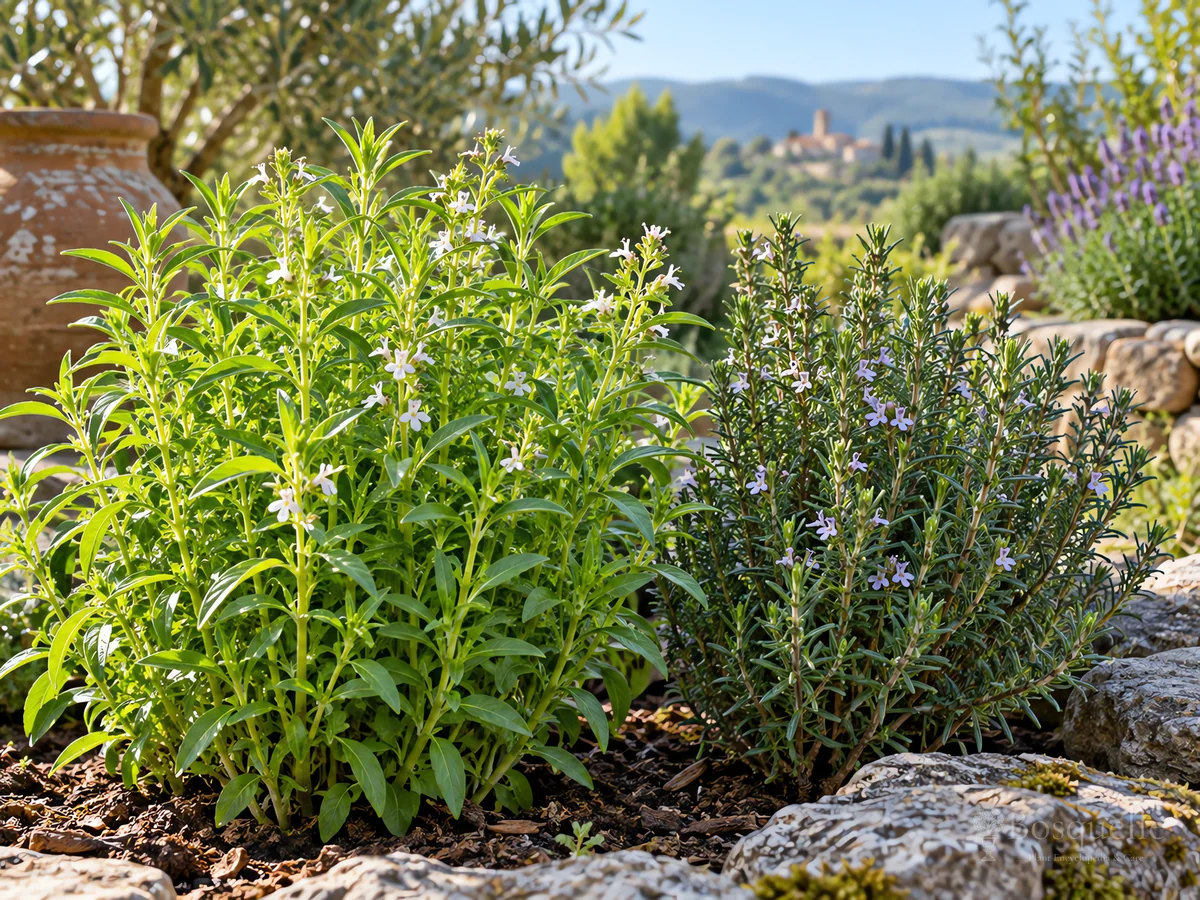
Grow savory in full sun, in soil that drains, and water a new plant until the roots take hold. Savory is Satureja; summer savory is the annual most cooks mean.
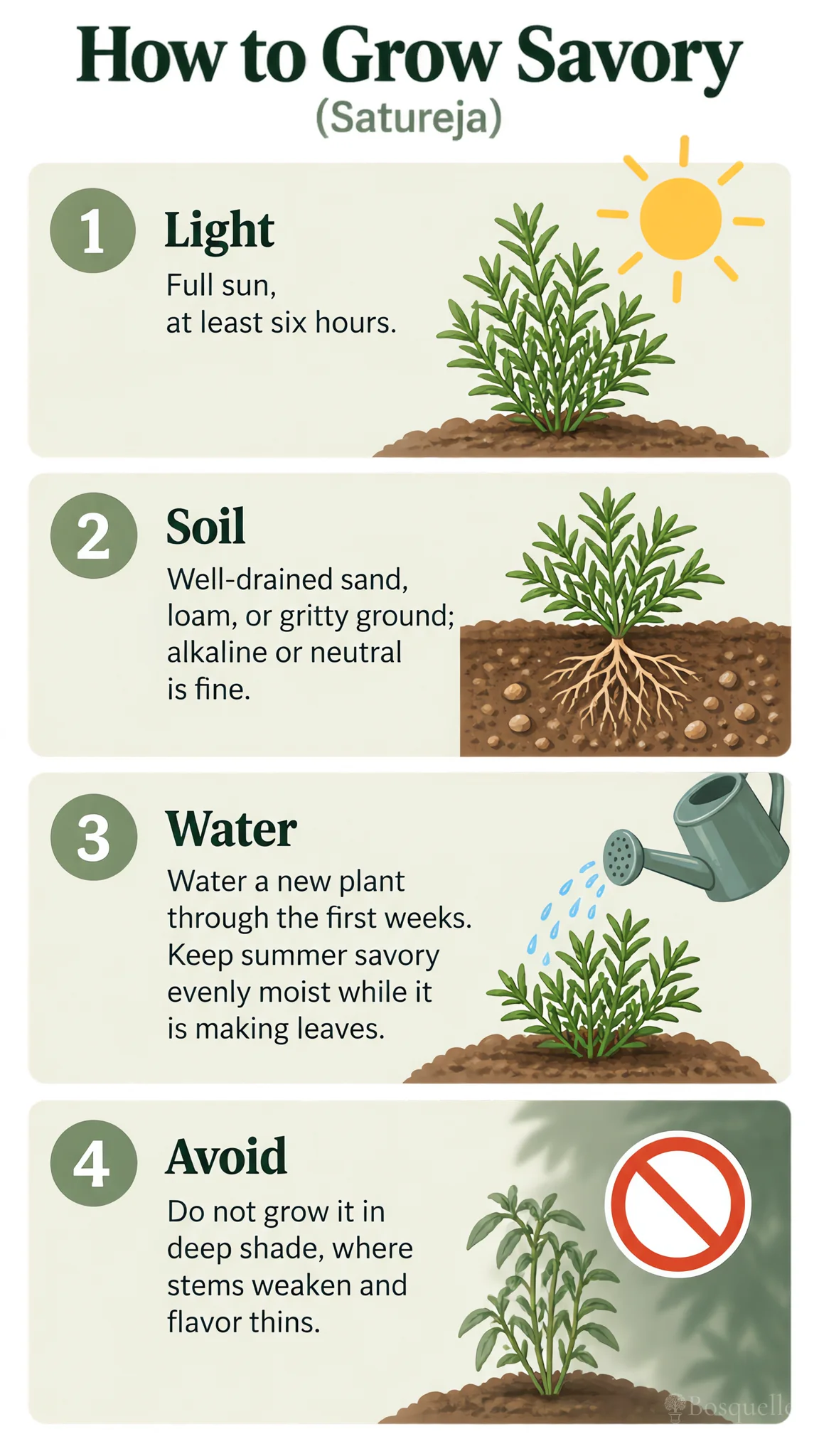
Give it full sun and soil that drains
| Factor | Recommended | Avoid |
|---|---|---|
| Light | Full sun, at least six hours | Do not grow it in deep shade, where stems weaken and flavor thins |
| Water | Water a new plant through the first weeks. Keep summer savory evenly moist while it is making leaves. Once winter savory is established, water when the top of the soil is dry | Do not leave the roots in soggy soil |
| Soil | Well-drained sand, loam, or gritty ground; alkaline or neutral is fine | Do not plant in heavy, wet clay |
| Feed | Little or no extra fertilizer once the plant is in the ground | Do not keep it in rich, wet soil |
| Deer | Aromatic foliage; deer usually leave it | Do not count on it if deer pressure is extreme |
| Drought | Established winter savory handles dry spells. Summer savory still needs even moisture for a leaf crop | Do not skip water on a new plant because the tag says drought-tolerant |
Savory wants an open, sunny bed and ground that does not stay wet. Shade and damp soil are the main reasons the plant fails. [1] summer savory is an annual with softer leaves; keep the soil evenly moist while it is making foliage, never soggy. [2] winter savory is a woody perennial. Once the roots are in, let the top of the soil dry before you water again. [3] If you are sowing this spring, the seed depth and spacing are on Planting Savory. Leaves for the kitchen are on Harvesting Savory.
- Set it in full sun. Light shade is tolerable, but the plants stay tighter and more flavorful in open light.
- Water deeply after you plant. For summer savory, keep the soil evenly moist while it is making leaves. For winter savory, wait until the top of the soil is dry once the plant is established.
- Skip heavy feeding. Rich, wet soil makes weak stems and a milder leaf.
How much sun does savory need?
Full sun. Deep shade makes weaker stems and a thinner flavor.
How often should I water savory?
Water a new plant through the first weeks. Keep summer savory evenly moist while it is making leaves. Once winter savory is established, water when the top of the soil is dry.
Grow it in a pot with a drainage hole
A patio pot works when the pot has a hole and the mix drains. Water when the top of the mix is dry, because a pot dries faster than open ground. A sunny windowsill can carry summer savory through winter indoors.
- Choose a pot with a drainage hole, about six to twelve inches wide and deep. Empty the saucer so the roots do not sit in standing water.
- Use a potting mix with grit, not packed garden soil. The mix should shed water after you water.
- Water when the top of the mix is dry. In heat a small pot may need water more often than a bed.
Can I grow savory in a pot?
Yes. Use a pot with a hole and a mix that drains. Water when the top of the mix is dry.
Cut winter savory in spring, after new leaves show
Winter savory goes dormant in cold weather, so a bare stem can still be alive. Wait until new leaves appear in spring, then cut only the stems that stay bare, damaged, or dead. Summer savory is an annual: it dies at frost, so there is no woody cut to schedule.
- Leave winter savory in place through winter. A mulch of dry leaves or straw over the crown helps in a hard freeze; pull the mulch off in spring.
- When new leaves show, cut out the stems that remain bare or broken. Do not cut into old hard wood that has no buds. [4]
- Replace a plant that has gone mostly woody and thin. A cutting or a division is on Planting Savory.
When should I cut winter savory back?
Wait until new leaves show in spring, then cut only the stems that stay bare or dead. Summer savory dies at frost and is sown again.
Not thyme — and not oregano or calamint
Savory is Satureja. Thyme in the kitchen garden is Thymus, a different genus with smaller, denser leaves — see How to Grow Thyme. Oregano is Origanum — see How to Grow Oregano. Calamint is Calamintha, a minty mound sold for borders, not this peppery bean herb — see How to Grow Calamint. Rosemary is Salvia rosmarinus, a woody evergreen, not this plant.
Is savory the same as thyme?
No. This plant is Satureja. Culinary thyme is Thymus. Read the botanical name on the tag.
Set it in full sun in soil that drains, water a new plant, then match moisture to the kind you bought.
FAQ
What is the difference between summer and winter savory?
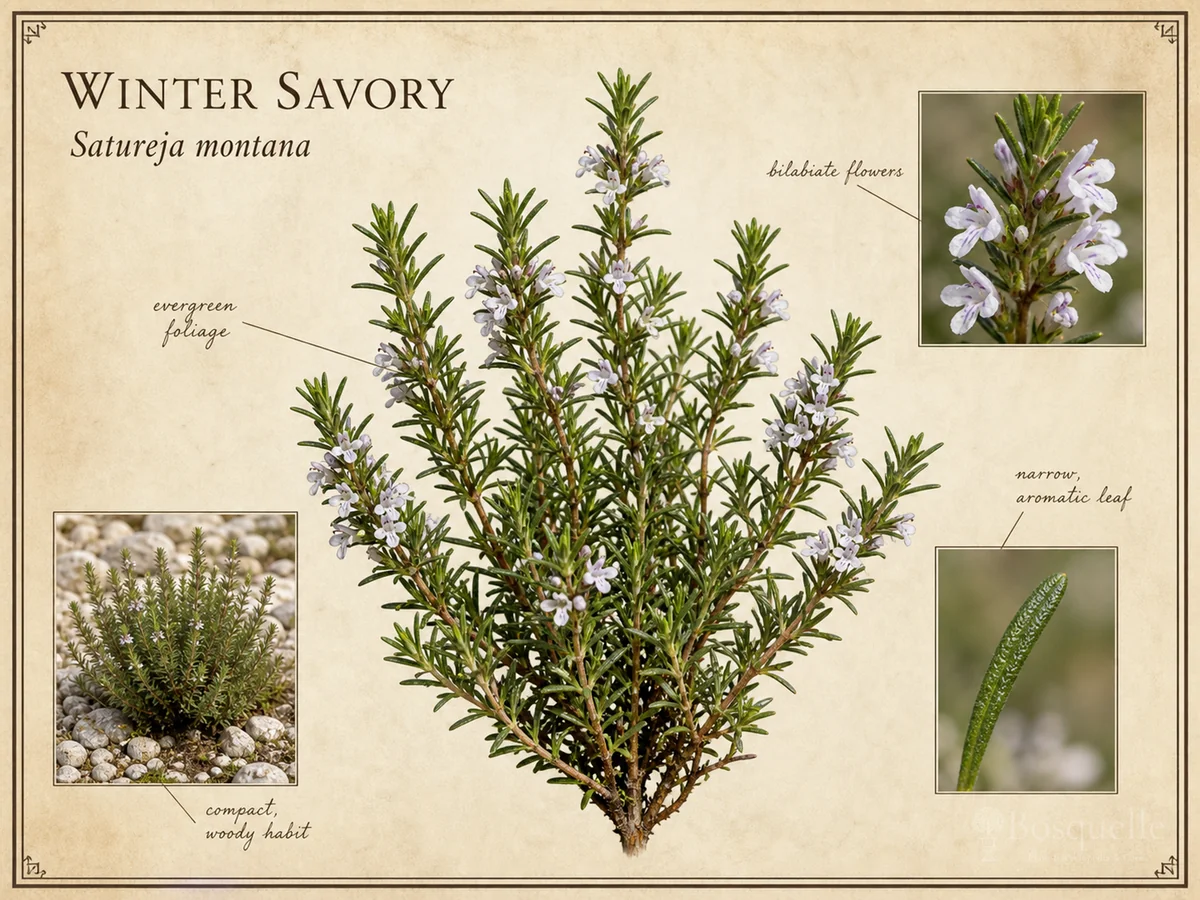
Summer savory is an annual you sow each spring; the leaf is milder. Winter savory is a woody perennial that can keep leaves in a mild winter and tastes more pungent. Both want full sun and soil that drains.
Will summer savory come back?
No. Frost kills the annual. Sow again after frost, or keep a pot in a sunny window. Winter savory is the plant that returns from the woody base.
Is creeping savory the same plant?
No. Creeping savory and the old San Francisco yerba buena name are different plants. Buy summer savory or winter savory by the botanical name Satureja hortensis or Satureja montana.
Does it belong next to beans?
Cooks often use the leaf with beans. In the bed it shares sun and drain with onions and other Mediterranean herbs.
Related guides

Recommended plants

References
This note is part of Satureja Guides.
More first-season notes by plant are gathered in How to Grow Guides.
Updated: Reviewed by Bosquelle Editors