
Grow calamint in full sun, in soil that drains, and water a new plant until the roots take hold. Calamint is Calamintha, also sold as lesser calamint.
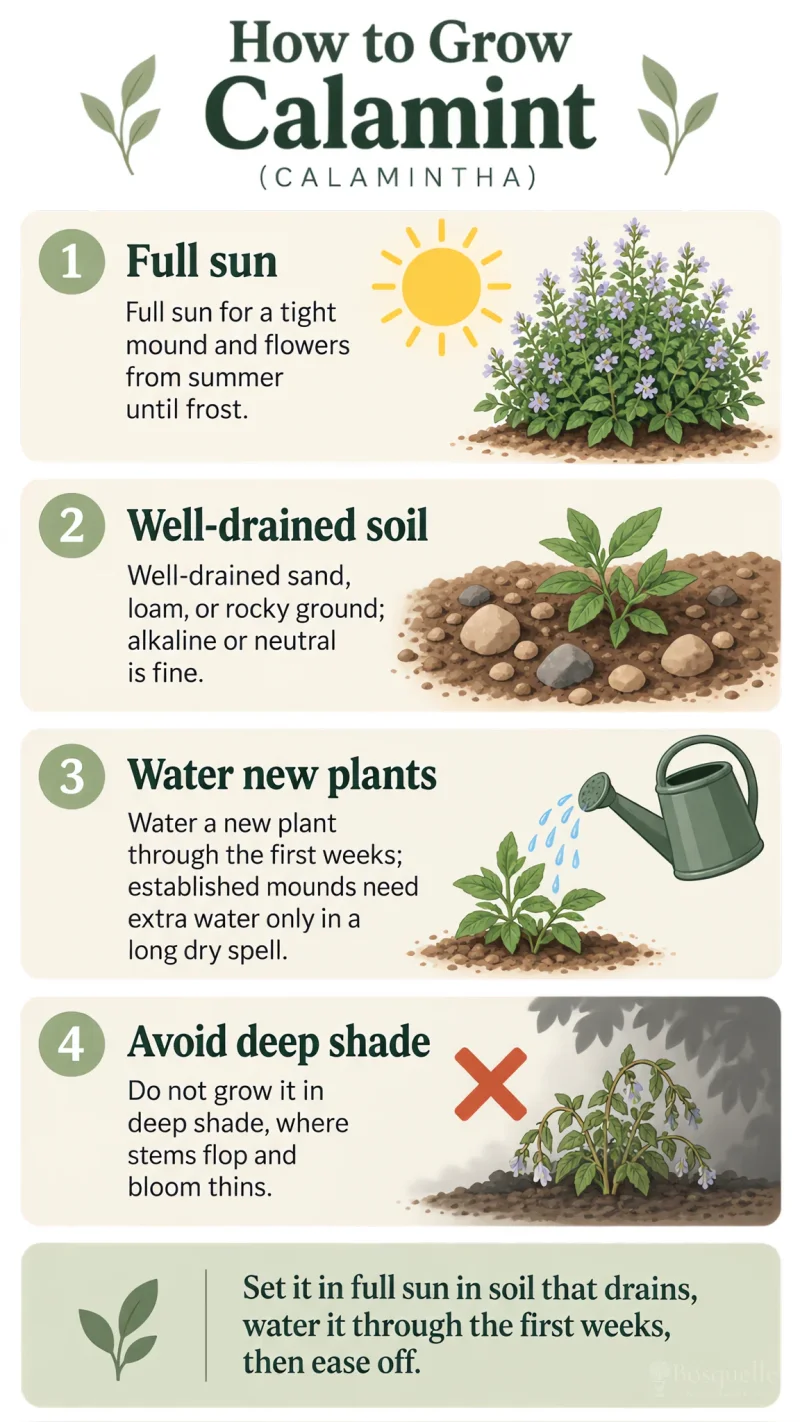
Give it full sun and soil that drains
| Factor | Recommended | Avoid |
|---|---|---|
| Light | Full sun for a tight mound and flowers from summer until frost | Do not grow it in deep shade, where stems flop and bloom thins |
| Water | Water a new plant through the first weeks; established mounds need extra water only in a long dry spell | Do not keep the crown sitting in wet soil |
| Soil | Well-drained sand, loam, or rocky ground; alkaline or neutral is fine | Do not plant in heavy, wet clay |
| Feed | Little or no extra fertilizer once the plant is in the ground | Do not keep it in rich, wet soil |
| Deer | Aromatic foliage; deer usually leave the mound | Do not count on it if deer pressure is extreme |
| Drought | Once established, the mound handles dry spells | Do not skip water in the first weeks because the tag says drought-tolerant |
Calamint wants an open, sunny bed and soil that dries between waterings once the roots are in. Soggy soil around the crown is the primary cause of crown rot, and shade makes the stems lean. [1] Light afternoon shade is tolerable, but the mound stays tighter in open light. [2] In a humid, wet summer, a raised bed helps the crown stay dry. [3] lesser calamint uses that same sun and drain. If you are setting a nursery plant this spring, the hole and spacing are on Planting Calamint. Leaves for tea are on Harvesting Calamint.
- Set it in full sun. Light afternoon shade is tolerable, but the mound stays tighter and flowers more in open light.
- Water deeply after you plant, then wait until the top of the soil is dry before you water again. Once the plant is established, it needs little extra irrigation in most years.
- Skip heavy feeding. Rich, wet soil makes soft stems and fewer flowers.
How much sun does calamint need?
Full sun. Deep shade makes a looser mound and fewer flowers.
How often should I water calamint?
Water a new plant through the first weeks. Established plants in the ground need extra water only in a long dry spell.
Grow it in a pot with a drainage hole
A patio pot works when the pot has a hole and the mix drains. Water when the top of the mix is dry, because a pot dries faster than open ground.
- Choose a pot with a drainage hole. Empty the saucer so the crown does not sit in standing water.
- Use a potting mix with grit, not packed garden soil. The mix should shed water after you water.
- Water when the top of the mix is dry. In heat a small pot may need water more often than a bed.
Can I grow calamint in a pot?
Yes. Use a pot with a hole and a mix that drains. Water when the top of the mix is dry.
Cut it back after the flowers fade
After the main flush fades, cut the flowering stems back about eight to ten inches. That tidies the mound and, on the species, cuts down on extra seedlings.
- When most of the spikes have gone over, shear or cut the flowering stems back about eight to ten inches.
- In spring, trim winter-killed stems down to living wood so new growth comes from the base. Montrose White calamint is sterile, so a spring trim is usually enough. [4]
- Leave the faded stems through winter if you want the structure in the bed; cut them in spring instead.
When should I cut calamint back?
After the flowers fade, cut the stems back about eight to ten inches. A spring trim clears winter-killed wood.
Not catmint — and not mint or thyme
Calamint is Calamintha, often listed now as Clinopodium nepeta. Catmint in the dry-garden trade is Nepeta, a different genus with purple flower spikes — see How to Grow Catmint. The species name nepeta points at a resemblance to catnip, not at the same plant.
Kitchen mint is Mentha, which runs by stolons — see How to Grow Mint. Thyme is Thymus. A calamint tag that still says Thymus minor is still this mound, not culinary thyme — see How to Grow Thyme. Summer savory is Satureja. False rosemary sold with an old Calamintha canescens name is Conradina, a different shrub.
Is calamint the same as catmint?
No. This plant is Calamintha. Catmint in rock gardens is Nepeta. Read the botanical name on the tag.
Set it in full sun in soil that drains, water it through the first weeks, then ease off.
FAQ
Is Montrose White a different kind of care?
No. Montrose White calamint uses the same full sun, drain, and first-season water. It does not set seed, so a spring trim is usually enough.
Will it take over like mint?
The species can self-sow and root where stems touch soil, so cut it back after bloom if you do not want extra seedlings. It does not run by mint stolons. Montrose White is sterile.
Is this Clinopodium?
Many lists now file it as Clinopodium nepeta. That is the same calamint plant, not a second kind of care.
Related guides
Recommended plants


References
- [1] NC State Extension -
https://plants.ces.ncsu.edu/plants/clinopodium-nepeta/ - [2] University of Illinois Extension -
https://extension.illinois.edu/blogs/flowers-fruits-and-frass/2021-05-14-perennial-plant-year-calamint - [3] Harvest to Table -
https://harvesttotable.com/how-to-grow-calamintha/ - [4] Northern Gardener -
https://northerngardener.org/plant-profile-montrose-white-calamint/
This note is part of Calamintha Guides.
More first-season notes by plant are gathered in How to Grow Guides.
Updated: Reviewed by Bosquelle Editors