
Grow thyme in full sun and well-drained soil. Thymus is the Latin name.
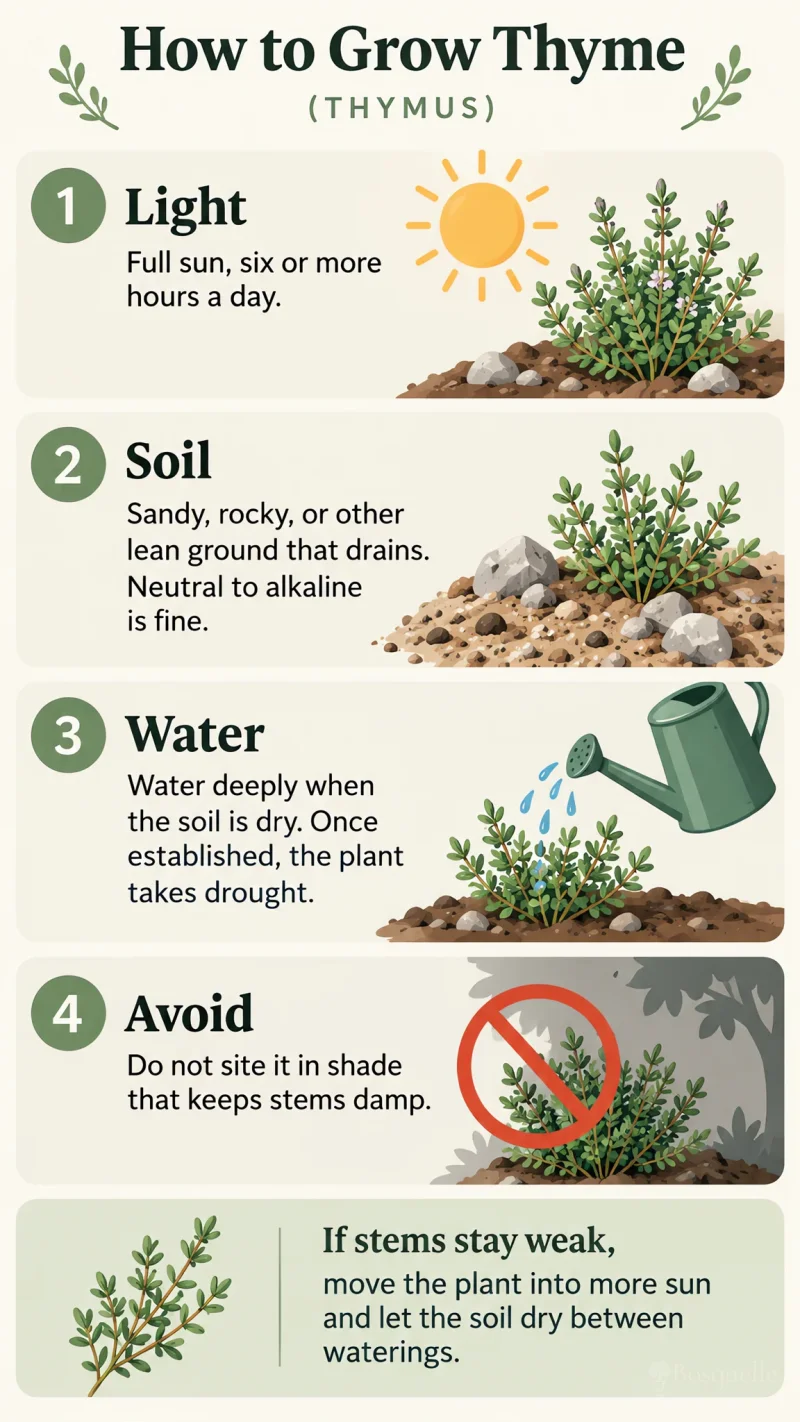
Give it full sun and soil that drains, and water only when the soil is dry
| Factor | Recommended | Avoid |
|---|---|---|
| Light | Full sun, six or more hours a day | Do not site it in shade that keeps stems damp |
| Soil | Sandy, rocky, or other lean ground that drains. Neutral to alkaline is fine | Do not plant in wet clay, a low spot, or a rich bed that stays moist |
| Water | Water deeply when the soil is dry. Once established, the plant takes drought | Do not water on a calendar, or leave standing water at the crown |
| Feed | Little or none. Lean ground keeps flavor and a tight habit | Do not use heavy fertilizer that makes weak, sprawling growth |
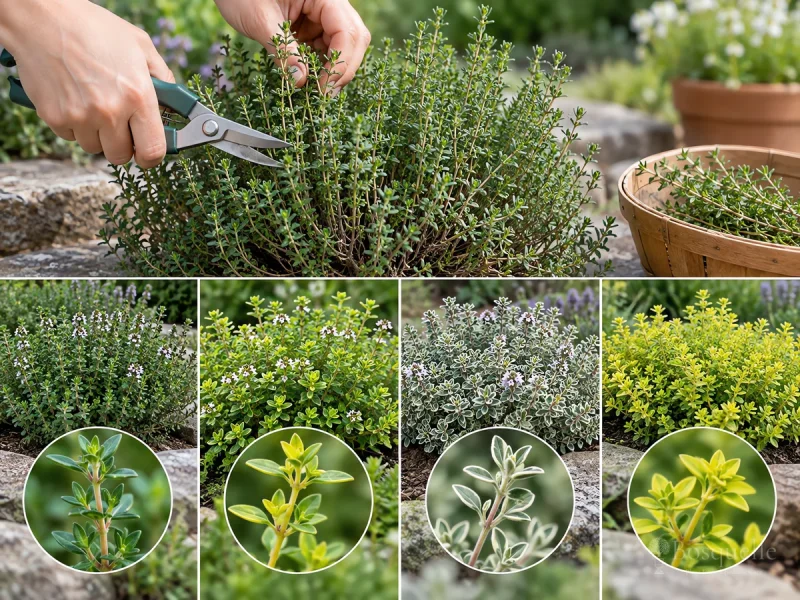
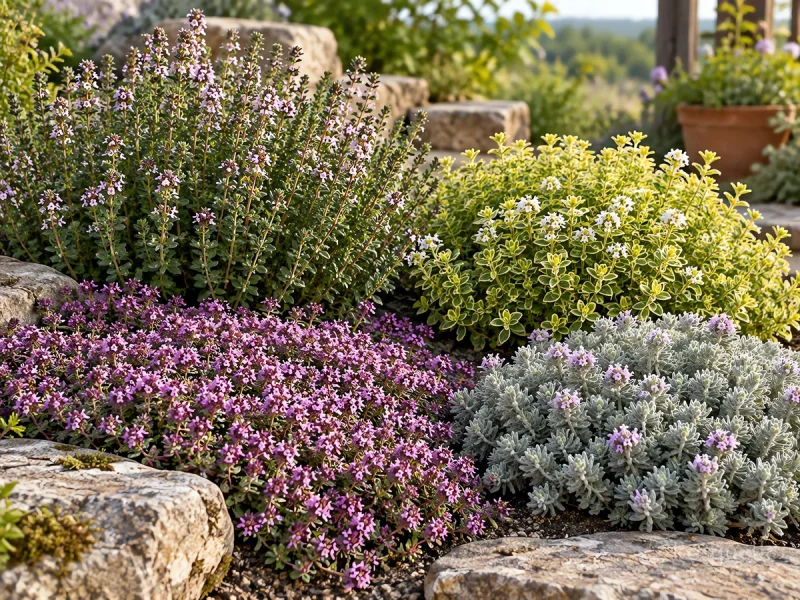
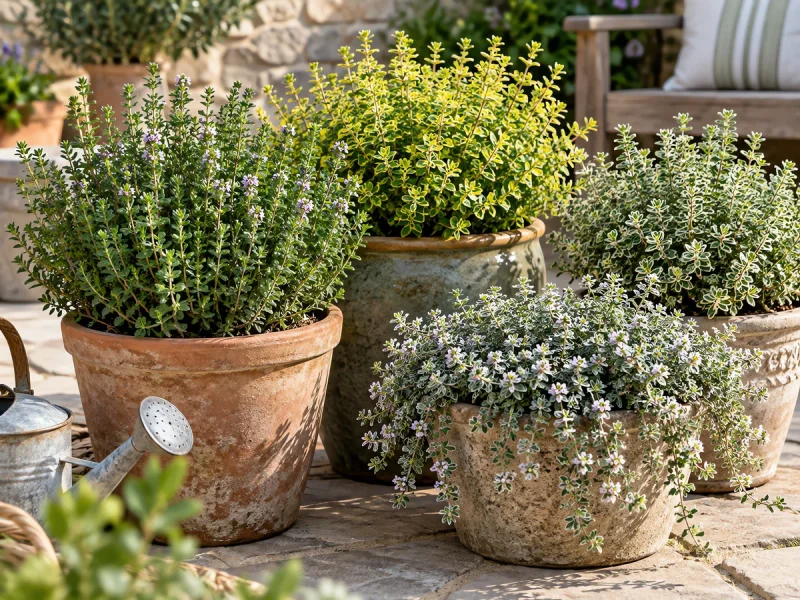
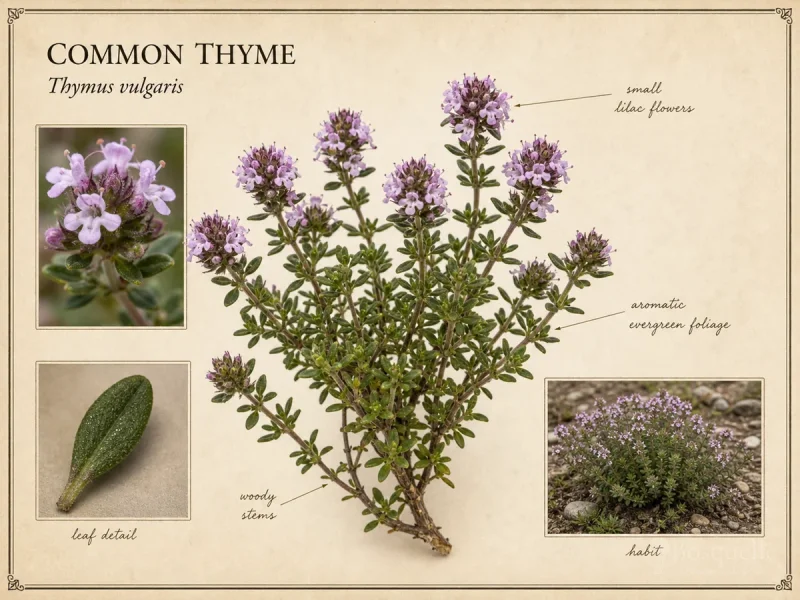
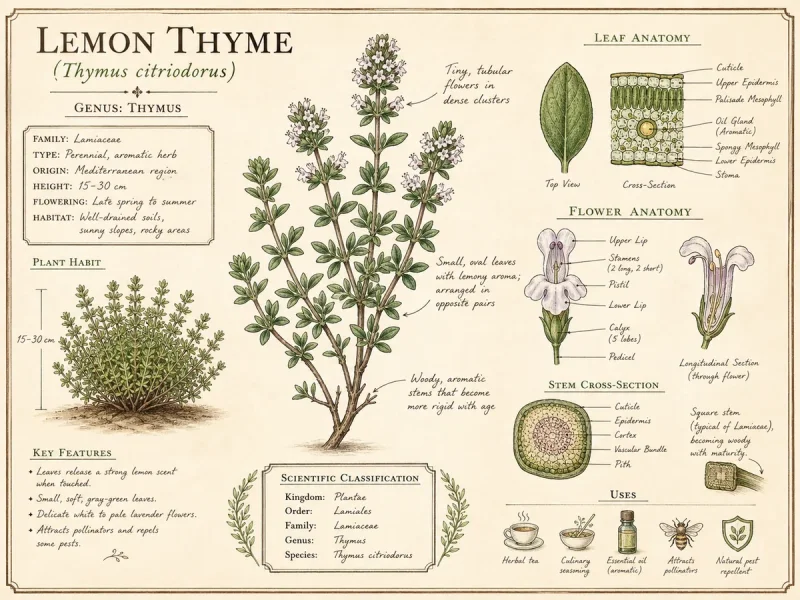
Give thyme full sun and a bed that sheds water. [1] It is a Mediterranean subshrub. Wet soil causes root rot, so water only when the soil is dry, then let it dry again. [2] Lean ground beats a rich, wet bed. Water in a drought, not on a weekly calendar. [3] Kitchen mounds share that site. common thyme is the usual cooking mound. lemon thyme wants the same dry ground. Match the habit on Types of Thyme before you pick the bed. A walkable mat is a different job on How to Grow Creeping Thyme.
- Plant in full sun so the leaves stay aromatic and the stems dry after rain.
- Use sandy, rocky, or other lean ground that drains. Do not bury the plant in wet clay.
- Water deeply when the soil is dry. Do not keep the crown wet.
Does thyme need full sun?
Yes. Give it six or more hours of direct sun. Shade keeps stems damp and weakens flavor.
How often should I water thyme?
Water deeply when the soil is dry. Once the plant is established, it takes drought. Frequent watering causes rot.
Is thyme deer resistant?
Yes. The fragrant leaves make it less attractive to deer. That is not a guarantee in a hungry yard.
Not oregano — and not mint
Thyme is not oregano. Oregano is How to Grow Oregano — a different mint-family herb with a broader leaf. Mint is How to Grow Mint. Mint runs in moist ground. Thyme sits in sun and lean drain. Creeping thyme is still this genus; it is the walkable mat, not a second kitchen herb.
Is oregano the same as thyme?
No. Oregano is Origanum. Thyme is Thymus. They share the mint family, not the same plant or the same wet-soil tolerance.
Take a green-stem cutting in spring or summer
A three-inch tip of green stem roots more reliably than seed. Old gray wood rarely roots. [4] Take the cutting from new growth, not from a bare woody base.
- Clip a three-inch tip of green stem in spring or summer.
- Strip the lower leaves and set the stem in a gritty, draining mix. Keep the mix barely moist until roots form.
- Move the rooted cutting to a small pot, then into the bed once the root ball holds together.
Can I grow thyme from a cutting?
Yes. Take a three-inch tip of green stem in spring or summer and root it in a gritty mix. Do not expect old wood to root.
If stems stay weak, move the plant into more sun and let the soil dry between waterings.
FAQ
Does thyme come back every year?
Yes. It is a woody perennial. In a hard winter the top may die back; new growth comes from green wood in spring. Wet soil kills more plants than cold.
Can I grow thyme from seed?
You can, but germination is slow and uneven. A nursery plant or a cutting is the usual start.
Why is my thyme getting spider mites?
Hot, dry weather can bring spider mites. Keep the plant in sun and do not crowd it. Rot from wet soil is the usual reason a plant dies.
Related guides


Recommended plants


References
- [1] North Carolina Extension Gardener Plant Toolbox -
https://plants.ces.ncsu.edu/plants/thymus-vulgaris/ - [2] North Carolina Extension Gardener Plant Toolbox -
https://plants.ces.ncsu.edu/plants/thymus/ - [3] Iowa State University Extension -
https://yardandgarden.extension.iastate.edu/how-to/all-about-thyme - [4] Old Farmer's Almanac -
https://www.almanac.com/plant/thyme
This note is part of Thymus Guides.
More first-season notes by plant are gathered in How to Grow Guides.
Updated: Reviewed by Bosquelle Editors