
Grow prickly poppy in full sun, in lean soil that drains. Prickly poppy is Argemone mexicana, also called Mexican prickly poppy. It is not a true poppy.
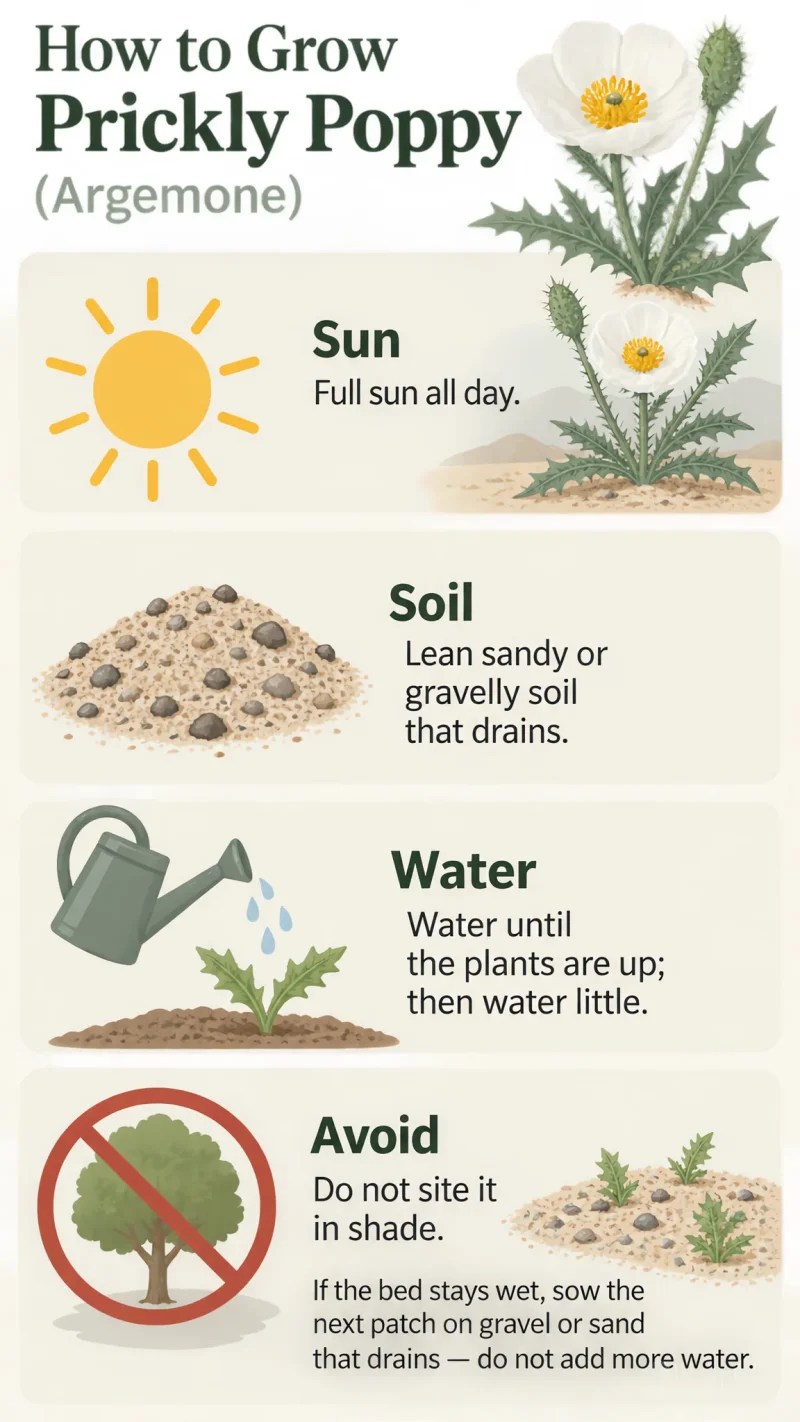
Give it full sun, lean soil that drains, and little extra water
| Factor | Recommended | Avoid |
|---|---|---|
| Sun | Full sun all day | Do not site it in shade |
| Soil | Lean sandy or gravelly soil that drains | Do not leave it in heavy wet clay |
| Water | Water until the plants are up; then water little | Do not leave the roots wet |
| Feed | None | Do not keep the soil rich |
| Drought | Tolerates dry spells once the plants are up | Do not skip water while seedlings are still small |
Prickly poppy wants a hot, draining spot and poor soil. Extra fertilizer makes soft growth that dies when the bed stays wet. Water until the plants are up, then ease off. Soggy soil around the taproot is the primary cause of root rot. A baked west wall is a better site than a north eave that stays damp after rain. [1] [2] Mexican prickly poppy and white prickly poppy want that same lean drain. Once the plants are up, they take a dry spell. [3] Sow the seed on Planting Prickly Poppy.
Does prickly poppy need full sun?
Yes. Give it a full day of light. Shade makes a weak, floppy plant and few flowers.
How often should I water prickly poppy?
Keep a new plant moist until it is growing. After that, water only in a long dry spell. Do not leave the roots wet.
Not a true poppy — and not a thistle
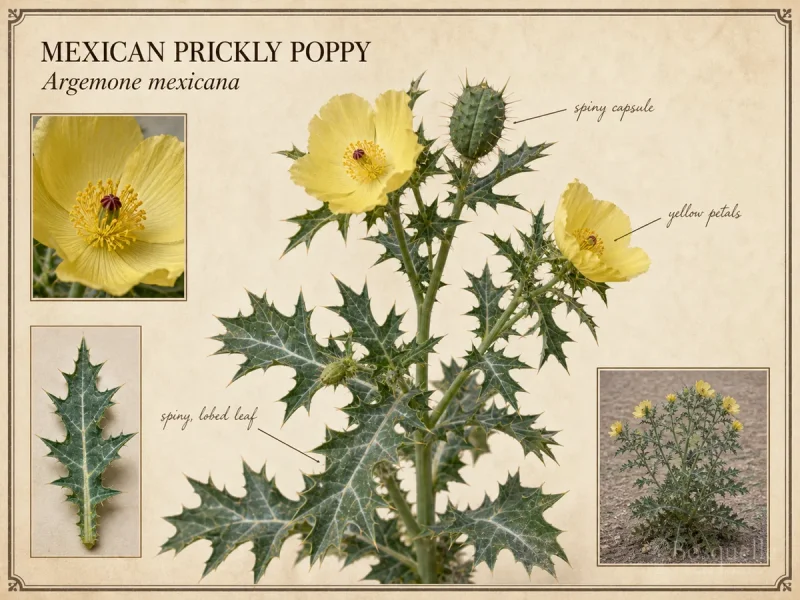
Prickly poppy is Argemone. Oriental, Iceland, breadseed, and corn poppies are Papaver — see How to Grow Poppies. A packet labeled prickly poppy can also be Papaver argemone, the long pricklyhead poppy — that is a true poppy, not this plant. California poppy is Eschscholzia — see How to Grow California Poppy. Young plants look like thistles until they bloom. Break a stem: Argemone bleeds yellow sap, and a true thistle does not. Garden plume thistle is Cirsium — see How to Grow Plume Thistle. Read the Latin before you buy. [4]
Is prickly poppy a true poppy?
No. Prickly poppy is Argemone. True poppies are Papaver. California poppy is Eschscholzia. Young plants look like thistles, but they are not Cirsium.
If the bed stays wet, sow the next patch on gravel or sand that drains — do not add more water.
FAQ
Can I grow prickly poppy in a pot?
A draining pot can hold a few plants on a patio, but the taproot wants ground. Use a lean mix, and do not keep it wet.
Should I deadhead prickly poppy?
Pick off spent flowers if you want more bloom and fewer seedlings. Leave some of the spiny capsules if you want the patch to reseed.
Is white prickly poppy the same plant?
White prickly poppy, also sold as bluestem pricklypoppy, is Argemone albiflora. Give it the same sun and drain. The cups are white, not yellow.
Is Mexican prickly poppy a weed?
In some regions it is a crop weed and it reseeds freely. Deadhead if you do not want a thicket, and keep it off pasture. Check with your extension office before you sow it in a field.
Are prickly poppies poisonous?
Do not eat any part of the plant. The seeds are especially toxic if swallowed. Keep pets from chewing the leaves, and site it away from a play path because the stems are very prickly.
Is prickly poppy the same as prickly pear?
No. Prickly pear is Opuntia, a cactus — see How to Grow Prickly Pear. This plant is Argemone.
Related guides
Recommended plants

References
- [1] NC State Extension Gardener -
https://plants.ces.ncsu.edu/plants/argemone-mexicana/ - [2] Plants For A Future -
https://pfaf.org/user/Plant.aspx?LatinName=Argemone+Mexicana - [3] Gardening Know How -
https://www.gardeningknowhow.com/ornamental/flowers/fgen/prickly-poppy.htm - [4] University of Florida IFAS Extension -
https://edis.ifas.ufl.edu/publication/AG311
This note is part of Argemone Guides.
More first-season notes by plant are gathered in How to Grow Guides.
Updated: Reviewed by Bosquelle Editors