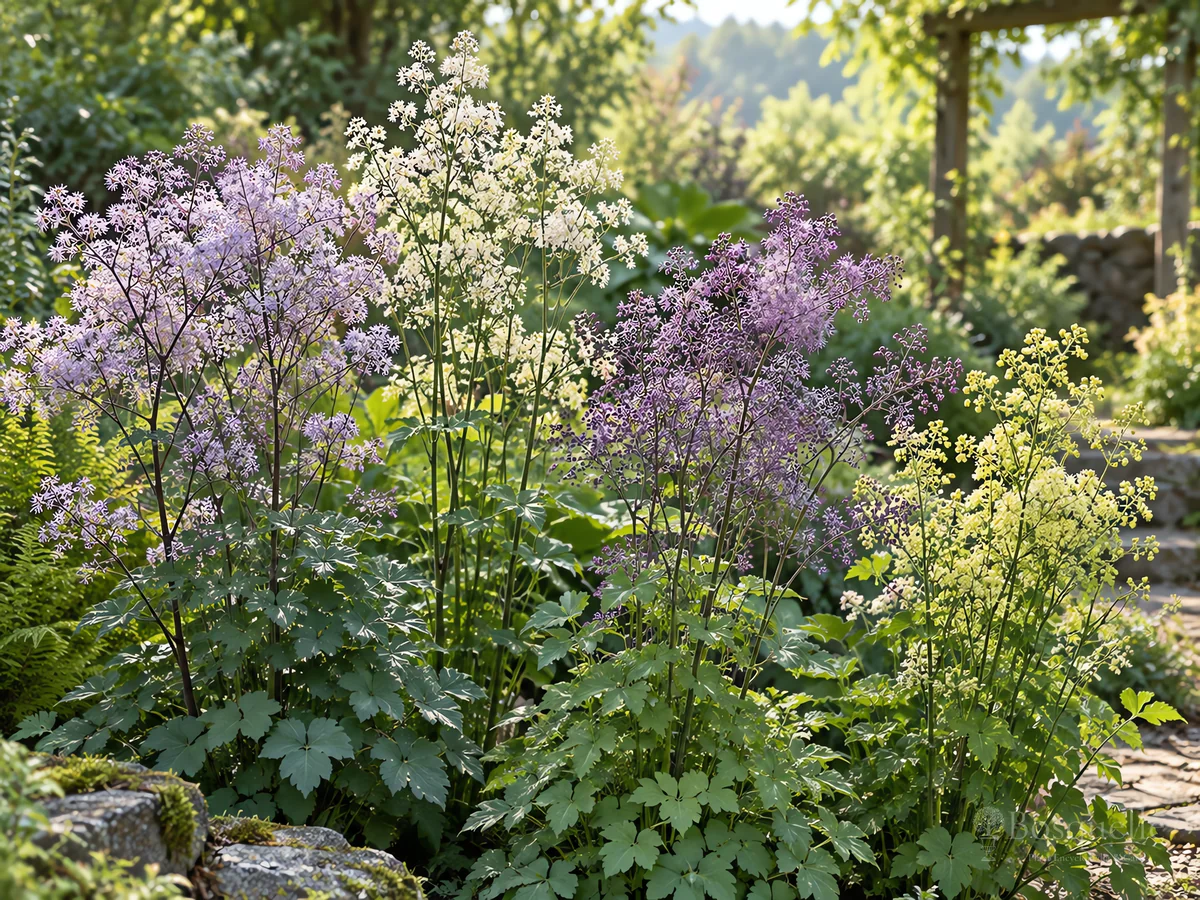
Grow meadow rue in part shade, in soil that stays moist. Meadow rue is Thalictrum — not the herb rue sold as Ruta.

Give it part shade and soil that stays moist
| Factor | Recommended | Avoid |
|---|---|---|
| Sun | Morning sun and afternoon shade, or dappled light | Do not put it in hot afternoon sun, or in deep shade that cuts bloom |
| Soil | Rich, moist ground that still drains | Do not plant on a dry bank, or leave a winter puddle on the crown |
| Water | Keep the root zone moist; water when rain is short | Do not let the bed dry, or leave the crown soggy |
| Feed | Compost worked into the soil in spring | Do not use heavy fertilizer that pushes floppy stems |
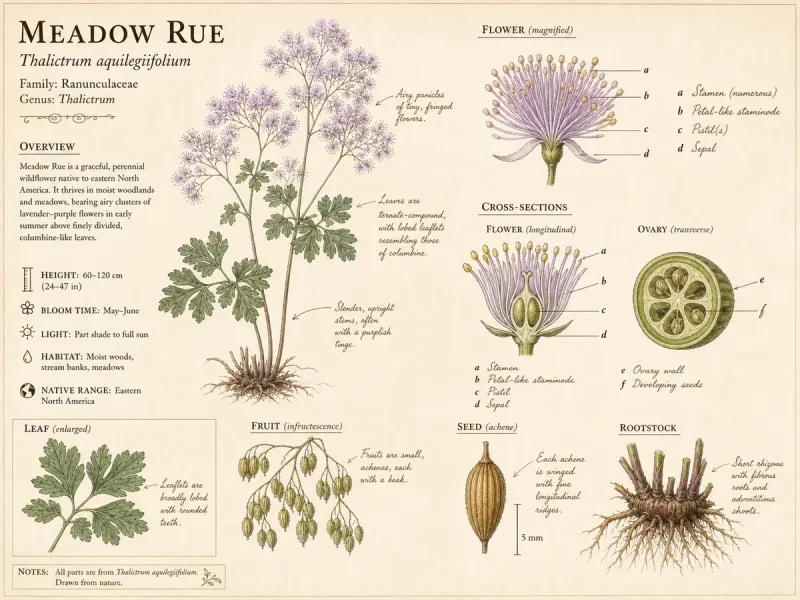
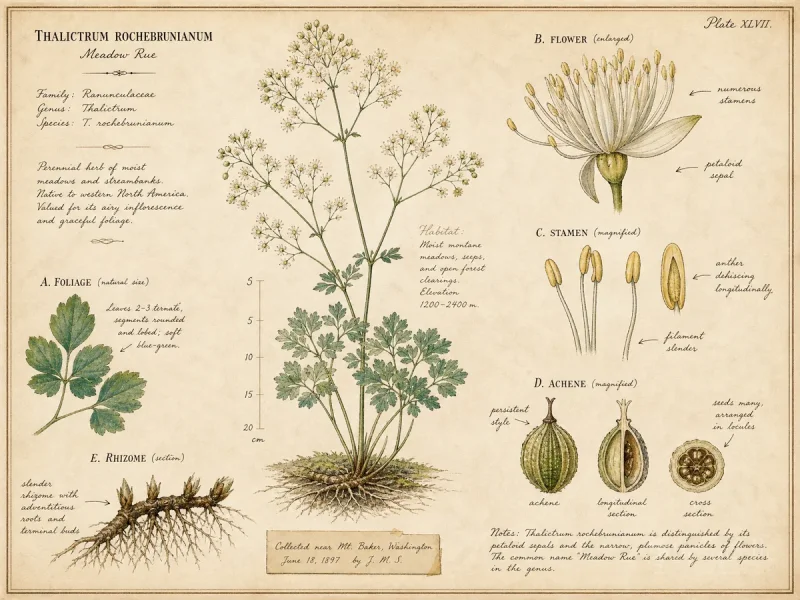
Meadow rue is a woodland-edge perennial. A few hours of morning sun, then shade, keeps the foliage green. Hot afternoon sun browns the leaflets. Full sun works only if the soil stays moist. [1] In a long hot summer, give it afternoon shade. Deep shade makes fewer flowers. Garden kinds are usually left alone by deer and rabbits; that is not a deer-proof promise. [2] Aquilegiifolium wants that same moist shade. So does Rochebrunianum. Match kind on Types of Meadow Rue. The 6- to 9-inch spring plant that vanishes in summer is on How to Grow Rue Anemone.
How much sun does meadow rue need?
Morning sun and afternoon shade, or dappled light, is enough. Full sun works only if the soil stays moist. Hot afternoon sun scorches the leaves.
Keep the soil moist through the season
Do not let the root zone dry, and do not leave the crown in standing water. Water at the base so the leaves stay dry. Still, wet air invites mildew.
- Water in after planting, and keep the root zone moist until new growth shows.
- Then water whenever the top few inches start to dry. Do not wait for wilt.
- Mulch with compost or shredded leaves. Keep the mulch off the crown.
- Skip heavy fertilizer. Rich, moist soil is the aim.
How often should I water meadow rue?
Keep the soil moist. Water when rain is short. Do not let the bed dry out, and do not leave the crown in standing water.
Cluster tall stems, or stake them
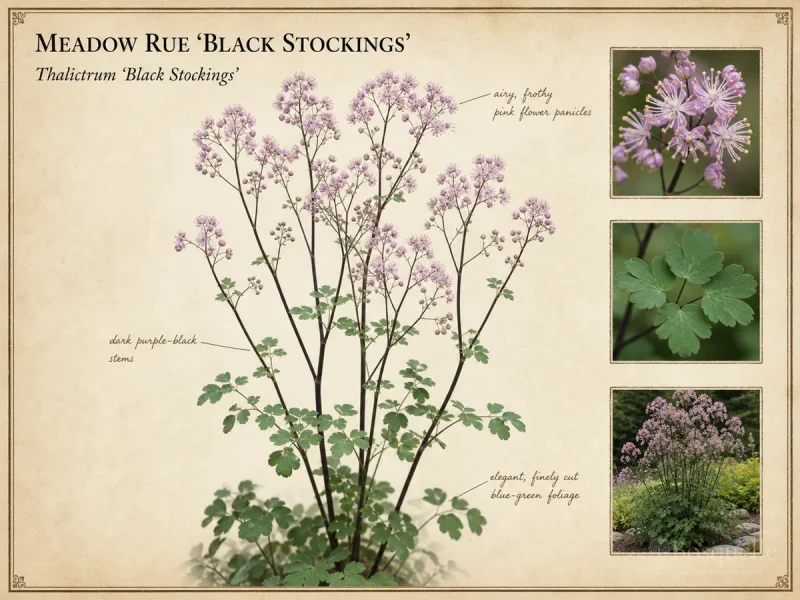
Stems over about 4 feet can flop in wind or a heavy rain. Plant tall kinds in a group of three so they lean on each other, or set a ring or bamboo stake early, before the stems elongate. Shade and heavy feed make flop worse. Black Stockings is in that tall class.
- Read the mature height on the tag before you plant.
- Set tall kinds in a small cluster, or add a grow-through ring while the shoots are still short.
- Do not wait until a storm has already bent the stems.
Does meadow rue need staking?
Tall kinds often do, unless you plant them in a cluster so the stems support each other. Stake early, before the stems elongate.
Cut spent stems after they fade, or leave them through winter
Deadheading is optional. Cutting spent sprays can bring a shorter, sturdier plant and fewer seedlings. After frost, when the foliage has died back, cut the stems to the ground, or leave the seed heads for winter and cut them in late winter before new growth.
- If you want a tidier clump, cut faded flower stems as they brown.
- Leave a few heads only if you want seed.
- After the leaves die back, cut remaining stems to the ground, or wait until late winter.
- Do not cut new spring shoots.
When do I cut back meadow rue?
After the foliage dies back in fall, or in late winter before new growth. Deadheading during bloom is optional.
Plant in spring, with the crown at the soil surface
Set the crown even with the surrounding soil. Burying it invites rot. Leave about 12 to 36 inches between plants, to the mature width on the tag. [3]
- Plant in spring so roots take before summer heat. Early fall also works while the soil is still workable.
- Dig a hole as deep as the root ball and twice as wide. Mix compost into the backfill.
- Set the ball so the crown sits at soil level, not buried.
- Space plants 12 to 36 inches apart. Backfill, firm, and water in.
How far apart should I plant meadow rue?
Leave about 12 to 36 inches between plants, to the mature width on the tag. Tall kinds can sit a little closer in a cluster so they lean on one another.
Divide the clump in spring or fall
After a few years the clump thickens. Lift it in early spring as shoots show, or in fall, split off pieces that each have shoots and roots, and replant at the same depth. Named kinds do not come true from seed — divide those, or buy a plant. A new division may take a season or two to settle.
- Dig the clump in early spring or in fall.
- Split off sections that each have shoots and roots.
- Replant at once at the same depth, and water in.
Not the herb rue, and not columbine
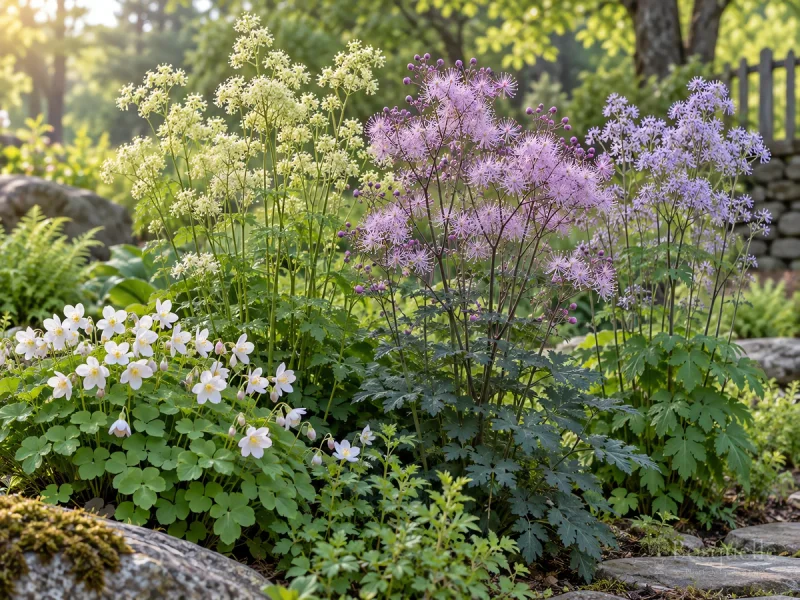
Herb rue is Ruta graveolens — a sun-loving, drought-tolerant subshrub with scented leaves that can burn skin in sun. Meadow rue is a moist, part-shade perennial with no true petals. Columbine is Aquilegia. The leaflets look alike; the flowers do not. See How to Grow Columbine. Maidenhair fern is Adiantum. See How to Grow Maidenhair Fern. [4]
Is meadow rue the same as rue?
No. Herb rue is Ruta, a dry-sun shrub. Meadow rue is Thalictrum, a moist part-shade perennial. Read the Latin on the tag.
Is meadow rue the same as columbine?
No. The leaflets look similar. Columbine has spurred flowers. Meadow rue has fluffy stamen clusters. Read How to Grow Columbine if the tag says Aquilegia.
If the leaflets crisped, the bed dried out — water, and give it afternoon shade.
FAQ
Can I grow it in a pot?
Yes, in a large draining pot with a rich, moist mix, in part shade. Water when the top of the mix starts to dry. Move the pot to a sheltered spot for winter if it sits above ground.
Will meadow rue self-seed?
It can, if you leave the heads. It is not aggressive. Deadhead if you do not want seedlings.
Is meadow rue toxic if eaten?
The sap can irritate skin, and the plant can upset a stomach if eaten. Wear gloves if your skin is sensitive, and keep pets from chewing the stems.
Related guides

Recommended plants
References
- [1] Garden Design -
https://www.gardendesign.com/perennials/meadow-rue.html - [2] North Carolina Extension Gardener Plant Toolbox -
https://plants.ces.ncsu.edu/plants/thalictrum-aquilegiifolium/ - [3] Harvest to Table -
https://harvesttotable.com/how-to-grow-thalictrum-meadow-rue/ - [4] Gardening Know How -
https://www.gardeningknowhow.com/ornamental/flowers/meadow-rue/growing-meadow-rue-flowers.htm
This note is part of Thalictrum Guides.
More first-season notes by plant are gathered in How to Grow Guides.
Updated: Reviewed by Bosquelle Editors