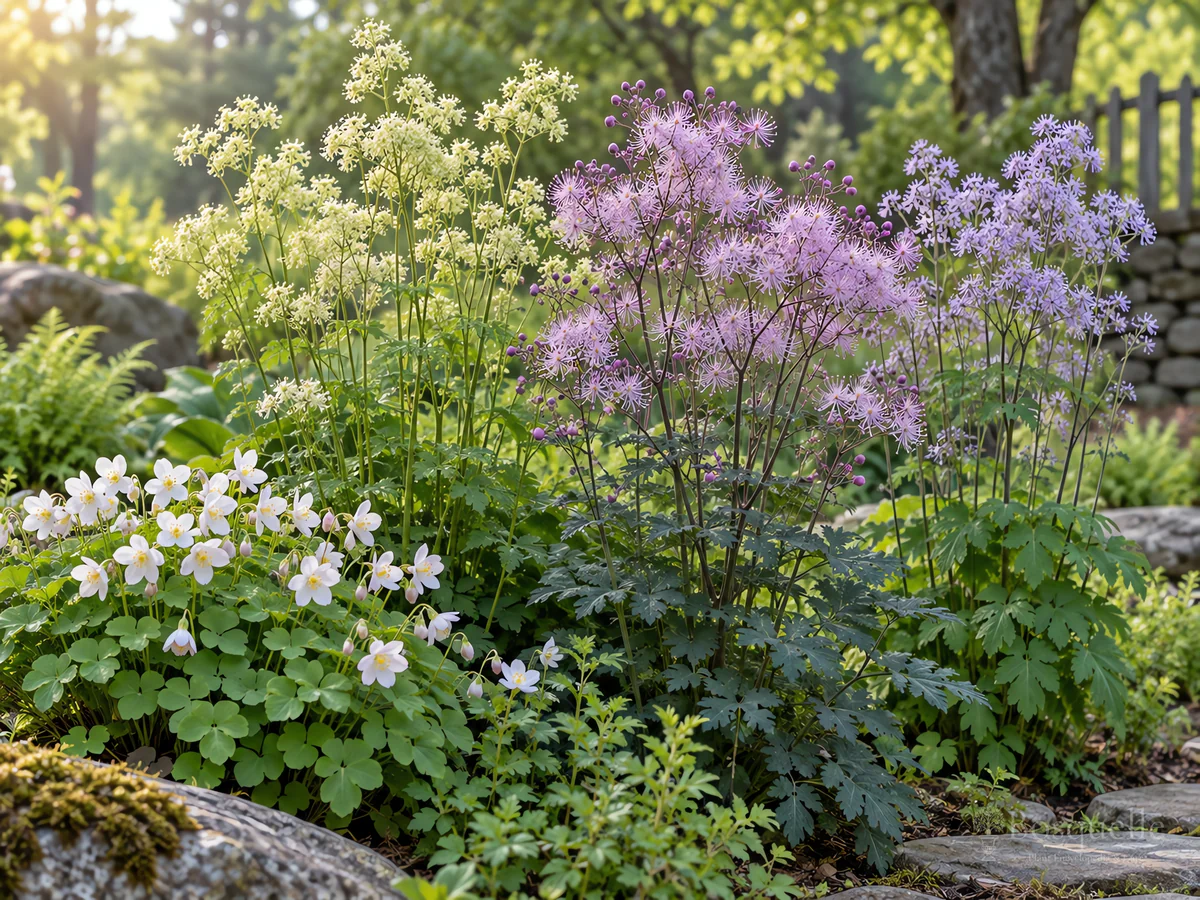
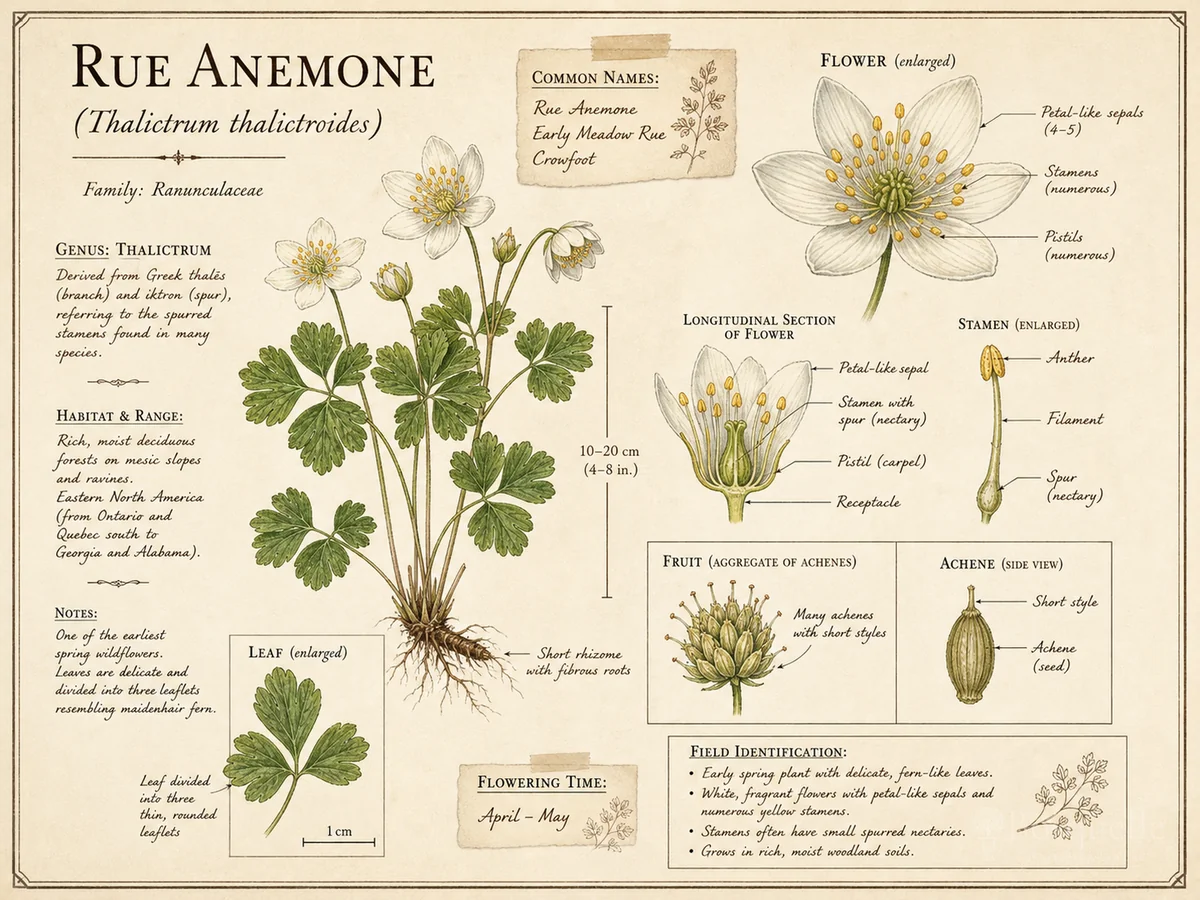
Grow rue anemone in deciduous shade, in soil that is mesic to slightly dry. It is a 6- to 9-inch spring plant that goes dormant in summer.
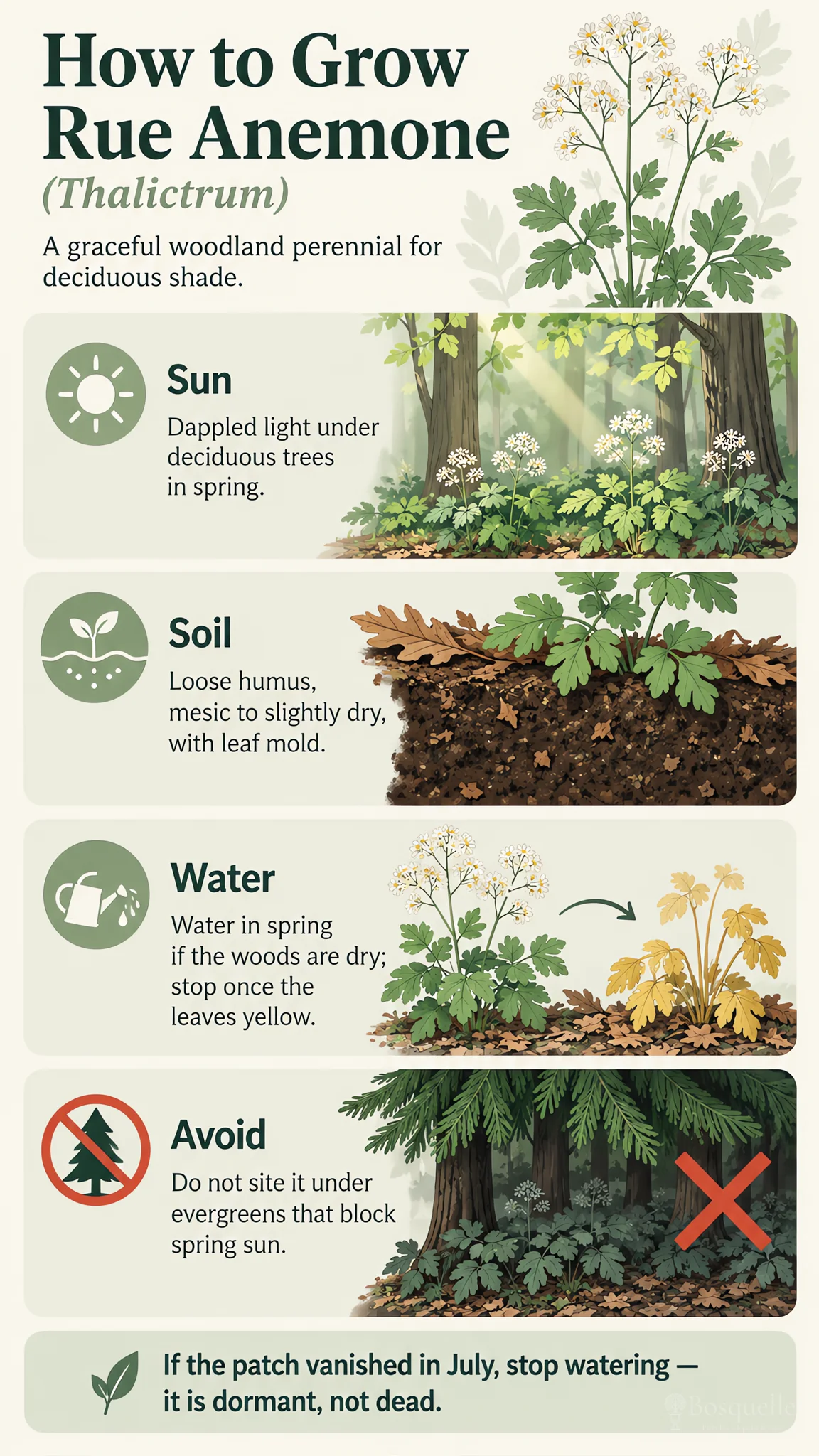
Give it deciduous shade, and let it go dormant in summer
| Factor | Recommended | Avoid |
|---|---|---|
| Sun | Dappled light under deciduous trees in spring | Do not site it under evergreens that block spring sun |
| Soil | Loose humus, mesic to slightly dry, with leaf mold | Do not keep the bed wet all summer |
| Water | Water in spring if the woods are dry; stop once the leaves yellow | Do not keep watering after the plant has gone dormant |
| Mulch | A thin layer of leaf mold | Do not bury the crown under a thick bark pile |
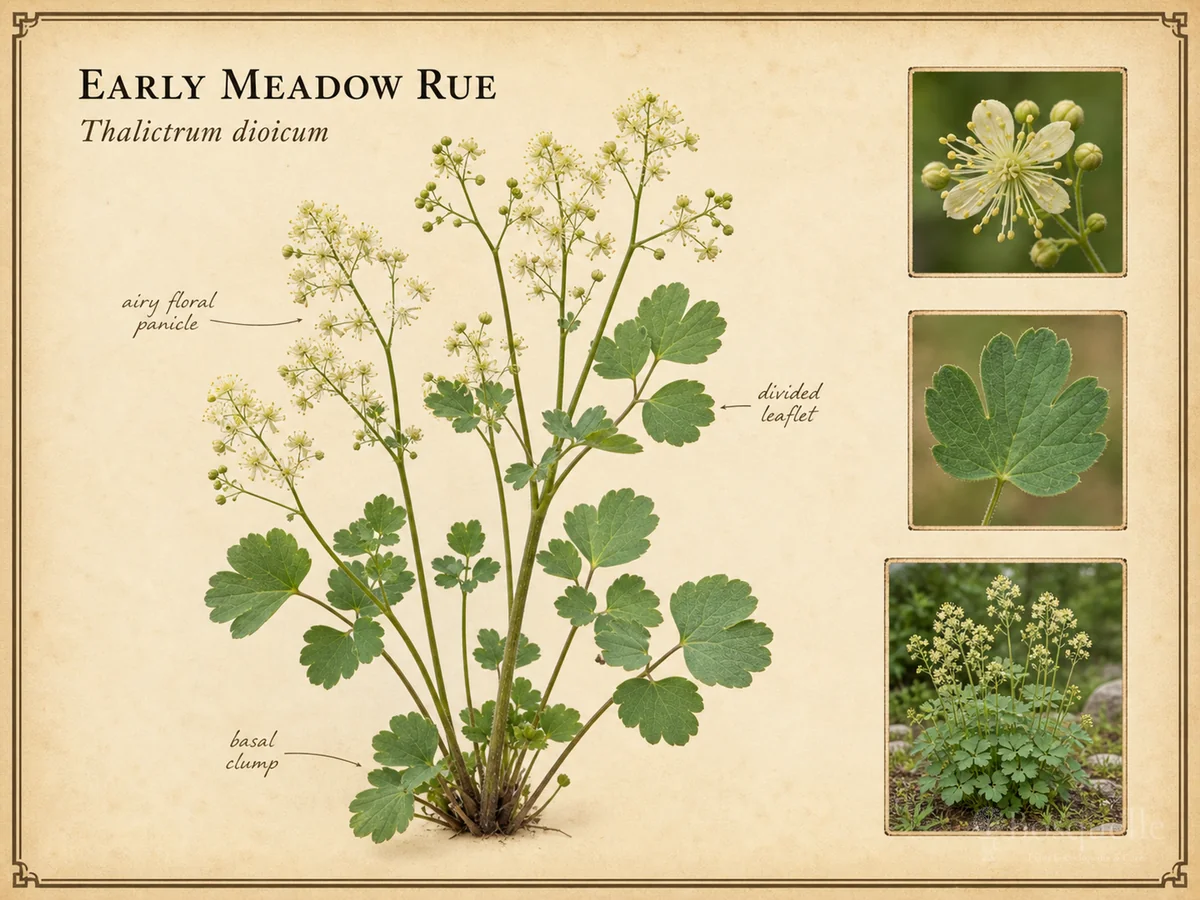
Rue anemone is a spring woodland plant about 6 to 9 inches tall. It wants dappled light while the trees are still bare, then shade as the canopy closes. The soil should be loose and humus-rich, mesic to slightly dry — not a summer-wet border. [1] Once the leaves yellow, the plant is going dormant. Stop watering. A vanished clump is not a plant that needs a weekly soak. [2] Dioicum is a taller native meadow rue that also dies back in heat; pick that kind on Types of Meadow Rue, and grow the moist-border class on How to Grow Meadow Rue.
Does rue anemone come back after summer?
Yes. The leaves die back in summer heat, then the plant returns the next spring. Do not keep watering after the foliage has gone.
Plant several together under deciduous trees
Because the plants are small, set several in a group so the spring display reads as a patch, not one thin stem. Use a sloping or well-drained woodland spot. Set the crown at the soil surface, and dress the bed with leaf mold. [3]
- Plant in spring, or as soon as a nursery pot is available, under deciduous trees.
- Dig a hole as deep as the root ball. Set the crown at soil level, not buried.
- Cluster several plants a few inches apart so the patch shows from a path.
- Water in, then mulch with a thin layer of leaf mold. Keep the mulch off the crown.
How do I plant rue anemone?
Set several plants together under deciduous trees, with the crown at the soil surface. Dress the bed with leaf mold. Do not bury the crown.
Divide the tuberous roots after bloom
The roots are slightly swollen. Divide after the flowers finish, while you can still see the clump. Flag the spot if you will wait until fall, because the plant vanishes in summer heat. Replant at the same depth, and water once to settle.
- Lift a clump after bloom, or in fall if you marked it in spring.
- Split off sections that each have roots and a growing point.
- Replant at once at the same depth, and water in once.
Not wood anemone, and not the herb rue
Wood anemone is Anemone, a different spring flower. See How to Grow Anemones. False rue anemone is Enemion — five petal-like sepals, not the 5 to 10 on rue anemone. [4] Herb rue is Ruta, a dry-sun shrub. Rue anemone is still Thalictrum.
Is rue anemone the same as wood anemone?
No. Wood anemone is Anemone. Rue anemone is Thalictrum thalictroides, the 6- to 9-inch spring plant in this genus.
If the patch vanished in July, stop watering — it is dormant, not dead.
FAQ
Are the double pink forms in this list?
No. Names such as Amelia or Cameo are not cards here. They still want the same deciduous shade and summer rest if the tag says Thalictrum thalictroides.
Related guides
Recommended plants


References
- [1] Morton Arboretum -
https://mortonarb.org/plant-and-protect/trees-and-plants/rue-anemone/ - [2] North Carolina Extension Gardener Plant Toolbox -
https://plants.ces.ncsu.edu/plants/anemonella-thalictroides - [3] University of Arkansas Division of Agriculture -
https://www.uaex.uada.edu/yard-garden/resource-library/plant-week/rue-anemone.aspx - [4] Illinois Wildflowers -
https://www.illinoiswildflowers.info/woodland/plants/rue_anemone.htm
This note is part of Thalictrum Guides.
More first-season notes by plant are gathered in How to Grow Guides.
Updated: Reviewed by Bosquelle Editors