
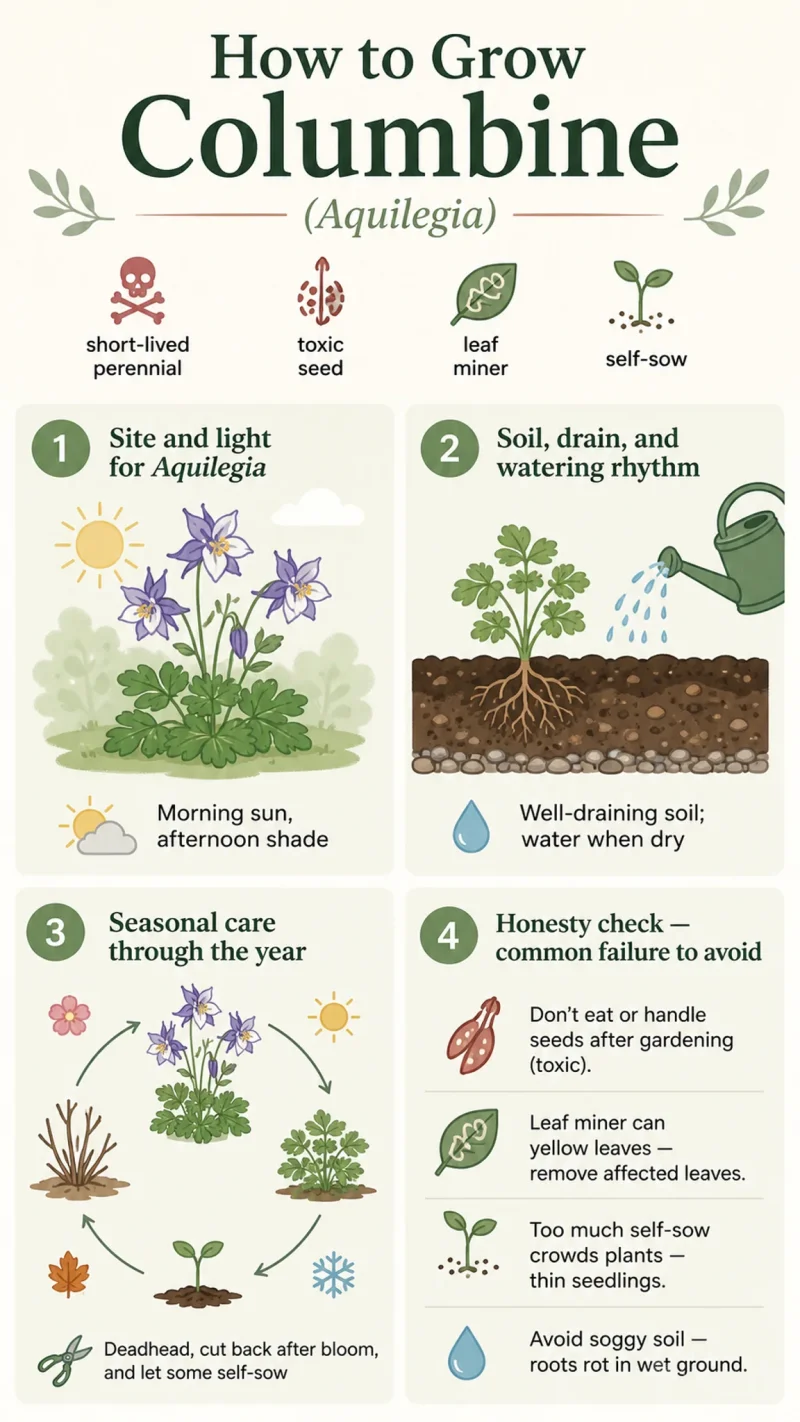
Columbine is a short-lived perennial. Two or three good flowering years is typical, then the parent clump fades. Give morning sun and afternoon shade, and soil that stays moist but still drains after rain. Leave some seed so seedlings can replace the parent; thick mulch or paving blocks that. Full sun works if you keep the soil evenly moist. Wet winter clay rots the crown. The plant is in the buttercup family and is toxic if eaten, so keep pets and children from chewing leaves or seed.
Sort hybrid, native species, or double on Types of Columbine. Surface-sow, a four-to-eight-week cool moist chill, and a fall outdoor sowing are on Growing Columbine from Seed.
Part shade, moisture, and drainage
| Factor | Recommended | Avoid |
|---|---|---|
| Light | Part shade; morning sun, afternoon relief in heat | Hot reflected west walls on large hybrids |
| Soil | Moist, rich, well-drained loam; grit if clay stays wet | Standing water on the crown in winter |
| Habit | A short-lived clump that returns by seed | Expecting a peony-length woody crown |
Most clumps fail from wet winter soil or from deadheading every seed pod. Missing fertilizer is rarely the cause. Water the first season when the top inch of soil dries. Established plants in part shade can take a short dry spell, but the crown should never sit in standing water. Compost in spring is enough. Heavy fertilizer makes more leaf and fewer flowers.
A north wall under an overhang looks like woodland shade, but eaves steal rain and the crown often crisps in May as trees leaf out. Clay that stays slick after rain needs grit or a raised bed first. Then you can keep the soil evenly moist without a puddle on the crown. Part shade is the default. Full sun works only if you water often enough to keep the soil evenly moist through heat.
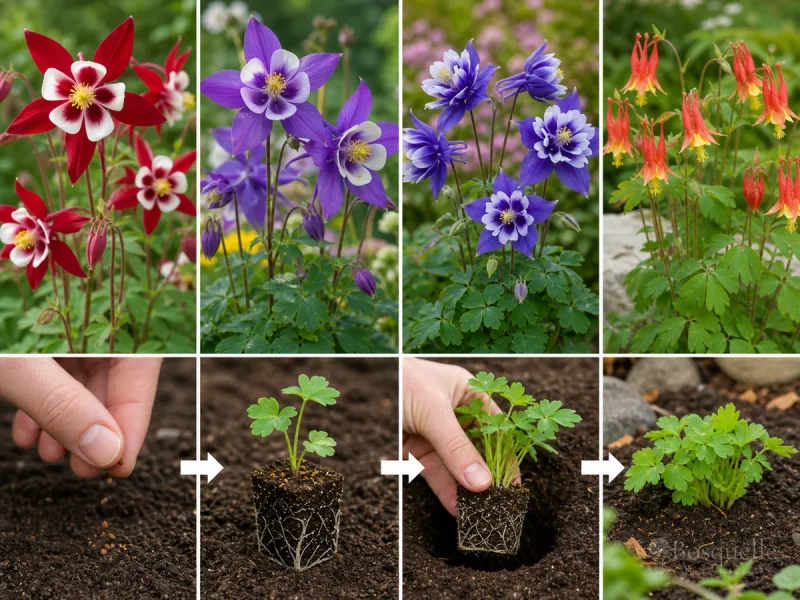
Crimson Star is a named bicolor hybrid, McKana Hybrid is a tall long-spur mix, and Songbird BlueBird is a compact Songbird type. They all want cool, moist soil that drains. Large hybrids still need more light and air than a woodland species. Group them with other moist-shade plants on one hose. A timer that also serves a dry lavender hedge will keep one plant too wet and the other too dry.
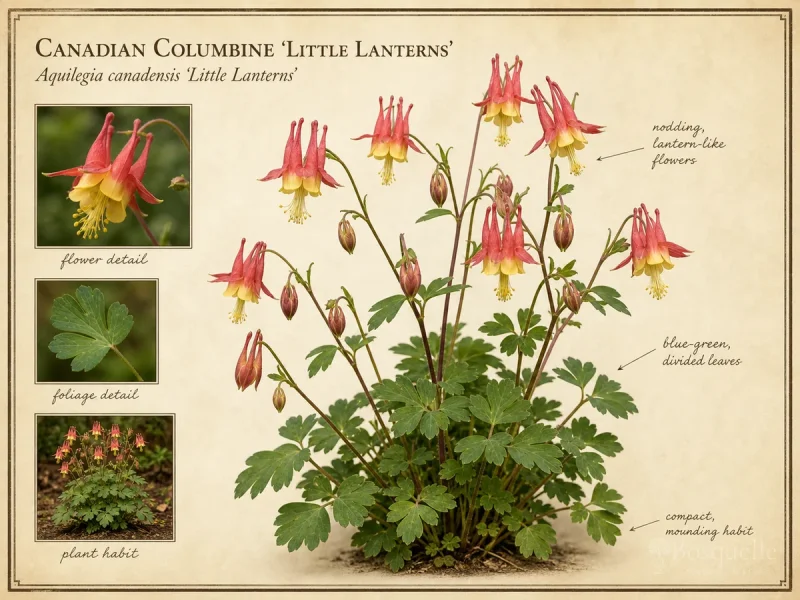
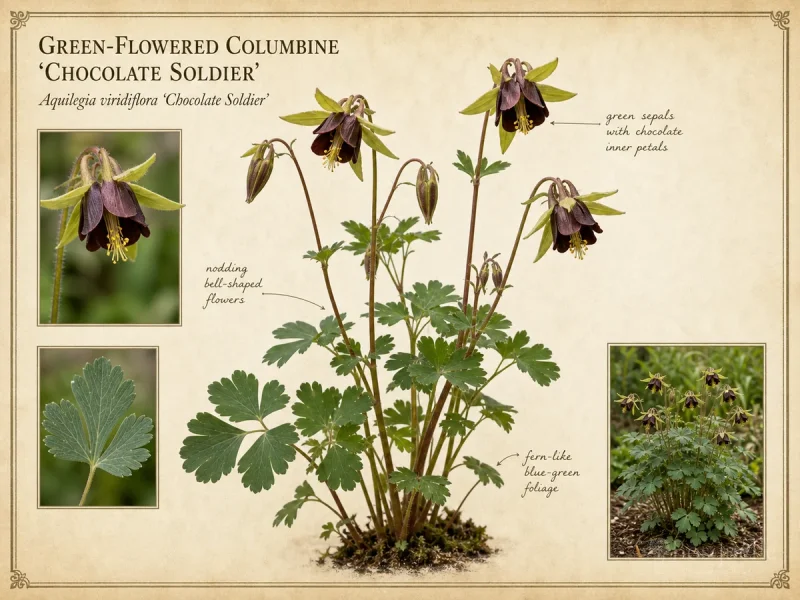
Little Lanterns is eastern red columbine at a smaller scale. Yellow Queen is golden and takes more open sun. Chocolate Soldier is a smaller, often drier niche. Sort those habits on Types of Columbine before you match a catalog photo to a hole. A tag that says sun or shade can still hide two light levels. If paving reflects heat, give afternoon shade and water new clumps more often. Black stone cooks shallow roots faster than a mulched bed. Large hybrids against a reflected west wall flop in heat, even when the photo looks woodland. Morning sun and afternoon shade is the safer default.
A drained pot is a tip only. Use a mix that dries between waterings, empty the saucer, and keep even moisture. Do not leave standing water under the crown. After a flood, lift a sour, black crown and discard it. Soft rot will not recover in the same hole until you add grit or raise the bed. Check after each thaw the first winter. Columbine drowns in a melt puddle more often than it freezes. If a late frost nips the buds, wait for new stems, then keep even moisture while they rebuild. Extra water will not undo frost damage. In summer heat, check the top inch every few days on new clumps and twice a week on established plants in part shade. Water at the soil until the bed is moist a finger deep, then stop. If the surface is still shiny an hour after rain, the hole is holding water: add grit or raise the next planting. If the soil is dusty the same afternoon, water again and add a thin mulch besides the crown, not on it.
Short-lived clumps that return by seed
Leave at least some spent flowers to set seed. Seedlings usually bloom in year two and replace fading parents. That is how a patch lasts longer than any one crown. Thick mulch or paving blocks seed-to-soil contact, so pull mulch back in late summer where you want a colony. Keep a clear collar of bare soil at the crown. Groundcover belongs beside that ring, not on top of it. Two or three good bloom years is normal. If a clump fades, check winter wet and whether you cut every pod before you add more water.
Named hybrids rarely come true from seed. Enjoy the remix, or buy named plants when color must match a design. Species such as eastern red columbine stay closer because they have not been crossed through a mixed McKana bed. Surface sow, light, and a cool moist period of about four to eight weeks, or a fall outdoor sowing, are on Growing Columbine from Seed. Do not dig and divide as a habit. The taproot resents disturbance, so move seedlings while they are small. Do not shift a mature clump in peak heat. The first winter is a drainage test: five minutes after a thaw can save a clump that sat in a melt puddle.
First-year bloom may be light until roots fill. Leave bare soil for seed before you mulch the whole bed in June. Map the colony once a year after bloom. If seedlings have jumped a path, lift them the same week. Waiting until fall lets another round set seed. Buy a firm, leafy nursery plant when a named color must match — how to set that pot is on Planting Columbine.
Leaf miners, pets, and cut-back
Silver trails in the leaves are leaf miners. They look ugly and almost never kill the plant. Treat them as cosmetic unless the bed is a show edge. Cut the foliage after bloom if trails bother you. Fresh leaves often follow. Eastern red types take less damage than many hybrids. Do not scalp green leaves in May while flowers still feed bees. If you cut every leaf in May, you also remove the seed you needed for next year's patch. Leave a few pods on the back of the clump. When you do cut mined leaves, wait until the flowers fade, then cut the marked foliage at the base and compost it. Fresh leaves often follow in a few weeks. Do not start with a spray. Miners live inside the leaf, so a contact insecticide misses them, and the plant still needs those leaves until bloom is over.
Deer and rabbits usually leave columbine alone. In a hungry year they may browse; a hoop or netting protects the clump better than extra water. Powdery mildew shows on crowded, still, wet leaves. Space clumps and water at the soil, not on the foliage. Slugs chew new leaves in wet springs. Pick them at dusk. Chewed holes are slug damage, not a sign the plant needs more water. A weekly flood for a thirsty annual on the same line sours the columbine crown even when the annual still looks thirsty.
The buttercup family is toxic if eaten. Site the patch away from a dog run if pets graze, and keep seed trays off the floor if cats chew seedlings. Cut stems for a vase when flowers are just open. Leave enough foliage to feed the crown so next year's bloom is possible. Hummingbirds use the long-spur types while the clump is up. If you cut every stem for the house, the plant also misses seed.
Plant, sow, and next jobs
Set a nursery columbine in spring or fall with the crown at soil level, and water the first season. Do not transplant in peak heat — the taproot resents a move, and a heat-stressed crown sulks even in moist soil. Give clumps room so you can still reach the crown after rain, water well to settle, and put no fertilizer in the hole. Spacing, soaking the pot, and the hole steps are on Planting Columbine. For tray, chill, and fall sow, use Growing Columbine from Seed.
Partners that share cool moisture, and that leave bare soil for seed, are on Columbine Companion Plants. Label hybrid versus native versus double on the pot. Next May a green fan will not tell you the spur or the color. Store unused seedlings in moist mix, not a sealed wet bag. Trapped moisture starts crown rot before you replant. Mulch to keep roots cool, but keep that mulch off the crown and off the bare-soil collar in late summer.
Hummingbirds use long spurs. Short-spur and double types feed different insects. Check the spur on Types of Columbine when you shop. Large hybrids want more light. Woodland natives take more shade. Get drainage right on one strip before you collect every named hybrid. If the catalog photo looks woodland, still check whether you hold a McKana mix that wants morning sun.
FAQ
Is columbine a perennial?
Yes, but often short-lived: two or three years is normal. Leave seed if you want the patch to return after the parent clump fades.
Why did my columbine disappear?
The clump aged out, winter wet rotted the crown, or you deadheaded every pod. Leave seed and fix drainage so seedlings can replace the parent.
Does columbine need sun or shade?
Part shade is the usual fit: morning sun and afternoon relief in heat. Full sun works with even moisture; deep dry shade thins bloom.
Are columbines toxic to pets?
Yes if eaten: keep dogs and cats from chewing leaves or seed, and grow it as a flower rather than a snack.
Should I cut columbine after bloom?
You can cut foliage after flowering to tidy leaf-miner trails, but leave some seed heads if you want seedlings to replace the clump.
Will named columbine come true from seed?
Usually no for hybrids; species stay closer. See Growing Columbine from Seed for surface sow and chill.
Can I grow columbine in pots?
Yes as a tip only: drain the pot, keep even moisture, and empty the saucer.
How do I plant a nursery columbine?
Soak the pot, set the crown at soil level, space 12–18 inches, and water the first season. See Planting Columbine.
Should I divide columbine?
Usually no. The taproot resents a split. Move small seedlings instead, and leave seed for a colony.
Related guides



Recommended plants



This note is part of Aquilegia Guides.
More first-season notes by plant are gathered in How to Grow Guides.
Updated: Reviewed by Bosquelle Editors