
Grow lemon balm in full sun or light shade, in soil that drains. Lemon balm is Melissa officinalis, a mint-family clump with lemon-scented leaves — not bee balm, and not lemon verbena.

Give it full sun or light shade and soil that drains
| Factor | Recommended | Avoid |
|---|---|---|
| Light | Full sun to part shade; afternoon shade where summers run hot | Do not plant it in deep shade, where stems stretch and the leaf thins |
| Soil | Average to rich loam that drains. A wide range of soils is fine if water can leave | Do not plant it in a winter soggy pocket. Wet ground around the roots leads to root rot |
| Water | Water a new planting until it takes hold. Established clumps in the ground need less, then a soak in a long dry spell | Do not leave the crown in standing water. Soggy soil is the usual cause of root rot |
| Feed | A light compost mulch in spring is enough for most clumps | Do not dump high-nitrogen fertilizer that pushes weak, off-flavor leaves |
| Deer | Deer usually leave it alone | Do not count on it as a deer fence for the rest of the bed |
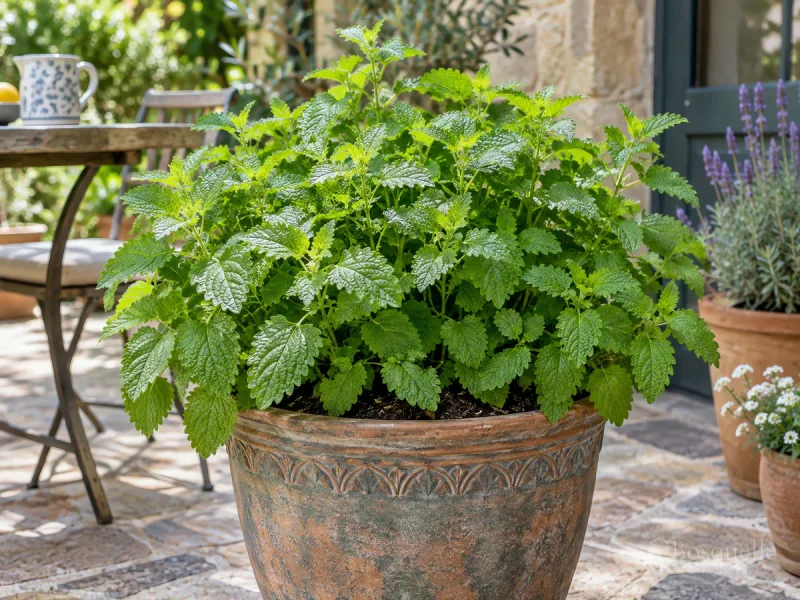
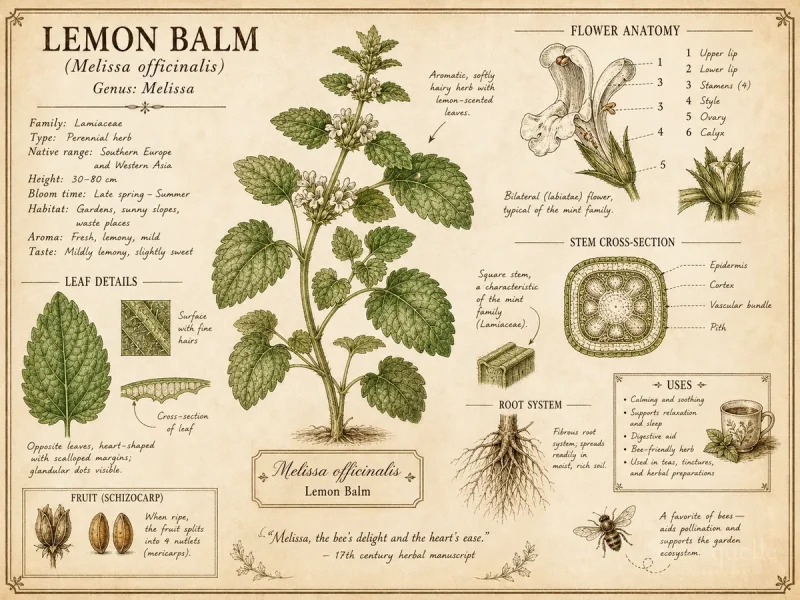
lemon balm is a bushy perennial that reaches about two feet, with wrinkled, lemon-scented leaves on square stems. [1] It takes full sun in a cool summer, and it wants some afternoon shade where the heat is hard, so the leaf stays green and usable. [2] Give it soil that drains. Water until the roots take, then water the bed again only when a dry spell lasts. Bees work the small white flowers; a couple of other herbs in the same sun and drain are enough company. [3] If you are starting seed this spring, the light sow and spacing are on Planting Lemon Balm. When to cut leaves is on Harvesting Lemon Balm. A pot that keeps seed out of the bed is on Lemon Balm in Pots.
- Set it in full sun, or in light afternoon shade where the summer stays hot.
- Work the bed so water can leave. A compost mulch in spring keeps the surface from crusting.
- Water through the first weeks. After that, soak the clump when the surface stays dry for days, and empty any saucer so the crown does not sit wet.
How much sun does lemon balm need?
Full sun to part shade. Deep shade makes a thin clump. Light afternoon shade is useful where summers run hot.
How often should I water lemon balm?
Water a new planting until it takes hold. Established clumps in the ground need less, then a soak in a long dry spell. Do not leave the crown in standing water.
Will deer eat lemon balm?
Usually no. Deer tend to leave it alone, but it is not a fence for the rest of the bed.
Cut it back after flowering, before seed sets
The clump widens, and it dumps a lot of seed if you leave the flowers. That is not mint sending runners through the bed. Cut the flower stalks, or cut the whole plant close to the base, as soon as the flush of bloom is over, so new leaves come and seedlings stay out of the path. [4] Water after a hard cut. In late winter, cut any faded stems before new growth starts.
- When the main flush of flowers finishes, cut the stalks, or cut the clump close to the base, before seed sets.
- Water the same day so new leaves come.
- In late winter or early spring, cut faded stems that still stand before new shoots show.
When do I cut back lemon balm?
After the main flush of flowers, before seed sets. Cut faded stems in late winter or early spring before new growth starts.
Not bee balm — and not lemon verbena
Lemon balm is Melissa, a lemon-scented clump with small white flowers in the leaf axils. Tags sometimes say Bee Balm; that is an old name for this same plant, not the showy flower. Bee balm is Monarda, with red, pink, or purple flower heads — see How to Grow Bee Balm. Lemon verbena is Aloysia, a woody shrub with narrow leaves — see How to Grow Lemon Verbena. Mint is Mentha, which runs by underground stems — see How to Grow Mint. Catmint stays on How to Grow Catmint.
Is lemon balm the same as bee balm?
No. Lemon balm is Melissa, grown for lemon leaves. Bee balm is Monarda, grown for showy flower heads. Some lemon balm tags still say Bee Balm — crush a leaf; it should smell like lemon, not bergamot.
Set it in sun or light shade on soil that drains, cut it after flowering so it does not seed, and confirm the tag is not bee balm or lemon verbena.
FAQ
Will lemon balm come back next year?
Yes. The top dies down in a hard winter and new shoots come from the crown in spring. Cut the spent stems in late winter, or wait until early spring and cut them before new growth starts.
Are gold or lime kinds a different plant?
No. Gold, variegated, compact, and lime forms are still this lemon balm. They share the same sun and drain. Named kinds often do not come true from seed.
Can pets chew it?
It is not listed as a poison plant for dogs, cats, or horses. Still keep pets from stripping a clump you want to keep.
Will it take over like mint?
It does not send mint runners through the bed. The clump gets wider, and it dumps seed if you leave the flowers. Cut the bloom, pull seedlings, or grow it in a pot.
Related guides

Recommended plants
References
- [1] NC State Extension Gardener -
https://plants.ces.ncsu.edu/plants/melissa-officinalis/ - [2] Royal Horticultural Society -
https://www.rhs.org.uk/herbs/lemon-balm/grow-your-own - [3] Wisconsin Horticulture -
https://hort.extension.wisc.edu/articles/lemon-balm-melissa-officinalis/ - [4] Illinois Extension -
https://extension.illinois.edu/herbs/lemon-balm
This note is part of Melissa Guides.
More first-season notes by plant are gathered in How to Grow Guides.
Updated: Reviewed by Bosquelle Editors