
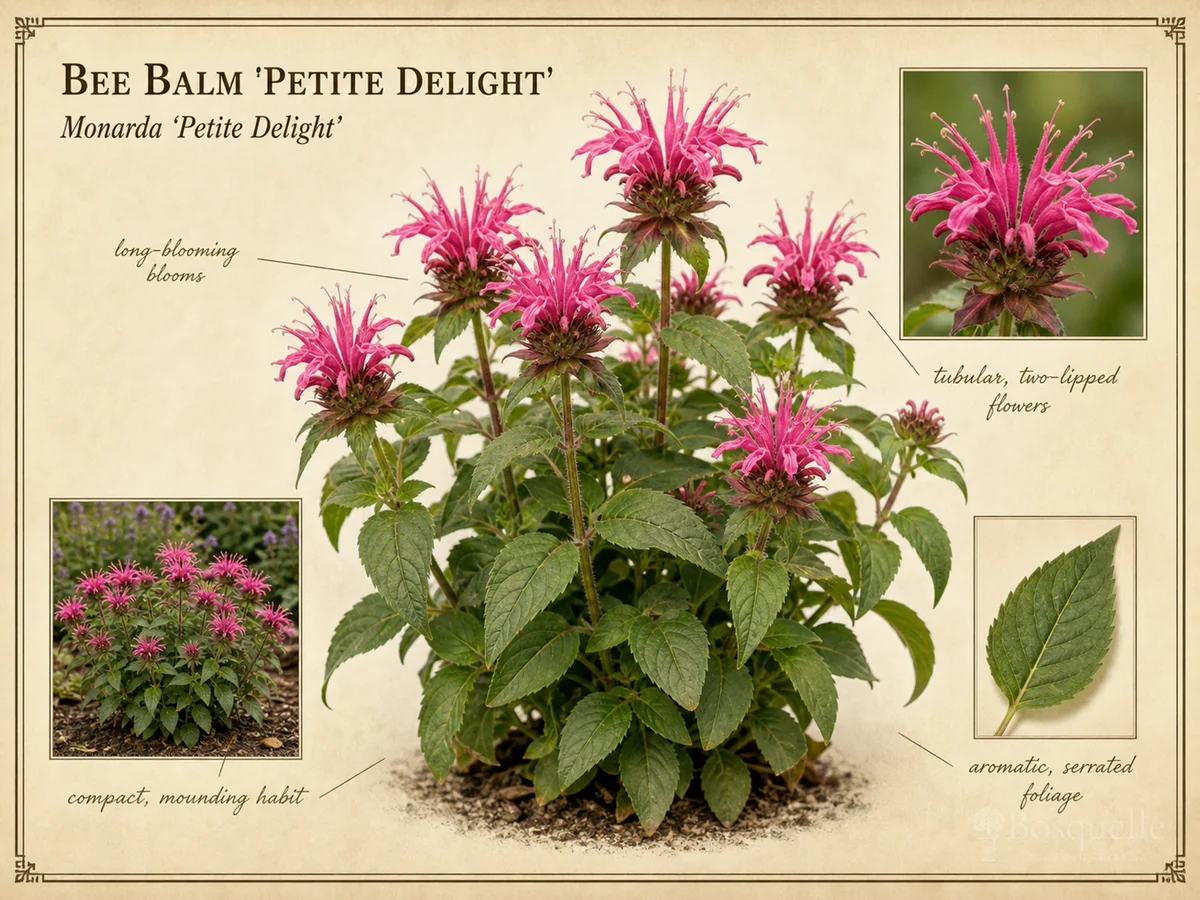
Bee balm (Monarda) wants full sun, even moisture, and air through the clump. Powdery mildew is the usual disease when foliage stays crowded and wet. Jacob Cline is a tall scarlet border plant; Pardon My Cerise is a compact mildew-bred series. Space clumps, water the soil, and divide tired mats. Sort classes on Types of Bee Balm.

Full sun, space, and moist soil
| Factor | Recommended | Avoid |
|---|---|---|
| Light | Full sun, at least six hours | Part shade that cuts bloom and raises mildew |
| Soil | Moist, well-drained; compost in poor ground | A winter puddle on the crown; bone-dry sand with no mulch |
| Space | 18–24 inches between plants (about 2 feet) | A jammed hedge of wet leaves |
| Water | Even moisture at the soil; soak 6–8 inches in drought | Evening overhead spray on the foliage |
Iowa State Extension: bee balm flowers best in full sun on moist, draining soil. Shade means fewer flowers and more powdery mildew. Heavy fertilizer and crowded clumps make the disease worse. Many garden types are hardy about USDA zones 3–9 if moisture and air hold. Afternoon shade in extreme heat can help bloom last; it is not a license to plant in a still, damp pocket. Keep thirsty lawn spray off the clump so you are not soaking foliage every evening.
- Leave airflow between clumps so leaves dry after rain.
- Mulch to hold moisture. Keep mulch off the crown.
- Do not copy a shade hosta bed onto bee balm.
- Partners live on Bee Balm Companion Plants.
Powdery mildew and airflow
Powdery mildew shows as a gray-white film on upper leaves. Badly hit leaves drop early. Iowa State Extension: it is worst on crowded plants, plants in shade, and plants that dry out hard. Resistant cultivars help. They are not mildew-proof in a wet thatch.
- Site in full sun. Space about 2 feet apart.
- Water the soil, not the leaves. Morning water dries faster.
- Thin congested runners so air can move.
- Remove infected debris in fall. Spores overwinter on old stems (Iowa State Extension).
- Next year’s cleaner picks live on Best Mildew-Resistant Bee Balm.
Deadhead, spread, and winter cut
Bee balm spreads by underground stems. Clump centers often die out in a few years. Divide every two to three years in early spring to keep vigor and slow the mat (Iowa State Extension / HGTV). Deadheading spent heads tidies the plant and can stretch bloom. It is not a separate prune page.
- Cut spent flower heads as they fade if you want later bloom.
- Leave some seedheads if you want goldfinches and winter structure.
- After frost, cut mushy stems and clear mildewed debris. Do not leave a wet pile on the crown.
- Full split steps live on Dividing Bee Balm.
Compact vs tall, and a pot tip
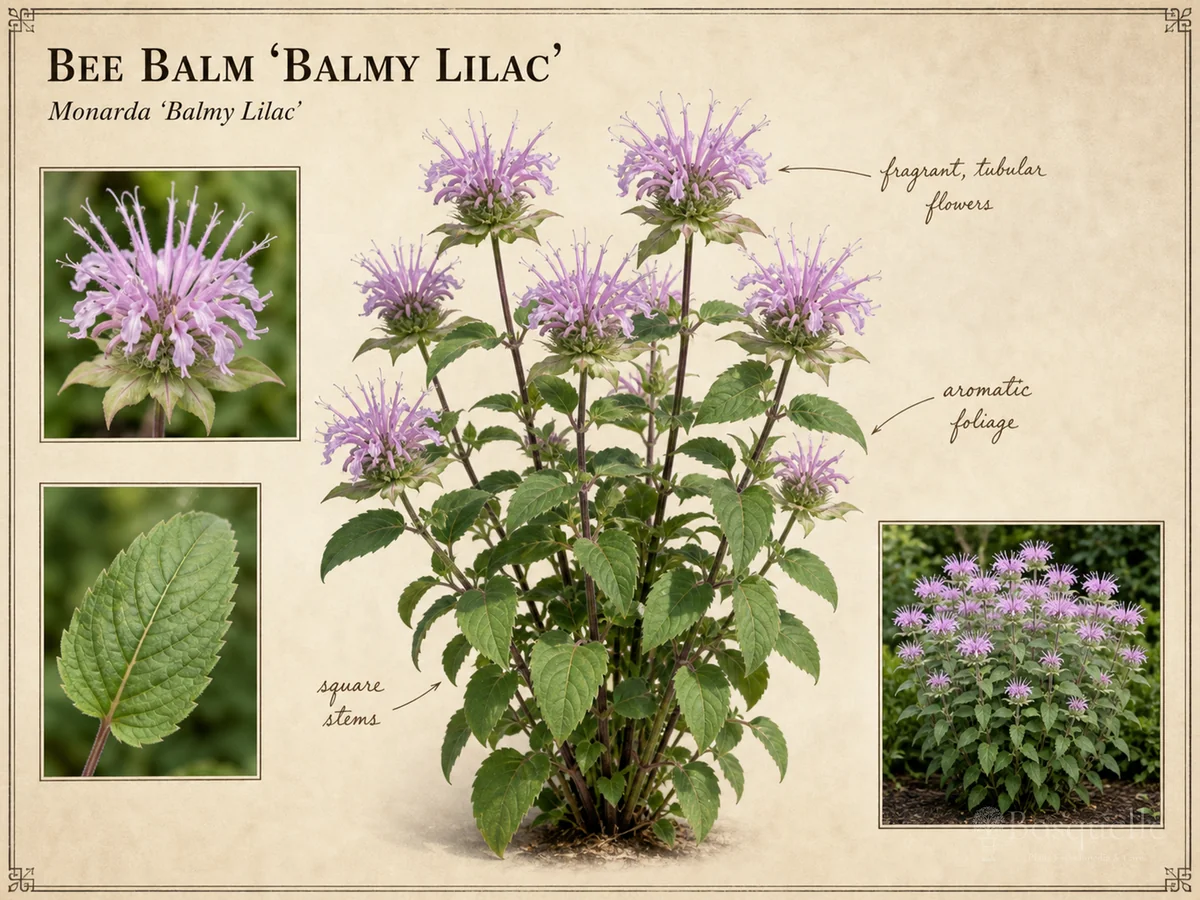
Tall border kinds need mid-border space and air. Compact mildew-bred series sit at the front and still want the same sun and spacing. Wild bergamot is a native species with a wilder habit, not a different watering rule. Confirm class on Types of Bee Balm.
- A patio pot can hold a compact cultivar in a deep, draining container with the same sun and airflow. Tall classics belong in the ground. Empty the saucer.
- Do not jam four compact plants in one saucer and call it resistant.
- Light feeding is enough. Heavy nitrogen without sun makes soft, mildew-prone growth.
FAQ
Is bee balm a perennial?
Yes. Garden Monarda is a hardy perennial. It spreads by runners and needs dividing every few years.
Does bee balm need full sun?
Yes — at least six hours. Part shade cuts bloom and raises powdery mildew.
Should I deadhead bee balm?
Deadheading spent heads tidies the clump and can encourage later bloom. It is optional, not a full prune program.
Does bee balm spread?
Yes, by underground stems. Divide every two to three years and lift runaway pieces. See Dividing Bee Balm.
How do I prevent powdery mildew on bee balm?
Full sun, 18–24 inch spacing, water the soil, divide tired mats, and clear infected debris in fall. Resistant cultivars still need air.
When should I cut bee balm back for winter?
After frost, remove mushy or mildewed stems so spores do not overwinter on the debris. Leave healthy structure if you want winter form.
Can I grow bee balm in a pot?
A compact cultivar can sit in a deep draining pot in full sun. Empty the saucer. Tall kinds need open ground.
When to plant bee balm?
Spring or fall. Spring is also the usual divide window.
Related guides

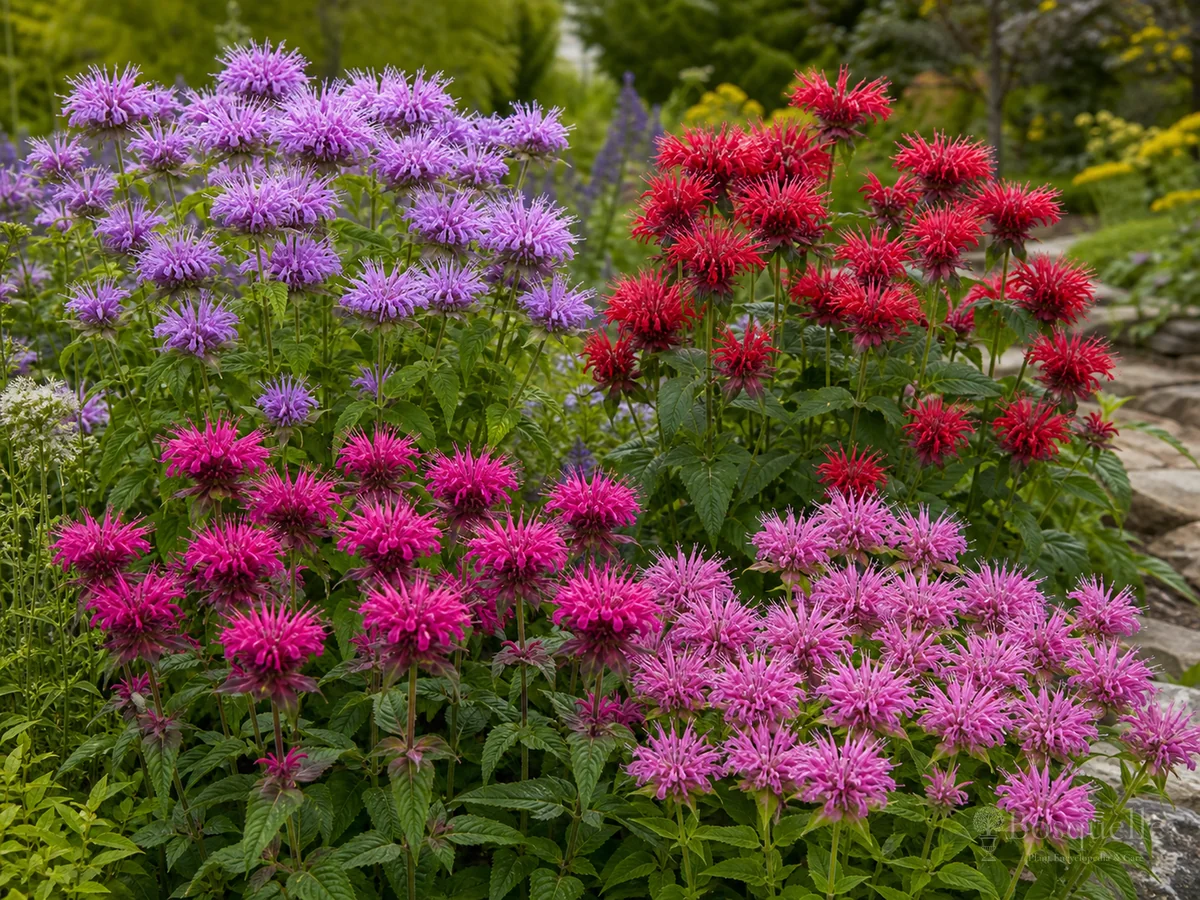

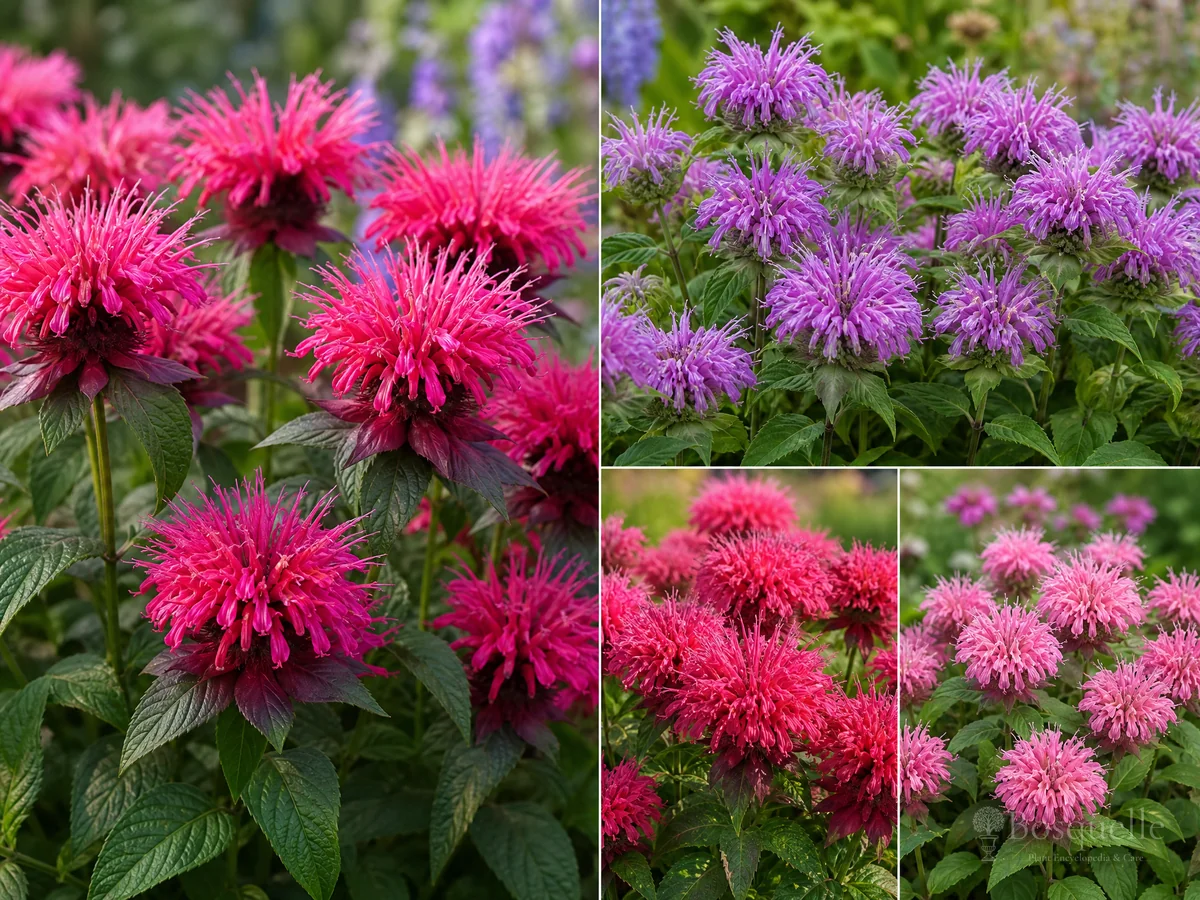
Recommended plants
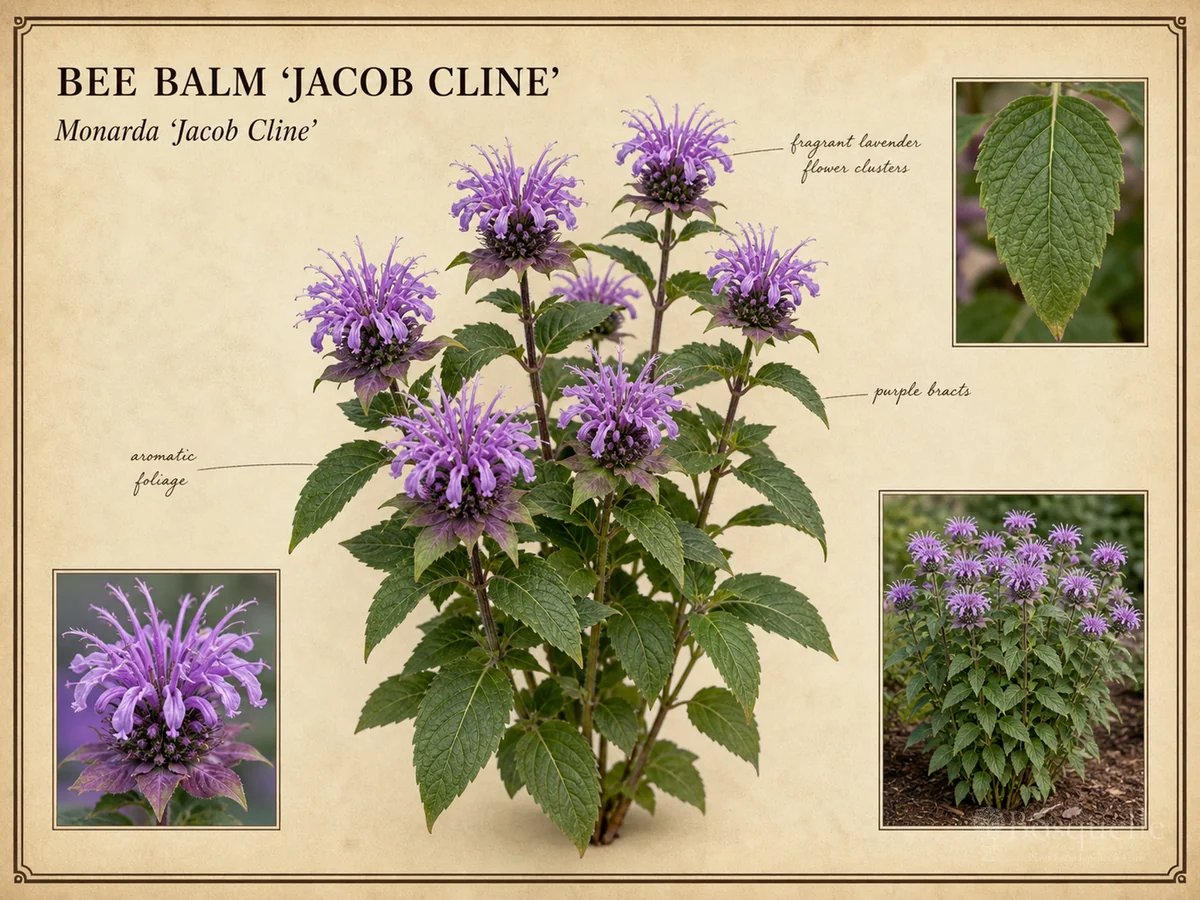
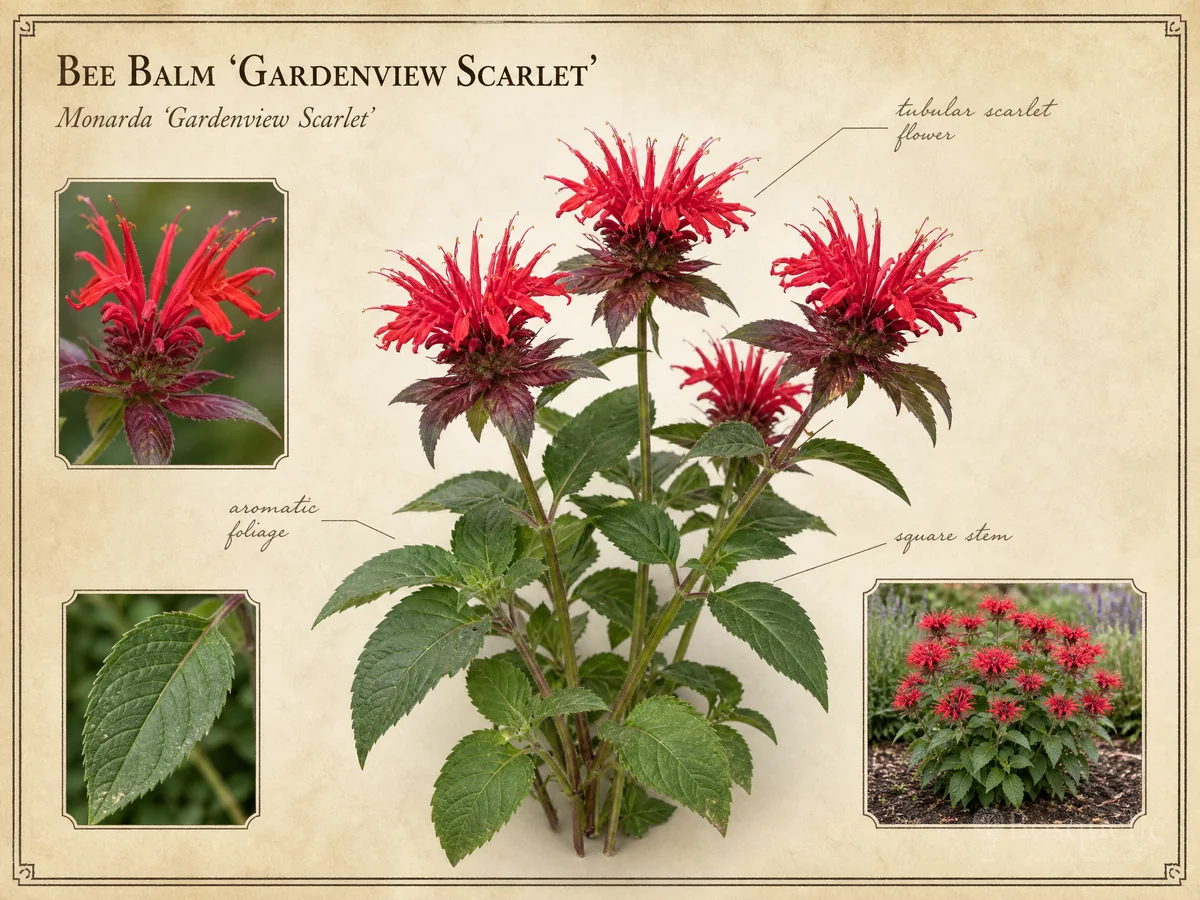



This note is part of Bee Balm Guides.
More first-season notes by plant are gathered in How to Grow Guides.
Updated: Reviewed by Bosquelle Editors