
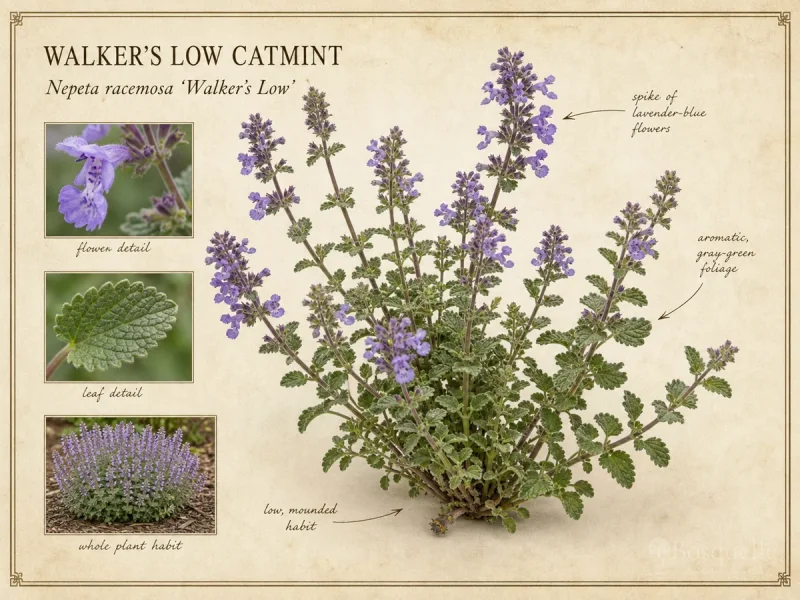
Ornamental catmint wants full sun, soil that drains, and lean fertility. Shear it after the first flush for a second bloom. It is not N. cataria (true catnip) — that is a weedy herb cats want. 'Walker's Low' is the usual border mound. Compare sizes on Types of Catmint. Planting steps on Planting Catmint; partners on Catmint Companion Plants.

Full sun, lean soil, and water only when dry
| Factor | Recommended | Avoid |
|---|---|---|
| Light | Full sun (6+ hours); light afternoon shade in hot summers | Deep shade; a closed, humid pocket |
| Soil | Sharp drainage; average to lean; grit on clay | Rich, wet clay; a freshly manured bed |
| Water | Regular the first season; then deep and infrequent | Daily soaking of an established clump |
| Feed | None, or a light feed only on starved sand | High-nitrogen fertilizer that makes soft, floppy stems |
| Shear | Cut by half to two-thirds after the first flush | Leaving a collapsed mound until fall with no cut |
North Carolina Extension: catmint wants full sun and good drainage, and is drought tolerant once established. Proven Winners: hardy about USDA zones 3–8; pest-light; deer and rabbits usually skip it. Lean soil keeps the mound tight. Rich, wet soil is the usual flop. Southern gardeners can give light afternoon shade; still drain.
- Loosen the bed so water moves away. Add grit on clay, not a peat bowl that holds winter wet.
- Water new plants until roots run. Then water deeply only in a long hot, dry stretch. Let the surface dry between waterings.
- Skip extra nitrogen. Soft growth flops and mildews.
- A pot needs drain holes and a mix that dries. Empty the saucer.
Tall types such as Six Hills Giant need more space and an earlier shear. Compact types stay tighter at the path. Size lives on Types of Catmint.
Catmint is not catnip
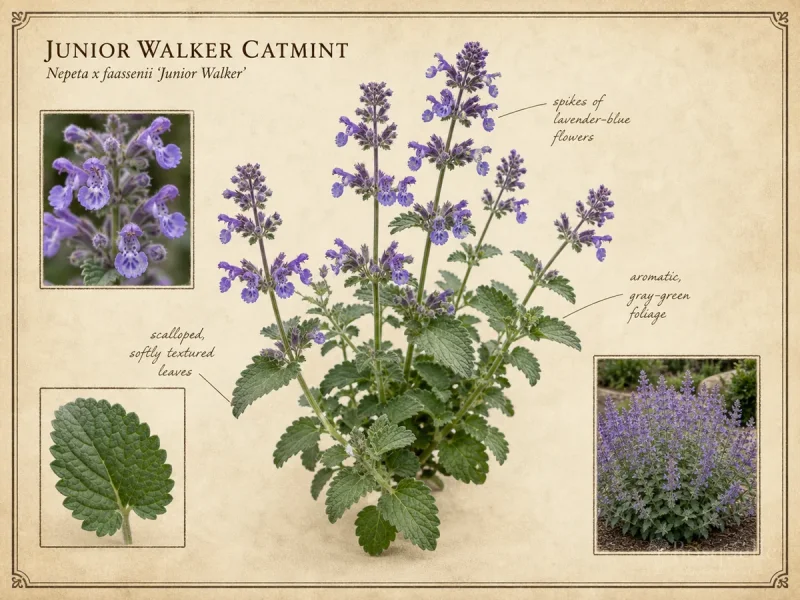
Almanac: catnip is Nepeta cataria. Catmint is the ornamental group — usually N. × faassenii and N. racemosa, including Walker’s Low. Both are Nepeta. They are not the same plant on a tag.
- Catmint — tidy grey-green mound, lavender-blue spikes, sterile or low-seed hybrids, grown as a border plant. Cats may sniff it; most do not wreck it the way they wreck catnip.
- Catnip (N. cataria) — looser, straggly, white spotted flowers, stronger nepetalactone. Grown as an herb. It can self-sow and look weedy. Do not plant it as the front-of-border haze you saw in a catalog photo.
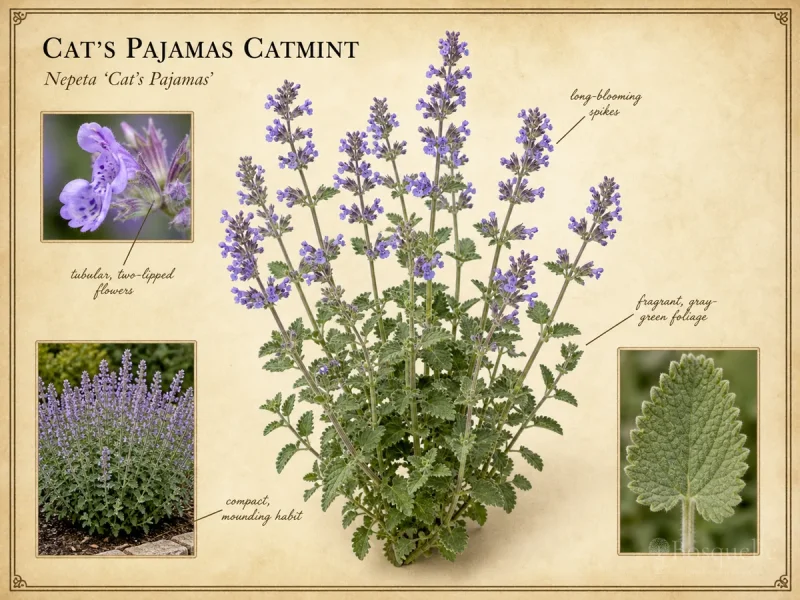
If the tag says only “nepeta” or “catmint,” check Latin or a cultivar name. Walker’s Low and Junior Walker are ornamental catmint. Cat’s Meow and Purrsian Blue are too. Cataria is the cat herb.
Shear after the first flush
Proven Winners and North Carolina Extension: shear after flowering to keep the plant compact and to get another wave. Cut the whole mound by about half to two-thirds when the first spikes fade and stems start to open in the middle — often late June to mid-July. Use shears, not a yank that tears the crown.
- Deadheading individual spikes is optional. A hard shear is the job that resets the plant.
- Water once after the cut if the week is dry. Do not fertilize the flush back into flop.
- In late fall, you can leave stems for winter structure and for insects, then cut dead growth to a few inches in early spring (Gardeners’ World). Or cut to 2–3 inches after frost if you want a tidy bed (Gardenia).
- First-year plants may bloom lighter. Still shear if they flop open. Do not expect a peony-length wait.
Flop, mildew, and cats
- A mound that opens in the middle — too little sun, rich soil, extra water or feed, or the natural slump after the first flush. Shear. Next year: leaner soil, more sun, less water.
- Powdery mildew — crowded, wet foliage in shade. Thin neighbors. Space plants for air. Do not overhead-soak at dusk.
- Winter rot — a crown in wet clay. Raise the bed or add grit. Hardiness does not rescue a puddle.
- Cats flattening a patch — more likely on catnip. On ornamental catmint, a hoop or a few sticks can keep a determined cat off a new crown until it roots.
- A weedy seedling carpet — you probably have cataria, or a seed-true species. Sterile faassenii hybrids do not carpet from seed. Sort the plant on Types of Catmint.
Partners that share sun and drain live on Catmint Companion Plants. Spacing and the planting hole live on Planting Catmint.
FAQ
What is the difference between catmint and catnip?
Catnip is Nepeta cataria, a weedy herb cats want. Catmint is the ornamental group (faassenii and racemosa hybrids) grown for lavender-blue mounds in a border.
Is catmint a perennial?
Yes. Most garden catmints are hardy perennials (often about USDA zones 3–8). They return from the crown if winter drainage is good.
When should you cut back catmint?
Shear by half to two-thirds after the first flush for a second bloom. Cut dead winter stems in early spring, or after frost if you want a tidy bed.
When should you plant catmint?
Spring or fall, in cool weather. Container plants can go in summer if you water until they root. Full steps live on Planting Catmint.
Why is my catmint flopping?
Usually too little sun, rich soil, extra water or fertilizer, or the slump after the first bloom. Shear, then grow it leaner.
Does catmint need full sun?
Yes for tight mounds and the most flowers. Light afternoon shade is fine in hot summers. Deep shade makes it leggy.
Does catmint spread?
Clumps widen. Sterile hybrids do not seed around. True catnip can self-sow. Divide every few years if the center thins.
Is catmint deer resistant?
Usually yes — the scent puts deer and rabbits off. It is not a guarantee in a hungry year.
Do I need to fertilize catmint?
No. Extra nitrogen makes floppy stems and fewer flowers. Lean, draining soil is the feed.
Related guides
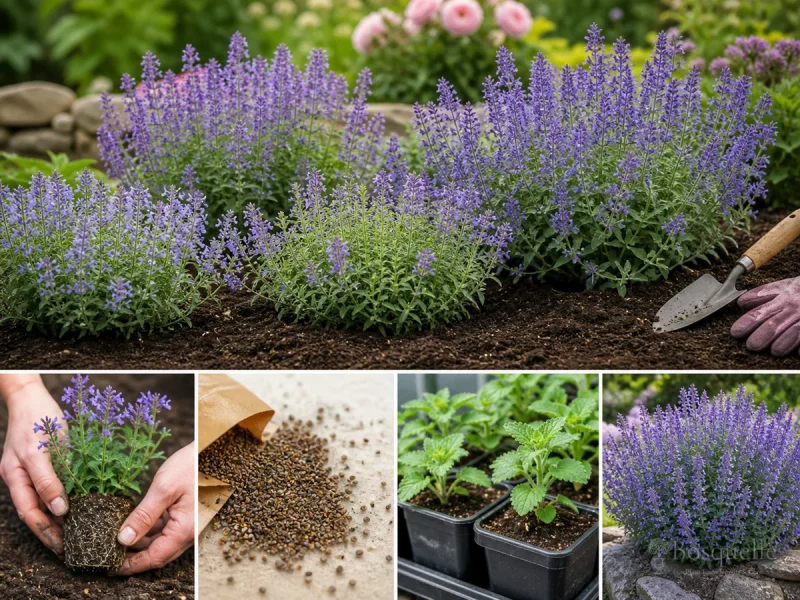


Recommended plants




This note is part of Nepeta Guides.
More first-season notes by plant are gathered in How to Grow Guides.
Updated: Reviewed by Bosquelle Editors