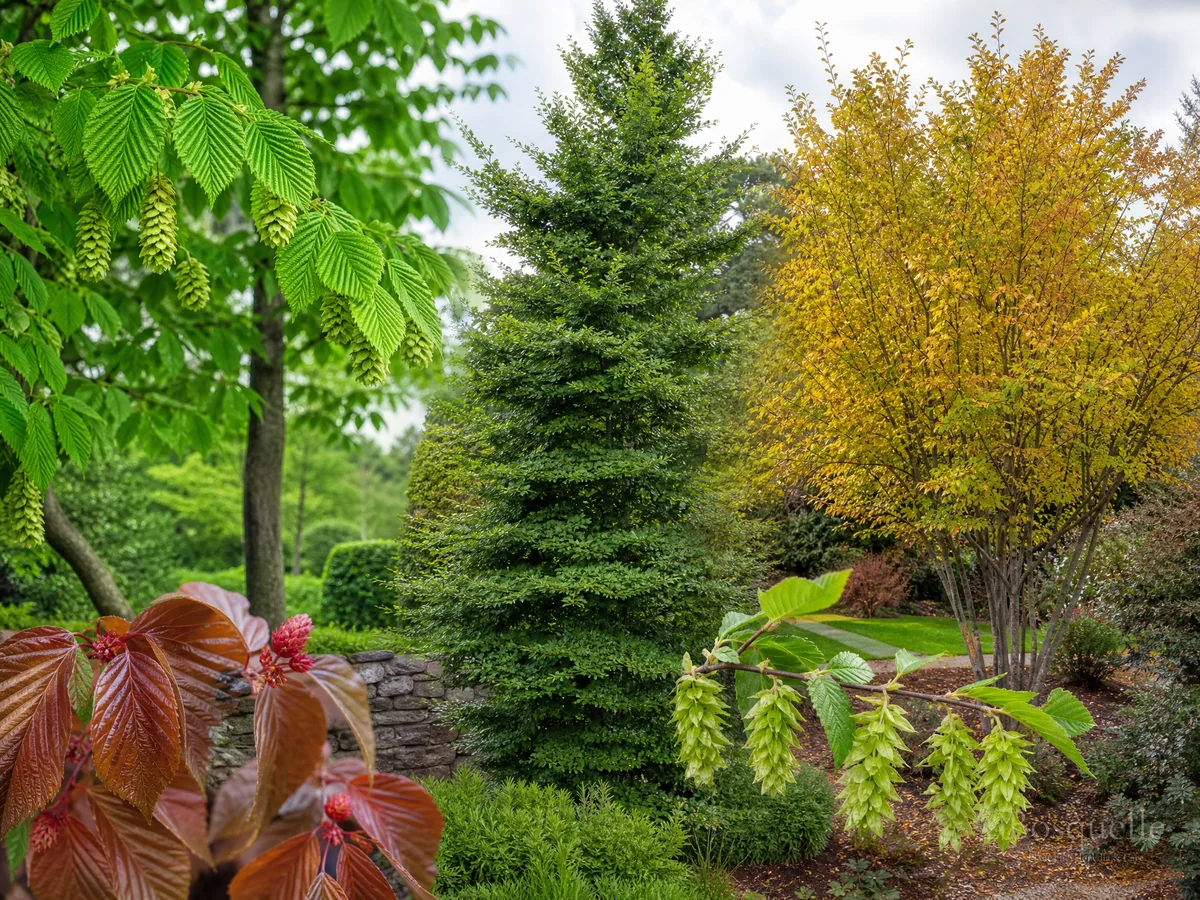
Choose a European hornbeam for a hedge or street, or American hornbeam for a moist woodland first.
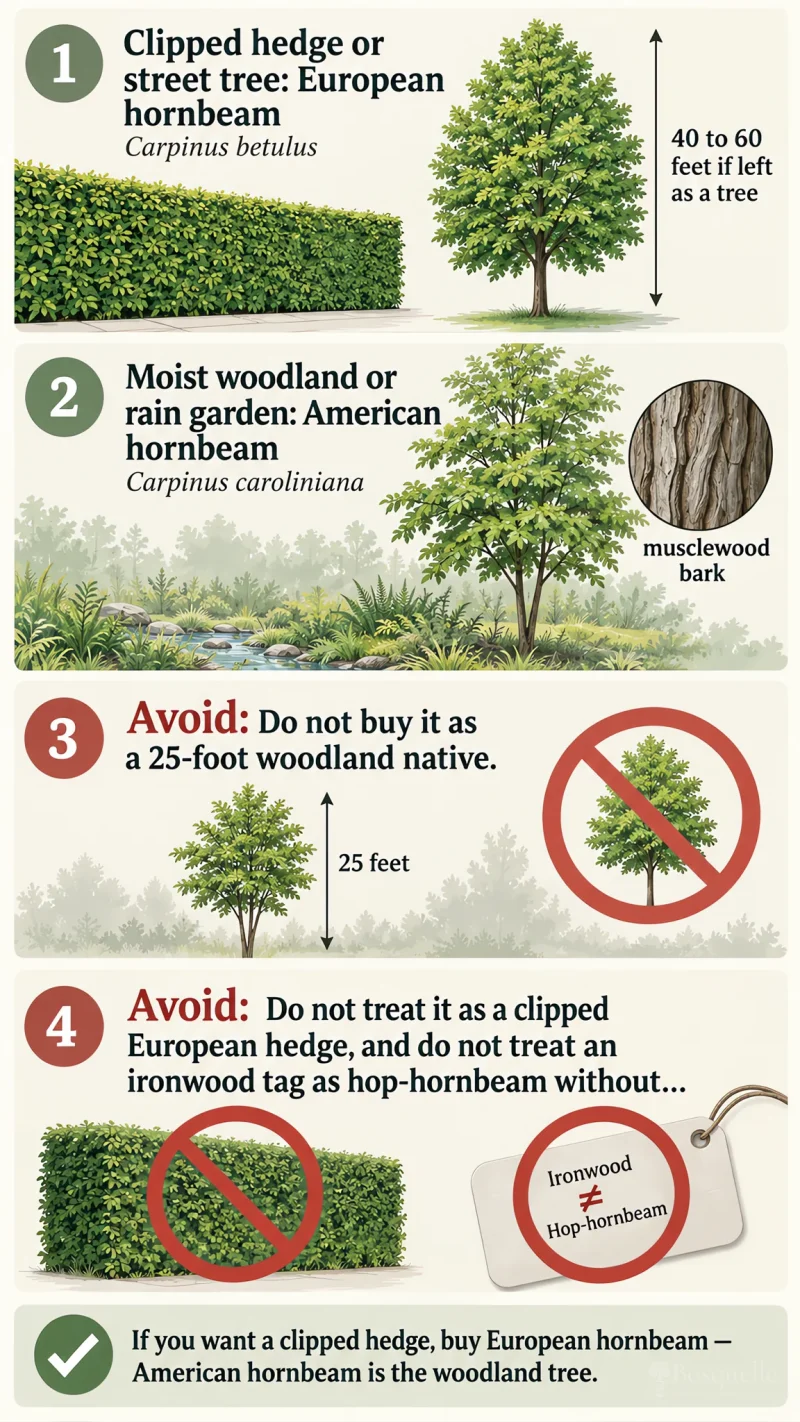
Choose a European hornbeam for a hedge or street, or American hornbeam for a moist woodland
| Factor | Recommended | Avoid |
|---|---|---|
| Clipped hedge or street tree | European hornbeam — Carpinus betulus; 40 to 60 feet if left as a tree | Do not buy it as a 25-foot woodland native |
| Moist woodland or rain garden | American hornbeam — Carpinus caroliniana; musclewood bark | Do not treat it as a clipped European hedge, and do not treat an ironwood tag as hop-hornbeam without checking the Latin |
Know your USDA hardiness zone before you pick a type of carpinus that will take your winter. Type your ZIP below.
2023 USDA ZIP listings (PRISM / USDA-ARS). Find Your USDA Hardiness Zone · Official USDA map.
The first choice is the job. European hornbeam is the large hedge and street tree, 40 to 60 feet if you leave it unclipped. American hornbeam is the smaller native for moist shade, usually 20 to 30 feet, with smooth fluted bark that reads as musclewood on a winter trunk. [1] [2] If the tag only says hornbeam, look at whether you want a clipped screen or a woodland tree, then pick that kind. Upright shop names such as Fastigiata are still European hornbeam, not a third species. [3]
Which hornbeam should I buy?
Buy European hornbeam for a clipped hedge or a street. Buy American hornbeam for a moist woodland or rain garden.
Is musclewood the same as European hornbeam?
No. Musclewood is American hornbeam, Carpinus caroliniana. European hornbeam is Carpinus betulus.
Browse by kind
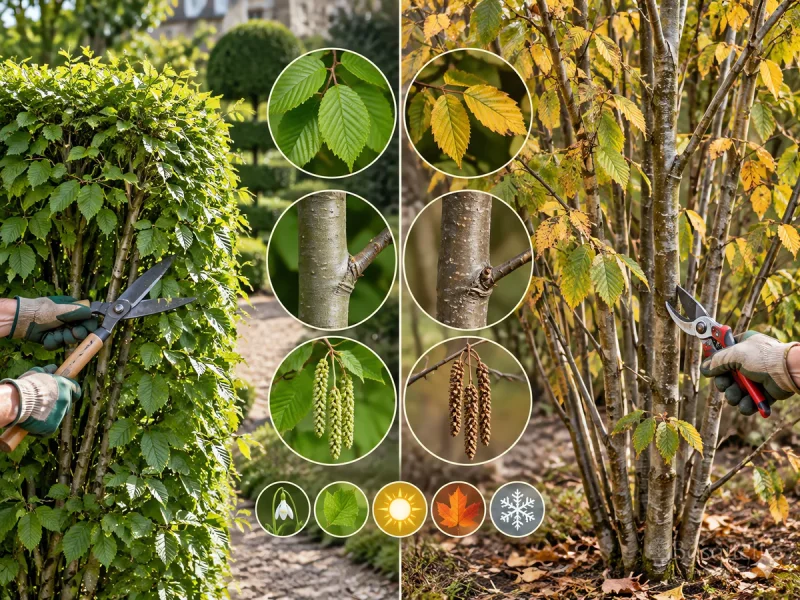
Match the hedge-or-street job or the woodland job, then pick that kind. An American hornbeam will not fill a clipped European screen, and a European tree will not stay a 25-foot understory. An ironwood tag can also mean hop-hornbeam, which is Ostrya, not this genus — look for shredding bark and hop-like fruit before you buy. The European species is the more widely planted landscape tree; the American kind is the understory native. [4] Care for the tree you already have on How to Grow Hornbeam.
European hornbeam
European hornbeam is the large landscape tree, often sold as common hornbeam. Buy this group for a clipped hedge, a screen, or a street. Upright shop forms such as Fastigiata stay on this kind; they are not a third species. It is Carpinus betulus, not a beech.
American hornbeam
American hornbeam is the smaller native, also called musclewood, blue beech, or ironwood. Buy this group for a moist woodland, stream edge, or rain garden. The bark is smooth and fluted. It is Carpinus caroliniana, not hop-hornbeam.
If you want a clipped hedge, buy European hornbeam — American hornbeam is the woodland tree.
FAQ
Is Fastigiata a separate kind of hornbeam?
No. Fastigiata and similar upright forms are European hornbeam, Carpinus betulus. This catalog holds the species, not extra cultivar cards.
Do you hold Japanese hornbeam?
No. Japanese hornbeam is Carpinus japonica. This catalog holds European hornbeam and American hornbeam.
Is hop-hornbeam a type of hornbeam?
No. Hop-hornbeam is Ostrya virginiana, a related tree with shredding bark and hop-like fruit. Both are sometimes sold as ironwood. Hornbeam in this catalog is Carpinus.
Is blue beech a type of beech?
No. Blue beech is American hornbeam. Beech is Fagus. See How to Grow Beech if that is the tag you have.
Related guides


References
- [1] NC State Extension Gardener -
https://plants.ces.ncsu.edu/plants/carpinus-betulus/ - [2] NC State Extension Gardener -
https://plants.ces.ncsu.edu/plants/carpinus-caroliniana/ - [3] Piedmont Master Gardeners -
https://www.piedmontmastergardeners.org/article/consider-a-hornbeam/ - [4] Lady Bird Johnson Wildflower Center -
https://www.wildflower.org/plants/result.php?id_plant=CACA18
This note is part of Carpinus Guides.
More type comparisons by plant are gathered in Types of Plants Guides.
Updated: Reviewed by Bosquelle Editors