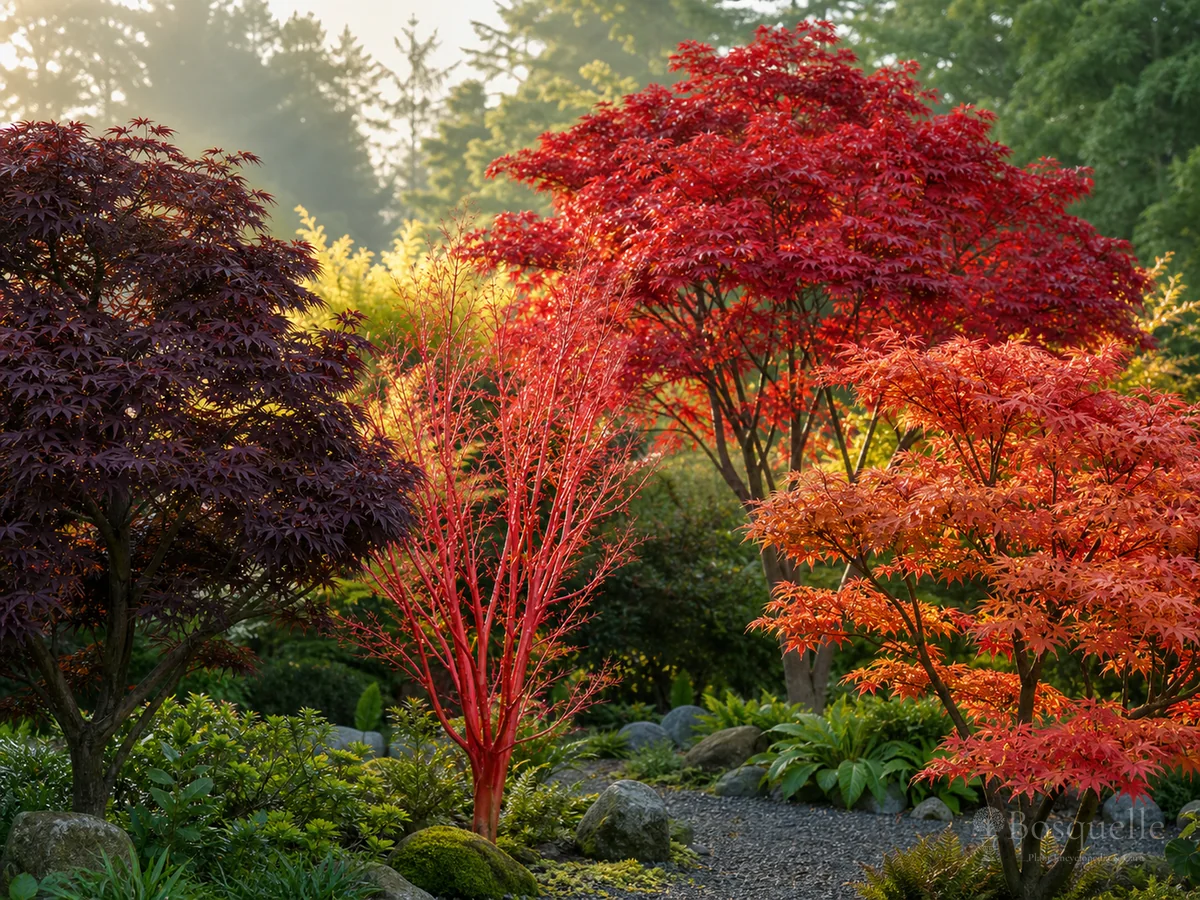
Japanese maples and large landscape maples share the genus Acer but need completely different handling. Acer palmatum and its cultivars are architectural garden specimens — slow-growing, wind-sensitive, and prone to scorch in exposed positions. Acer platanoides and A. pseudoplatanus are large forest trees unsuited to most gardens. Identify your species before planning any care or placement.
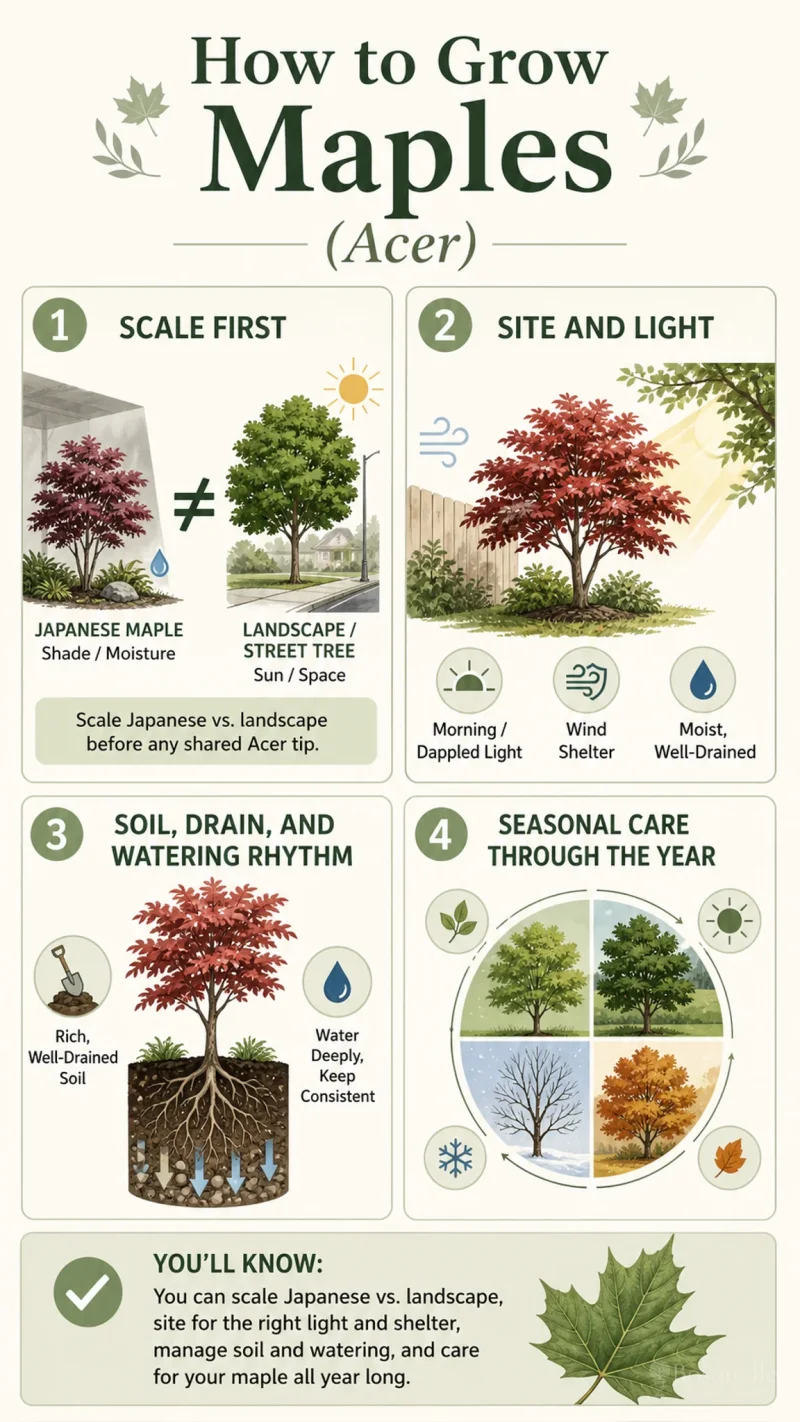
Japanese maple scorch risk ≠ landscape street trees
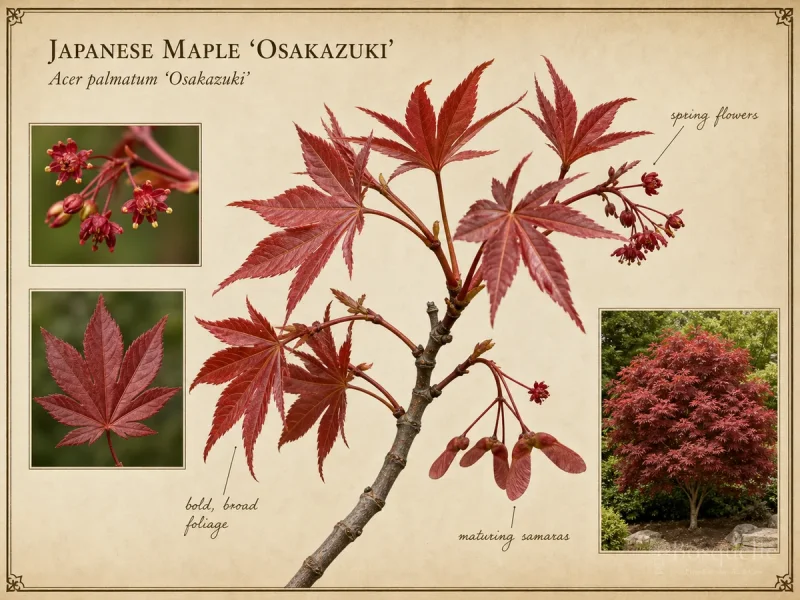
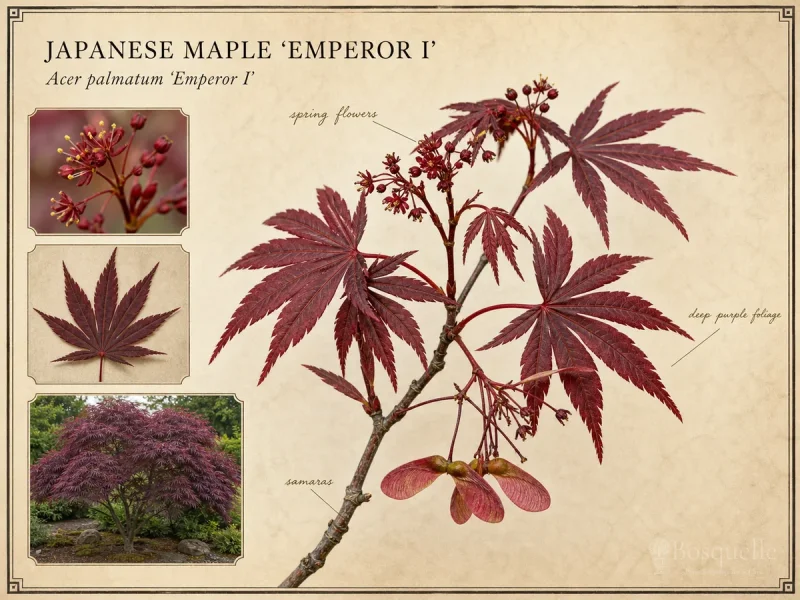
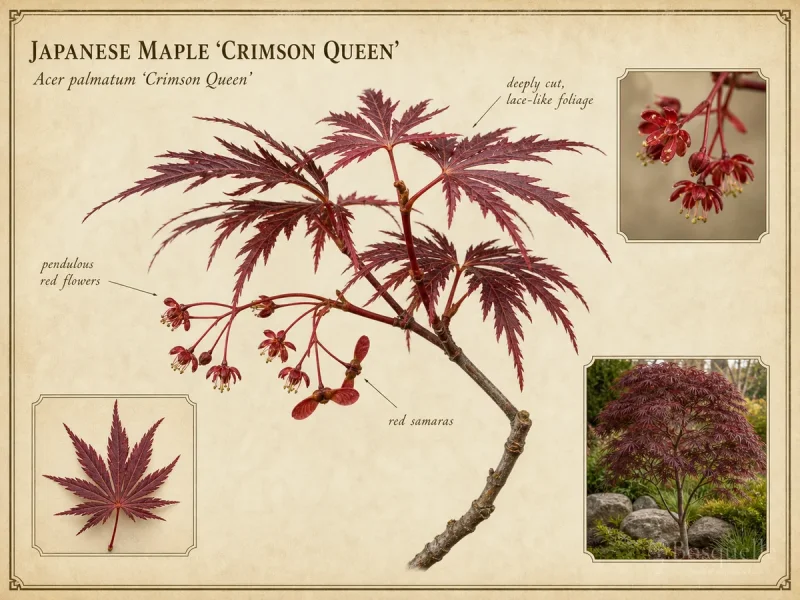
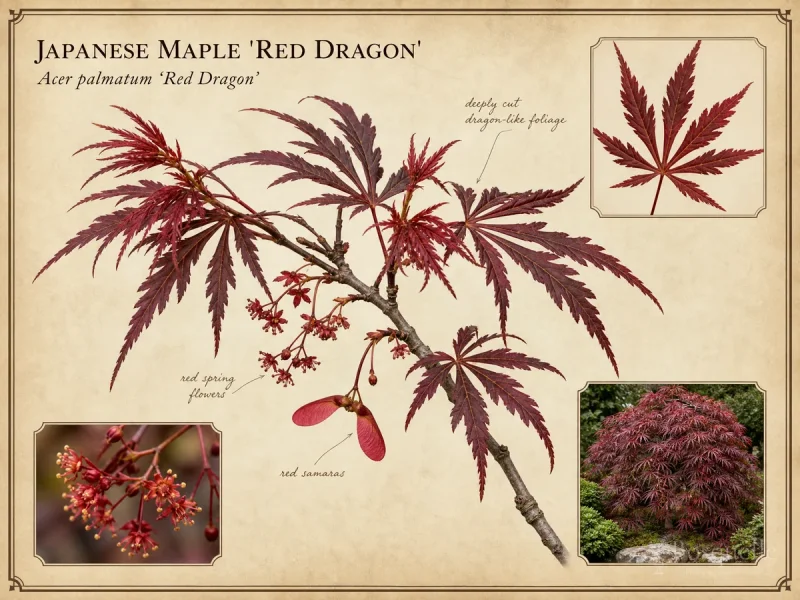
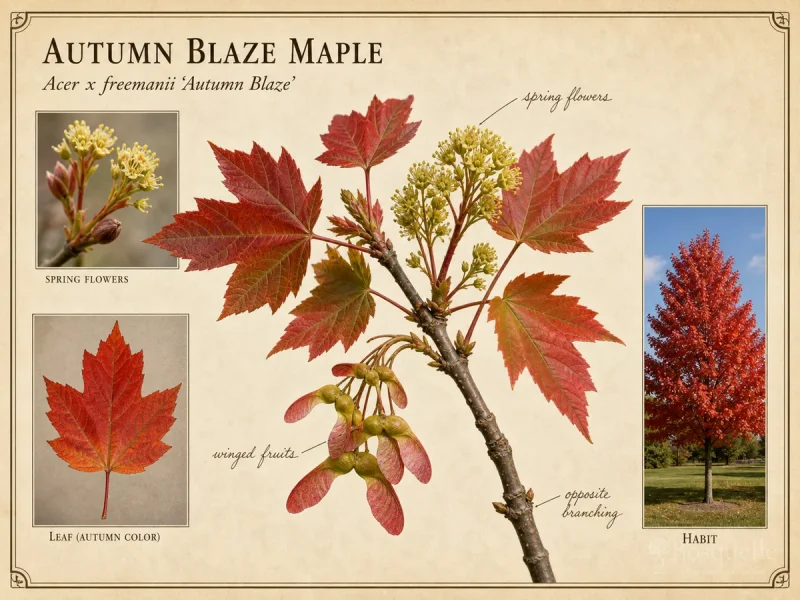
Upright Japanese maples such as Bloodgood, Sango-kaku, Osakazuki, and Emperor I, laceleaf types such as Crimson Queen, Red Dragon, and Viridis, and fullmoon types such as Aureum scorch in hot afternoon blaze and reflective heat. Give them morning sun or high dappled canopy, keep soil moist but drained, and never bury the root flare. Landscape maples such as Red Maple, Sugar Maple, Autumn Blaze, and Crimson King are sun-and-space trees — do not paste Japanese maple shade rules onto a street maple, and do not expect a patio Japanese maple to fill a boulevard.
Site, soil, and water for Japanese maples
For palmatum / dissectum / fullmoon: prefer morning sun or dappled light with afternoon shade and wind shelter — hot reflective west walls scorch leaves. Give moist, free-draining soil with organic matter; water evenly in the first seasons; mulch the root zone without volcano-piling against the trunk. Leaf edges brown when wind, drought, or afternoon heat combine — culture first, not a mystery disease. Full sun only works if soil stays evenly moist and the cultivar tolerates it. Confirm hardiness and mature size on each profile.
Landscape maple sun and space
Red, sugar, silver, Norway, and Freemanii-type shade trees need room for canopy and roots. Plant where mature height and spread fit the site; keep turf and irrigation steady while establishing. Autumn colour is a bonus of good culture — not a reason to cram a large maple into a courtyard Japanese-maple slot.
Planting depth — never deep
Set the root flare at or slightly above grade for every maple. Deep planting and volcano mulch invite stress on Japanese maples and landscape trees alike. The full checklist lives on Planting Maples.
Pruning overview — class before calendar
Japanese maples prefer light structural work after leaf-out and avoid late-winter heavy cuts; landscape maples take a dormant structural prune. For the class playbook, use Pruning Maples. Browse groups on Types of Maples.
Seasonal rhythm for garden maples
- Spring: plant while soil is workable; water new Japanese maples through leaf-out; light prune after leaves expand on types such as Bloodgood.
- Summer: deepen mulch; water in drought; watch afternoon scorch on Japanese maples in hot gardens.
- Autumn: enjoy colour on Osakazuki and landscape types; plant in cool soil; ease late nitrogen.
- Winter: protect young Japanese maples from drying winds; do landscape structural prune when dormant if that class fits.
Pests and diseases (basics)
Expect occasional aphids, scale, and leaf scorch from culture gaps. Start with light, water, drainage, and planting depth. Shade companions under Japanese maples live on Maple Companion Plants.
Growing maples in containers?
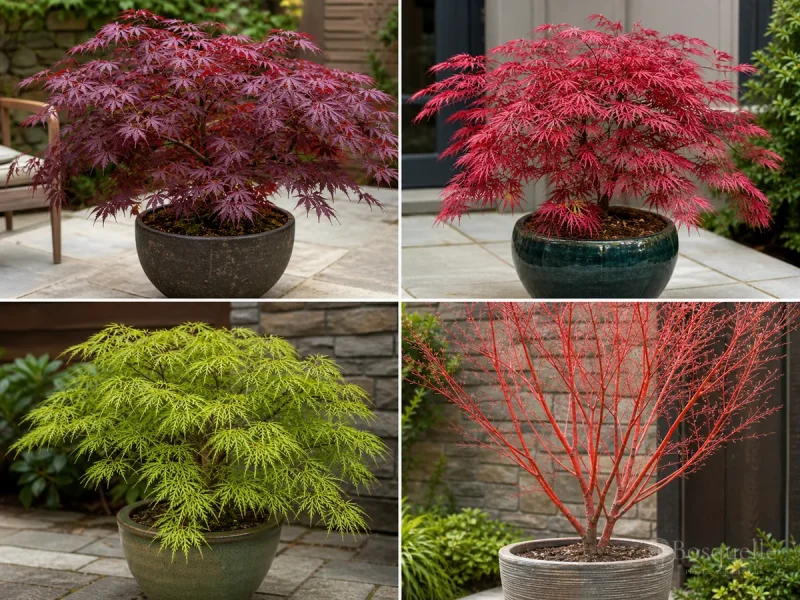
Containers mainly suit Japanese maple scale — not large landscape shade trees on a patio. For pot size, mix, and realistic scale, use Maples in Containers.
Common mistakes: planting deep; volcano mulch; hot afternoon sun on Japanese maples; treating street maples like patio laceleafs; pasting this whole pillar onto every cultivar page.
Choosing type first? See Types of Maples — then return here for shared growing rules. Colour shortlists live on Colorful Garden Maples.
Hardiness by method (no zone claim): colder gardens favour hardier landscape maples and cold-tolerant Japanese maples — protect young Japanese maples from drying winter winds; mid-temperate gardens suit most catalog types with the light each class needs; warmer gardens need real afternoon shade for Japanese maples and room plus summer water for landscape shade trees. Confirm each cultivar on its plant profile — do not invent one USDA story for every Acer.
Lead with class first: Japanese maple shade and moisture ≠ landscape street-tree sun and space. Never plant deep. Related guides below extend this pillar — they do not replace it with duplicate full-care clones.
FAQ
Do Japanese maples and landscape maples grow the same way?
No. Japanese maples need real afternoon shade and moist, drained soil at garden scale; landscape maples need sun and space as shade trees. Shared genus care still starts here.
Do Japanese maples like sun or shade?
Morning sun or dappled light with afternoon shade is the safe default. Wind shelter matters. Full sun only if soil stays evenly moist and the cultivar tolerates heat — laceleaf types scorch faster than tough uprights. Landscape shade maples want more open sun and room.
Why are my Japanese maple leaf edges browning?
Usually culture: afternoon heat, drying wind, drought, or planting too deep — not a mystery disease. Improve afternoon shade and even moisture first; keep the root flare at grade and mulch off the trunk.
Are maple trees deciduous?
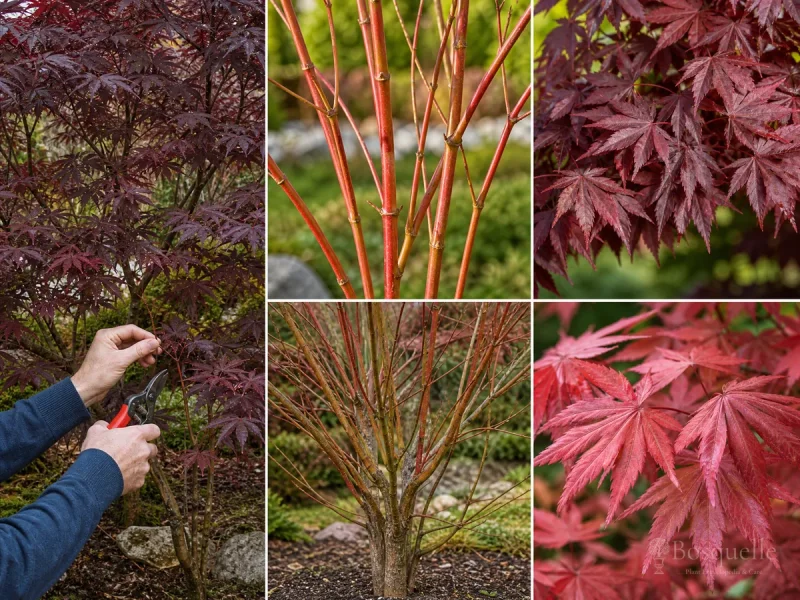
Yes — garden Acer maples drop their leaves in autumn/winter. Bare branches in winter are normal, not a dead tree. Coral bark and paperbark types still earn winter interest after leaf fall.
Do all maples prune the same way?
No. Japanese maples and landscape maples differ — open the pruning guide.
Where should I look next?
Pruning maples for class timing; types to browse all cultivars; planting for root-flare checklist; containers for patio Japanese maples; companions and colourful foliage shortlists when those jobs dominate.
Why are my Japanese maple leaves scorching?
Scorch — brown, papery leaf edges — is caused by wind desiccation more than direct sun. Acer palmatum needs a sheltered position protected from drying winds. East or north-east aspects reduce scorch risk. Late frost hitting expanding leaves in spring also causes similar symptoms. A protective windbreak or wall siting solves most cases.
Is Japanese maple toxic to people or pets?
Japanese maple (Acer palmatum) is generally considered non-toxic to people and pets — it is not on standard toxic plant lists for dogs, cats, or horses. The seeds of some Acer species are mildly irritant to horses in large quantities but are not a significant concern for garden use.
Can Japanese maple grow in a container?
Yes — A. palmatum grows well in large containers (minimum 50 cm wide) in a loam-based, slightly acidic compost. Water regularly — containers dry out rapidly in summer. Shelter from wind. Pot on every 3–4 years or root-prune to maintain size. Container specimens are more susceptible to frost — wrap the pot in fleece in severe cold.
When and how do I prune a Japanese maple?
Japanese maple needs minimal pruning. Remove dead, crossing, or damaged branches in late summer or early autumn when the tree is growing but sap is not rising strongly. Avoid pruning in late winter or early spring when sap bleeding is highest. Heavy shaping reduces the natural architectural form — only tidy what is necessary.
Related guides




Recommended plants




This note is part of Maple Guides.
More first-season notes by plant are gathered in How to Grow Guides.
Updated: Reviewed by Bosquelle Editors