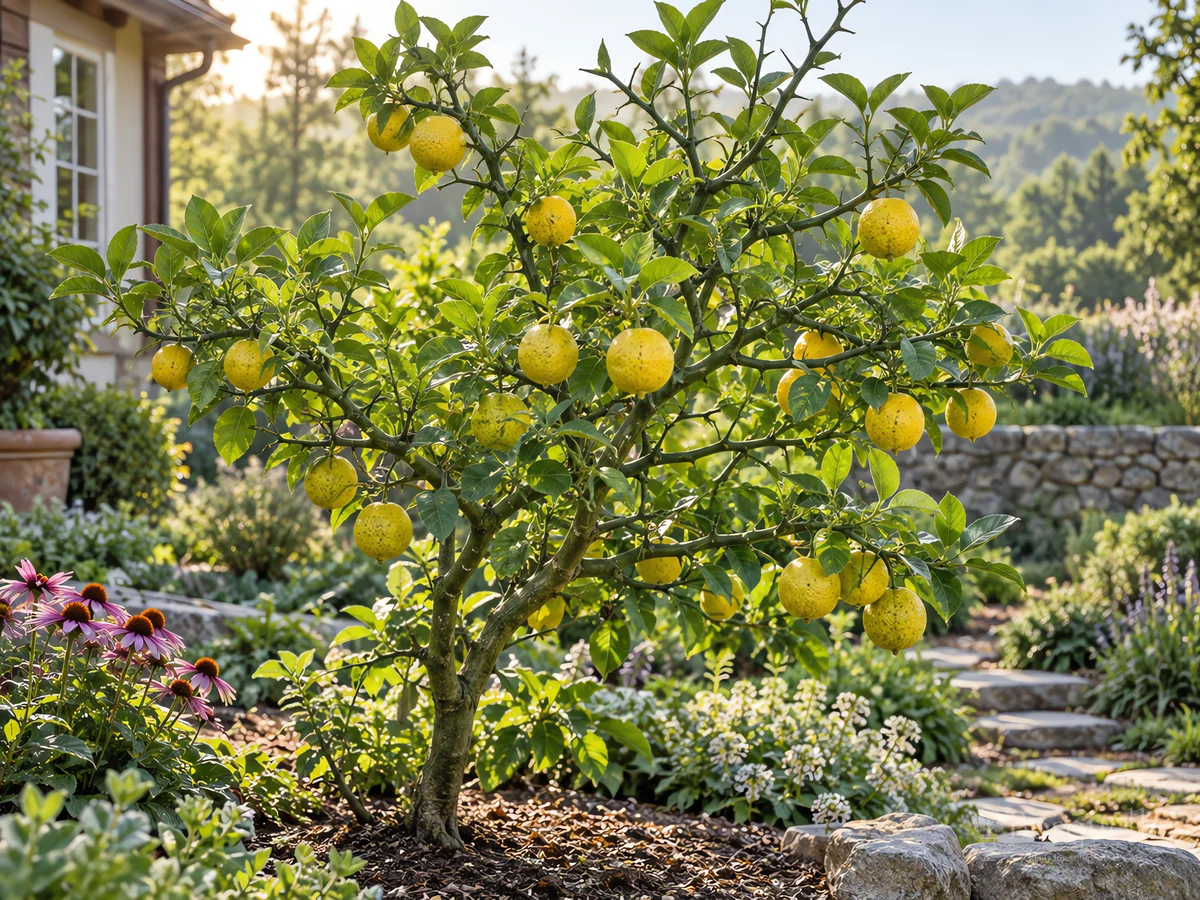
Grow hardy orange in full sun, on soil that drains, and water it through the first year. Hardy orange is Poncirus trifoliata, also sold as trifoliate orange — a deciduous citrus relative, not a grocery orange.

Give it full sun and soil that drains, and water it through the first year
| Factor | Recommended | Avoid |
|---|---|---|
| Light | Full sun, at least six hours a day | Do not hide it in deep shade if you want a dense, thorny crown |
| Soil | Soil that drains; chalk, loam, and sand are fine | Do not leave the roots in a hole that stays wet |
| Water | Water a new plant through the first year, then only in a long dry spell | Do not keep an established plant on a soggy lawn |
| Kind | A straight plant for a tall hedge; Flying Dragon if you want a shorter, twisted specimen | Do not expect Flying Dragon to be a second species with different sun and soil |
| Room | About 8 to 20 feet tall and 6 to 15 feet wide as a specimen | Do not crowd a specimen against a house, a walk, or a play area |
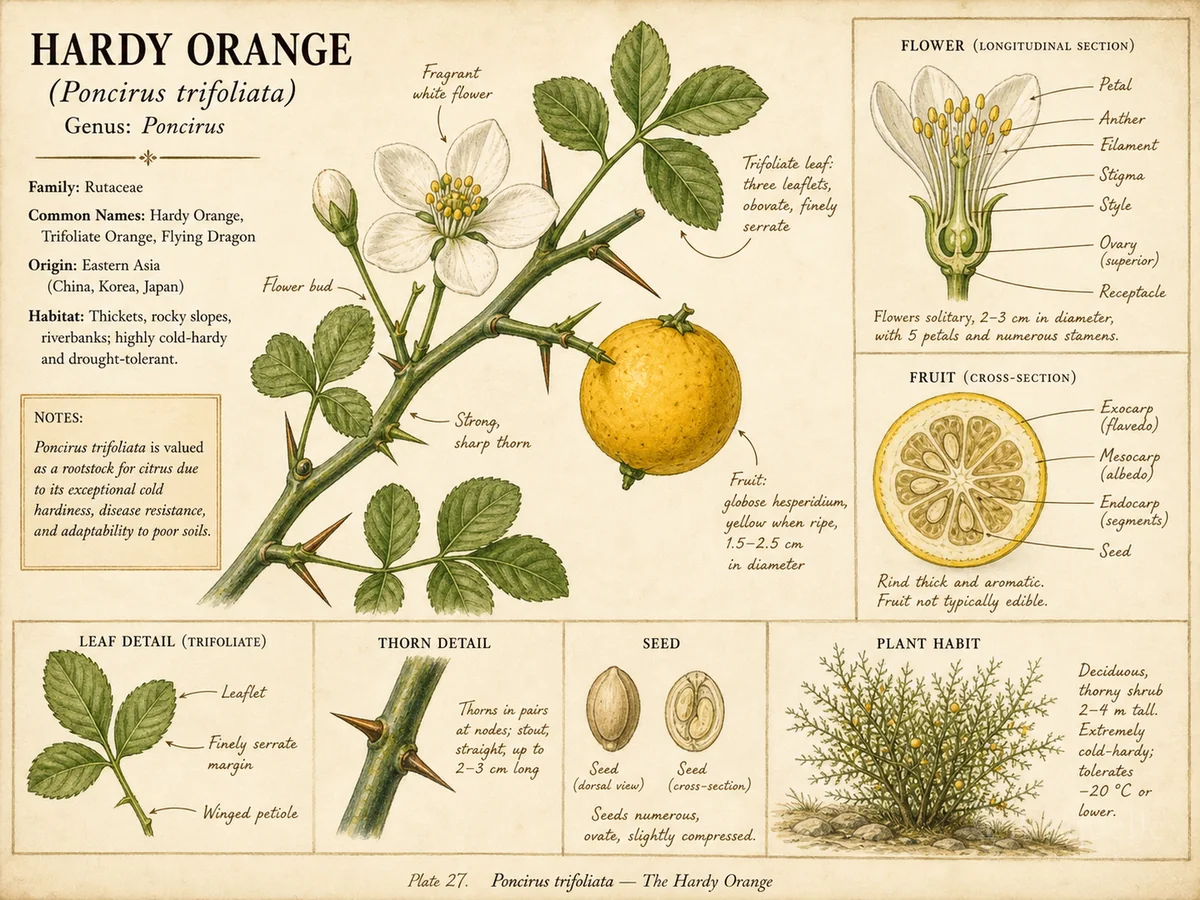
hardy orange is Poncirus trifoliata, a thorny deciduous shrub or small tree with leaves in threes. Full sun and soil that drains are what it needs. Water a new plant through the first year, then ease off; an established plant takes a dry spell better than a wet hole. [1] It will grow in ordinary soil, in full sun or a little light shade, as a specimen or as a barrier hedge. [2] This is not a grocery orange and not a patio lemon you wheel indoors. A nursery plant goes in the ground in spring or early fall — see Planting Hardy Orange.
- Choose full sun and soil that drains. Standing water is the main reason a young plant fails.
- Leave about 8 to 20 feet of height for a specimen. A hedge stays shorter if you shear it.
- Water through the first year, then water again only when a long dry spell hits.
- Keep a mulch ring over the roots, and keep that mulch off the stem.
How do you grow hardy orange?
Give it full sun and soil that drains, and water it through the first year. It drops its leaves in winter and stays in the ground.
What kind of soil does hardy orange grow in?
Soil that drains. Chalk, loam, and sand are fine. Do not leave the roots in a hole that stays wet.
Prune it in winter with heavy gloves, or shortly after it flowers
The thorns are long and sharp, so put on heavy gloves, long sleeves, and eye cover before you reach in. Winter is the easy time to see the frame, because the leaves are off. A hedge also takes a shear shortly after the white flowers fade, so you do not cut off next spring's bloom wood. [3] It withstands shearing, which is why it makes a barrier. Keep the top a little narrower than the base so sun reaches the lower wood. Cut dead, broken, or rubbing stems, and take shoots that come up outside the line you want.
- Put on heavy gloves, long sleeves, and eye cover before you reach into the thorns.
- In winter, cut dead, broken, or crossing wood while you can see the frame.
- For a hedge, shear shortly after the flowers fade so the face stays dense.
- Cut new shoots that come up outside the row, because the plant spreads by seed and by extra stems at the base.
When do I prune hardy orange?
In winter, while it is leafless, for the frame. Shear a hedge shortly after it flowers. Wear heavy gloves either way.
Not a grocery orange — and not Osage orange or mock orange
A grocery orange is Citrus, an evergreen fruit tree that you often pot and move before a freeze. Hardy orange drops its leaves, keeps green thorny stems, and stays in the ground. If the tag says navel, Valencia, Meyer, or citrus, read How to Grow Citrus.
Osage orange is Maclura, a deciduous tree with simple leaves and bumpy green hedge apples, not three leaflets and a fuzzy yellow fruit. If the tag says hedge apple or Maclura, read How to Grow Osage Orange. [4] Mock orange is Philadelphus, a spring shrub with white flowers and no citrus fruit — see How to Grow Mock Orange. Mexican orange is Choisya, an evergreen with glossy leaves — see How to Grow Mexican Orange. If the tag says Poncirus trifoliata, you have hardy orange.
Is hardy orange a real orange?
It is a citrus relative, not a grocery orange. The fruit is sour and seedy. A navel or Meyer lemon is Citrus.
Is this the same as Osage orange?
No. Osage orange is Maclura, with simple leaves and hedge apples. Hardy orange has three leaflets and small fuzzy fruit.
Give it sun and drain, water it through the first year, and prune with gloves in winter or after it flowers.
FAQ
Is Flying Dragon a different plant?
No. Flying Dragon is a shorter, twisted form of hardy orange. Give it the same sun and drain. It is not a second species card here.
Can I grow hardy orange in a pot?
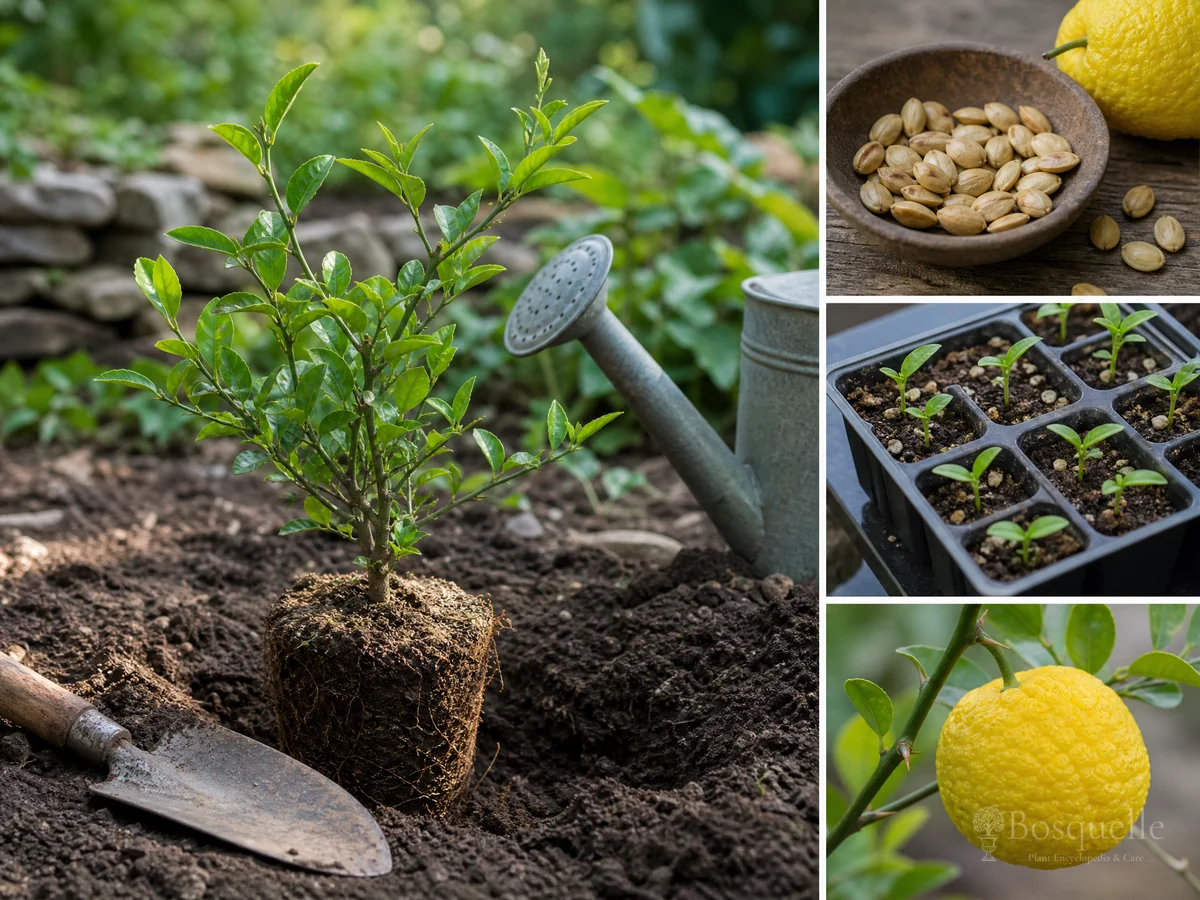
A large pot that drains will hold a young plant. It is not a dim windowsill crop, and it does not need to come indoors for winter the way a lemon does.
Can I eat the fruit?
Do not eat it raw. The fruit is very sour, seedy, and acidic. People sometimes cook it; this guide does not give a recipe. Leave the yellow fruit on the plant for winter color if you do not want to cook it.
Is hardy orange invasive?
It can spread by seed in parts of the South and Mid-Atlantic, and some lists treat it as a threat. Pick up fallen fruit if you do not want seedlings, and check local guidance before you plant a hedge.
Do I graft grocery citrus onto it?
Nurseries use hardy orange as a cold-hardy rootstock. That bud job is citrus work, not how you grow this shrub for a hedge. Sow seed if you want more hardy orange.
Related guides

Recommended plants
References
- [1] NC State Extension Gardener -
https://plants.ces.ncsu.edu/plants/citrus-trifoliata/ - [2] University of Arkansas Extension -
https://www.uaex.uada.edu/yard-garden/resource-library/plant-week/hardy-orange-2-9-07.aspx - [3] Oregon State University -
https://landscapeplants.oregonstate.edu/plants/poncirus-trifoliata - [4] Mississippi Forestry Commission -
https://www.mfc.ms.gov/forest-health/invasive-plants/forest-health-invasive-plants-trifoliate-orange/
This note is part of Poncirus Guides.
More first-season notes by plant are gathered in How to Grow Guides.
Updated: Reviewed by Bosquelle Editors