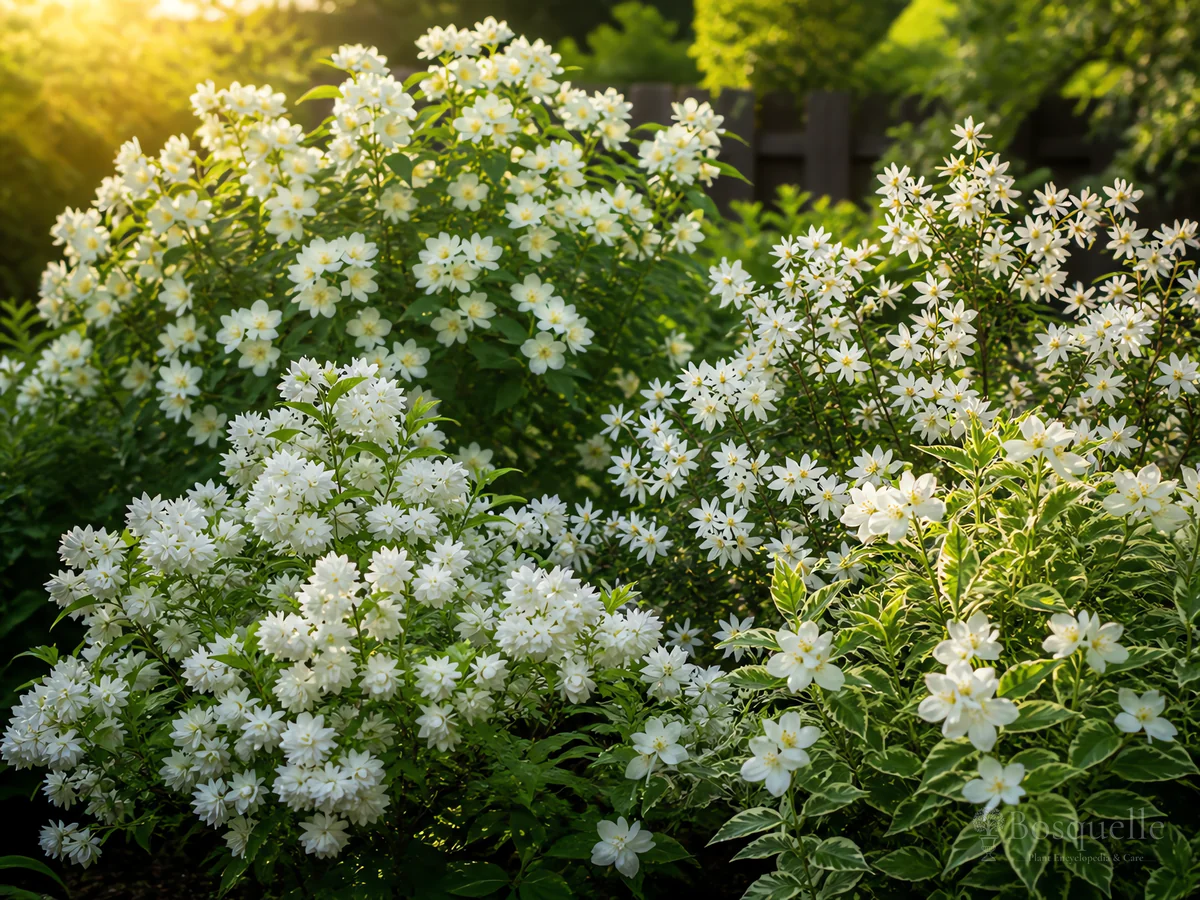
Grow mock orange in full sun and moist, well-drained soil. Mock orange is Philadelphus — sweet mock orange is the usual tag — a deciduous shrub with orange-blossom scent, not evergreen Japanese mock orange.

Give it full sun and moist, well-drained soil
| Factor | Recommended | Avoid |
|---|---|---|
| Sun | Full sun for the heaviest bloom; light shade is fine | Do not site it in deep shade that cuts flowers |
| Soil | Moist, well-drained sandy, loam, or clay that drains | Do not leave it in a wet pocket that holds standing water |
| Drought | Once roots have taken, soak only in long dry spells | Do not keep an established plant soggy |
| Room | Leave the mature width on the tag | Do not squeeze a full-size shrub into a tight foundation bed you will shear weekly |
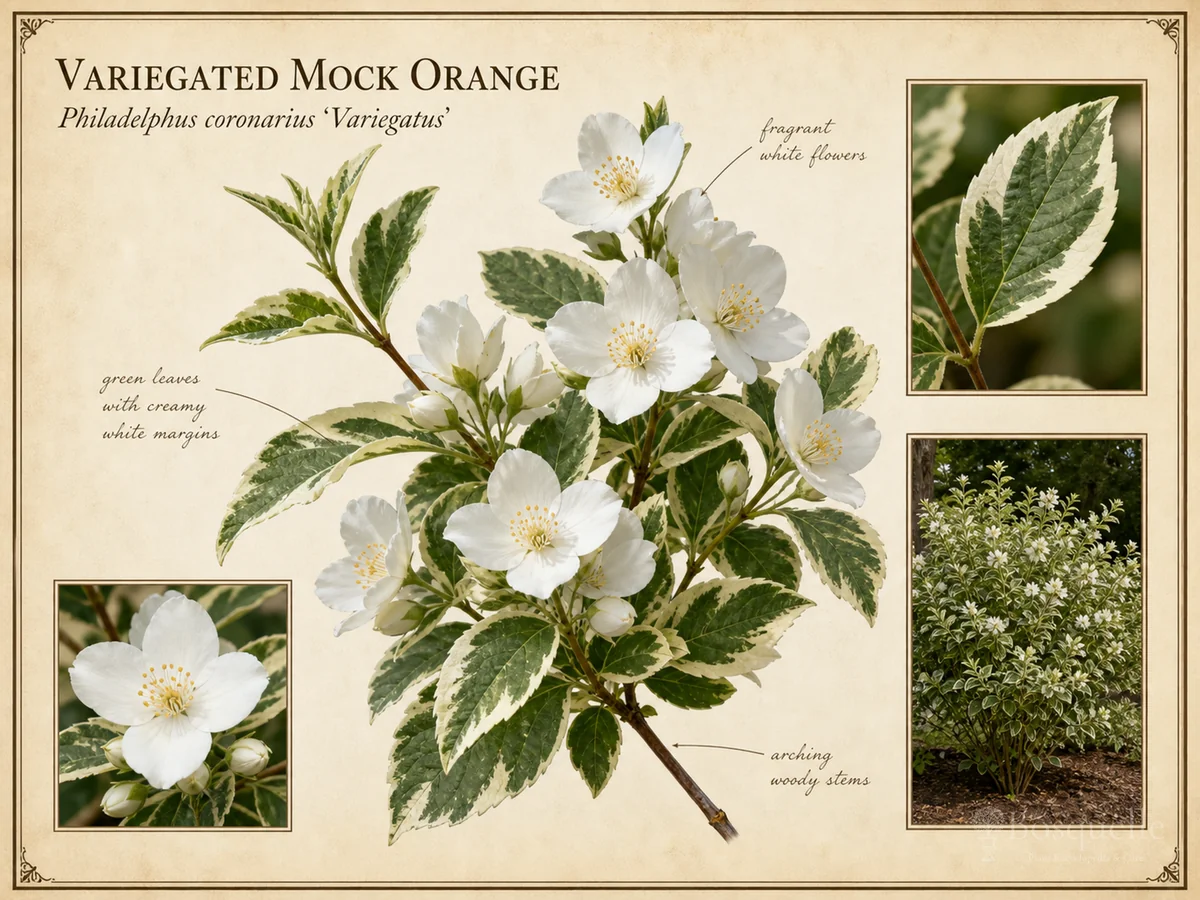
Mock orange wants sun and soil that drains. Wet ground around the roots is the usual cause of rot. [1] Once the plant is established it handles dry spells, so do not keep the crown soggy. [2] sweet mock orange and Belle Etoile share that same drain. Match kind on Types of Mock Orange. Cut after bloom on Pruning Mock Orange.
How much sun does mock orange need?
Full sun for the best bloom. Light shade is fine. Deep shade cuts flowers.
Will deer eat mock orange?
Young plants get browsed some years. Only hoary mock orange is flagged deer-resistant in this list. Hungry deer may still chew new growth.
Water until it is established, then soak in dry spells
A new plant needs water so roots leave the nursery ball. An established mock orange takes missed rain better than a soggy crown.
- Water thoroughly after planting. Keep the root ball moist — not soggy — through the first growing season.
- Check about an inch down. Water again when that soil is drying, not on a calendar splash.
- Once roots have taken, soak during long dry spells if leaves wilt midday. Keep mulch a few inches off the stems.
How often should I water mock orange?
Keep a new plant moist the first season. Then soak only in a long drought. Do not leave the crown in standing water.
Grow a compact kind in a draining pot
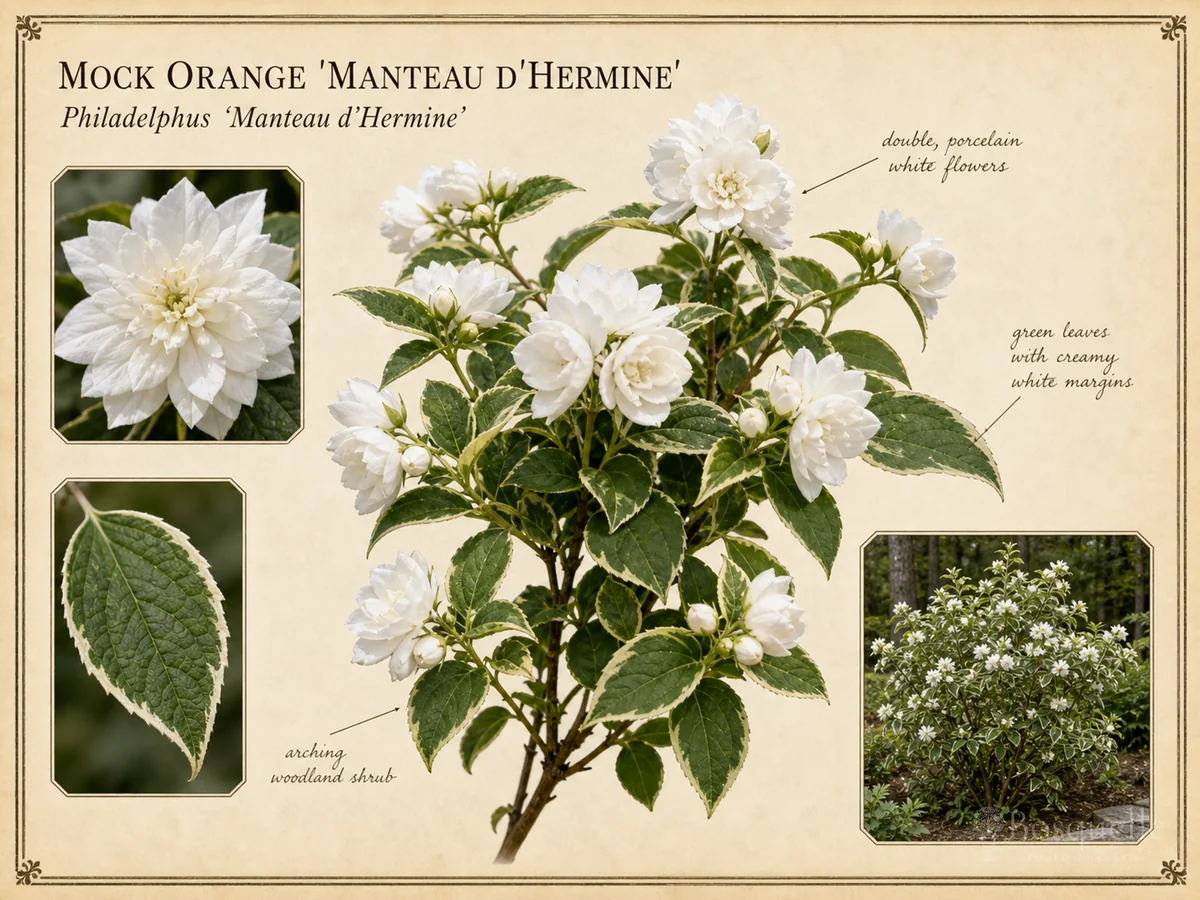
Open ground is the usual home. A compact hybrid such as Manteau d’Hermine can sit in a large pot near a seat so you catch the scent, if the mix stays moist and drains.
- Choose a compact kind, not an eight- to twelve-foot sweet mock orange in a tub.
- Use a pot with drainage holes, a few inches wider than the root ball.
- Fill with a moist, well-drained potting mix, not garden clay.
- Water when the top of the mix is drying. Empty the saucer so the crown does not sit wet.
Can I grow mock orange in a pot?
A large draining pot can hold a compact hybrid. Full-size sweet mock orange belongs in open ground.
Take a cutting after bloom if you want more plants
Softwood cuttings after the flowers fade root readily. Named kinds will not come true from seed, so a cutting copies the plant you already like.
- Cut a 4- to 6-inch tip of this year’s growth, below a leaf joint, after bloom and before midsummer.
- Strip the lower leaves. Dip the cut end in rooting hormone if you have it.
- Push the stem into moist, gritty mix — not soggy. Keep it in bright shade until it resists a gentle tug.
- Pot it on once roots hold, and plant it out the next fall or spring.
Can I grow mock orange from cuttings?
Softwood cuttings after bloom root easily. Named kinds will not come true from seed.
Plant in spring or fall, at the same depth as the pot
Plant in fall if you can water for a few weeks, or in spring after frost. Dig a hole wider than the pot and no deeper than the root ball. [3]
- Water the pot before you knock it out. Set the top of the root ball even with the surrounding soil, or a little high on slow-drain ground.
- Tease circling roots. Backfill with the soil you removed. Water to settle.
- Mulch one to two inches over the root zone, kept off the stems. Leave the mature width on the tag.
When should I plant mock orange?
Fall is easier on roots if you can water. Spring works if you keep the first season moist.
Not Japanese mock orange or Mexican orange
Japanese mock orange is evergreen Pittosporum — see How to Grow Pittosporum. Mexican orange is evergreen Choisya — see How to Grow Mexican Orange. [4] Deciduous mock orange drops its leaves in winter and belongs to the hydrangea family. A tag that says only mock orange and shows leathery evergreen leaves is the wrong plant. Lilac is Syringa, not Philadelphus, even when a shop mixes the names.
Is Japanese mock orange the same as mock orange?
No. Japanese mock orange is evergreen Pittosporum. Deciduous mock orange is Philadelphus. Mexican orange is Choisya.
If the hole stays wet, move the plant to draining ground — do not add more water.
FAQ
Does mock orange need fertilizer?
Usually no. If leaves yellow from poor soil, a light spring feed is enough. Skip late-season nitrogen.
Is mock orange fruit edible?
No. The fruit is a small dry capsule, not an orange. Do not eat it. Cut stems in bloom for a vase if you like the scent.
Is English dogwood the same plant?
Some gardeners call this shrub English dogwood. It is Philadelphus, not a dogwood (Cornus).
What about aphids or leaf spot?
Aphids, scale, and leaf spot show up some years. The shrub usually lives. Hose aphids off; skip a spray unless damage is heavy.
Will rabbits chew mock orange?
Rabbits can strip young bark in winter. Hardware cloth around the base from late fall to spring stops most chewing.
Related guides


Recommended plants


References
- [1] University of Minnesota Extension -
https://extension.umn.edu/trees-and-shrubs/mockorange - [2] NC State Extension Gardener -
https://plants.ces.ncsu.edu/plants/philadelphus-coronarius/ - [3] Almanac -
https://www.almanac.com/plant/mock-orange - [4] Gardener’s Path -
https://gardenerspath.com/plants/ornamentals/grow-mock-orange/
This note is part of Philadelphus Guides.
More first-season notes by plant are gathered in How to Grow Guides.
Updated: Reviewed by Bosquelle Editors