
Grow goldenseal in hardwood shade, in moist woodland soil that drains, and keep a leaf mulch on the bed. Goldenseal is Hydrastis canadensis — a yellow-rhizome woodland perennial, not turmeric and not yellowroot.
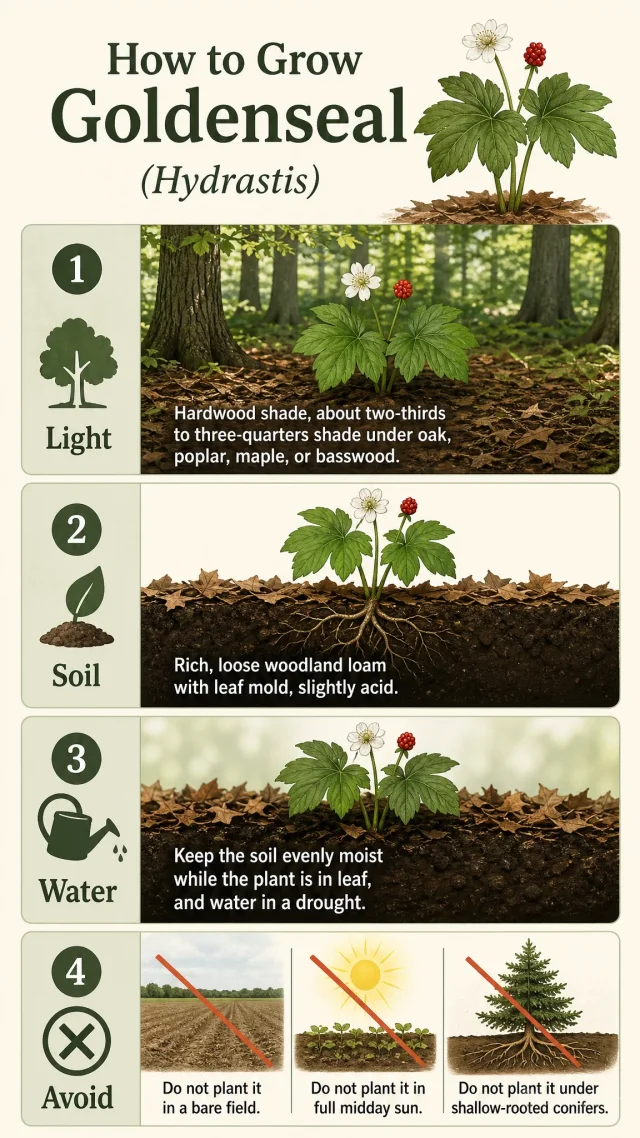
Give it hardwood shade, moist woodland soil, and a leaf mulch
| Factor | Recommended | Avoid |
|---|---|---|
| Light | Hardwood shade, about two-thirds to three-quarters shade under oak, poplar, maple, or basswood | Do not plant it in a bare field, in full midday sun, or under shallow-rooted conifers |
| Water | Keep the soil evenly moist while the plant is in leaf, and water in a drought | Do not let the bed dry out, and do not plant it in a soggy bottom |
| Soil | Rich, loose woodland loam with leaf mold, slightly acid | Do not plant it in packed clay that holds water after rain |
| Mulch | One to two inches of hardwood leaves | Do not leave the rhizomes bare, and do not pile mulch so deep that the crown stays wet |
| Stock | Buy cultivated rhizomes from a nursery | Do not dig wild goldenseal |
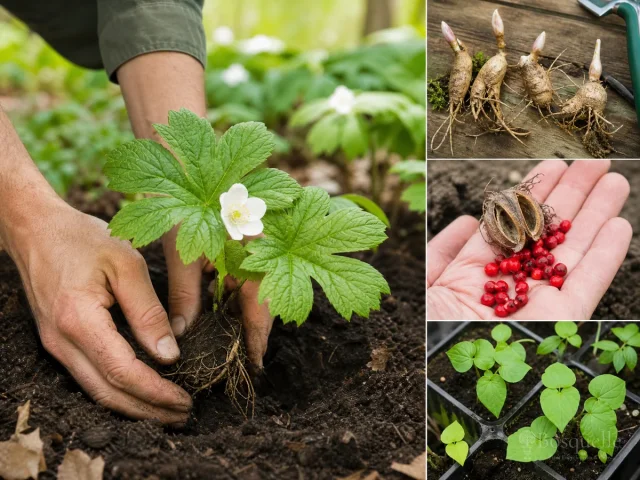
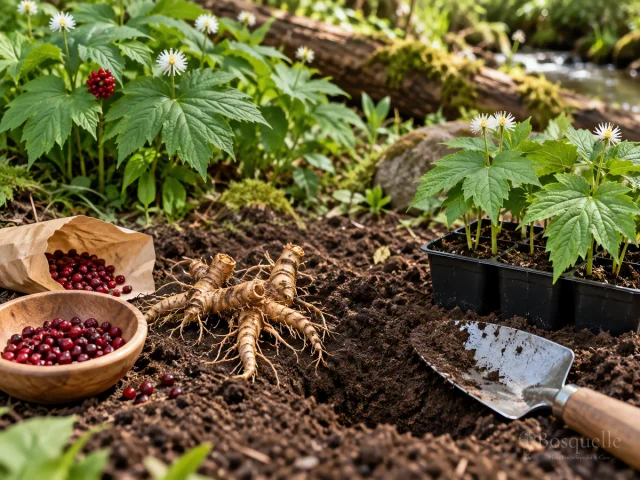
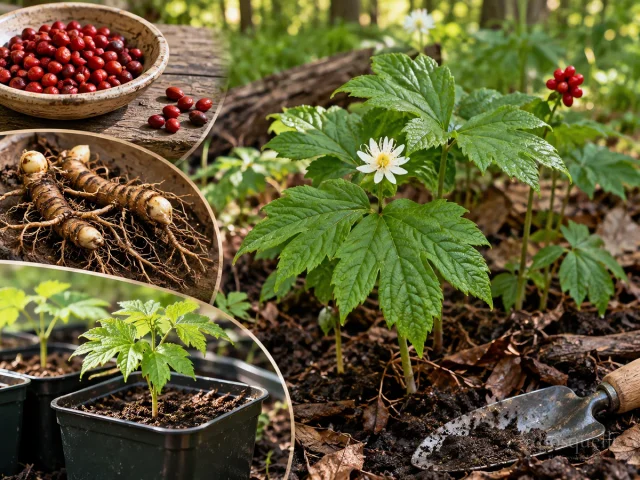
goldenseal wants the same cover it has in eastern hardwood forest: shade from tall trees, soil that stays moist, and a thin blanket of leaves. [1] Mixed hardwoods with deep roots — oak, tulip poplar, maple, walnut, basswood — work better than a solid stand of pine or hemlock, because those shallow roots steal the moisture. A little morning light is fine; a bare field or a south wall will scorch the leaves. [2] Start from cultivated nursery stock. Wild patches have been dug for so long that the plant is scarce in many woods, so do not take rhizomes from a wild stand. Plant-out of those nursery pieces is on Planting Goldenseal. It often shares the same woods as How to Grow Trillium and How to Grow Wild Ginger, which is a clue you have the right shade and leaf litter — not a second watering calendar. [3] [4]
How much shade does goldenseal need?
About two-thirds to three-quarters shade under hardwoods. A bare field or full midday sun scorches it.
How do I water goldenseal in the ground?
Keep the woodland soil evenly moist while it is in leaf, and water in a drought. Do not plant it where water stands after rain.
Let it bloom, then let the tops die back
The flower opens in spring as the leaves unfold: a small, petal-less bloom with many white stamens on a short stalk between two palmate leaves. It is easy to miss. After that, a tight cluster of crimson fruit forms in summer. Birds will take the fruit; people should not eat it.
- Leave the leaves on through summer so the rhizome can store food for next year.
- Let the tops yellow and die back on their own in fall. Do not cut the plant like a hedge.
- Keep a cover of mixed hardwood leaves on the bed through winter so the rhizomes stay insulated and the soil does not dry out.
After several years in a planted bed, you can lift the crop in fall. That wait-and-dig job is on Harvesting Goldenseal.
Do I cut goldenseal back?
No. Let the tops yellow and die back in fall, then leave a cover of hardwood leaves on the bed for winter.
Not yellowroot, turmeric, or ginseng
Yellowroot is a different plant, Xanthorhiza simplicissima, a low suckering shrub of stream banks. Goldenseal is sometimes sold under the same folk name because both have yellow underground parts, so read the Latin on the tag. If the plant is a woody shrub, it is not this one.
Turmeric is Curcuma, a tropical rhizome grown for kitchen spice in heat. Goldenseal is a hardy woodland herb of eastern forests. If you bought a fat orange kitchen rhizome to plant after frost, read How to Grow Turmeric instead.
American ginseng is Panax, another slow woodland crop with a forked taproot, not a yellow horizontal rhizome. Bloodroot has orange-red sap and a different leaf. The red fruit cluster is nicknamed ground raspberry, but it is not a bramble — raspberries live on How to Grow Brambles. Oregon grape is Mahonia, a berberine shrub people sometimes use as a stand-in; that care is on How to Grow Oregon Grape. Japanese wood poppy was once listed as a Hydrastis; that plant is Glaucidium, and its care is on How to Grow Japanese Wood Poppy.
Is goldenseal the same as turmeric?
No. Turmeric is Curcuma, a tropical kitchen rhizome. Goldenseal is Hydrastis, a hardy woodland perennial with a yellow rhizome.
If a plant sulks, check the shade and the soil first: give it hardwood cover, keep the loam moist but draining, and leave the leaf mulch on.
FAQ
Can I grow goldenseal in a pot?
It is a woodland plant. A deep pot in shade can hold a piece for a season, but the usual home is a mulched bed under hardwoods, not a windowsill.
Is there more than one kind of goldenseal?
Hydrastis canadensis is the plant here. Other folk names — orange root, yellow puccoon, golden seal — are the same species, not extra shop kinds.
Can I eat the berries?
No. The crimson fruit is inedible. Eating the plant can cause nausea, vomiting, and diarrhea.
Is goldenseal the same as Oregon grape or bloodroot?
No. Oregon grape is Mahonia, an evergreen shrub. Bloodroot is Sanguinaria, a spring woodland plant with orange-red sap. Goldenseal has a yellow rhizome and palmate leaves.
Related guides
Recommended plants

References
- [1] NC State Extension -
https://content.ces.ncsu.edu/commercial-goldenseal-cultivation - [2] United Plant Savers -
https://unitedplantsavers.org/goldenseal-cultivation-growing-guide/ - [3] NC State Extension Gardener -
https://plants.ces.ncsu.edu/plants/hydrastis-canadensis/ - [4] Lady Bird Johnson Wildflower Center -
https://www.wildflower.org/plants/result.php?id_plant=HYCA
This note is part of Hydrastis Guides.
More first-season notes by plant are gathered in How to Grow Guides.
Updated: Reviewed by Bosquelle Editors