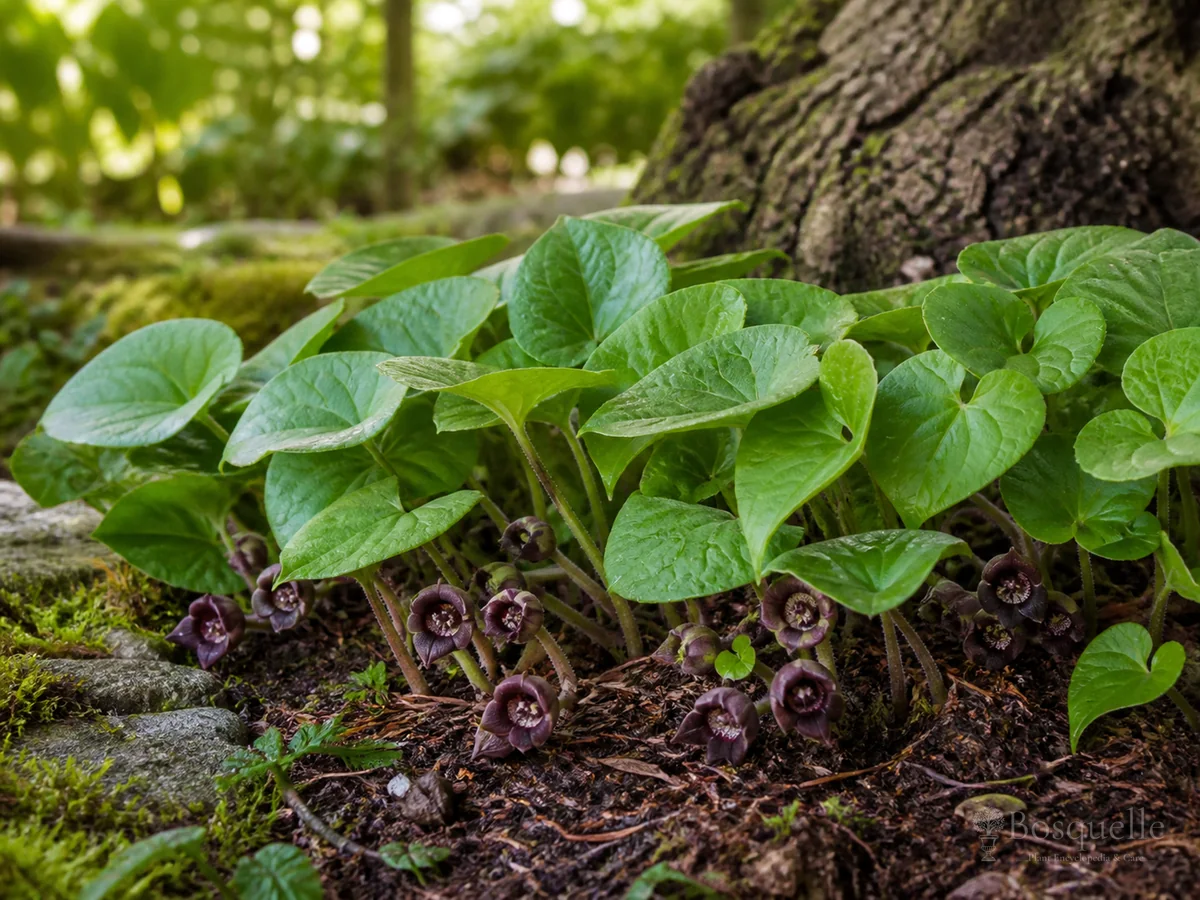
Grow wild ginger (Asarum) in shade and moist, humus-rich soil as a low groundcover. It is not culinary ginger (Zingiber).

Shade, moist humus, and sun scorch
| Factor | Recommended | Avoid |
|---|---|---|
| Light | Dappled woodland light to full shade | Hot afternoon sun (scorched leaves) |
| Soil | Moist, humus-rich loam with leaf mold | Dry sandy shade with no organic matter |
| Water | Even moisture in the growing season, especially the first year | Letting the stand dry out after leaf-out |
| Mulch | Shredded leaves that can settle into the floor | Thick bark slabs that shed water and bury shoots |
Afternoon sun scorches the leaves. Dry shade thins the stand because wild ginger has poor drought tolerance — keep the soil moist, especially the first season. [1]
Does wild ginger need shade?
Yes. Dappled to full shade. Hot afternoon sun scorches leaves and thins the stand.
Does wild ginger like dry shade?
No. It wants moist humus. Prolonged dry shade thins the stand — mulch with shredded leaves and water in drought.
How to plant and divide wild ginger
Plant nursery clumps in early spring or fall. Set rhizomes just under the surface, keep the patch moist, and divide in cool weather when you want a wider floor.
- Plant in early spring or fall, once the soil is workable and heat has eased.
- Choose shade — under a deciduous canopy or on the north side of a wall.
- Dig a hole as deep as the root ball. Set the crown at the old nursery line, with rhizomes just under the leaf mold.
- Backfill with the native soil plus leaf mold or compost so the mix stays moist and draining.
- Space plants 12–24 inches apart so the stand can knit into a groundcover. [2]
- Water until the hole settles. Keep the soil evenly moist the first season.
- To divide, lift a clump in early spring and slice the thick rhizomes near the soil surface. Replant pieces with roots and buds right away. [3]
Buy nursery plants or divide what you already grow. Do not dig colonies from the woods. Seed is possible but slow: fresh seed needs a warm, moist spell, then a cold, moist spell, and may not show until the next spring.
Does wild ginger spread?
Yes, slowly by rhizomes. It knits into a groundcover over seasons, not overnight.
How do you divide wild ginger?
In early spring, lift a clump and slice the thick rhizomes near the soil surface. Replant pieces with roots and buds in moist shade.
Can I dig wild ginger from the woods?
No. Buy nursery stock or divide plants you already grow. Wild colonies recover slowly.
Canada, European, and other kinds
Canada and European
- Canada — Canada wild ginger: deciduous eastern native. Heart-shaped leaves drop in winter and return in spring. Same shade and moist humus as the rest.
- European — European wild ginger: glossy evergreen (or nearly so) floor in mild winters. Same culture; hot, humid summers can stress it.
Western, Sierra, and mottled
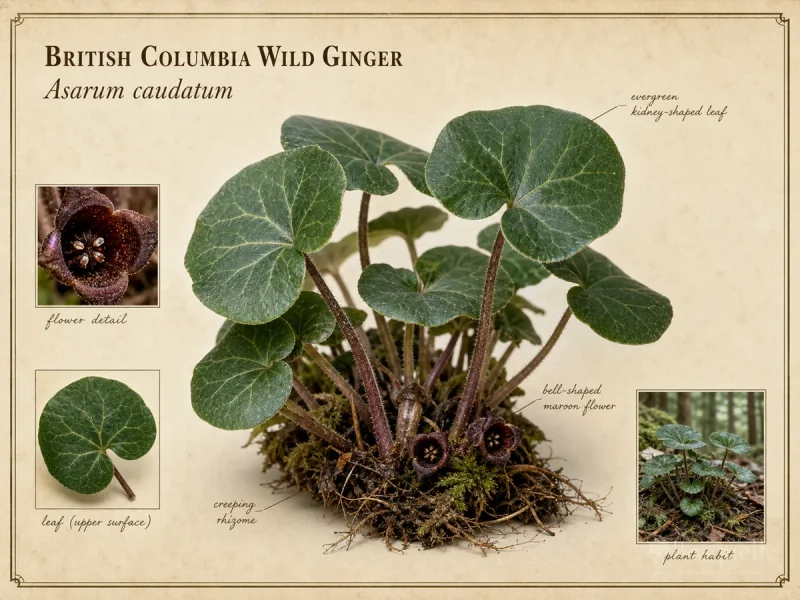
- Western — western wild ginger: British Columbia and West Coast woodland. Match a cool, moist site; do not treat it as a swap for a hot Midwest bed.
- Sierra — Sierra wild ginger: montane western kind. Same shade and humus; check summer heat before you plant a large patch.
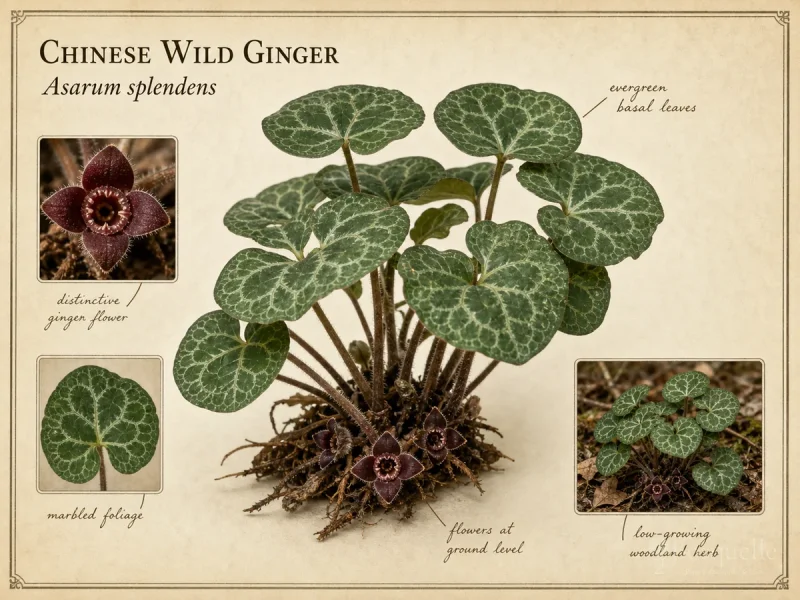
- Mottled — Chinese wild ginger: silver-marked leaves. Still a shade rhizome groundcover, not a sun plant and not a kitchen crop.
Some evergreen southeastern natives are sold as Hexastylis. They want the same shade and moist humus.
What is the difference between European and Canada wild ginger?
European wild ginger is the glossy evergreen (or near-evergreen) floor. Canada wild ginger is typically deciduous and bare in winter. Same shade job; winter look differs.
Not culinary ginger, partners, and pots
Not culinary ginger
Wild ginger is in the birthwort family, not the ginger family. The plant can contain aristolochic acid, which can damage kidneys. Do not eat the leaves or rhizomes, and do not cook with ornamental Asarum. Grow culinary ginger if you want the spice. [4]
Is wild ginger the same as culinary ginger?
No. Garden wild ginger is Asarum, not Zingiber officinale used in cooking. Grow it as shade groundcover only.
Can you eat wild ginger?
No. The plant can contain aristolochic acid, which can damage kidneys. Historic spice stories are not a modern recipe.
Partners
Share shade and moist humus: ferns, foamflower, bleeding heart, and spring ephemerals that finish before summer. Keep aggressive sun plants and heavy summer diggers off the floor.
Pots
A woodland pot works if the mix stays moist and draining in shade. Wild ginger is a groundcover, not a sunny windowsill houseplant, and it is not the tropical rhizome grown for kitchen ginger.
Can wild ginger grow in containers?
Yes, in a shaded pot with a moist, humus-rich mix and drainage. Keep it outdoors as groundcover, not as a dry indoor houseplant.
Plant in shade in moist leaf mold. Space clumps so they can meet. Do not eat it. Divide in early spring to fill gaps.
FAQ
Do slugs bother wild ginger?
They can sample soft spring growth. Hand-pick, or use a pet-safe bait where pressure is high.
Are the flowers worth waiting for?
They are small brown-purple blooms at soil level, hidden under the leaves — curious, not a cutting crop. Grow the plant for the foliage floor.
Is Hexastylis the same as Asarum?
Some evergreen southeastern natives are sold as Hexastylis. Care is the same: shade and moist humus.
Should I fertilize wild ginger?
A yearly shredded-leaf top-dress is enough. Skip heavy soluble feed; woodland soil is the model.
Recommended plants



References
- [1] NC State Extension -
https://plants.ces.ncsu.edu/plants/asarum-canadense/ - [2] Wisconsin Horticulture -
https://hort.extension.wisc.edu/articles/wild-ginger-asarum-spp/ - [3] Epic Gardening -
https://www.epicgardening.com/wild-ginger/ - [4] Illinois Extension -
https://extension.illinois.edu/blogs/good-growing/2025-04-18-wild-ginger-native-groundcover-shady-gardens
More first-season notes by plant are gathered in How to Grow Guides.
Updated: Reviewed by Bosquelle Editors