
Grow Oregon grape in part shade to full shade, in well-drained soil with shelter from winter wind. It is Mahonia aquifolium, also sold as Oregon grape holly — a spiny-leaved evergreen, not Japanese barberry.

Give it part shade, well-drained soil, and shelter from winter wind
| Factor | Recommended | Avoid |
|---|---|---|
| Light | Part shade to full shade; tall Oregon grape takes more sun in a cool, moist climate | Do not sit it in hot afternoon sun inland — the leaflets scorch |
| Soil | Moist but well-drained, slightly acid ground | Do not plant it in a wet pocket or compacted alkaline strip |
| Wind | An east wall, a woodland edge, or another sheltered spot | Do not leave it open to drying winter wind — the leaves burn |
| Water | Soak the first season whenever the top few inches dry | Do not keep the crown soggy after it is established |
| Deer | Spiny leaflets usually stop browsing | Do not treat a young plant as deer-proof in a hungry winter |
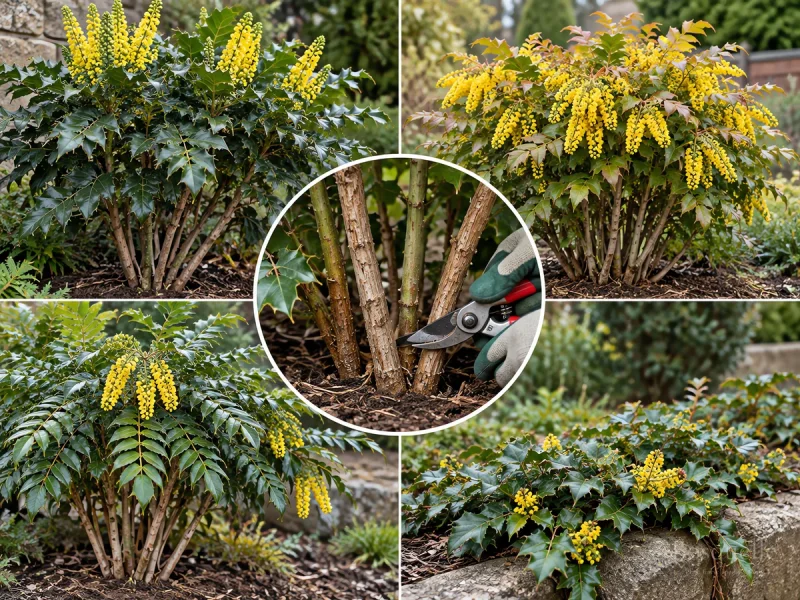
Woodland Oregon grape wants a protected, draining bed. Winter sun and wind brown the leaflets; those burned leaves drop when new growth starts in spring. [1] Keep the soil moist through the first year. After that, the shrub tolerates dry shade under trees. cascade Oregon grape wants the shadiest of the three natives. creeping Oregon grape is the low cover for a slope once the roots are in. [2] To choose a desert kind or a winter-flowering mahonia, see Types of Oregon Grape. To cut a leggy cane shrub, see Pruning Oregon Grape.
How much sun does Oregon grape need?
Part shade to full shade. Tall Oregon grape handles more sun in a cool maritime climate if the soil stays moist. Cascade Oregon grape bleaches in full sun.
How often should I water Oregon grape?
Water thoroughly through the first growing season whenever the top few inches of soil dry. After that, soak only in a long dry spell.
Is Oregon grape deer resistant?
Usually. The spiny leaflets deter most deer. In a hard winter deer may browse almost any shrub, so do not count on it as a fence.
Set the root ball at grade in a wide hole
Plant in early spring or in fall while the soil is still workable. Dig a hole twice as wide as the pot and no deeper. Set the crown at soil level, or a finger above grade on slow-draining ground, so the base does not rot. [3]
- Loosen circling roots. Do not bury the stem.
- Backfill with the soil you removed. Water to settle it.
- Mulch 2 to 3 inches over the root zone. Keep mulch off the crown.
- Water deeply the first season whenever the top few inches dry.
How far apart should I plant Oregon grape?
Give tall Oregon grape about 3 to 4 feet if you want a hedge. Space cascade and creeping kinds about 18 to 24 inches for a ground cover.
Pick the berries for jelly in late summer
The dusty blue-black berries ripen from July into September. They are edible and very tart raw, so most people cook them into jelly. Wear gloves — the leaflets scratch. [4] Leave some clusters for birds.
- Pick whole clusters when the berries are deep blue and come off easily.
- Wash them, leaving the stems on. Cover with water, boil 10 minutes, mash, then boil 5 minutes more.
- Strain the juice. Add 3/4 cup of sugar per cup of juice and boil until it sheets from a spoon.
- Pour into hot jars and process as you would any high-acid jelly.
Are Oregon grape berries edible?
Yes. They are tart raw and make good jelly once cooked. Do not treat herbal capsules made from the root as a berry recipe.
Not barberry, holly, or a true grape
Oregon grape is Mahonia, an evergreen with compound, pinnate leaflets and dusty blue berries. Japanese barberry is Berberis thunbergii — deciduous, simple oval leaves, red berries. See How to Grow Barberry. Holly is Ilex. See How to Grow Holly. A grapevine is Vitis. See How to Grow Grapes.
Is Oregon grape the same as barberry?
No. Oregon grape is Mahonia, with compound holly-like leaflets. Japanese barberry is Berberis thunbergii, a deciduous shrub with simple leaves. Some botanists lump Mahonia into Berberis, but nurseries still sell them as separate plants.
If the crown sits wet after planting, lift the grade or move the shrub — root rot starts before the leaves tell you.
FAQ
Can I grow Oregon grape in a pot?
A compact or creeping plant can sit in a large draining pot in a shaded, sheltered spot. Tall kinds eventually need open ground.
Does Oregon grape spread?
Tall and creeping kinds send up suckers from rhizomes. Dig unwanted shoots in spring while the soil is soft. Cascade Oregon grape spreads more slowly.
Does Oregon grape need fertilizer?
Little to none in ordinary garden soil. On poor ground, a spring feed and a mulch are enough.
What is Compacta?
Compacta is a shorter form of Oregon grape, about 2 to 3 feet. We do not list it as its own plant. Treat it as woodland Oregon grape, not as cascade or creeping.
Related guides

Recommended plants


References
- [1] The Morton Arboretum -
https://mortonarb.org/plant-and-protect/trees-and-plants/oregon-grape-holly/ - [2] Oregon State University -
https://landscapeplants.oregonstate.edu/plants/mahonia-aquifolium - [3] Royal Horticultural Society -
https://www.rhs.org.uk/plants/mahonia/growing-guide - [4] OSU Extension Service -
https://extension.oregonstate.edu/catalog/sp-50-536-preserving-fruits-wild-berries-fruits
This note is part of Mahonia Guides.
More first-season notes by plant are gathered in How to Grow Guides.
Updated: Reviewed by Bosquelle Editors