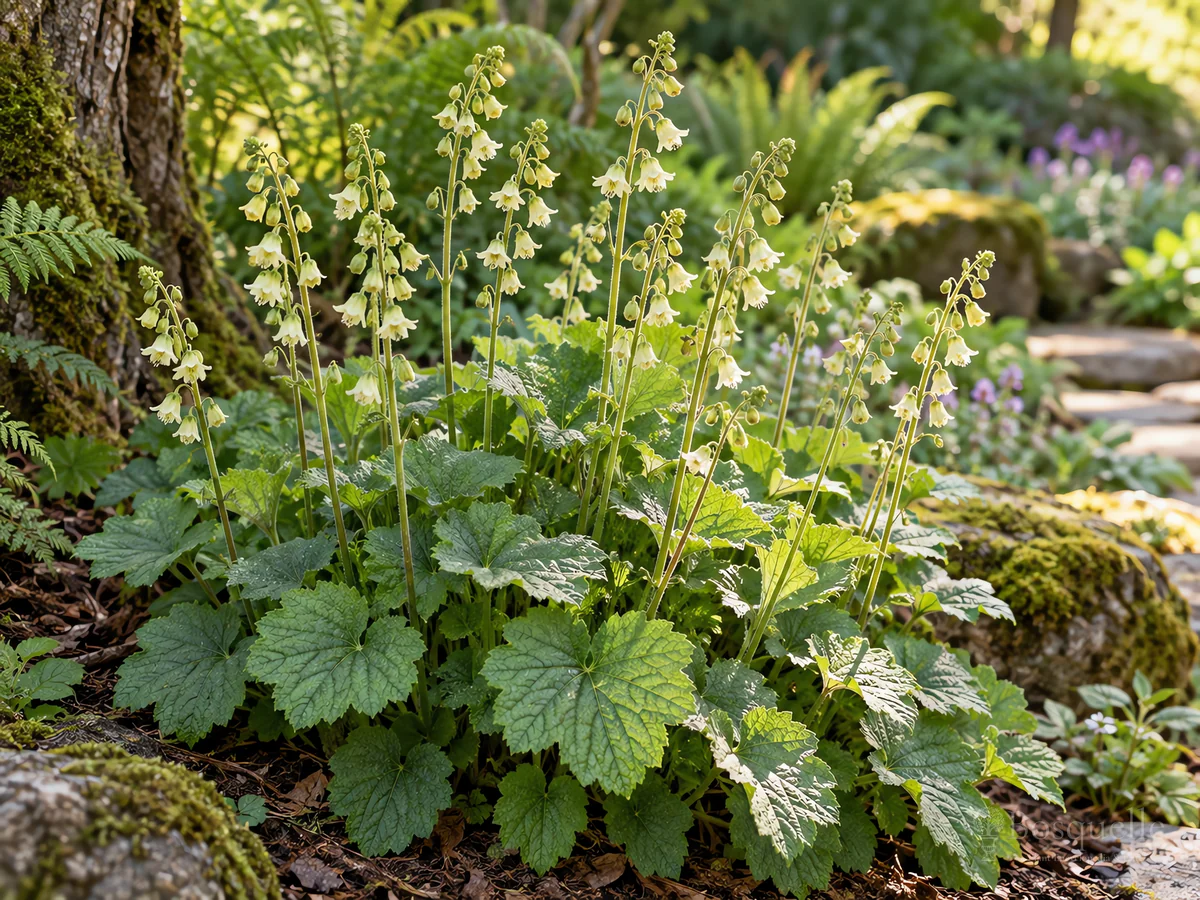
Grow fringe cups in part shade and moist, humus-rich woodland soil that still drains. Fringe cups is Tellima grandiflora, also called bigflower tellima — a western woodland perennial, not coral bells and not a fringe tree.

Give it part shade, moist woodland soil, and a leaf mulch
| Factor | Recommended | Avoid |
|---|---|---|
| Light | Part shade to shade; full sun only if the soil stays moist | Do not plant it in hot afternoon sun, which scorches the leaves |
| Soil | Moist, humus-rich woodland soil that still drains, with leaf mold worked in | Do not plant it in a stagnant bog, and do not treat it as a dry gravel plant |
| Water | Keep new plants evenly moist the first year; established clumps take short dry spells in shade | Do not let a new planting dry out, and do not flood the crown every week |
| Mulch | A loose layer of shredded leaves to keep the roots cool | Do not strip the leaf litter, and do not feed it richly |
| Deer | Deer usually leave the clump | Do not count on that if deer are starving in a hard winter |
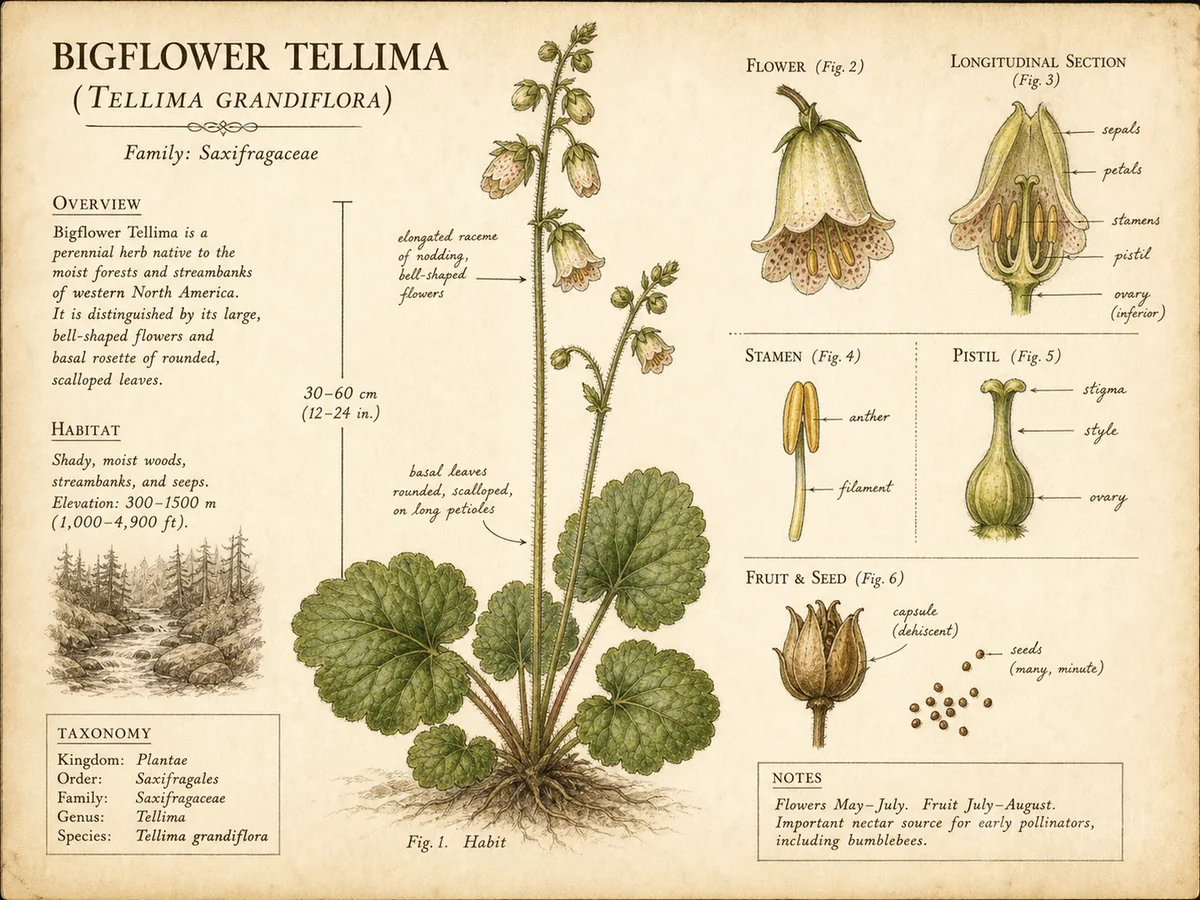
Fringe cups is a western woodland perennial from short rhizomes, with a basal mound of hairy, shallowly lobed leaves. Sit it in part shade so the leaves stay cool, in soil that stays moist but still drains after rain. [1] Full sun works only when the ground stays moist; drier shade is fine once the clump is settled. [2] Water it through the first summer. After that, a short dry spell in shade is not a crisis, but a hot, dry bank still makes the leaves flag. A thin layer of shredded leaves holds moisture and keeps the roots cool. [3] It is a moist-woods plant, not a prairie. Water a new planting in a dry week, then leave the leaf mulch in place through winter.
How much shade do fringe cups need?
Part shade to shade. Full sun is only a fit if the soil stays moist; hot afternoon sun scorches the leaves.
How often should I water fringe cups?
Keep a new planting evenly moist the first year. Once it is settled, water in a long dry spell; an established clump takes short dry weeks in shade.
Plant in spring or fall, at the same depth as the pot
Set nursery plants in spring or fall, in a shady, moist bed you will not need to move later. Set the crown at the same depth it grew in the pot, firm the backfill, and water it in the same day. Space plants about 12 to 18 inches apart so the leaves can fill without rotting in a crowded crown. Keep the soil moist while it settles, and do not dig plants from the woods.
- Pick a shady, moist woodland bed you will not need to move later.
- Plant in spring or fall, at the same depth the crown already grew in the nursery pot.
- Space plants about 12 to 18 inches apart, then firm the soil so there are no air pockets around the roots.
- Water thoroughly the same day, mulch with leaves, and keep the soil evenly moist while the clump settles.
When do I plant fringe cups?
In spring or fall, in a shady moist bed. Set the crown at the same depth it grew in the pot, about 12 to 18 inches apart.
Cut the spent stems, or leave them so the patch self-sows
Fringe cups open small greenish-white cups with five deeply cut petals, lined along a slender raceme in mid- to late spring. The cups often blush pink or red as they age, and some plants are lightly fragrant. If you want a tidy ground cover with fewer volunteer seedlings, cut the spent stems once the flowers fade. If you want the patch to thicken from seed, leave those stems until the capsules empty, then pull extras later. To raise plants from collected seed, see Growing Fringe Cups From Seed.
In a mild winter the leaves stay on as a low green mat. In late winter, pull tatty or winter-burned leaves so the new mound can fill. Do not shear the crown to the ground as if it were a woody shrub. Plant it with other woodland neighbors that share shade and moist humus, such as How to Grow Foamflower, and keep aggressive spreaders off the clump.
- Cut faded racemes if you want a tidy mound and fewer seedlings.
- Leave the stems if you want self-sown patches, and thin extras the next spring.
- Pull tatty winter leaves in late winter; do not hard-prune the crown.
Should I deadhead fringe cups?
Cut the spent stems if you want fewer seedlings. Leave them if you want the patch to self-sow.
Not coral bells — and not foamflower or a fringe tree
Out of flower, fringe cups look a lot like alumroot. Coral bells are Heuchera, usually grown for colorful leaves and small unfringed bells — see How to Grow Coral Bells. Foamflower is Tiarella, with frothy white spikes rather than a line of fringed cups — see How to Grow Foamflower. Foamy bells are Heucherella, a hybrid of those two, not this western species — see How to Grow Foamy Bells.
Miterwort is Mitella. The names are anagrams, and both have tiny fringed petals, but miterwort is a smaller eastern woodland plant with snowflake flowers and a seed cup that rain splashes — see How to Grow Miterwort. Piggyback plant is Tolmiea. The leaves can look alike until you find plantlets sitting on the old leaf blades; fringe cups do not make those plantlets. [4] Do not buy a piggyback when you wanted this raceme of fringed cups.
A fringe tree is Chionanthus, a woody tree with white tassels — see How to Grow Fringe Tree. Chinese fringe flower is Loropetalum, a shrub — see How to Grow Chinese Fringe Flower. Fringed orchid is Platanthera — see How to Grow Fringed Orchid. Large-flowered collomia is an annual in the phlox family that sometimes surfaces next to a Tellima search — see How to Grow Collomia if that is the shop tag.
Is this coral bells?
No. Coral bells are Heuchera, usually grown for colorful leaves. Fringe cups have green, hairy, maple-like leaves and a raceme of small fringed cups.
If the leaves scorch by midsummer, the sun was too hot or the soil dried out. Move the next plants into part shade with a leaf mulch, and keep a new clump evenly moist its first year.
FAQ
Is there more than one kind of fringe cups?
Tellima grandiflora is the plant here, the only catalog species. Bigflower tellima, fragrant fringecup, and false alum root are names for this same plant. Purple-leaf garden forms want the same moist shade.
Can I grow it in a pot?
You can hold a nursery plant in a wide pot of moist, humus-rich mix in shade for a short time, but it is happier in the ground. A pot dries too fast in summer, and the leaves flag.
Will it come back after winter?
Yes, from the rhizomes, as long as the crown is not sitting in ice water. In a mild winter the leaves stay on; pull tatty ones in late winter. You do not lift it.
Is fragrant fringecup a different plant?
No. Fragrant fringecup and Tellima odorata are names for this same species. The flowers can be lightly scented; that does not change the shade and moisture.
Related guides

Recommended plants
References
- [1] Lady Bird Johnson Wildflower Center -
https://www.wildflower.org/plants/result.php?id_plant=TEGR2 - [2] Missouri Botanical Garden -
https://www.missouribotanicalgarden.org/PlantFinder/PlantFinderDetails.aspx?taxonid=286921 - [3] Royal Horticultural Society -
https://www.rhs.org.uk/plants/18039/tellima-grandiflora/details - [4] Portland State University -
https://web.pdx.edu/~maserj/ESR410/Tellimagrandiflora.htm
This note is part of Tellima Guides.
More first-season notes by plant are gathered in How to Grow Guides.
Updated: Reviewed by Bosquelle Editors