
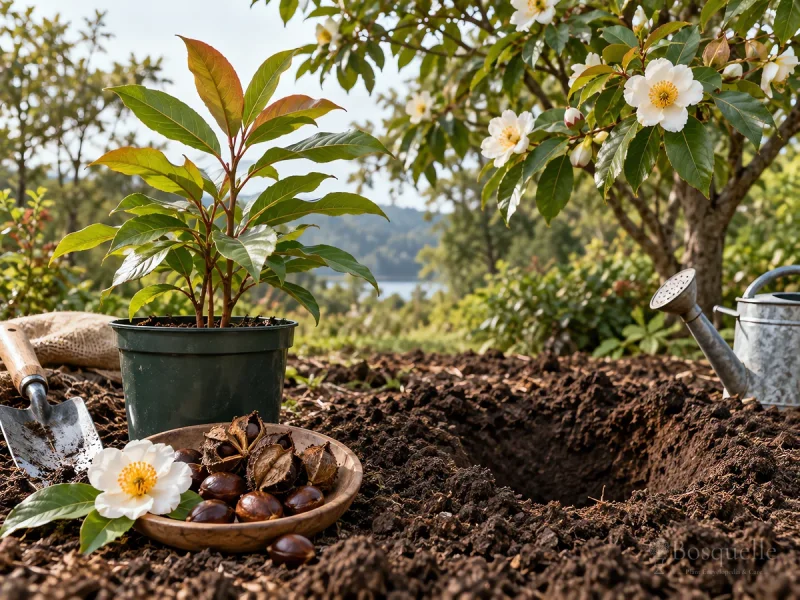
Grow a Franklin tree in moist, acid soil that drains, with afternoon shade in a hot summer, and water it through dry spells so the roots never sit dry. Franklin tree is Franklinia alatamaha, a small deciduous tree in the tea family.

Give it moist, acid soil that drains, and afternoon shade in the heat
| Factor | Recommended | Avoid |
|---|---|---|
| Light | Full sun, or afternoon shade in a hot site | Do not site it in a hot, dry wind with no shade |
| Water | Water through dry spells, especially through late-summer bloom | Do not let the soil stay dry around the roots |
| Soil | Moist, acid soil that drains, with organic matter | Do not leave it in wet clay or a soggy hollow |
| Size | About 10 to 20 feet tall and 6 to 15 feet wide | Do not crowd it against a walk or a small courtyard |
Franklin Tree is Franklinia alatamaha, a deciduous flowering tree about 10 to 20 feet tall and 6 to 15 feet wide. It wants even moisture in acid soil that drains, and it fails when the roots stay dry or sit wet. [1] Give it afternoon shade in a hot summer. Water deeply through a dry spell, because this tree does not bounce back once the soil has dried around the roots. [2] Wilt and root rot follow wet clay and standing water, so keep the soil moist without a bog. [3] A weekly soak through late summer and fall keeps the tree flowering, provided the water still moves away from the roots.
How do you grow a Franklin tree?
Give it moist, acid soil that drains, afternoon shade in a hot summer, and water through dry spells so the roots never sit dry.
How do you care for a Franklin tree?
Keep the soil evenly moist and acid, water deeply when a dry spell hits, and keep it out of wet clay. Brown leaves in summer usually mean the roots dried out or sat wet.
How big does a Franklin tree get?
A mature tree is about 10 to 20 feet tall and 6 to 15 feet wide. Leave that room so the crown can stay open.
Prune little — keep one trunk, or let it make several
A Franklin tree needs little pruning once the framework is in. It often makes several trunks. If you want one trunk, take the extras while the tree is young.
- Wait until new growth starts in spring before you cut winter dieback, because a bare stem can still leaf out late.
- If you want one trunk, prune extra stems while they are still young. Leave several trunks if you want a large shrub.
- Cut dead, crossing, or rubbing branches. Do not hard-cut a mature crown into a hedge, and do not prune in late summer, when next year's flower buds are forming.
Do I need to prune a Franklin tree every year?
No. On a young tree, keep one trunk if you want a single stem. On an established tree, cut dead or crossing wood and leave the natural shape.
It flowers in late summer, while the leaves turn red
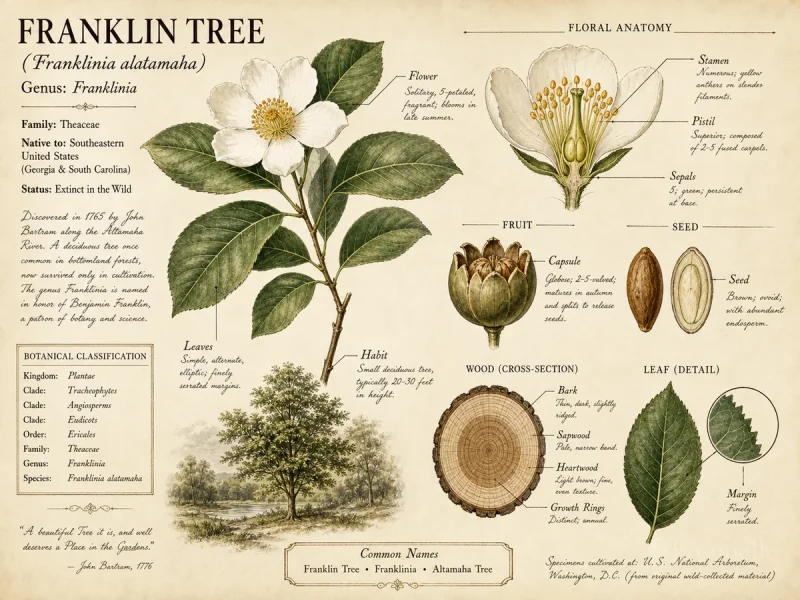
The show is the fragrant white flowers from mid-summer into the first frost, each about three inches across with a yellow center. The leaves often turn red, orange, or purple while those flowers are still open. [4] Do not pour on fertilizer to rush the bloom. Full sun gives stronger fall color; afternoon shade in heat still keeps the tree healthier. Extra names on a nursery tag, including Wintonbury, are still this species and want the same moist acid soil.
When does a Franklin tree bloom?
It flowers from mid-summer into the first frost. The leaves can turn red while the white flowers are still open.
Not a camellia — and not a stewartia
A camellia is Camellia. Both plants have white flowers with yellow stamens, but a garden camellia is evergreen and usually flowers in winter or spring. Franklinia drops its leaves and flowers in late summer. If the tag says camellia, read How to Grow Camellias.
Stewartia is a related tea-family tree with white summer flowers. If the tag says stewartia or Japanese stewartia, read How to Grow Stewartia.
Loblolly bay is Gordonia lasianthus, an evergreen cousin once sold under the same old Gordonia names. It keeps its leaves. A tag that says Gordlinia is a hybrid with loblolly bay, not this deciduous Franklin tree. Ben Franklin tree and Franklintree are names for the same Franklinia.
Is Franklinia a camellia?
No. Camellia is Camellia. Franklinia drops its leaves and flowers in late summer. A garden camellia is evergreen.
Is Franklinia a stewartia?
No. Stewartia is a related tea-family tree. Franklinia is Franklinia alatamaha, also sold as Franklin tree.
If the leaves brown in summer, water deeply and check that the soil is not a dry crust or a soggy hollow.
FAQ
Can I grow a Franklin tree in a pot?
A nursery pot is how a young tree is sold, not a houseplant. Plant it in the ground. A 15-foot specimen will not stay in a patio pot.
Does a Franklin tree need winter protection?
An established tree drops its leaves and stays in the ground. Shelter a young tree from a hard wind. Do not lift it like a tender pot plant.
Are Franklin tree seed capsules edible?
The woody capsules are a garden show, not a kitchen crop. Do not treat them as food.
Are Franklin trees poisonous to dogs?
This tree did not show up on the pet-plant lists we opened. Keep pets from chewing landscape plants as a habit.
Is Gordlinia the same plant?
No. Gordlinia is a hybrid with loblolly bay. It is not this deciduous Franklinia. It is not a second species in this shop.
Related guides
Recommended plants
References
- [1] NC State Extension -
https://plants.ces.ncsu.edu/plants/franklinia-alatamaha/ - [2] Virginia Cooperative Extension -
https://www.pubs.ext.vt.edu/content/dam/pubs_ext_vt_edu/3010/3010-1485/3010-1485.pdf - [3] Oregon State University -
https://landscapeplants.oregonstate.edu/plants/franklinia-alatamaha - [4] Bartram's Garden -
https://www.bartramsgarden.org/franklinia/
This note is part of Franklinia Guides.
More first-season notes by plant are gathered in How to Grow Guides.
Updated: Reviewed by Bosquelle Editors