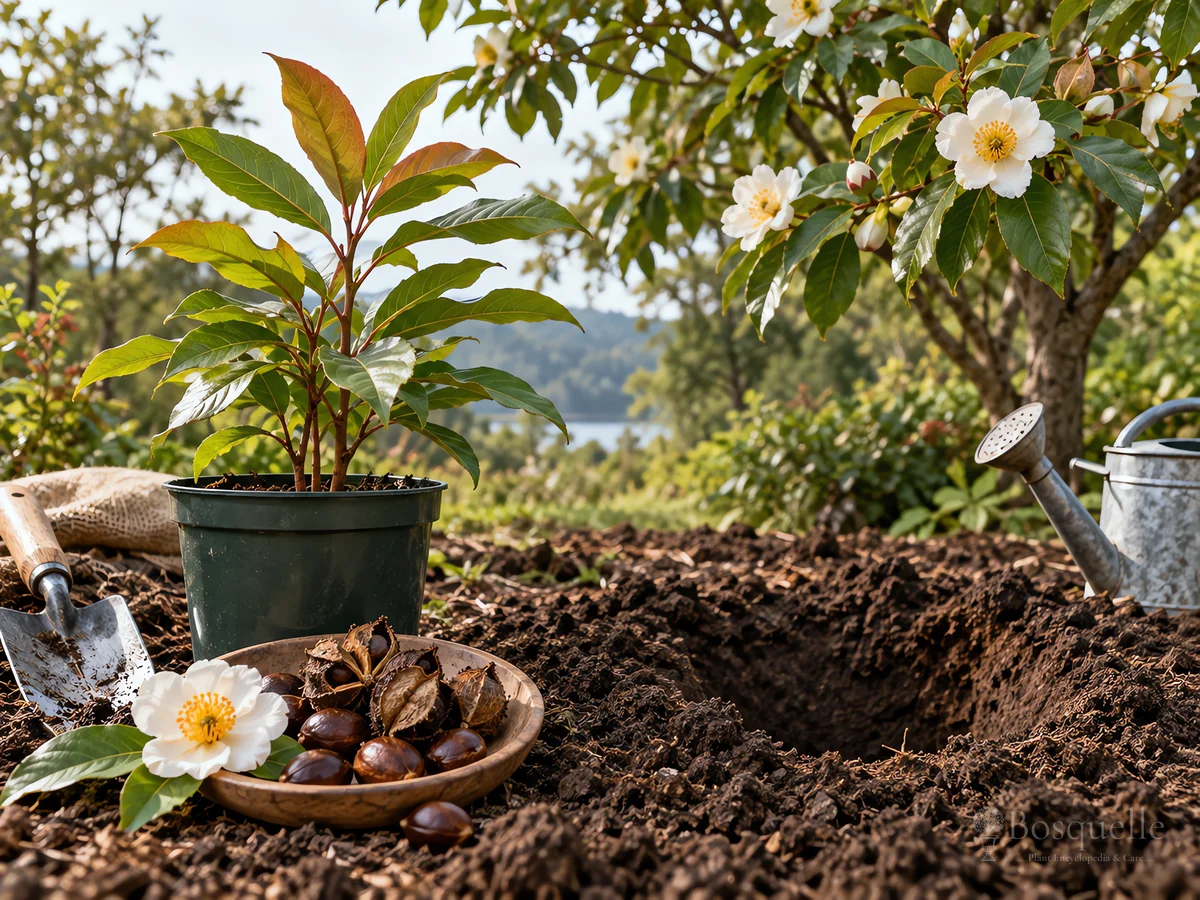
Plant a Franklin tree in fall after leaf drop, or in early spring once frost has passed, in a hole that drains. Pick the permanent spot first, because the roots resent a later move.
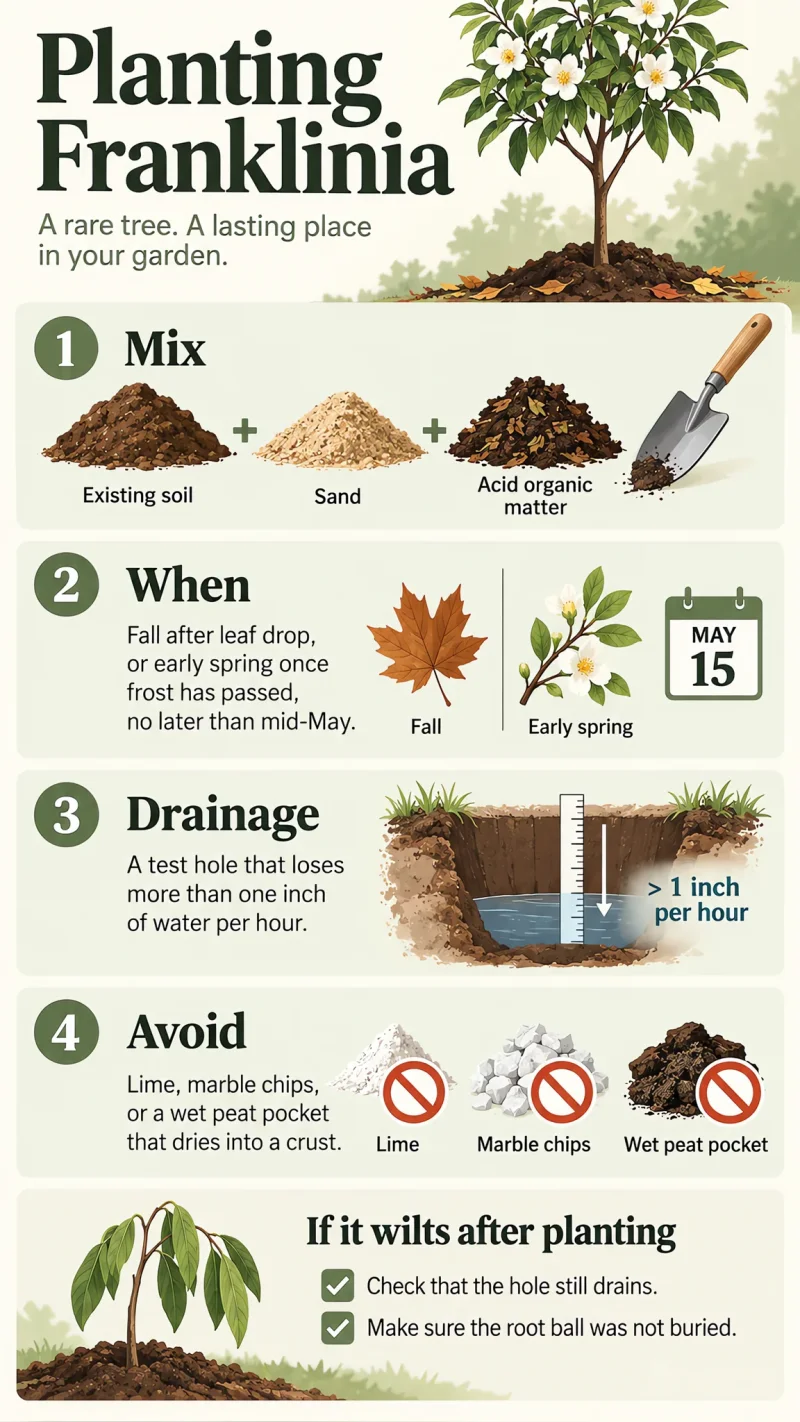
Plant it in fall or early spring, in a hole that drains
| Factor | Recommended | Avoid |
|---|---|---|
| When | Fall after leaf drop, or early spring once frost has passed, no later than mid-May | Planting into frozen ground, or moving an established tree in midsummer |
| Drainage | A test hole that loses more than one inch of water per hour | A soggy hollow, or soil that holds a puddle |
| Hole | Twice as wide and twice as deep as the nursery pot, with the root ball level with the soil | A deep hole that buries the flare |
| Mix | Existing soil mixed with sand and acid organic matter where the ground is clay or almost pure sand | Lime, marble chips, or a wet peat pocket that dries into a crust |
Set Franklin Tree in its permanent place while it is still young. The root system is sparsely fibrous, so a later move often fails. [1] Dig a test hole and fill it twice. If the second fill falls slower than one inch per hour, pick another spot or raise the bed, especially in heavy clay. [2] Do not plant it where cotton was grown, because a soil pathogen from that crop also hits this tree. Sun and watering after it is in the ground stay on How to Grow Franklinia.
- Plant in fall after the leaves drop, or in early spring after frost, and finish spring planting by mid-May.
- Dig a hole at least twice as wide and twice as deep as the nursery pot. In clay, rock, or almost pure sand, mix the backfill with a third sand, a third existing soil, and a third acid organic matter such as composted pine bark.
- Set the top of the root ball level with the soil. Water it in, firm the mix lightly, and spread about three inches of acid mulch over the roots, keeping the mulch off the trunk.
- Skip fertilizer at planting. Keep the soil moist while the tree settles, without filling the hole like a pond. [3]
When should I plant a Franklin tree?
Plant it in fall after leaf drop, or in early spring once frost has passed. Finish spring planting by mid-May.
How do I plant a Franklin tree?
Test drainage, dig a hole twice as wide and twice as deep as the pot, set the root ball level with the soil, and do not fertilize at planting.
Can I transplant an established Franklin tree?
Usually no. The roots resent a move. Plant a young nursery tree and leave it in that spot.
Starting from seed takes a winter of cold
You can start a tree from the seed inside a ripe capsule, but that is a long wait. Buy a nursery tree if you want flowers in fewer years. Do not let collected seed dry out. [4]
- Collect a ripe capsule in fall, and keep the seed moist.
- Sow it in a moist, acid mix, and give it a winter of cold, then warmth, until it sprouts.
- Grow the seedling in a shallow pot of acid mix, and keep that mix from drying out before you plant it out.
A cutting is easier than moving a tree
A stem cutting taken in late summer or fall can root. That is still slower than buying a young nursery tree, and it is still better than digging an established plant.
- Take a short piece of firm late-summer or fall wood.
- Stick it in an acid mix that drains.
- Keep the mix barely moist until roots hold, then grow it on before you plant it out.
If the new tree wilts after planting, check that the hole still drains and that the root ball was not buried.
FAQ
Should I start from seed or buy a nursery tree?
Buy a nursery tree if you want a landscape plant sooner. Seed needs a winter of cold and years before the first good flower show.
Do I fertilize when I plant?
No. Water the tree in, mulch it, and wait. Fertilizer at planting does not help the roots take hold.
Related guides

Recommended plants
References
- [1] Bartram's Garden -
https://www.bartramsgarden.org/franklinia/ - [2] NC State Extension -
https://plants.ces.ncsu.edu/plants/franklinia-alatamaha/ - [3] Virginia Cooperative Extension -
https://www.pubs.ext.vt.edu/content/dam/pubs_ext_vt_edu/3010/3010-1485/3010-1485.pdf - [4] Lady Bird Johnson Wildflower Center -
https://www.wildflower.org/plants/result.php?id_plant=fral
This note is part of Franklinia Guides.
More planting notes by plant are gathered in Planting Guides.
Updated: Reviewed by Bosquelle Editors