
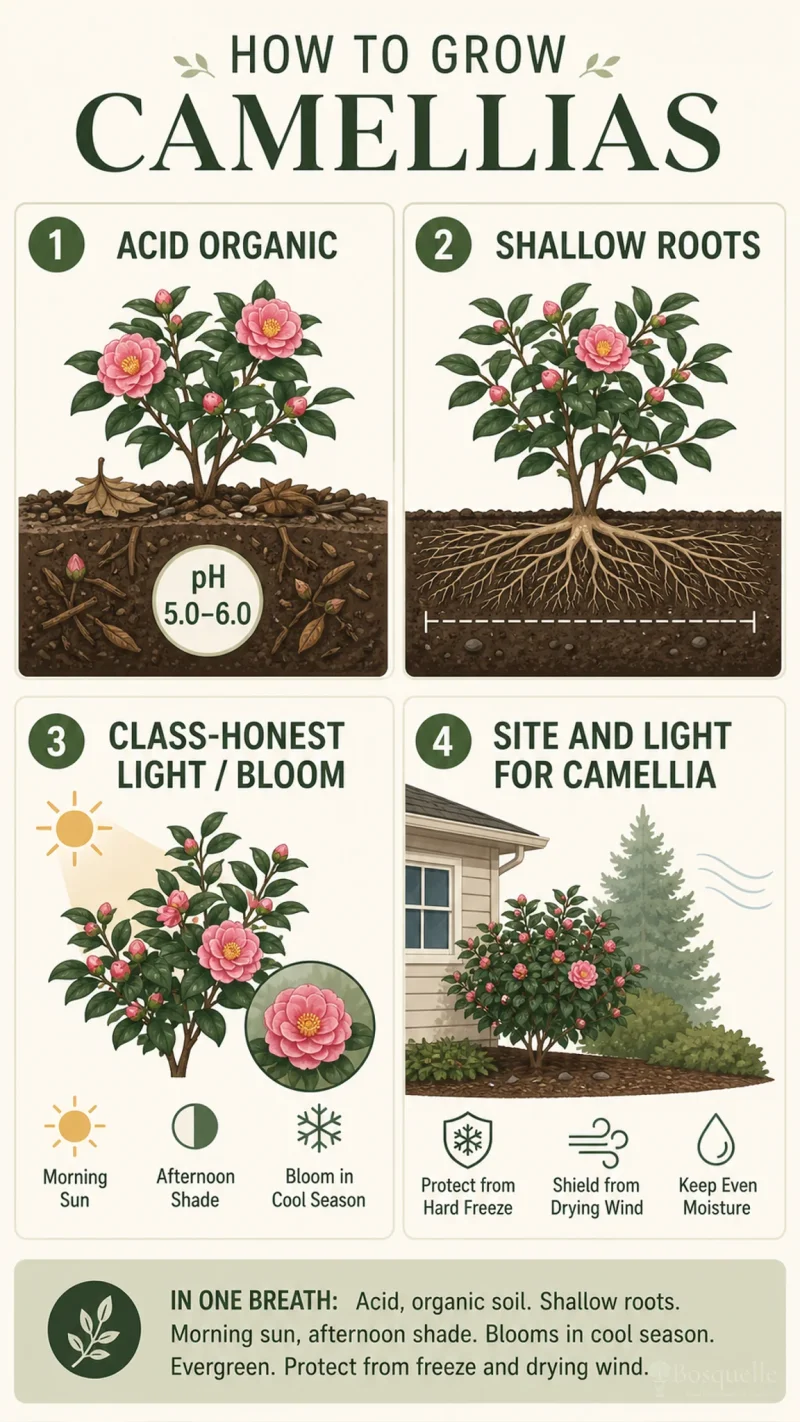
Acid soil is not optional — the camellia brief
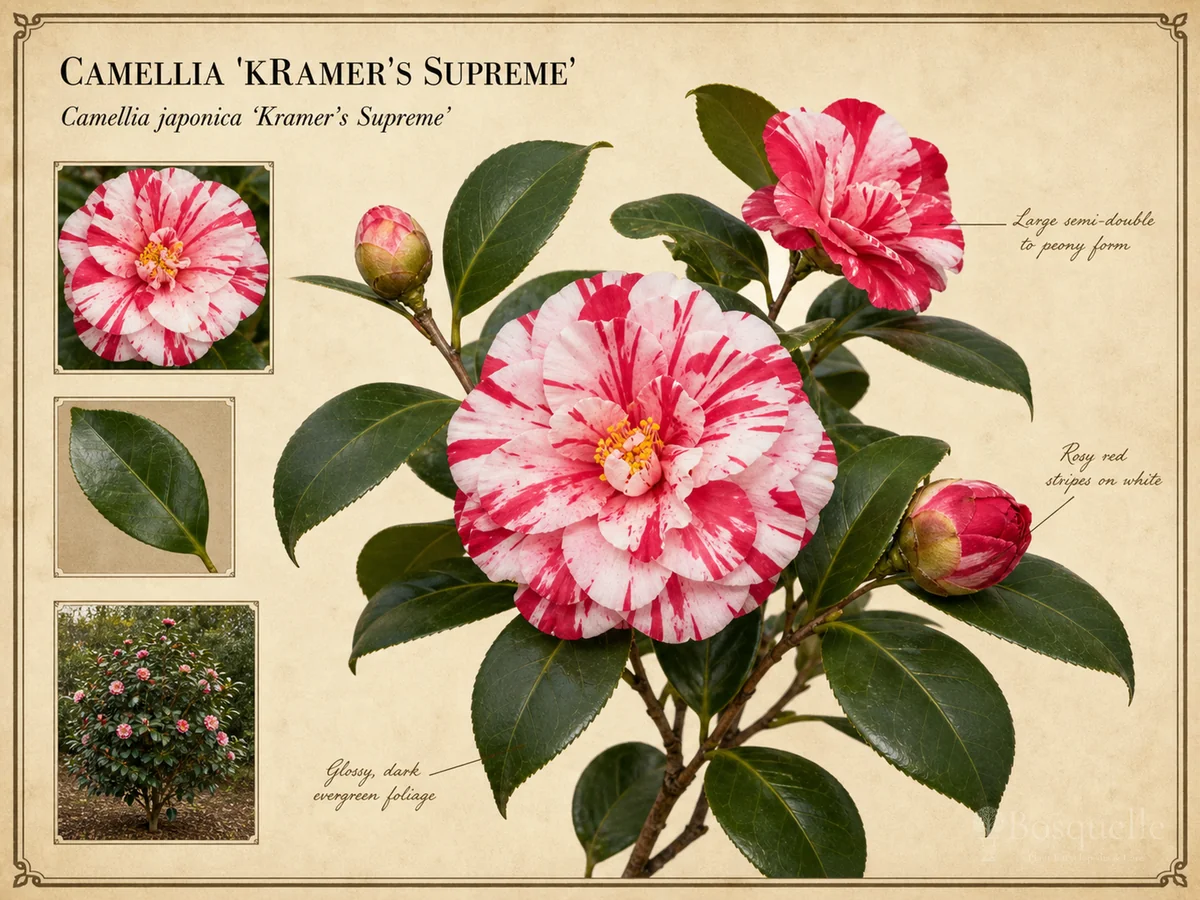
Camellias need acidic, organic, free-draining soil — not chalky alkaline beds. Roots run shallow and wide; plant high, water at the drip line, and keep a 5–8 cm organic mulch over the root zone without piling it against the stem. Japonicas such as Debutante and Kramer's Supreme show stress fast when soil stays alkaline or waterlogged.
Light — morning or dappled for japonica; more sun for sasanqua
Japonicas want morning sun or high dappled canopy with afternoon shade — not reflective west heat that scorches leaves and buds. Sasanquas often take more sun once established, still with afternoon relief on harsh sites. Example: Setsugekka and Kanjiro are typical of that brighter group. Mature canopy can shade a plant’s own roots in brighter spots; young or exposed japonicas scorch. Deep shade means sparse bloom. Cold-hardy picks such as April Rose still need freeze protection in exposed sites.
Japonica ≠ sasanqua — bloom timing and sun
Do not treat every camellia as one shrub. Japonicas flower in winter/spring and usually want more shade; sasanqua / hiemalis fall bloomers flower autumn into early winter and often handle brighter light. Williamsii hybrids such as Donation and vernalis bridges such as Yuletide sit between those calendars. Tea plants such as Assam Tea follow the same acid-soil rules but are not a second japonica care essay.
Protect buds from freeze
Flower buds form months ahead. A late freeze or drying wind can brown petals before they open — site japonicas out of cold, drying wind tunnels, keep roots mulched, and avoid late high-nitrogen feed that pushes soft growth into cold snaps.
Water and feed without drowning the crown
- Water: keep the root zone evenly moist in the first seasons; never plant into a soggy bowl or leave the crown buried.
- Feed: modest acid-loving fertilizer after bloom if growth is thin — skip heavy nitrogen late in the season.
- Mulch: refresh leaf mould or pine bark annually; pull mulch back from the stem flare.
Pruning overview — class before calendar
Shared goals: remove dead wood, lightly reshape after flower, and avoid late hard cuts into bare old wood without a recovery plan. Timing follows class — japonica after spring bloom, sasanqua after fall bloom, williamsii after their flush. For the full class playbook, use Pruning Camellias. Browse which cultivars sit in which type group on Types of Camellias.
Seasonal rhythm for garden camellias
- Spring: plant or transplant while soil is workable; water new plantings; prune japonicas after the main flush (Debutante).
- Summer: deepen mulch; water in drought at the drip line; watch heat stress on shallow roots.
- Autumn: plant in cool soil bands; enjoy sasanqua bloom (Setsugekka); ease late nitrogen.
- Winter: shield buds from freeze and drying winds; do not dig or fertilize frozen wet soil.
A dedicated planting checklist lives on Planting Camellias — this section stays a rhythm, not a second full planting manual.
Pests and diseases (basics)
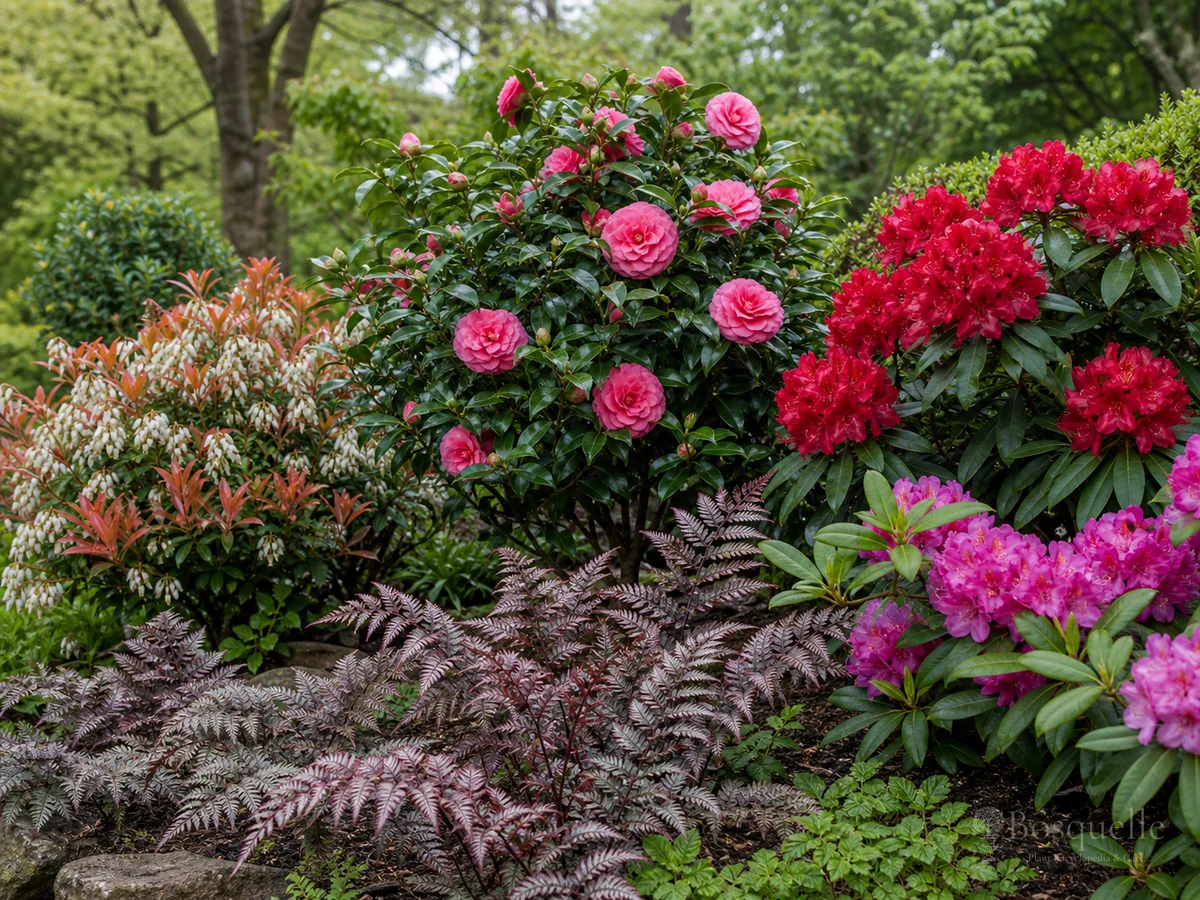
Expect scale, sooty mould, and bud drop from freeze or drought stress. Start with culture: acid organic soil, shallow planting, mulch, and even light. Companions that share acid woodland conditions live on Camellia Companion Plants.
Growing camellias in containers?
Many compact sasanquas and smaller japonicas can live in large pots with an acidic mix, but containers dry and freeze faster. This pillar stays focused on in-ground care. For pot size, acidic mix, and never planting deep, use Camellias in Containers.
Common mistakes: planting deep; alkaline soil; hot afternoon sun on japonicas; pasting one prune calendar onto sasanqua and japonica alike; pasting this whole pillar onto every cultivar page.
Choosing type first? See Types of Camellias — then return here for shared growing rules. Fragrant shortlists live on Fragrant Garden Camellias.
Hardiness (method only): colder gardens favour cold-hardy japonicas and Ackerman-type fall bloomers — protect flower buds from freeze and drying winter winds; mid-temperate gardens suit most japonicas and williamsii with acid soil and dappled shade; warmer gardens need afternoon shade for japonicas and may give sasanquas a touch more sun. Confirm each cultivar on its plant profile — hardiness is cultivar-specific, not one zone story for every Camellia.
Lead with acid organic soil, shallow roots, dappled light, and bud freeze protection. Remember japonica ≠ sasanqua for sun and timing. Related guides below extend this pillar — they do not replace it with duplicate full-care clones.
FAQ
Do camellias need sun or shade?
Japonicas prefer morning sun or dappled shade with afternoon relief. Sasanquas often take more sun once established, still with afternoon shade on harsh sites. Deep shade means sparse bloom.
Can camellias grow in full sun?
Sometimes — mature canopy may shade its own roots in brighter spots, and many sasanquas handle more sun. Young or exposed japonicas often scorch in full afternoon heat. Confirm the cultivar; light requirements are class- and site-dependent.
When do camellias bloom?
By class, not one calendar: sasanqua / hiemalis usually autumn into early winter; japonica winter into spring; williamsii and vernalis bridge those seasons. Tea (Camellia sinensis) is a separate crop calendar — confirm the profile.
Where should I plant a camellia?
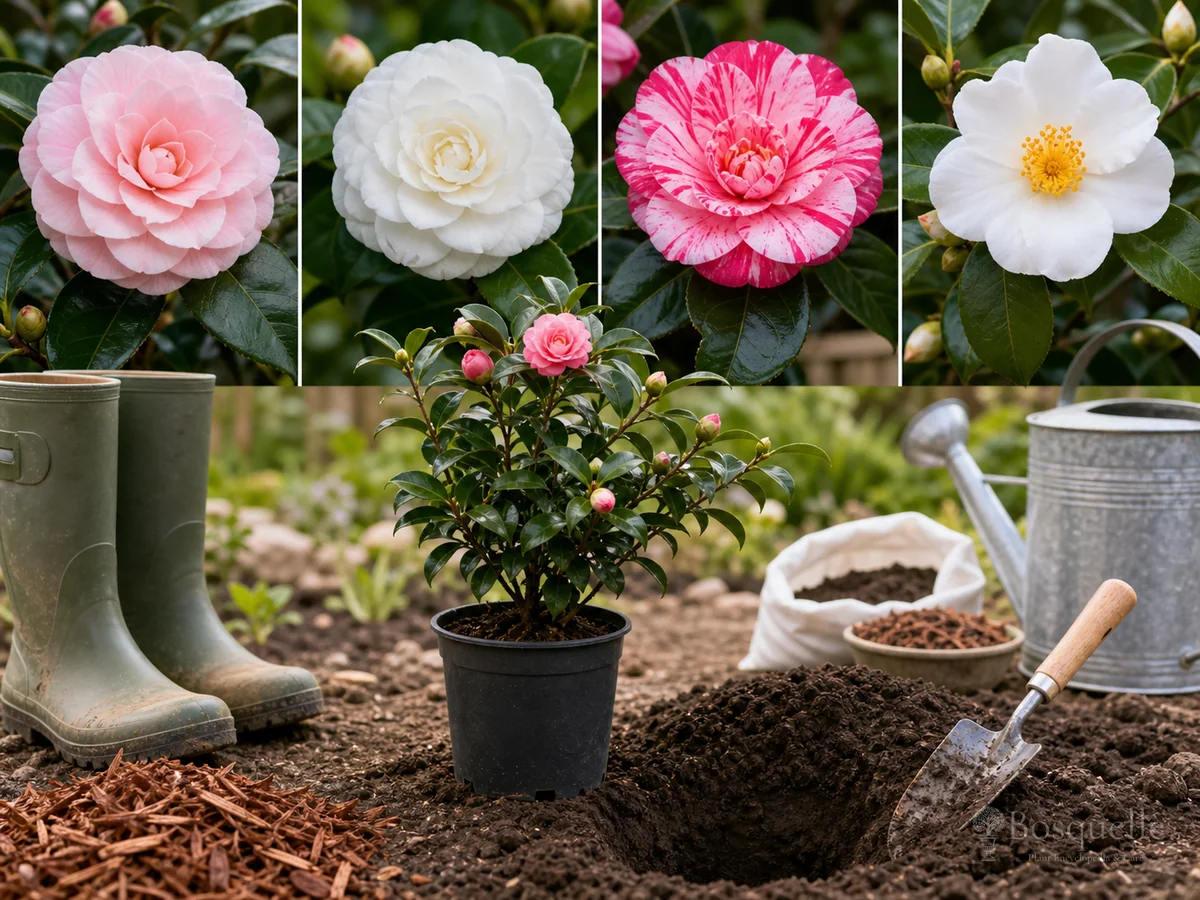
Acidic organic free-draining soil, wind shelter for buds, and class-matched light (morning/dappled for japonica; sasanqua often takes more sun). Depth and day checklist live on Planting Camellias.
Are japonica and sasanqua the same care?
They share acid soil and shallow roots, but bloom timing and sun tolerance differ. Prune after each class's flush — open Pruning Camellias.
Why are my buds browning before they open?
Often freeze, drying wind, drought at the roots, or planting too deep. Check mulch, water, and that the stem flare sits at or above grade.
Do all camellias prune the same way?
No. Japonica, sasanqua, and williamsii differ — open Pruning Camellias for after-flush timing by class.
Where should I look next?
Pruning camellias for class timing; types to browse all cultivars; planting for the shallow/acid checklist; containers for pots; companions and fragrant shortlists when those jobs dominate. Open a plant profile for cultivar-only facts.
Are camellias evergreen?
Yes — camellias are evergreen shrubs with glossy leaves year-round. They do not die back in winter and keep structure in sheltered positions.
Why are my camellia leaves turning yellow?
Almost always soil pH too high — alkaline conditions lock out iron (camellias need pH 5.5–6.5). Treat with sulphur or ericaceous fertiliser with sequestered iron. Other causes: waterlogged soil causing root rot, or drought stress in summer.
When and how should I prune camellia?
Minimal pruning: light shaping after that class’s flush. Finish before midsummer bud set; avoid late-summer cuts that strip next year’s flowers. Detail on Pruning Camellias — avoid blanket shear and bare old-wood cuts.
Can I grow camellia in a container?
Yes in a wide drained ericaceous tub — compact sasanquas and smaller japonicas are realistic; large japonicas need a very large pot or the ground. Detail on Camellias in Containers.
Related guides



Recommended plants



This note is part of Camellia Guides.
More first-season notes by plant are gathered in How to Grow Guides.
Updated: Reviewed by Bosquelle Editors