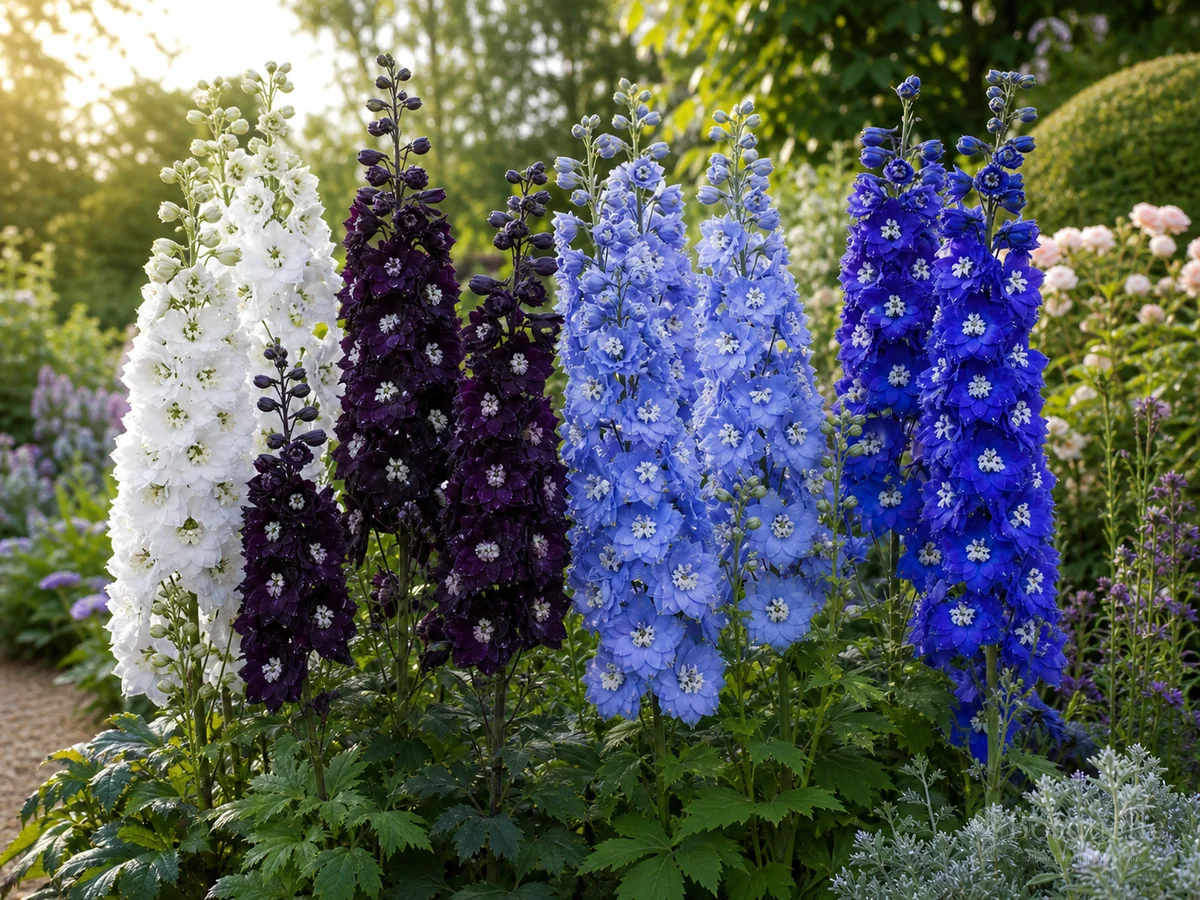
Delphiniums need full sun, fertile soil that stays moist but drains, and shelter from wind. Stake tall types when shoots are 8–12 inches high, before hollow stems load. All parts are toxic if eaten. Wear gloves when you cut.

Height class decides the stake job. Compact Magic Fountain types need less support. Cut spent spikes after the first flush if you want a shorter second bloom. Sort types on Types of Delphiniums.
Full sun, rich soil, and drainage
| Factor | Recommended | Avoid |
|---|---|---|
| Light | Full sun, 6 or more hours; a wind-sheltered border | Deep shade; an open gale that snaps hollow stems |
| Soil | Fertile, moist, well-drained loam with compost | A winter puddle on the crown; thin dry sand |
| Planting | Crown at soil level; 18–24 inches between plants | Burying the growing point; crowding so air cannot move |
| Feed | Compost at plant-up; balanced fertilizer in spring, then potash | Heavy nitrogen that makes soft, floppy stems |
Pick the richest, most sheltered sunny strip in the border. Morning sun plus a fence or hedge on the windward side is better than an open west blast. Flower thins in shade. Stems snap in wind even when the soil is perfect.
Work compost into the top 8–12 inches before you plant. Clay can work if you add organic matter and grit so winter water leaves. A sealed wet hole kills more clumps than a missed watering. Sand needs compost and steady moisture through spike season.
Set the crown level with the soil. Firm gently. Water once to settle, then keep even moisture while roots leave the nursery mix. Mulch 2 inches around the plant, not over the growing point. Pull mulch back if rain packs it into a wet collar.
Space about 24 inches so air moves and you can fit a ring or three canes later. Do not jam a tall type against a path that snags sleeves. Plant in spring or early fall when soil is workable. Midsummer transplant into heat is a poor start.
Afternoon heat in the South is harder than a cool summer. Morning sun with light afternoon shade can keep spikes from frying, as long as the soil still drains in winter. Do not use heat as an excuse to plant in a dark corner. Six hours of light is still the job.
Average border soil with compost is enough. Delphiniums are hungry, not a weekly soluble ritual. Manure that stays wet against the crown invites rot. In sticky clay, raise the bed a few inches rather than forcing a cold bowl.
Water at the base after planting, then check the root ball the first weeks. Nursery mix dries faster than garden soil. Do not leave a saucer of water against a new crown overnight in cold weather.
Slugs, water, and toxicity
| Factor | Recommended | Avoid |
|---|---|---|
| Slugs | Protect shoots from emergence in spring | Waiting until the first leaves are already gone |
| Water | Even moisture through spike season; drain in winter | Drought at bud, then a flood on the crown |
| Handling | Gloves; bag cuttings away from pets and children | Using delphinium as a garnish or tea plant |
Shoots break ground in early spring and slugs take them overnight. Check at dusk. Use the slug method you already trust — pellets labeled for ornamentals, nematodes, or traps — from the first green nubs. A late start is how a clump never spikes.
Example: Galahad and Magic Fountain Lavender want the same moist, drained bed and the same slug watch. Height does not rewrite toxicity. Color does not rewrite drainage.
Keep soil evenly moist while spikes rise. Dry soil at bud stage shortens the flower. Overhead spray at night on crowded leaves invites mildew. Water the soil, then let it drain. Winter wet on a low crown is a different fail — that is rot, not drought.
Feed as growth starts with a balanced fertilizer, then switch to a higher-potash product (tomato fertilizer is the usual garden label) once buds show. Extra nitrogen makes lush leaves and weak stems that cannot hold a spike. Compost in the soil still does most of the work.
Wear gloves for planting, staking ties, and cut-back. Wash hands and tools. Do not leave spent spikes in a pile where a pet can chew them. Dried stems in a vase are still toxic. Teach children not to put flowers in their mouths.
Thin crowded shoots if the clump is dense, so air moves and mildew has less cover. Leave the strongest stems. Do not strip the plant to a single spike unless you are growing for a show vase.
Powdery mildew shows as a white film on crowded, dry-air foliage. Thin, water the soil, and keep mulch off the crown. A spray is not a substitute for air. If leaves yellow from a sealed puddle, fix drain before you add more fertilizer.
Tall vs compact — stake and cut
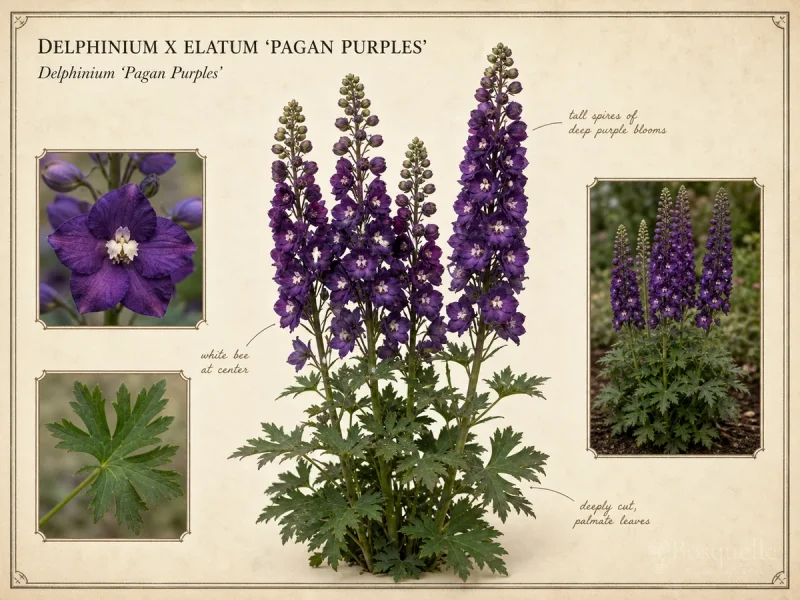
Tall elatum and Pacific types need support before stems elongate. Set rings or canes when shoots are 8–12 inches (20–30 cm) high. Hollow stems snap in rain once they are loaded. Waiting until bloom is how you tie a kinked stem to a cane. Full steps live on Staking Delphiniums.
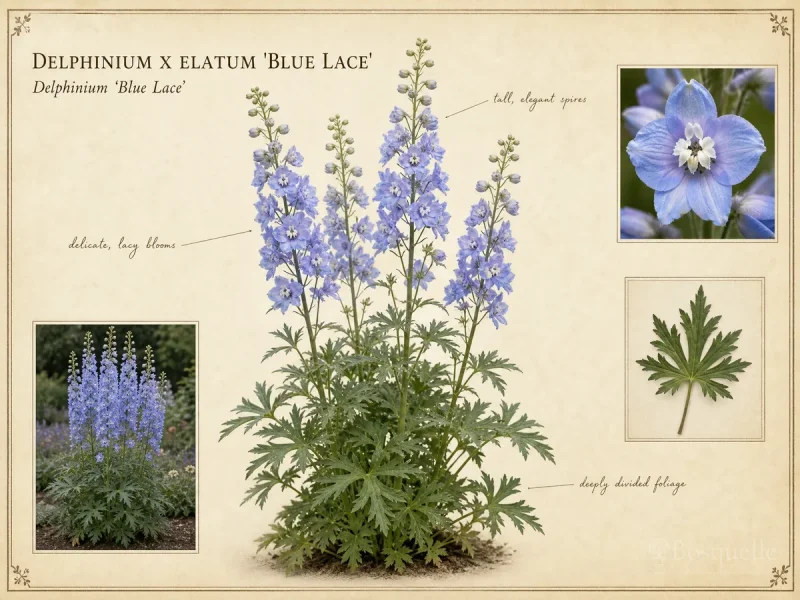
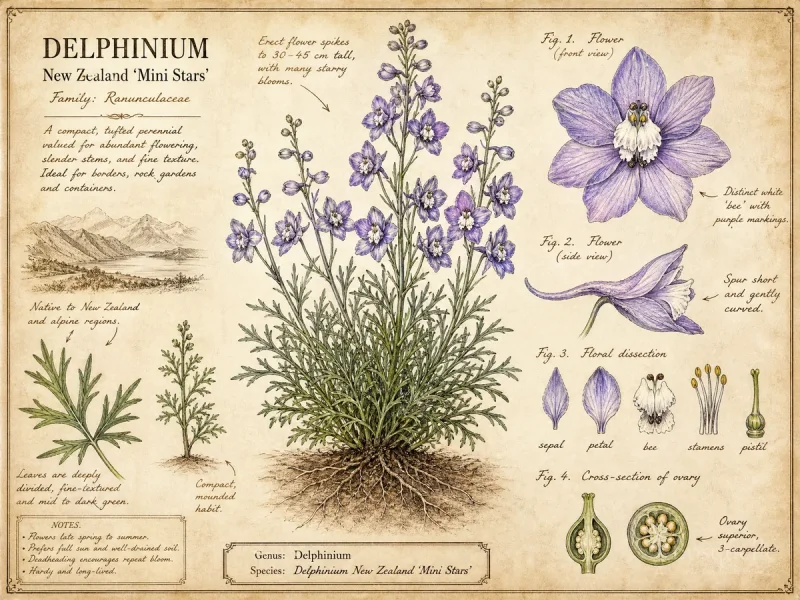
Black Knight Group and Blue Lace are the tall class that almost always needs early stakes. Compact series such as Magic Fountain Lavender and Mini Stars need less, but an open, windy bed still benefits from a low ring. Confirm height on Types of Delphiniums before you omit support.
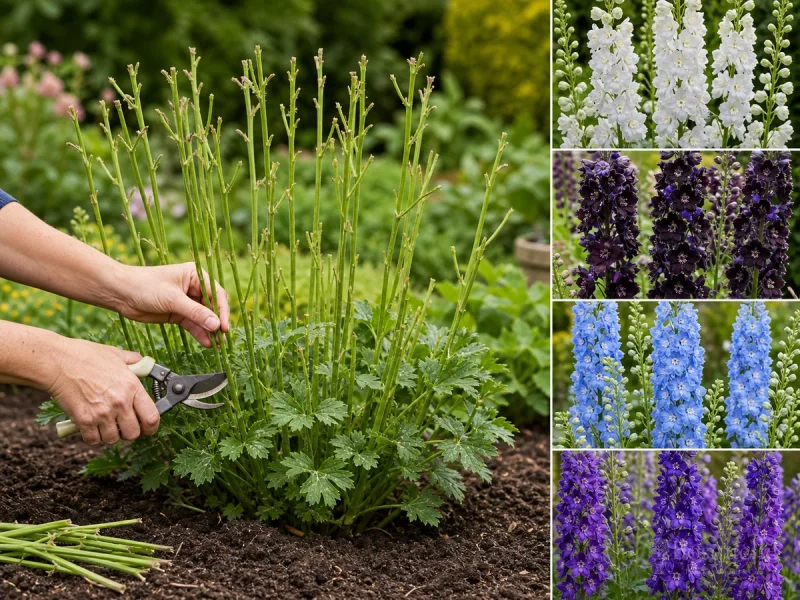
After the first flush fades, cut spent flower stems to the ground if you want a shorter second bloom in a cool summer. Leave working leaves. Heat may end the show after the first spike. Cut-back steps live on Cutting Back Delphiniums.
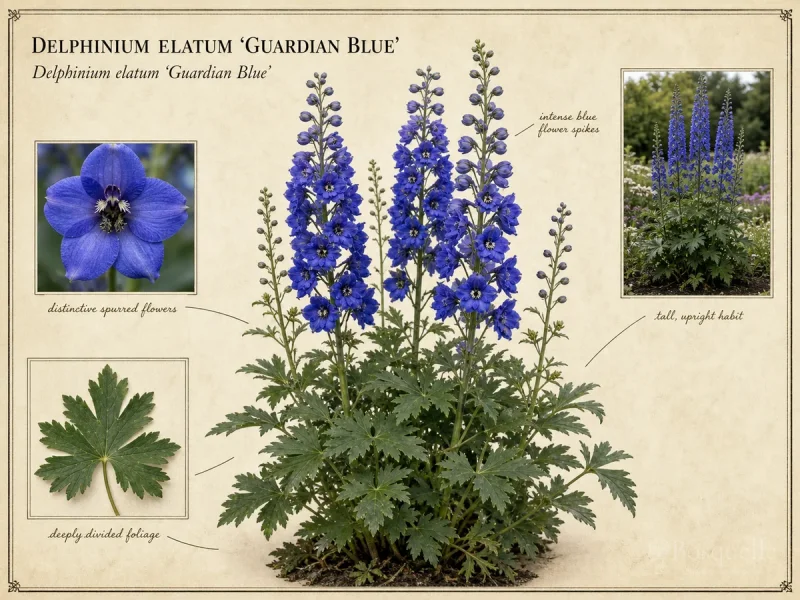
Guardian Blue sits mid-height: still stake in wind, still cut spent stems the same way. Faust is a tall spike — treat it as a back-of- border plant with room for canes. Summer Nights is compact and suits a front edge if slugs are under control.
Do not use cut-back as a substitute for staking. The first spike still needs a brace. Do not shear all foliage in midsummer. Leaves feed the crown for next year.
If you bought a packet labeled only “larkspur,” confirm the Latin. Annual Consolida is a different plant with a different life cycle. Woodland Dwarf Larkspur (Dwarf Larkspur) is a species delphinium, not a Pacific tower and not annual larkspur. Site it like an early woodland perennial, not like a 6-foot border spike.
Short-lived clumps and next jobs
Many Pacific hybrids are short-lived. Three to five good seasons is a fair result, not a failure. Plan to refresh with young plants. Do not treat a tired woody crown like a peony you can ignore for a decade. When spikes thin and the center dies out, replace the clump.
This cluster has no divide page. Division of an old crown is unreliable and often kills the plant. Start new plants instead. Species such as Dwarf Larkspur follow a woodland calendar; do not copy Pacific feeding onto that plant.
Compact Magic Fountain types belong in a large drained pot — size, mix, and the saucer are on Delphiniums in Containers.
Partners that share sun and rich soil live on Delphinium Companion Plants. Leave a clear collar so you can stake and cut without crushing neighbors.
In fall, cut blackened stems after frost if they look messy, or leave them until late winter if you want some structure. Keep winter mulch off the crown. A wet blanket on the growing point is the usual off-season kill.
Keep a short note: height class, cultivar, and plant year. Mixed blues look the same in leaf by May. You will not remember which tray was the compact series when they spike. Write it on a stake that survives winter.
If bloom was poor after a year you let the bed dry in June, do not replace every plant yet. Keep moisture even this cycle, stake earlier, and judge again next summer. Replacing a starved clump without changing water or wind repeats the same fail.
Store unplanted nursery pots in bright shade and keep the mix barely moist until the hole is ready. Do not leave them in a hot car. A wilted spike in a plastic sleeve is a weaker start than a firm crown planted the same week.
When two instincts compete — chase every blue versus master one sunny, rich, drained hole with early stakes — master the hole. Color is easy to swap next year. A snapped stem in an open gale wastes the season.
Label the row the hour you plant. A pencil on plastic fades; a plant tag tucked at the crown lasts. Do that at plant-up, not in July when every spike looks the same in a photo.
If neighbors ask why yours stood and theirs snapped, the answer is usually early stakes plus wind shelter, not a secret feed. Extra nitrogen makes the snap more likely. Compost, drain, and a ring in place at 8–12 inches do more than another soluble feed in June.
FAQ
Do delphiniums need full sun?
Yes. Give 6 or more hours. Light afternoon shade in heat is fine if the soil still drains in winter.
Are delphiniums toxic?
Yes. All parts are toxic if eaten. Sap can irritate skin. Wear gloves. Keep debris away from children and pets.
When should I stake delphiniums?
When shoots are 8–12 inches high, before stems load. See Staking Delphiniums.
Why did my delphinium flop after rain?
Hollow stems were not braced early. Prop gently this time. Stake earlier next year.
Are delphiniums long-lived perennials?
Often not. Many hybrids last a few seasons. Refresh tired clumps with new plants.
Can I grow delphiniums in pots?
Yes — compact types in a large drained pot. See Delphiniums in Containers.
Is larkspur the same as delphinium?
Not always. Annual Consolida is a different plant. Confirm the Latin. See Types of Delphiniums.
When do I cut delphiniums back?
Cut spent flower stems after the first flush if you want a second bloom. Leave working leaves. See Cutting Back Delphiniums.
What soil do delphiniums want?
Fertile, moist, well-drained. Winter wet on the crown causes rot.
Do I need rich fertilizer?
Compost plus a balanced spring feed, then potash as buds form. Heavy nitrogen makes weak stems.
Related guides



Recommended plants





This note is part of Delphinium Guides.
More first-season notes by plant are gathered in How to Grow Guides.
Updated: Reviewed by Bosquelle Editors