
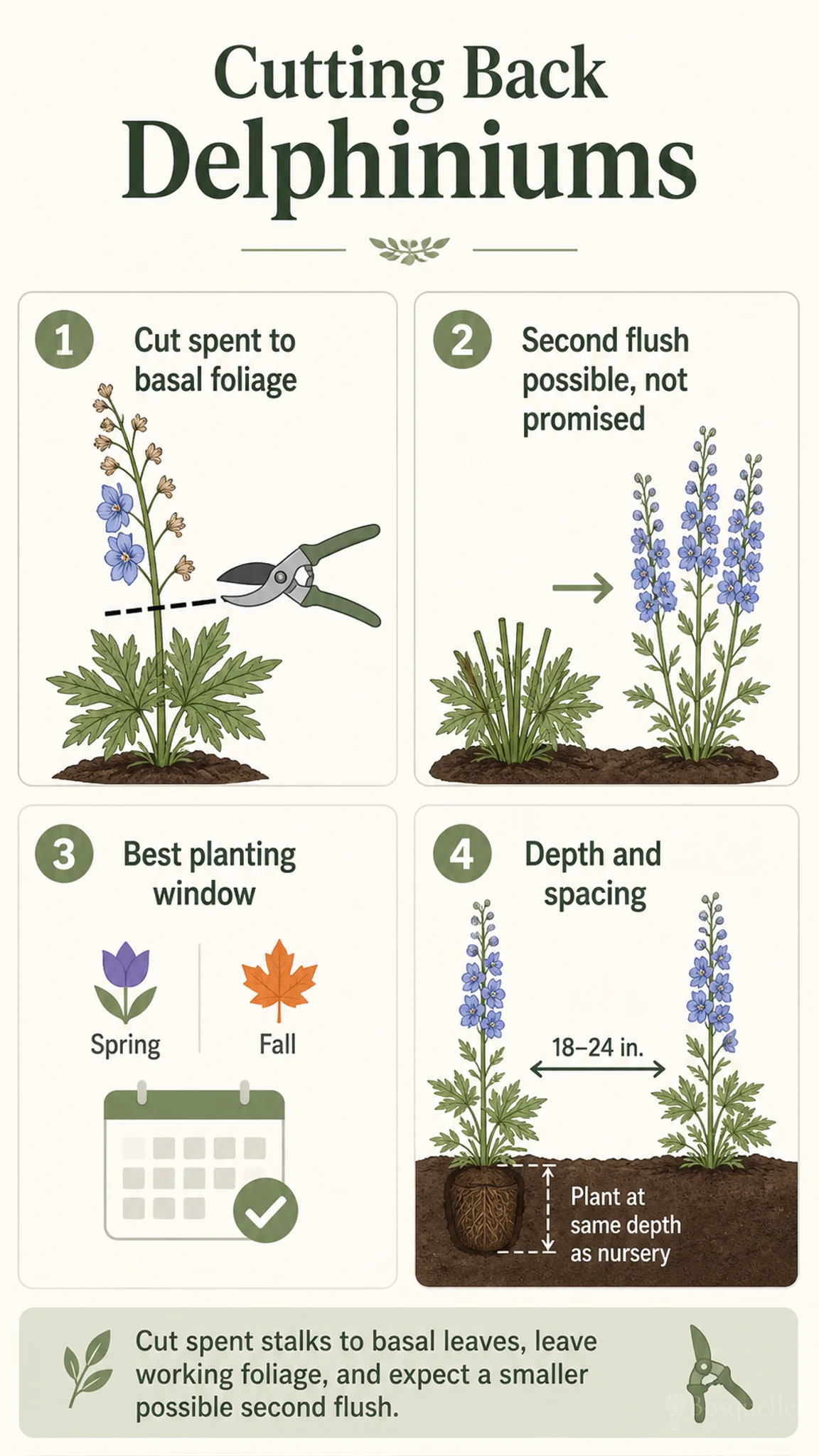
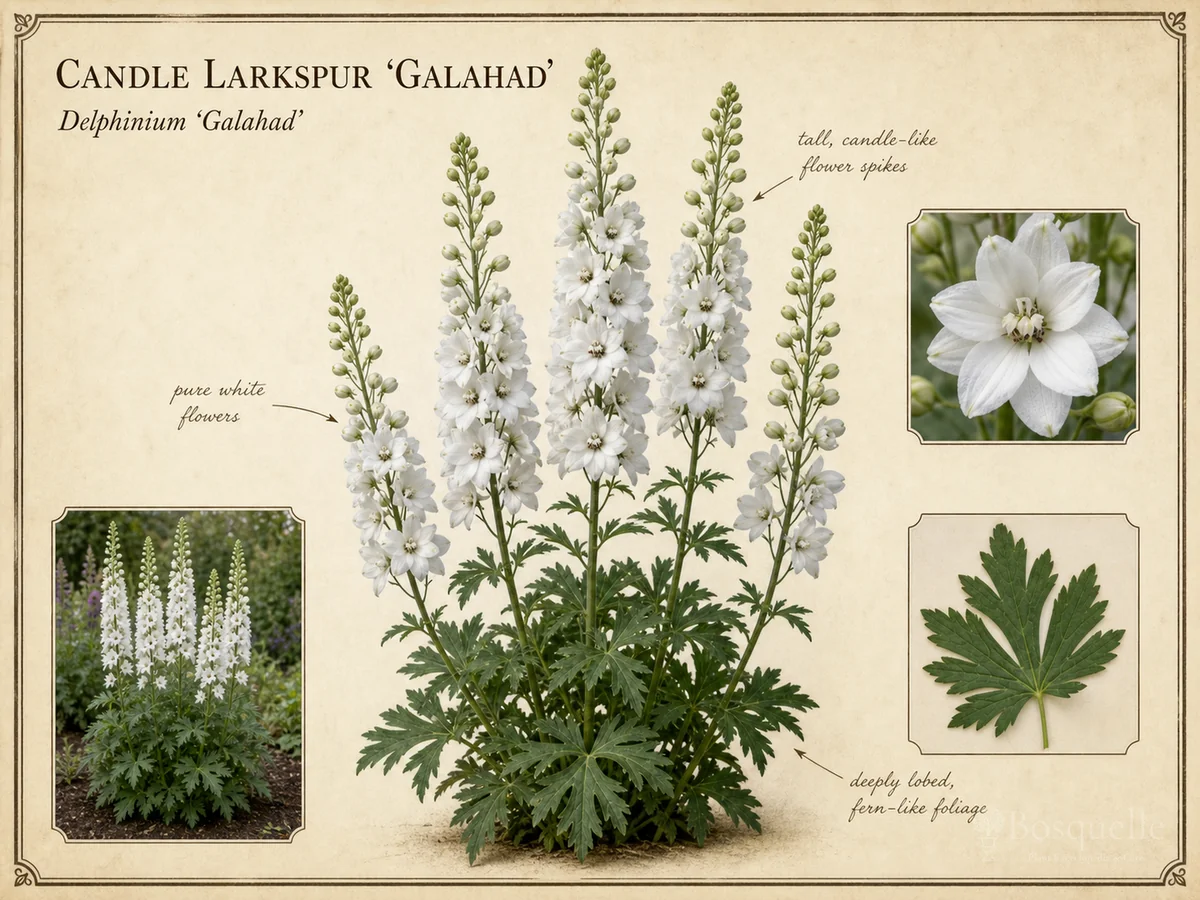
Cut spent delphinium spikes to the ground after the first flush if you want a shorter second bloom. Leave the working leaves. A second flush is more likely in a cool, moist summer than in heat. Galahad and compact types follow the same cut.
Site, water, and toxicity stay on How to Grow Delphiniums.
Cut spent spikes for a second flush
| Factor | Recommended | Avoid |
|---|---|---|
| When | As soon as the first spike fades | Leaving spent stems until they seed if you wanted a second bloom |
| How far | Cut flower stems to the ground | Shearing all foliage with the spikes |
| After | Water if dry; a potash feed; leave leaves working | Treating a second flush as a guarantee in heat |
The first spike is the main show. Cutting it down can push basal shoots for a later, shorter bloom. Cool nights and even moisture help. Heat often ends the season after the first flush. Cut anyway for a tidy bed. Do not promise yourself September towers.
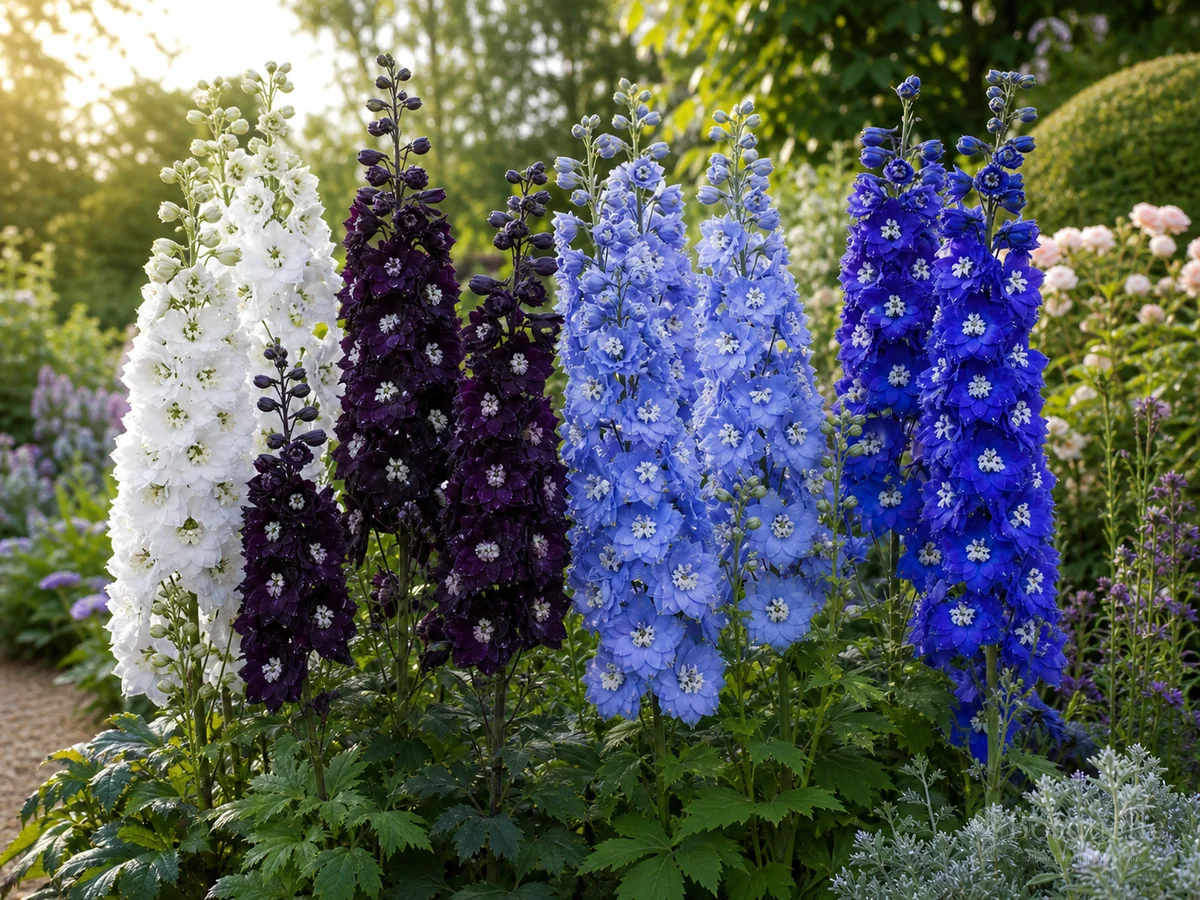
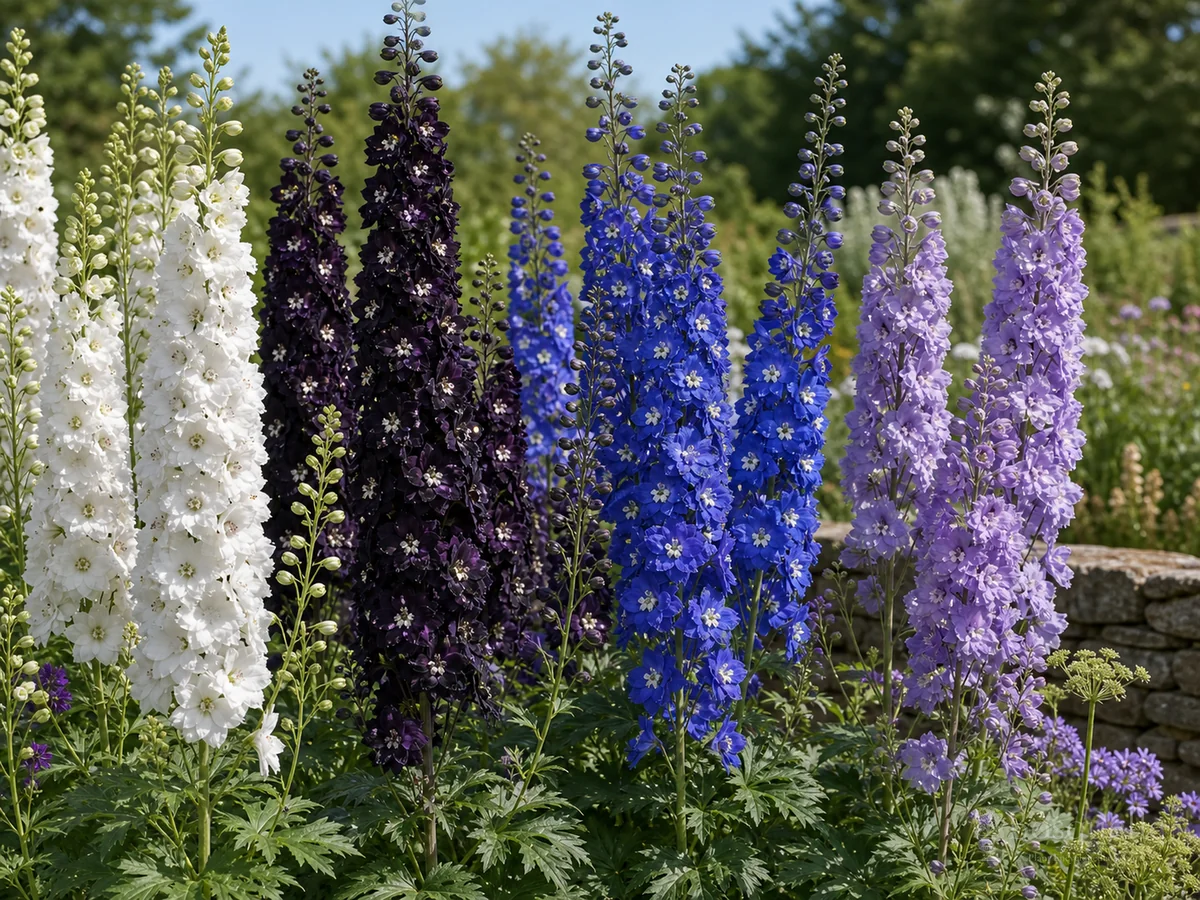
Galahad and Black Knight Group take the same spent-stem cut. Height does not change the rule. Gloves still apply. Bag the trimmings. All parts are toxic if chewed.
If you want seed, leave one or two stems and cut the rest. Named colors may not come true. Volunteers are still toxic seedlings, not a safer crop.
Do not wait until the whole clump is brown. Cut each spent stem as it finishes. Mixed timing in a row is normal. Watch the plant, not a calendar date.
This cut is not a substitute for staking. The first spike still needed a brace. After the cut, you may leave the ring if new shoots rise, or lift it if the bed is empty until next spring.
Cutting back delphiniums
- Put on gloves. Sap can irritate skin. All parts are toxic if eaten.
- Find spent flower stems. Leave green working leaves at the base.
- Cut each spent stem at soil level. Do not tear it from the crown.
- Lift cuttings into a bag. Keep them away from pets and children.
- Water the root zone if the top 2 inches are dry, then let it drain.
- Feed with a potash fertilizer if you want basal shoots to push.
Use sharp pruners. A ragged rip invites rot. Work on a dry day if you can so cuts dry. Do not compost obviously diseased foliage in a home pile if mildew was heavy; bag it.
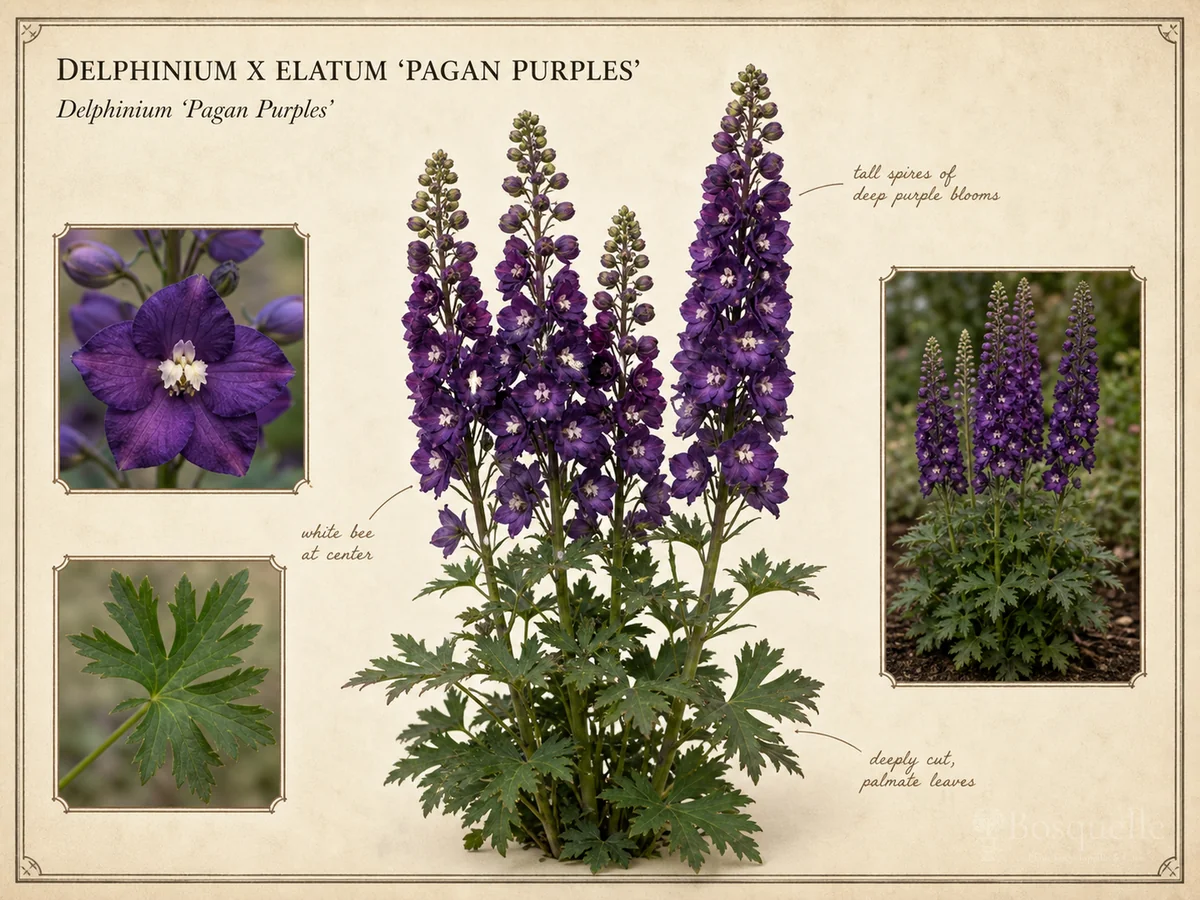
Magic Fountain Lavender and Summer Nights are shorter, so the cut is quicker. Pagan Purples is tall — you will handle longer stems. The rule does not change. Leave the leaves.
Clean the blades before you move to the next clump if disease was present. Do not carry mildew through the bed on wet tools.
If new basal shoots are already up, cut around them. Do not slice the fresh growth. Those shoots are the second flush if weather cooperates.
Staking hardware can stay until you see whether shoots return. Adjust ties so they do not rub new stems. Full brace steps live on Staking Delphiniums.
Partners should have left you a path. If they did not, you will damage neighbors getting in. Design that gap on Delphinium Companion Plants.
After the cut — water and feed
If the soil is dry, soak the root zone once, then drain. Do not leave a puddle on the cut stubs. Winter is the rot season; summer after cut-back is a drought season if you forget the hose.
A potash-forward fertilizer (tomato fertilizer is the usual label) after the cut is the common garden practice for a second push. Skip heavy nitrogen. Soft leaves after a cut flop and mildew.
Mulch that slid onto the crown during the job needs to be pulled back. Keep a thin layer around, not over, the growing point.
Watch for slugs on the new basal shoots the same as in spring. Fresh growth is food. The April method still applies in July.
If no new shoots appear in two to three weeks, the plant may be done for the year. Leave the foliage until fall. Do not dig the crown to “check.” Heat and short-lived habit are the usual reasons, not a missed cut.
Year-round sun and soil stay on How to Grow Delphiniums. Height class stays on Types of Delphiniums.
A patio plant takes the same spent-stem cut. Empty the saucer on Delphiniums in Containers.
Do not treat a missing second flush as a reason to drench daily. Even moisture is the job. A sealed wet hole after the cut is worse than a modest second bloom.
Fall tidy and what not to cut
Do not shear all foliage to the ground in midsummer with the spikes. Leaves recharge the crown. Wait until frost blackens the tops, or until late winter before new shoots, for a full tidy.
In fall you may cut blackened stems for appearance. Keep winter wet off the crown. A thick mulch blanket packed on the growing point is the usual off-season kill. Mulch around, not over.
Do not cut new fall basal leaves that still look green and firm. Those are next year’s start. Only remove what is spent or diseased.
Do not expect cut-back to revive a woody, hollow old crown. Many hybrids are short-lived. Replace the plant. This cluster has no divide page, and splitting an old delphinium often fails.
Bag toxic trimmings. Do not leave them on a path. Do not add them to a salad-garden compost you might spread on food crops.
If you left seed on purpose, collect pods when dry and store them away from children. Label the height class. Named colors will drift.
After frost, photograph the crown so you remember where the ring goes next spring. Set hardware when shoots are 8–12 inches, not when you see the first blue.
A messy July bed is usually uncut spent stems, not a fertilizer fail. Cut the spikes. Leave the leaves. Water if dry. That is the whole after-bloom job.
If mildew coated the summer leaves, fall tidy is also sanitation. Remove the worst foliage when it is dry enough to bag. Do not wait until a wet November mat sits on the crown all winter.
FAQ
Will cut-back always give a second flush?
No. Cool moist summers favor it. Heat may end the show after the first spike.
Do I cut all foliage to the ground in summer?
No. Cut spent flower stems. Leave working leaves until a fall or late-winter tidy.
Does cut-back replace staking?
No. Stake early for the first spike. Cut-back is a later job.
When should I cut delphiniums back?
As soon as the first spike fades, if you want a second bloom or a tidy bed.
Do I need gloves?
Yes. Sap can irritate skin. All parts are toxic if eaten. Bag cuttings away from pets.
Should I fertilize after cutting?
A potash feed can help basal shoots. Avoid heavy nitrogen.
What about fall?
Cut blackened stems after frost if you want. Keep mulch off the crown. Leave green basal leaves.
Is this the full care guide?
No. This is the spent-spike cut. Care lives on How to Grow Delphiniums.
Related guides



Recommended plants



This note is part of Delphinium Guides.
More pruning timing notes by plant live in Pruning Guides.
Updated: Reviewed by Bosquelle Editors