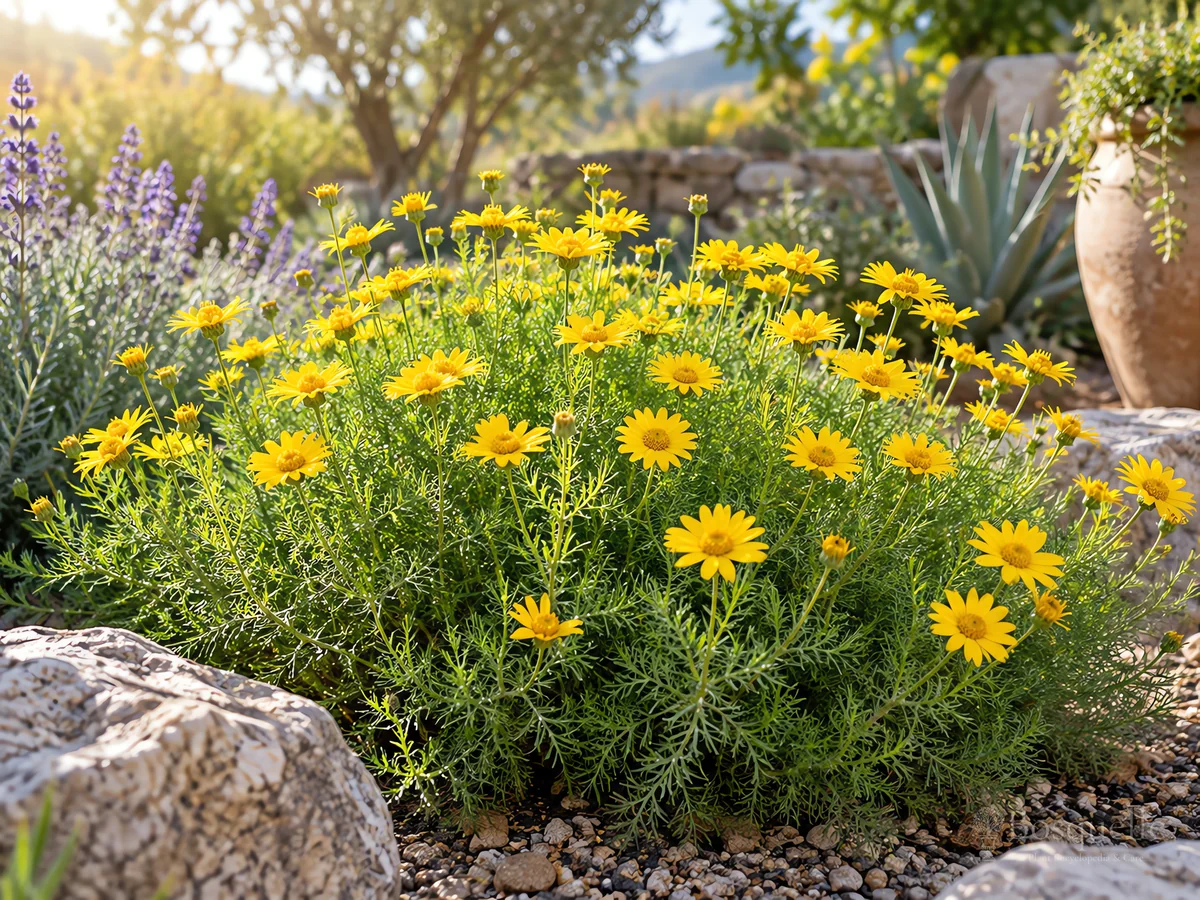
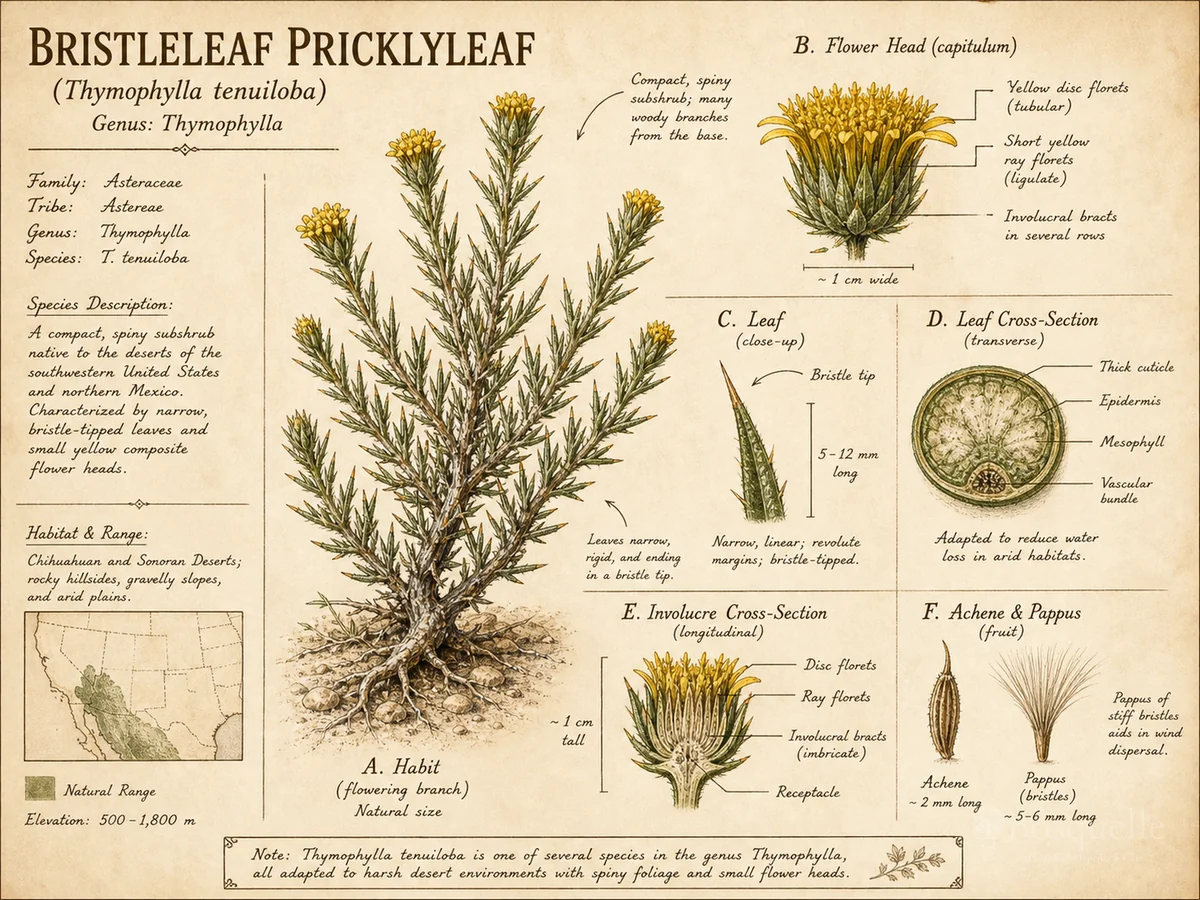
Grow Dahlberg daisy in full sun and sandy soil that drains. Dahlberg daisy is Thymophylla tenuiloba, also called bristleleaf pricklyleaf — a small Texas annual, not a shooting star and not a garden marigold.

Give it full sun, sandy soil that drains, and little extra water
| Factor | Recommended | Avoid |
|---|---|---|
| Light | Full sun, at least six hours of direct light | Do not plant it in shade, where the stems stretch and few flowers open |
| Soil | Sandy or rocky soil that drains; lean ground is fine | Do not plant it in wet clay or a low, soggy bed |
| Water | Water until the roots take, then let the soil dry between waterings | Do not keep the crown wet after it is settled |
| Heat | Dry heat is a fit once the plant is established | Do not count on it through a humid, wet summer in heavy soil |
| Drought | Once established it takes dry weeks | Do not treat drought as a reason to skip drainage |
Dahlberg daisy is a low mound of threadlike, aromatic leaves with half-inch yellow daisy heads. Sit it in full sun so the stems stay short and the flowers keep coming, in soil that dries after rain. [1] Sandy or rocky ground is the usual fit. Average garden soil works if water still runs through; wet clay around the roots is the main reason plants rot. [2] Water a new planting until it is settled, then let the top of the soil dry before you water again. Established plants take dry weeks. A humid, wet summer in a heavy bed is a poor match, even if the label promised drought tolerance. [3] It is a dry-sun plant, not a bog annual. If the leaves yellow and the crown softens, the soil stayed wet, not dry.
How much sun does Dahlberg daisy need?
Full sun, at least six hours. Shade makes the stems lanky and cuts the bloom.
How often should I water Dahlberg daisy?
Water until the roots take, then let the soil dry between waterings. Once it is settled, dry weeks are fine; a soggy crown is not.
Plant after frost, at the same depth as the pot
Set nursery plants out after the last frost, in a sunny, draining bed you will not need to move later. Set the crown at the same depth it grew in the pot, firm the backfill, and water it in the same day. Space plants about 8 to 12 inches apart so the mounds can fill without sitting in one another's wet foliage. [4] Keep the soil just moist while it settles, then ease off. Do not plant it before frost, and do not bury the crown.
- Wait until after the last frost, in a full-sun bed that drains.
- Plant at the same depth the crown already grew in the nursery pot.
- Space plants about 8 to 12 inches apart, then firm the soil so there are no air pockets around the roots.
- Water thoroughly the same day, then let the soil dry between waterings once the plant is settled.
When do I plant Dahlberg daisy?
After the last frost, in full sun. Set the crown at the same depth it grew in the pot, about 8 to 12 inches apart.
Deadhead, or shear it once if bloom slows
Dahlberg daisy opens small yellow heads from summer into fall. If you want more flowers, pinch or snip the spent heads before they set seed. If bloom slows in midsummer heat, shear the mound lightly — about a third of the height — and it will push new stems for a later flush. Leave the last heads if you want volunteers next year. To raise plants from collected seed, see Growing Dahlberg Daisy From Seed.
The leaves smell lemony when you crush them. Pull the plants after frost in a cold garden; they do not overwinter as a woody shrub. In a mild winter the crown may persist, and seedlings often return on their own in gravel and dry edges.
- Deadhead spent flowers if you want a longer flush and fewer seedlings.
- Shear the mound once if bloom slows in the heat, then let it refill.
- Leave the last heads if you want volunteers, and pull extras where they are not wanted.
Should I deadhead Dahlberg daisy?
Yes if you want more flowers and fewer seedlings. Shear once if the mound goes leggy in the heat. Leave the last heads if you want it to self-sow.
Not a shooting star — and not a garden marigold
Some tags call this plant shooting star. Garden shooting star is Dodecatheon, a spring woodland plant with reflexed petals, not a small yellow daisy in dry sun — see How to Grow Shooting Star. Garden marigolds are Tagetes. They are bigger bedding plants with denser flower heads, not this threadleaf Texas annual — see How to Grow Marigolds.
Bidens is another threadleaf yellow daisy sold for baskets. It wants more regular water and often trails harder than this mound — see How to Grow Bidens. Greenthread is Thelesperma, a taller prairie daisy with even finer stems, not this 6-to-12-inch edging plant — see How to Grow Greenthread. Garden coreopsis is a different daisy, often a larger clump — see How to Grow Coreopsis. Damianita is Chrysactinia, a woody evergreen mound from the same dry country — see How to Grow Damianita if that is the shop tag.
Is this a shooting star?
No. Garden shooting star is Dodecatheon, a spring woodland plant. Dahlberg daisy is a small yellow daisy for full sun and soil that drains.
If the mound collapses by midsummer, the soil stayed wet or the air was humid. Move the next plants into full sun with sand that drains, and let an established clump dry between waterings.
FAQ
Is there more than one kind of Dahlberg daisy?
Thymophylla tenuiloba is the plant here, the only catalog species. Bristleleaf pricklyleaf, golden fleece, and the old name Dyssodia tenuiloba are names for this same plant. They want the same sun and drainage.
Can I grow it in a pot?
Yes, in a pot that drains, in full sun. Let the mix dry between waterings. A hanging basket works if you do not keep it soggy. It is still a summer annual, not a houseplant.
Will it come back after winter?
Frost usually kills it. Where winter stays mild, a plant may persist for a year or two, and seedlings often return in gravel. Treat it as an annual everywhere else.
Is Golden Fleece a different plant?
No. Golden Fleece is another name for this same Dahlberg daisy. The sun, drainage, and watering do not change with the name.
Related guides

Recommended plants
References
- [1] NC State Extension -
https://plants.ces.ncsu.edu/plants/thymophylla-tenuiloba/ - [2] Missouri Botanical Garden -
https://www.missouribotanicalgarden.org/PlantFinder/PlantFinderDetails.aspx?kempercode=a612 - [3] Birds & Blooms -
https://www.birdsandblooms.com/gardening/drought-tolerant-gardening/dahlberg-daisies/ - [4] Select Seeds -
https://www.selectseeds.com/products/dahlberg-daisy-seeds
This note is part of Thymophylla Guides.
More first-season notes by plant are gathered in How to Grow Guides.
Updated: Reviewed by Bosquelle Editors