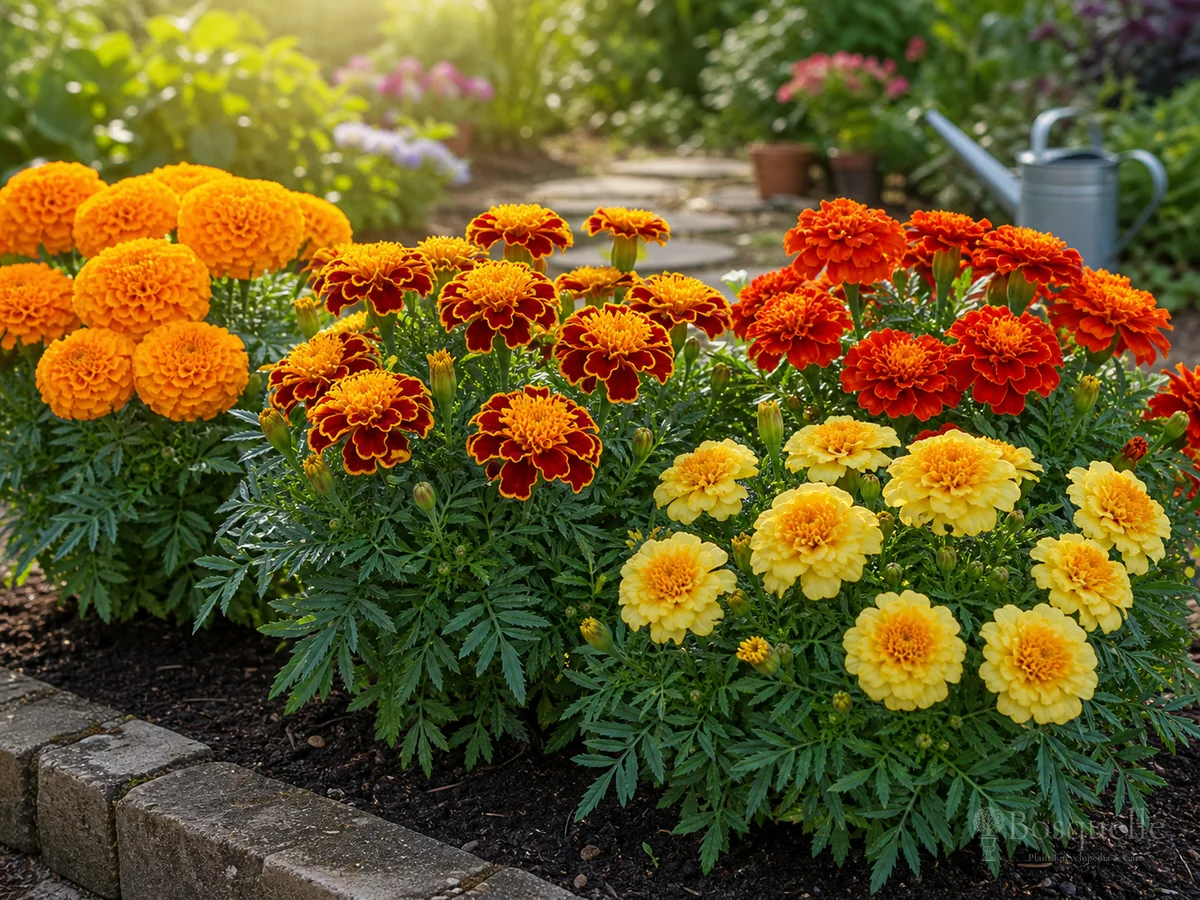
Marigolds (Tagetes) are warm-season annuals. They want full sun, soil that drains, and spent heads snipped off so bloom keeps coming until frost. French types stay compact. African types run tall. Do not treat a seed packet as one plant.
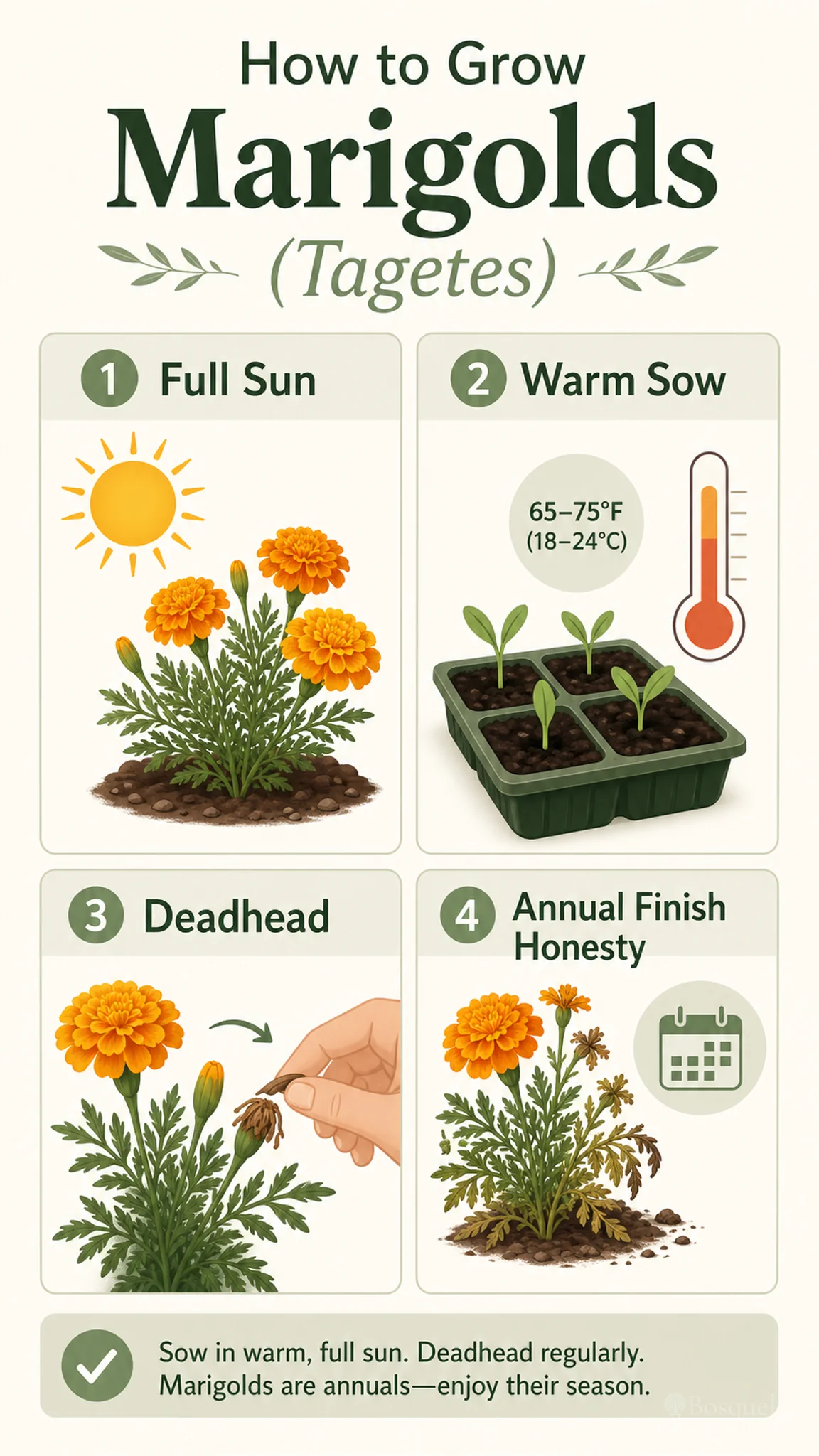
Sow or transplant after frost when soil is warm. Sort height on Types of Marigolds. Compact types in pots live on Marigolds in Containers. Vegetable-bed partners live on Marigold Companion Plants.
Full sun, lean drain, and deadhead
| Factor | Recommended | Avoid |
|---|---|---|
| Light | Full sun, 6 or more hours | Shade that stretches stems and cuts bloom |
| Soil | Well-drained loam; average fertility | A winter puddle, or heavy nitrogen that packs foliage |
| Water | About 1 inch a week at the base after they root | Keeping the mix wet every day, or letting them wilt hard in mite weather |
| Deadhead | Snip spent heads above a leaf pair | Leaving brown balls that stop new buds |
Pick the sunniest strip. Morning sun that dries dew helps more than a rich manure hole. Mix compost into clay so water moves, then plant at the same depth as the nursery pot.
Space French types about 8–12 inches. Space tall African types 12–18 inches so stems do not flop into each other after rain. Air between plants also slows mites and leaf diseases.
This is Tagetes, not pot marigold (Calendula). Confirm Tagetes on the Latin if the packet only says marigold.
Pets: foliage is strongly scented. Do not encourage chewing. This is not a forage plant. Keep cut debris out of reach of animals that eat garden waste.
Deer usually leave the plants alone. That is not a reason to plant them in deep shade. They still need sun to bloom.
French vs African vs signet
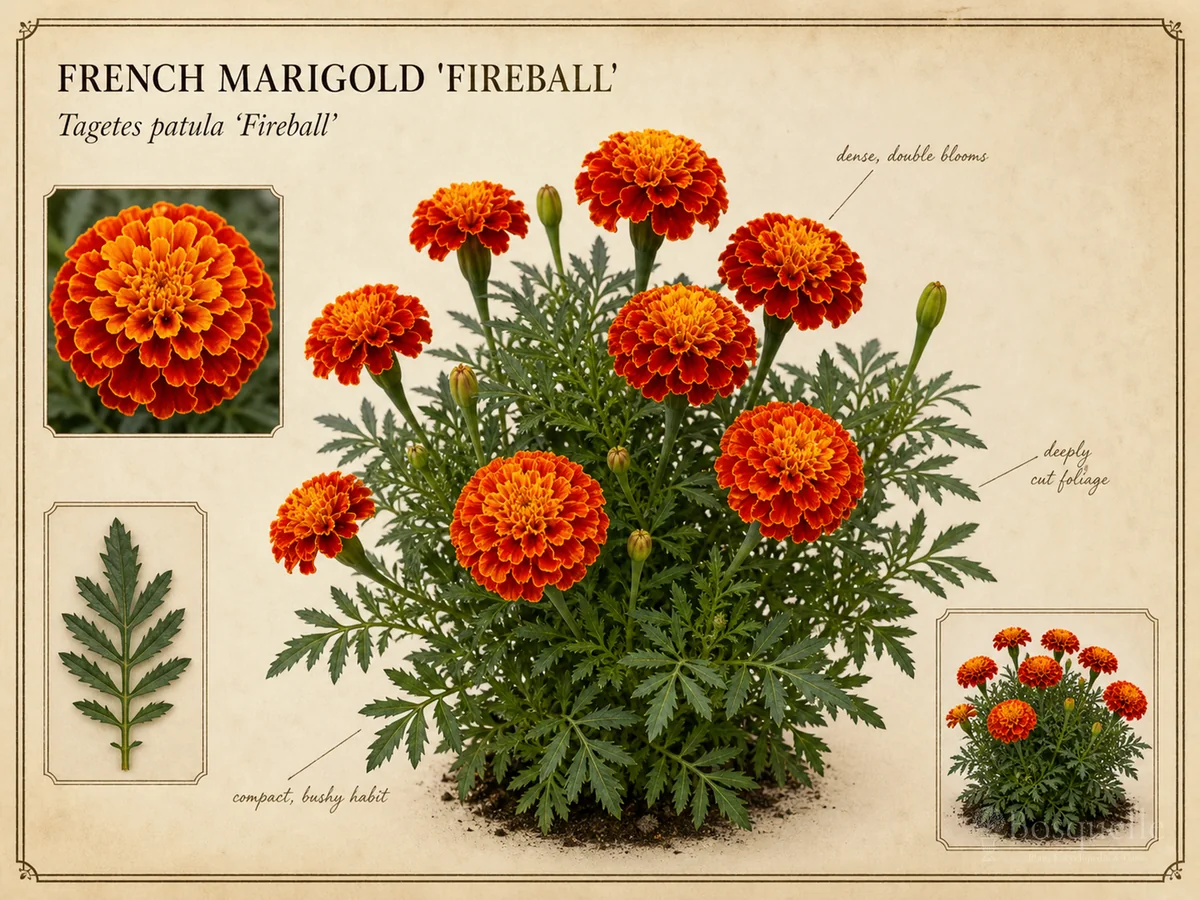
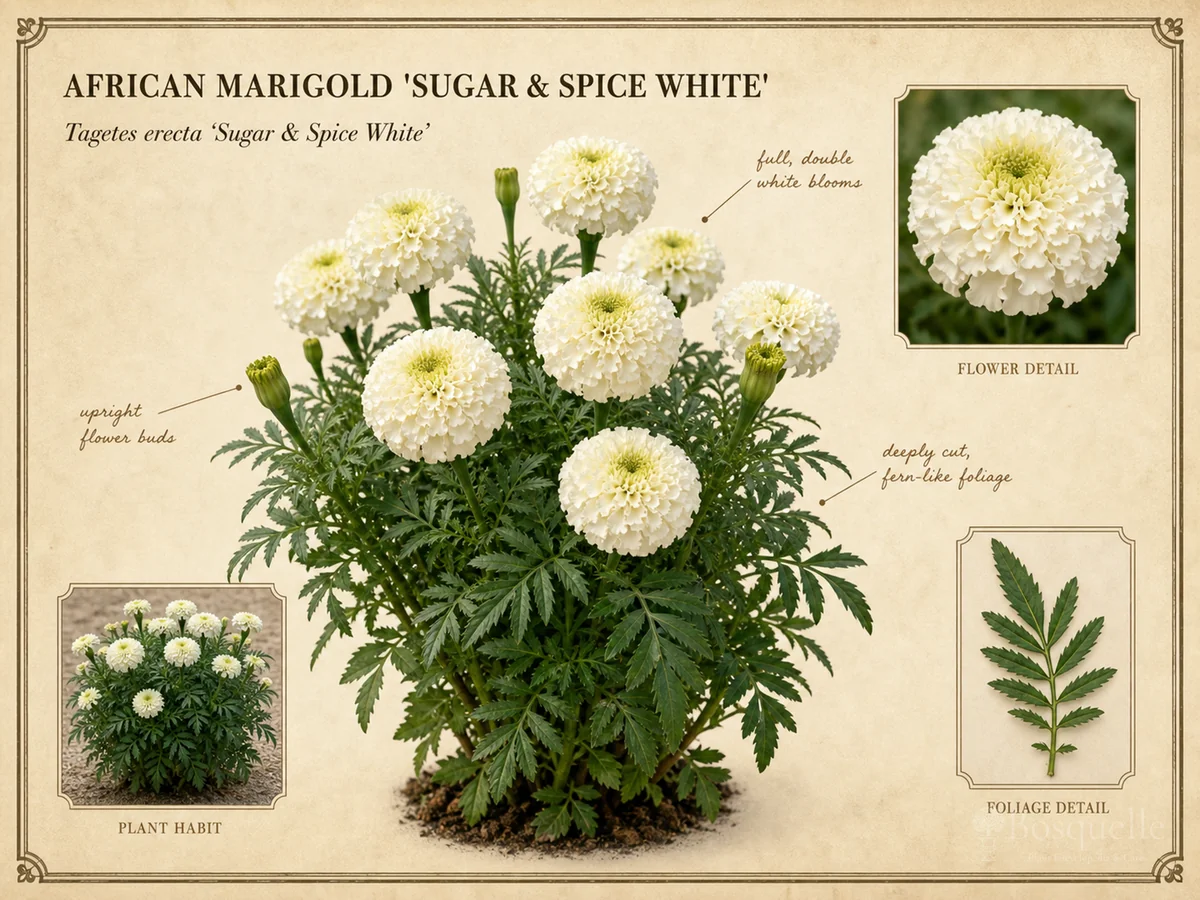
French marigolds (Tagetes patula) are compact, usually 6–12 inches, with smaller heads. African marigolds (T. erecta, also sold as Aztec) are taller, often 2–3 feet, with large double heads. Signet types (T. tenuifolia) are fine-leaf mounds with small single flowers, often used as an edible garnish. Height is the first buy. Color is second.
Fireball, Naughty Marietta, and Safari Scarlet are French compact types for edges and pots. Deadhead them. Do not stake them like a 3-foot African.
Big Duck Gold, Big Duck Orange, and Garuda Deep Gold are African types. Give them room. Stake in a windy bed if heads are heavy. A small patio pot is the wrong test unless the pot has real volume.
Signet Marigold is a fine-leaf mound, not a French double. Sugar & Spice White is a pale African. Lemmon's Marigold is a specialty shrub habit — confirm it is not a one-season bedding plant before you treat frost as the finish. Browse class on Types of Marigolds.
Series such as Bonanza Bolero, Hero Orange, Strawberry Blonde, and Queen Sophia are still French unless the tag says erecta. Read height on the packet before you sow a tray for a 6-inch trough.
Sow, water, and spider mites
| Factor | Recommended | Avoid |
|---|---|---|
| Sow | After frost; soil about 65°F, or start indoors 4–6 weeks earlier | Sowing into cold wet ground |
| Mites | Even moisture; rinse dusty undersides in heat | Drought-stressed plants in hot, dusty air |
| Feed | Little nitrogen; bloom fertilizer if the bed is very poor | Lawn feed that makes leaves and few flowers |
Direct-sow after the last frost, or set transplants when nights stay mild. Cover seed lightly. Keep the surface evenly moist until seedlings stand. Then water deeply at the base about once a week, more in heat, and let the top inch dry between soaks.
Spider mites stipple leaves and leave fine webbing in hot, dry, dusty weather. Stressed plants get them first. Water enough that the clump does not wilt hard. Rinse leaf undersides with a strong stream. Do not start with a broad-spectrum spray that kills mite predators.
Deadhead weekly. Cut or pinch the spent head just above the next healthy leaves. That keeps buds coming until frost. Leaving a brown seed ball tells the plant to stop.
Tall African types may need a stake after a storm. Compact French types usually do not. Do not treat flop as a reason to flood the pot.
A vegetable-bed strip still uses the same sun and drain. Compact French types are the usual edge. The pairing steps and the nematode cover crop live on Marigold Companion Plants.
Slugs chew seedlings in damp shade. Marigolds want sun. Move the row rather than spraying a shady, wet pocket all summer.
Frost finish, pots, and next jobs
Most bedding marigolds are annuals. Hard frost ends the show. Pull the plants, empty the pot, and plan a fresh sowing next spring. Do not treat a blackened clump as a perennial you failed to overwinter.
Compact types in drained pots live on Marigolds in Containers. Height and class live on Types of Marigolds. Vegetable-bed partners live on Marigold Companion Plants. This cluster has no prune page. Deadhead is the cut.
Save seed only from open-pollinated types if you want volunteers. Named hybrids usually will not come true. Pull extras while they are small if you wanted a single color row.
Store unplanted nursery six-packs in bright shade and keep the mix barely moist until the hole is ready. Do not leave them in a hot car.
When two instincts compete — collect every bicolor versus master one sunny, draining strip — master the strip. Color is easy to swap next year. A wet, shaded row wastes the summer.
Label the row with class (French, African, or signet) and sow date. Mixed oranges look the same in leaf. Next year you will want the height, not only the color name.
A late spring cold snap that nips new transplants is not a reason to flood the bed. Wait for green. Then keep the same sun and drain.
Test drain before you plant. Dig a hole, fill it with water, and watch. If it still stands an hour later, raise the bed. Marigolds rot in a sealed puddle faster than they fail from a missed feed.
First-week plants need even moisture until roots leave the nursery mix. After that, a deep soak and a dry surface beat a daily sprinkle that never wets the root ball.
If bloom was poor after a year you fed the bed like a lawn, stop the nitrogen, keep sun, and deadhead. Leaves without flowers are a feed problem, not a missing spray.
Keep a simple record: class, sow date, and whether mites showed. Next year you will know whether to water more in heat or to move the row into more sun. Guessing from flower color alone repeats last year’s stipple.
If rabbits clip new shoots, protect the row with a short ring. Browse is not a watering problem. Replace an eaten clump only after you confirm the hole still drains.
Cut a few stems for the house if you want. Leave most of the row for pollinators. Cutting is not a substitute for weekly deadhead on the plants that stay in the bed.
After frost, empty pots so wet mix does not sit all winter. Refresh the mix in spring. Do not reuse a sour, sealed pot without opening the holes.
A nursery pack that sat wet in a shop aisle needs a dry start. Knock off sour mix, then plant in sun. Shocked plants bloom later. That delay is not a reason to flood the crown.
If bloom stops in midsummer, deadhead harder before you add feed. A plant covered in brown seed heads will not restart from nitrogen. Cut the spent balls, then keep sun and a weekly soak.
Tall African types in rich soil may still lean. Stake while stems are short, or choose a compact French type next year. A late cane after flop is weaker than the right height class on day one.
After a heat wave, check the undersides of leaves for stipple. Rinse, then water the soil. Do not shade the pot to hide mites. They thrive in dust, not in full sun with even moisture.
Self-sown seedlings of open types can fill gaps. Named hybrids usually will not come true. Pull extras while they are small if you wanted a single cultivar row.
When heat arrives, resist panic fertilizer. Flower count comes from sun, deadhead, and a drained hole more often than from another soluble feed in July.
If neighbors ask why yours bloomed and theirs stretched, the answer is usually sun plus height class, not a secret spray. Move a shady row in spring. Then keep the same drain.
Keep a written note of sow date and first deadhead on the tag. Next year you will not guess whether the row is due. Color on the flower does not record those jobs.
If a late transplant sits in a six-pack until July, harden it in bright shade for two days, then plant high in a draining hole. Heat shock is not a reason to keep the mix wet all day.
A cool, wet June is not a reason to skip sun. Marigolds stretch in shade even when the soil is right. Keep the open strip.
FAQ
Do marigolds need full sun?
Yes. Aim for six or more hours. Shade stretches stems and cuts bloom.
What is the difference between French and African marigolds?
French types (patula) are compact. African types (erecta) are taller with larger heads. Read height on the packet. See Types of Marigolds.
When should I sow marigolds?
After frost, when soil is about 65°F, or start indoors 4–6 weeks earlier.
How do I deadhead marigolds?
Snip spent heads just above a leaf pair. Weekly deadhead keeps bloom coming until frost.
Why do my marigolds have stippled leaves?
Often spider mites in hot, dry, dusty weather. Water so plants are not drought-stressed. Rinse leaf undersides.
Are marigolds annuals?
Bedding types are. Hard frost ends the show. Specialty shrub forms are a different habit — confirm on Types.
Can I grow marigolds in pots?
Yes. Compact French types are the usual pot plant. See Marigolds in Containers.
Can I plant marigolds with tomatoes?
Yes on a sunny drained edge. Compact French types are the usual partners. See Marigold Companion Plants.
Are marigolds the same as calendula?
No. Calendula is pot marigold, a different genus. These pages are Tagetes.
Do I fertilize marigolds?
Lightly. Heavy nitrogen makes leaves and few flowers.
Related guides


Recommended plants




This note is part of Tagetes Guides.
More first-season notes by plant are gathered in How to Grow Guides.
Updated: Reviewed by Bosquelle Editors