
Grow damianita in full sun, on soil that drains, and skip extra water once the roots take. Damianita is Chrysactinia mexicana, also sold as damianita daisy.
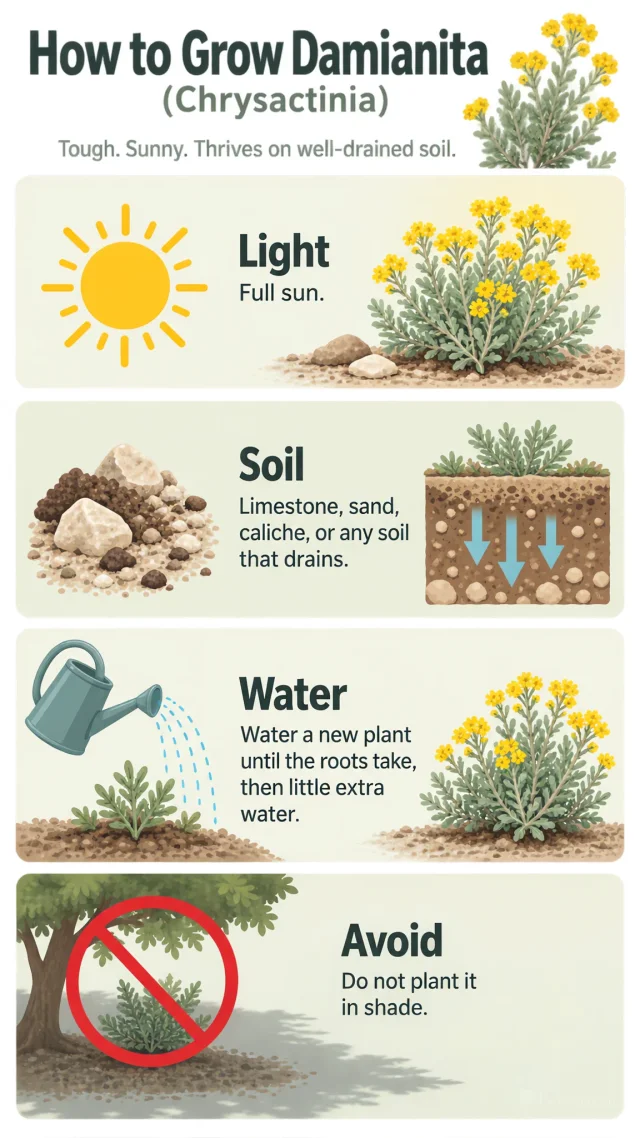
Give it full sun, soil that drains, and little extra water once the roots take
| Factor | Recommended | Avoid |
|---|---|---|
| Light | Full sun | Do not plant it in shade |
| Water | Water a new plant until the roots take, then little extra water | Do not keep the soil wet |
| Soil | Limestone, sand, caliche, or any soil that drains | Do not plant it in a low, wet hole |
| Size | About 1 to 2 feet tall and wide | Do not crowd it as if it were a 4-foot shrub |
Damianita wants full sun and a hole that drains. Shade makes a loose, spindly mound with fewer flowers. Water a new plant through the first dry weeks, then ease off; an established plant takes a dry spell better than soggy soil. Soggy soil around the roots is the primary cause of root rot. [1] It dies in a wet bed, and it stays thin if the light is poor. [2] Once the roots are in, skip extra fertilizer. This is a dry-slope shrub, not a border plant for moist loam.
How much sun does damianita need?
Give it full sun. Shade makes a thin, open mound and cuts the bloom.
How often should I water damianita?
Water a new plant until the roots take. Then skip extra water. Soggy soil around the roots is the primary cause of root rot.
Does it take a dry spell once it is rooted?
Yes. Once the roots are in, skip extra water. Rain is often enough in a draining bed.
Plant in fall, at the same depth as the pot
Knock the plant from its pot and set the root ball at the same depth it was already growing. Fall is the first window, so the roots settle before the next hot summer. Early spring is the next-best time.
- Plant in fall if you can. Early spring is the next-best window. Do not set a new plant into peak summer heat.
- Dig a hole about twice as wide as the root ball, and no deeper. Backfill with the same soil. Do not mix in extra compost that holds water around the roots. [3]
- Set the crown even with the surrounding soil. Do not bury it.
- Leave about 18 to 24 inches between plants so the mounds can fill. Water to settle the soil, then stretch the watering as the roots take.
When should I plant damianita?
Plant in fall if you can, at the same depth as the pot. Early spring is the next-best window.
How much room does a damianita need?
Leave about 18 to 24 inches between plants. A mature mound is about 1 to 2 feet tall and about as wide.
Shear after bloom, and leave some green on the stems
After the main spring flush fades, shear the tips so the mound stays tight and blooms again. Do not cut every green shoot off, and do not cut into bare woody stems. Those old stems often do not resprout.
- Shear after the spring bloom. Cut the tips, or cut the plant back to about half its size, and leave green on the stems. [4]
- Deadhead spent heads, or tip the top, if you want a tighter mound. Pull a few old woody stems from underneath if the center opens up.
- Do not shear in the coldest weeks. After a hard freeze, wait until new growth shows before you cut browned tips.
- Skip a hard cut into old wood. If the mound has gone woody and bare, start a new plant instead of hoping the stump will fill.
When do I prune damianita?
Shear after the spring bloom, and leave some green on the stems. Do not cut into bare wood.
Not damiana — and not angelita daisy
Damiana is Turnera, a different shrub grown for tea and herbal products. If the tag says damiana, False Damiana, or Turnera, you do not have this plant.
Angelita daisy is Tetraneuris, a low clump with grass-like basal leaves and yellow heads on wiry stalks. If the tag says angelita daisy or four-nerve daisy, read How to Grow Angelita Daisy. Desert marigold is Baileya, a woolly yellow daisy — see How to Grow Desert Marigold. Garden marigold is Tagetes — see How to Grow Marigolds. Coreopsis is a different yellow daisy for moister borders — see How to Grow Coreopsis.
Is damianita the same as damiana?
No. Damianita is Chrysactinia mexicana, an evergreen yellow daisy shrub. Damiana is Turnera, a different plant.
Start a new plant from a cutting, or from seed
The usual way to start a copy of a shrub you like is a softwood cutting in summer. Seed works too. Collect the dry flower heads after bloom and sow them in spring, or as early as fall.
- In summer, take a softwood cutting from a non-flowering stem and stick it in a mix that drains.
- Keep that mix barely moist until roots form. Then move the rooted cutting into full sun, in soil that drains.
- Or collect dry flower heads after bloom, store them cool and dry, and sow the seed in spring, or as early as fall. Barely cover it.
- Keep seedlings from sitting wet. Plant them out once they are sturdy, at the same depth as the pot.
Can I start it from a cutting?
Yes. Take a softwood cutting in summer, stick it in a mix that drains, and keep the mix barely moist until roots form. Seed also works if you sow the dry heads in spring.
If the soil stays wet, move the plant to a hole that drains, and skip extra water once the roots are in.
FAQ
Can I grow damianita in a pot?
A nursery pot is how the shrub is sold, not a houseplant. Keep it outdoors in full sun, in a mix that drains, if you hold it in a container. Empty the saucer so the roots do not sit wet.
Is there more than one kind of damianita?
Chrysactinia mexicana is the plant here. Damianita daisy is the same shrub, not a second type.
What does damianita look like in winter?
It stays evergreen. After a hard freeze, wait until new growth shows before you cut browned tips.
Can I grow damianita as a houseplant?
No. It needs full sun outdoors. Indoor light is too dim, and a wet indoor pot rots the roots.
What else likes that hot, draining slope?
Pair it with other plants that want full sun and dry soil, such as blackfoot daisy. Do not put it under a tree that holds shade and extra water.
Recommended plants
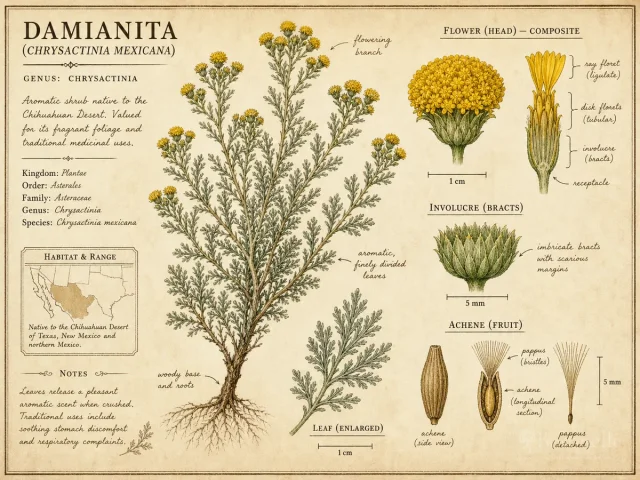
References
- [1] Lady Bird Johnson Wildflower Center -
https://www.wildflower.org/plants/result.php?id_plant=CHME3 - [2] Garden Style San Antonio -
https://www.gardenstylesanantonio.com/garden-articles/know-your-natives-damianita/ - [3] Southwest Gardener -
https://swgardener.com/damianita/ - [4] Central Texas Gardener -
https://www.centraltexasgardener.org/resource/damianita/
More first-season notes by plant are gathered in How to Grow Guides.
Updated: Reviewed by Bosquelle Editors