
Grow currant in a cool spot with sun or part shade, moist well-drained soil, and a thick mulch over the shallow roots. Gooseberry is the same genus — a thorny fruit shrub, not a husk berry.
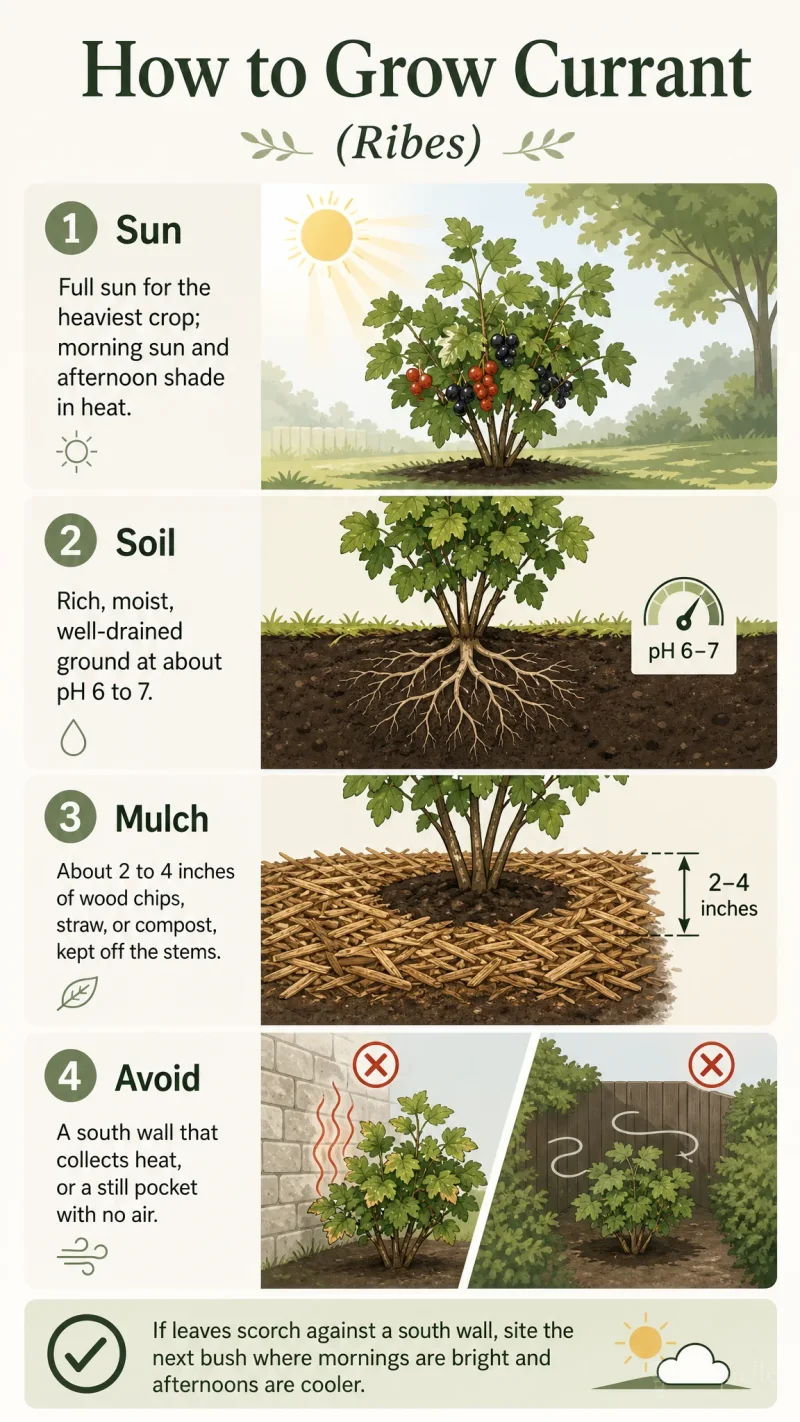
Give it a cool site, sun or part shade, and a thick mulch
| Factor | Recommended | Avoid |
|---|---|---|
| Sun | Full sun for the heaviest crop; morning sun and afternoon shade in heat | A south wall that collects heat, or a still pocket with no air |
| Soil | Rich, moist, well-drained ground at about pH 6 to 7 | Dry sand with no mulch, or a puddled clay cup |
| Mulch | About 2 to 4 inches of wood chips, straw, or compost, kept off the stems | Bare, hot soil over the shallow roots |
| Legal | Check local Ribes rules before you buy, especially black currant | Planting a banned black currant next to white pine |
Currant fails first from heat and dry shallow roots, not from a missed fertilizer spike. [1] The federal Ribes ban ended in 1966, but some states still limit black currant. Ask extension if white pine grows nearby. [2] A fruit bush such as Red Lake wants the same cool mulch as a gooseberry such as Pixwell. Most kinds set fruit alone; a second cultivar in bee range can improve the crop. [3] It blooms early, so skip a frost pocket and a south wall that collects heat. [4]
Gooseberry is the same cool shrub, with thorns
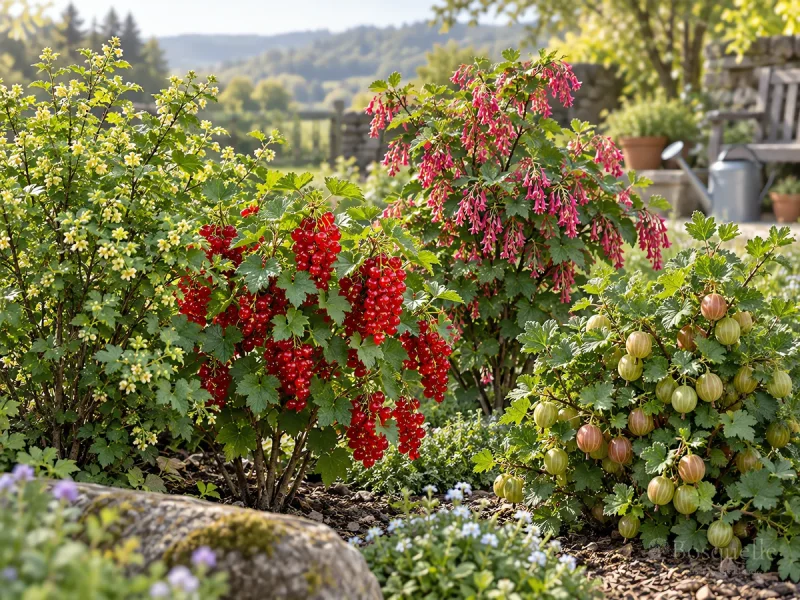
Gooseberry canes usually have a spine at each leaf node, and the berries sit one or two together, not in a long cluster. It still wants this cool site and mulch. Choose red, black, or gooseberry on Types of Currant.
What pH do currants need?
About 6 to 7. They tolerate a wider range than blueberry, including mildly alkaline soil.
Can I plant currants near white pine?
Check local rules. Black currant is the usual restriction. Red currant and gooseberry are less often banned.
Water the shallow roots
Currant roots sit in the top few inches. They wilt in a dry week and sit poorly in a puddle. Give even moisture from bloom until the fruit is off, then ease off so the wood can harden.
- Give about an inch of water a week from bloom until you pick, from rain or a soaker under the mulch.
- Keep the mulch at about 2 to 4 inches. Do not pile it against the stems.
- Ease off after harvest so the wood can harden. Water once more before the ground freezes if the fall is dry.
Birds will strip a ripe bush. Pick and net on Harvesting Currant.
Not cape gooseberry — and not a currant tree
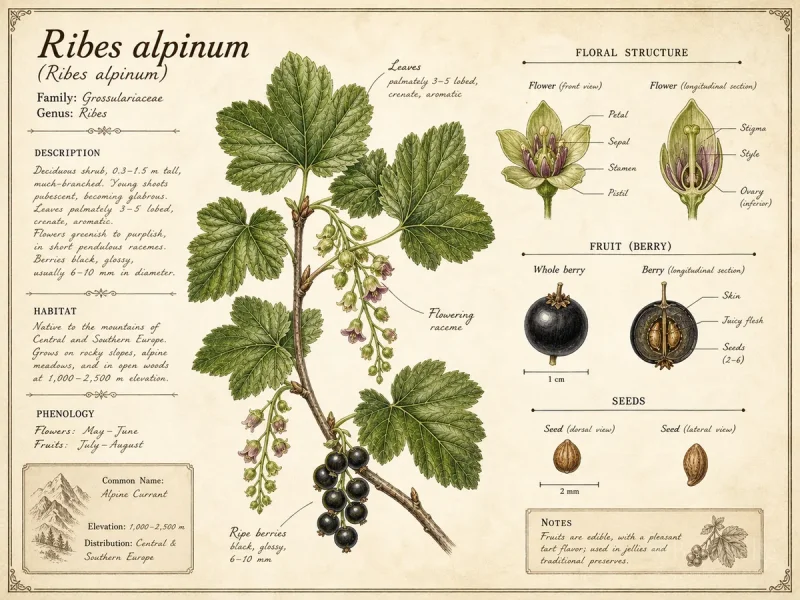
Cape gooseberry is Physalis, a husk berry on an annual or tender plant — care is on How to Grow Chinese Lantern. Currant is a shrub, not a tree. Dried “Zante currants” are grapes; vines are on How to Grow Grapes. Alpine currant is a hedge, not this fruit crop — see How to Grow Alpine Currant.
Is cape gooseberry a Ribes gooseberry?
No. Cape gooseberry is Physalis. True gooseberry is Ribes, a woody shrub with no papery husk.
If leaves scorch against a south wall, site the next bush where mornings are bright and afternoons are cooler.
FAQ
Do I need two currant bushes?
Most red currants and gooseberries set fruit alone. A second cultivar can improve the crop. Some black currants need a pair.
Can I grow currant in a pot?
A large tub works if you can water it in heat. In-ground with mulch is easier.
What about powdery mildew?
Give the bush sun and air, and keep the center open when you prune. Pull mildewed leaves. Do not start with a spray.
Related guides


Recommended plants


References
- [1] University of Minnesota Extension -
https://extension.umn.edu/fruit/growing-currants-and-gooseberries-home-garden - [2] Colorado State University Extension -
https://extension.colostate.edu/resource/currants-gooseberries-and-jostaberries/ - [3] SDSU Extension -
https://extension.sdstate.edu/currants-how-grow-it - [4] Utah State University Extension -
https://extension.usu.edu/yardandgarden/research/red-currants-in-the-garden
This note is part of Ribes Guides.
More first-season notes by plant are gathered in How to Grow Guides.
Updated: Reviewed by Bosquelle Editors