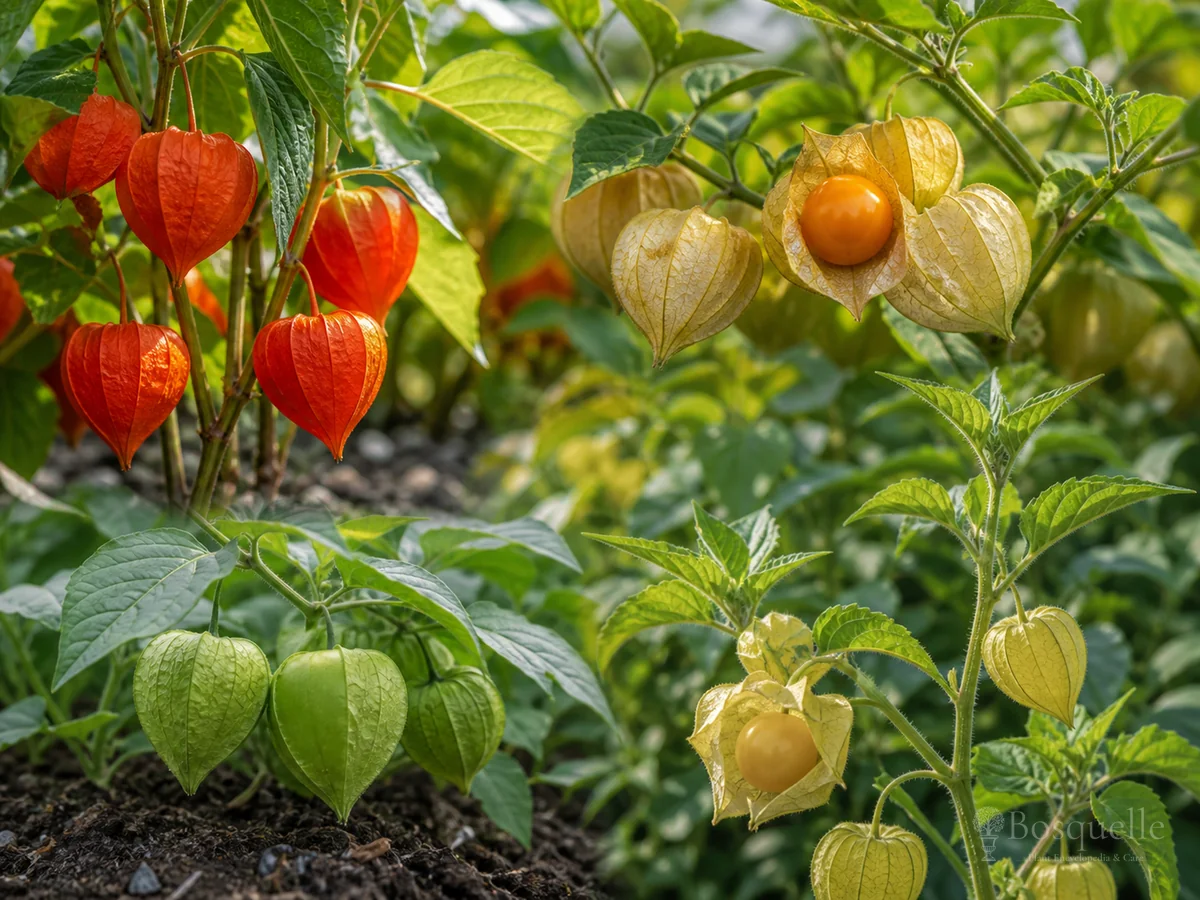
Grow Chinese lantern in full sun on even, well-drained moisture, with a plan for the rhizomes. Shops also list Physalis.
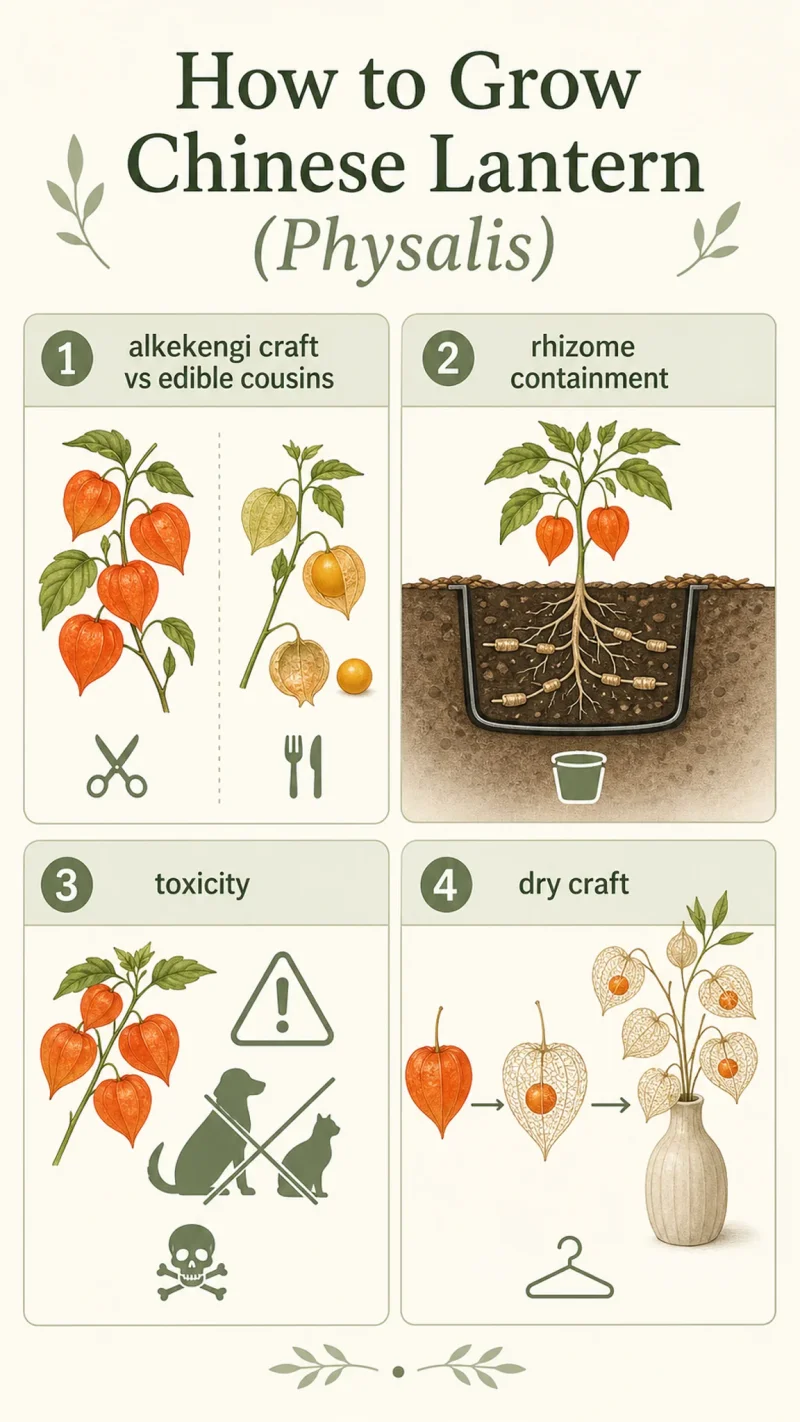
Full sun, even moisture, and a rhizome plan
| Factor | Recommended | Avoid |
|---|---|---|
| Light | Full sun; light afternoon shade in hard heat | Deep shade that makes lank stems and few husks |
| Soil | Evenly moist, well-drained ground | A winter-wet hollow |
| Spread | A contained bed, a sunk barrier, or a pot on paving | An open prize border with no edge |
| Winter | Let tops die back; mulch the crown in a hard freeze | Leaving a wet saucer under a dormant pot |
Ornamental Chinese lantern makes the brightest husks in full sun and stays even in moisture that drains. Deep shade thins the stems. A soggy hollow rots the crown. [1] Underground stems run sideways. Fork new shoots at the edge each spring, or keep the clump inside a bed you will police. [2] A large pot on a patio or other hard surface stops those stems from entering open soil. Watch the drain holes. [3] Feed lightly in spring if the soil is poor. Heavy nitrogen makes leaves, not husks. Do not dump soil from the clump onto another bed — fragments grow.
How much sun does Chinese lantern need?
Full sun. Light afternoon shade is fine in hard heat. Deep shade means fewer orange husks.
Does Chinese lantern spread?
Yes. Underground stems send up new shoots. Keep it in a contained bed or a pot on paving, and fork escapes in spring.
Cut stems when the husks turn orange
The show is the papery husk, not the small white flower. Wait until those husks turn from green to orange-red, then cut. Leaves and unripe fruit are toxic if eaten — keep them off the table and away from toddlers and pets.
- Cut stems as soon as the husks turn from green to orange-red, before they bleach and split.
- Strip the leaves so they do not hold moisture on the stems.
- Hang the stems upright in a cool, airy place until the husks are dry. They keep color for years out of direct sun. [4]
- Leave unripe green fruit and the foliage uneaten. Ripe lantern fruit is bland and rarely worth the kitchen.
Are Chinese lantern plants poisonous?
Leaves and unripe fruit are toxic if eaten. Treat the planting as ornamental, not a snack crop.
When do the husks turn orange?
Late summer into fall. Cut when the husk has gone from green to orange-red.
Can I dry the stems?
Yes. Cut at the color change, strip the leaves, and hang the stems upright in a cool, airy place.
If husks stayed green and thin, give the clump more sun next year and keep moisture even — then cut when the color turns.
FAQ
Can I grow Chinese lantern in a pot?
Yes — a pot on paving is a good way to stop the rhizomes. Use a sturdy pot at least a foot wide, and keep drain holes off open soil.
What else can I plant nearby?
Other full-sun perennials that accept even moisture. Give the lantern its own contained patch so it does not run through neighbours.
What pests hit Chinese lantern?
It is usually lightly bothered. Flea beetles may chew leaves. Tomato-family diseases show up in wet, crowded foliage. Airflow and even moisture matter more than a spray calendar.
Do I prune Chinese lantern?
Cut stems for drying when the husks turn orange. After frost, cut dead tops to the ground. That is cleanup, not a shaped hedge.
Is Japanese lantern the same plant?
Usually yes — Japanese lantern is another name for this ornamental. Flowering maple is a different plant.
Related guides

Recommended plants


References
- [1] NC State Extension Gardener -
https://plants.ces.ncsu.edu/plants/physalis/ - [2] Gardener's Path -
https://gardenerspath.com/plants/flowers/grow-chinese-lantern/ - [3] Gardener's Path -
https://gardenerspath.com/plants/flowers/grow-chinese-lantern-containers/ - [4] Washington State University Extension -
https://s3.wp.wsu.edu/uploads/sites/2079/2014/02/ChineseLanterns.pdf
This note is part of Physalis Guides.
More first-season notes by plant are gathered in How to Grow Guides.
Updated: Reviewed by Bosquelle Editors