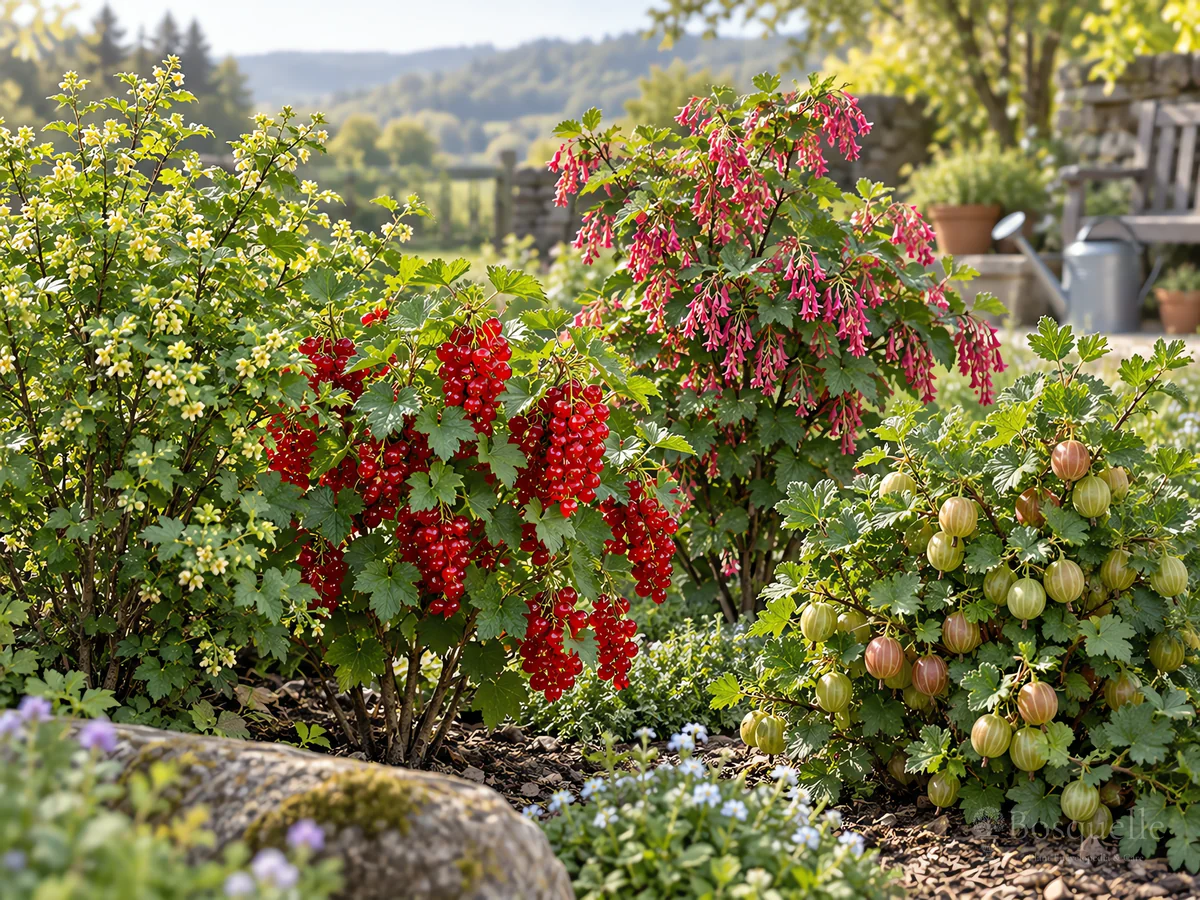
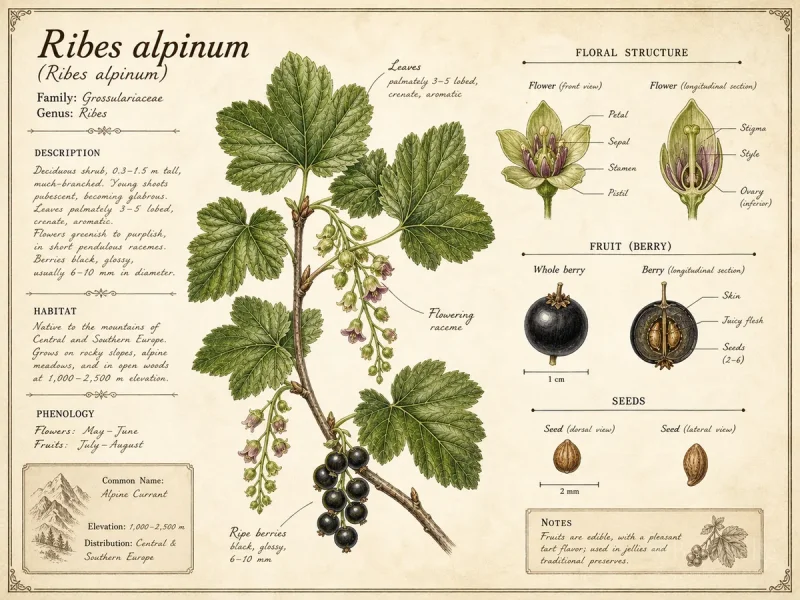
Grow alpine currant as a hedge in sun or shade. It is Ribes alpinum, a dense deciduous screen, not the European jelly crop.
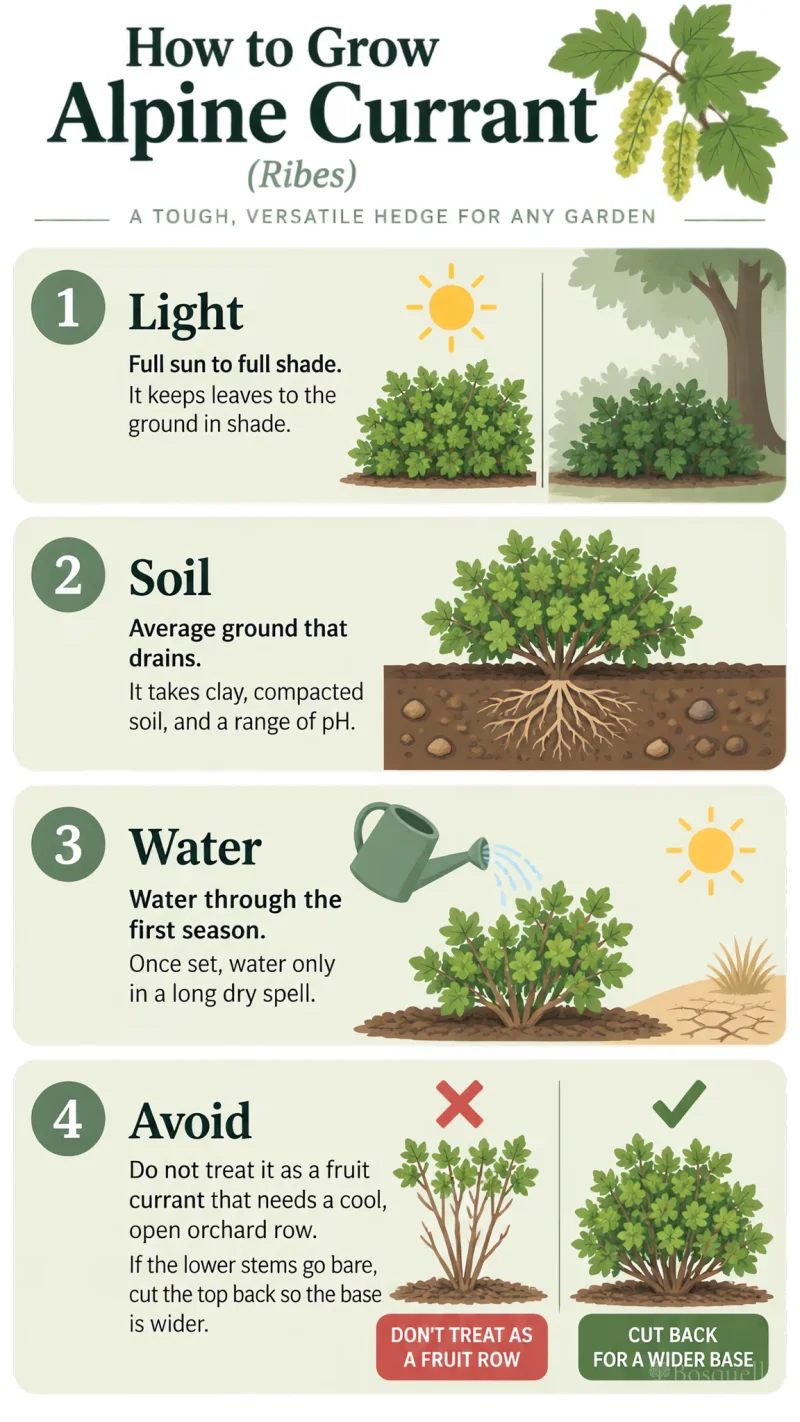
Grow alpine currant as a hedge in sun or shade
| Factor | Recommended | Avoid |
|---|---|---|
| Light | Full sun to full shade; it keeps leaves to the ground in shade | Treating it as a fruit currant that needs a cool, open orchard row |
| Soil | Average ground that drains; it takes clay, compacted soil, and a range of pH | A hole that stays soggy |
| Water | Water through the first season; once set, water only in a long dry spell | Keeping the soil muddy, or counting on fruit-currant even moisture |
| Legal | Check local Ribes rules before you plant | Skipping the check because it is sold as a hedge |
alpine currant is a mounded deciduous shrub, about 3 to 6 feet, used as a formal or informal hedge. It takes sun, part shade, or full shade, and it holds foliage to the ground better than most deciduous hedges. [1] Water a new plant through the first season. Once the roots take, it handles missed water better than fruit currant. [2] Most nursery plants are male clones, so you should not count on a crop of berries. [3]
Does alpine currant need full sun?
No. Full sun to full shade. It stays dense in shade, which is why it is sold as a hedge.
How to keep an alpine currant hedge dense
Shear for shape. Keep the base a little wider than the top so sun reaches the lower branches.
- Set the shrub at the same depth it sat in the pot. Water it in, and keep the first season from drying out. [4]
- Shear in late winter or early spring before buds break. You can shear again in midsummer if the hedge puts on a flush.
- Keep the base wider than the top. A top-heavy cut shades the lower stems and they go bare.
- Every few years, take a few of the oldest stems at the ground so light reaches the center. Do not renew it as a fruit-cane bush.
When do I shear alpine currant?
Late winter or early spring, before new growth. A second pass in midsummer is fine if the hedge has put on a flush.
Not a fruit currant
Fruit currant wants a cool, mulched row and mixed-age canes. That keep-alive is on How to Grow Currant. Choose red, black, or gooseberry on Types of Currant if you want jelly fruit. Alpine currant is the hedge.
If the lower stems go bare, cut the top back so the base is wider — do not treat it as a fruit row.
FAQ
Do sold alpine currants set fruit?
Usually not. Most nursery plants are male. Female plants can set small red berries; that is not the jelly crop.
Is alpine currant legal near white pine?
Check local rules. It is still Ribes. Male plants are the usual hedge stock.
Related guides



Recommended plants


References
- [1] The Morton Arboretum -
https://mortonarb.org/plant-and-protect/trees-and-plants/alpine-currant/ - [2] Gardening Know How -
https://www.gardeningknowhow.com/edible/fruits/currants/growing-alpinum-currants.htm - [3] Ohio State University -
https://plantfacts.osu.edu/tmi/Plantlist/ri_pinum.html - [4] Nature Hills Nursery -
https://www.naturehills.com/products/alpine-currant
This note is part of Ribes Guides.
More first-season notes by plant are gathered in How to Grow Guides.
Updated: Reviewed by Bosquelle Editors