
Grow crownbeard in sun to part shade, and match water to the kind you bought. Verbesina is the genus name.
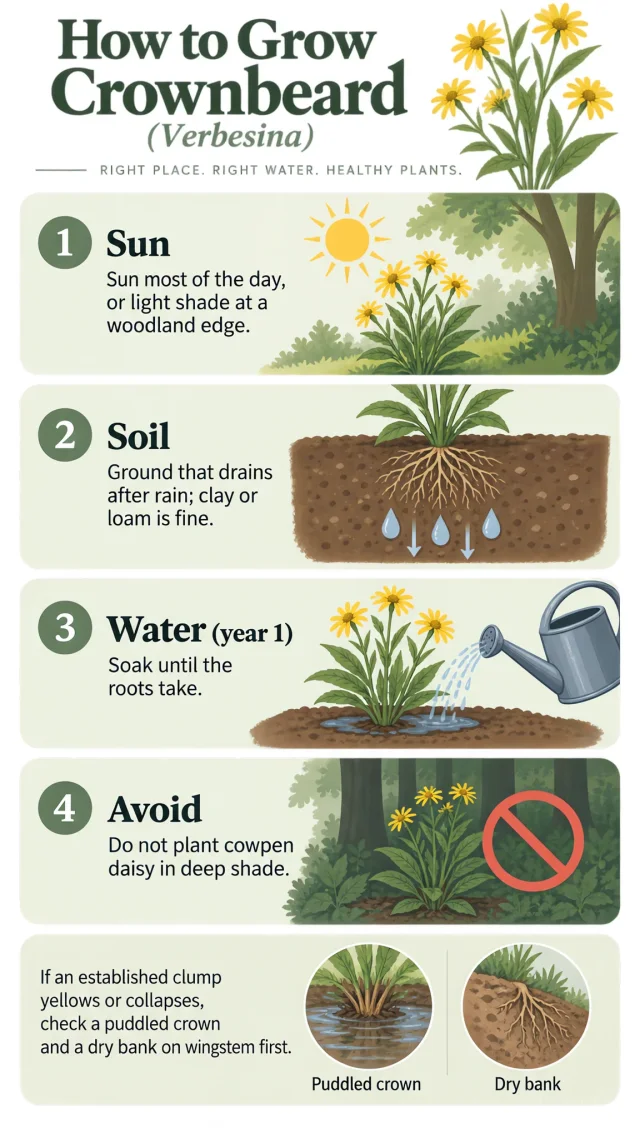
Give it sun to part shade, and match water to the kind you bought
| Factor | Recommended | Avoid |
|---|---|---|
| Sun | Sun most of the day, or light shade at a woodland edge | Do not plant cowpen daisy in deep shade |
| Soil | Ground that drains after rain; clay or loam is fine | Do not leave the crown sitting in a puddle that never dries |
| Water (year 1) | Soak until the roots take | Do not skip water in week one on a new perennial |
| Water (established) | Wingstem: keep the soil moist. Frostweed: a drier woodland edge. Yellow crownbeard and cowpen daisy: skip extra water once rooted | Do not run a weekly drip on established cowpen daisy. Do not site wingstem on a dry bank and expect a dense clump |
| Feed | Native soil is enough | Do not fertilize for extra height — the stems flop |
| Drought | Missed waterings once yellow crownbeard or cowpen daisy is rooted | Do not skip water on a new plant, or on wingstem in a dry bed |
| Deer | Often left once established; cage a new plant the first year | Do not assume a hungry deer will never browse a young transplant |
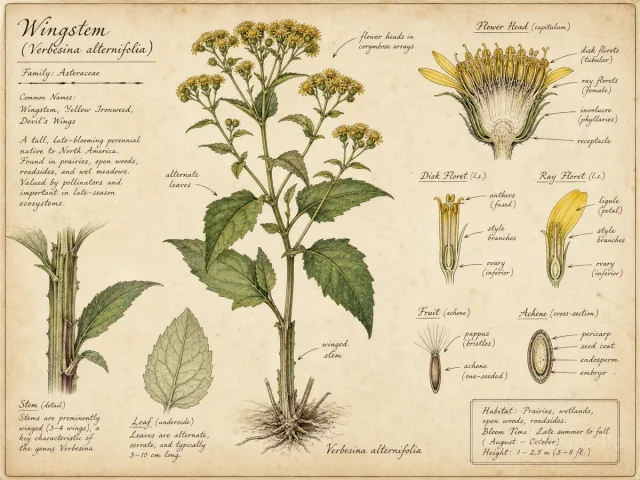
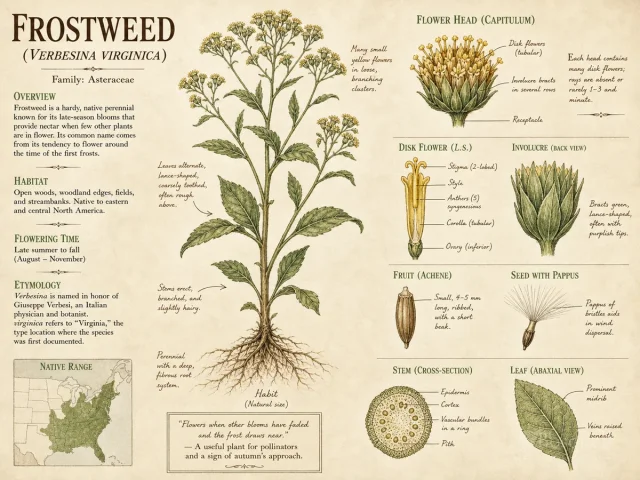
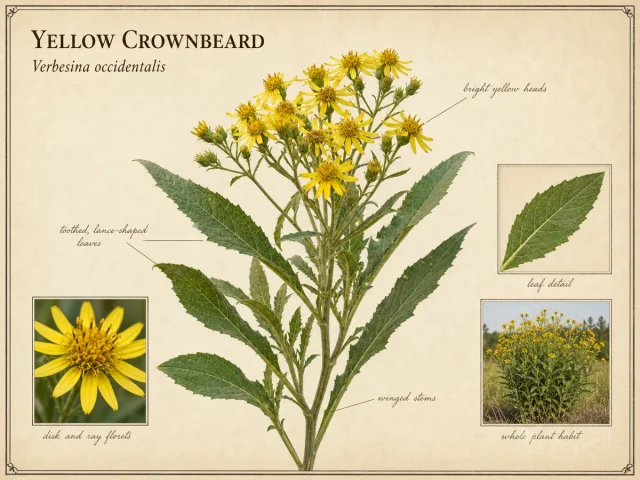
Give it sun for most of the day, or light shade at the woodland edge, and soil that drains after a rain. [1] Water a new plant until it is rooted. After that, match water to the kind: keep wingstem on moist ground, let frostweed take a drier woodland edge, and skip extra water on established yellow crownbeard or cowpen daisy. [2] wingstem is the usual eastern yellow perennial. frostweed wants a woodland edge. cowpen daisy is the dry annual. If you are still choosing a kind, see Types of Crownbeard.
- Plant in sun or light shade so the stems stay upright and the heads open.
- Use the native soil if water moves through it. Do not add a rich compost backfill that stays wet.
- Water to settle a new plant, then soak until it is rooted. After that, follow the kind, not a weekly calendar.
Does crownbeard need full sun?
Sun most of the day is the usual bed. Light shade at a woodland edge is fine for frostweed and wingstem. Cowpen daisy wants full sun.
How often should I water crownbeard?
Soak a new plant until it is rooted. After that, keep wingstem moist. Frostweed takes a drier woodland edge. Skip extra water on established yellow crownbeard and cowpen daisy.
Plant in spring or fall, at the same depth as the pot
Spring or fall is the usual window for a potted perennial. Set the crown at the same depth as in the pot. Cowpen daisy is an annual you start from seed, not from a returning clump.
- Dig a hole as deep as the pot and a little wider. Set the crown even with the soil. Do not bury the winged stems.
- Backfill with the soil you dug. Do not pack compost against the crown.
- Space clumps 2 to 3 feet apart so air can move through the stems.
- Water once to settle. Then follow the first-year soak, not a daily sprinkle.
When should I plant crownbeard?
Plant a potted perennial in spring or fall. Sow cowpen daisy after frost on disturbed ground.
How far apart do I plant it?
Set clumps 2 to 3 feet apart. Give a tall wingstem or frostweed room at the back of the border so it does not shade a short neighbor.
Cut the stems in late winter
Crownbeard dies back after frost. Cut the brown stems in late winter, before new growth. On frostweed, wait until after the first hard freeze if you want the ice ribbons at the stem base. [3]
- Leave frostweed standing through the first freeze if you want the ice display. Then cut.
- In late winter, cut the old stems to a few inches. New shoots come from the crown.
- If frostweed flops before bloom, cut the stems about in half in early June. Then still cut the dead stems in late winter.
- Deadhead after bloom if you do not want a thicket of seedlings. Birds eat the seed if you leave the heads.
When do I cut crownbeard back?
Late winter, before new growth. Cut the old stems to a few inches. If frostweed flops before bloom, cut it about in half in early June, then still cut the dead stems later.
Should I leave frostweed standing for ice flowers?
Yes, if you want the ice ribbons. Wait until after the first hard freeze, then cut in late winter.
Grow more from seed or by dividing a clump
Perennial kinds come from fall-sown seed or from a winter division. Cowpen daisy sprouts from a scatter on bare ground, with no cold wait. [4]
- For wingstem, frostweed, or yellow crownbeard, sow in fall, or keep the seed cold and moist for about 30 to 60 days before a spring sow. Press it onto the surface. Do not bury it deep.
- For cowpen daisy, scatter seed on disturbed ground after frost. Walk away. Thin the carpet if it crowds the bed.
- Divide a perennial clump in winter while it is dormant. Replant the pieces at the same depth, and water once to settle.
Can I grow crownbeard from seed?
Yes. Sow perennial seed in fall, or after a cold, moist wait. Scatter cowpen daisy on bare ground after frost, with no cold wait.
Can I divide frostweed?
Yes. Split a dormant clump in winter. Replant the pieces at the same depth.
Not ice plant — and not ironweed or a sunflower
Frostweed is also sold as iceplant or iceweed, but it is a tall native, not a succulent carpet. Ice plant in the dry-garden trade is usually Delosperma — see How to Grow Ice Plant if that is the mat on the tag. wingstem is also called yellow ironweed, but purple ironweed is Vernonia — see How to Grow Ironweed. The yellow heads can look like a sunflower. True sunflowers are Helianthus — see How to Grow Sunflowers if that is the annual on the tag. yellow crownbeard has opposite leaves. frostweed has alternate leaves and white heads. cowpen daisy has no stem wings.
Is frostweed an ice plant?
No. Frostweed is Verbesina. A succulent ice plant is Delosperma. Frostweed is also tagged iceplant, but it is a tall woodland perennial.
If an established clump yellows or collapses, check a puddled crown and a dry bank on wingstem first. Wet soil, not a skipped soak, is the usual cause on the dry kinds.
FAQ
Can I grow crownbeard in a pot?
A draining pot can hold a young plant for a season. Empty the saucer after you water. The open bed is the lasting home.
Does crownbeard need fertilizer?
No. Native soil is enough. Fertilizer makes tall, floppy stems.
Will cowpen daisy take over the bed?
It self-sows hard on bare ground. Pull extra seedlings, or deadhead if you want fewer plants next year.
Why does frostweed make ice ribbons?
After a hard freeze, sap splits the stems and freezes into ribbons at the base. Leave the stems standing if you want to see it.
What else can I plant with frostweed?
Pair it with other late nectar plants at a woodland edge — asters, goldenrod, or mistflower in the same sun and soil.
Does crownbeard get pests?
Serious insect damage is uncommon. Powdery mildew can mark crowded stems in humid weather. Thin the clump so air moves through. Wet soil is the usual cause of root rot.
Related guides

Recommended plants

References
- [1] The Morton Arboretum -
https://mortonarb.org/plant-and-protect/trees-and-plants/wingstem/ - [2] NC State Extension Gardener -
https://plants.ces.ncsu.edu/plants/verbesina-occidentalis/ - [3] Native Backyards -
https://nativebackyards.com/help-pollinators-plant-frostweed-verbesina-virginica/ - [4] Texas Butterfly Ranch -
https://texasbutterflyranch.com/2019/02/13/cowpen-daisy-how-to-grow-verbesina-encelioides-from-seed/
This note is part of Verbesina Guides.
More first-season notes by plant are gathered in How to Grow Guides.
Updated: Reviewed by Bosquelle Editors