
Grow ironweed in full sun and soil that stays moist. Most species reach four feet or taller, so give the clump room and cut stems back by half in late spring to keep them upright.

Give it full sun and soil that stays moist
| Factor | Recommended | Avoid |
|---|---|---|
| Sun | Full sun, at least six hours; light afternoon shade is fine in heat | Deep shade that stretches stems and reduces bloom |
| Soil | Moist to average, well-drained ground; a rain garden or stream edge works well | Infertile dry soil, or standing water on the crown |
| Water | Keep the root zone moist during the growing season; water in a dry spell | Letting the bed go dry — most species are not drought plants once established |
| Feed | Little or none; a layer of compost in the planting hole is enough | Rich fertilizer that pushes tall, weak stems that need staking |
| Deer / rabbit | Deer and rabbits avoid the plant — alkaloids in the foliage taste bitter | No concern needed |
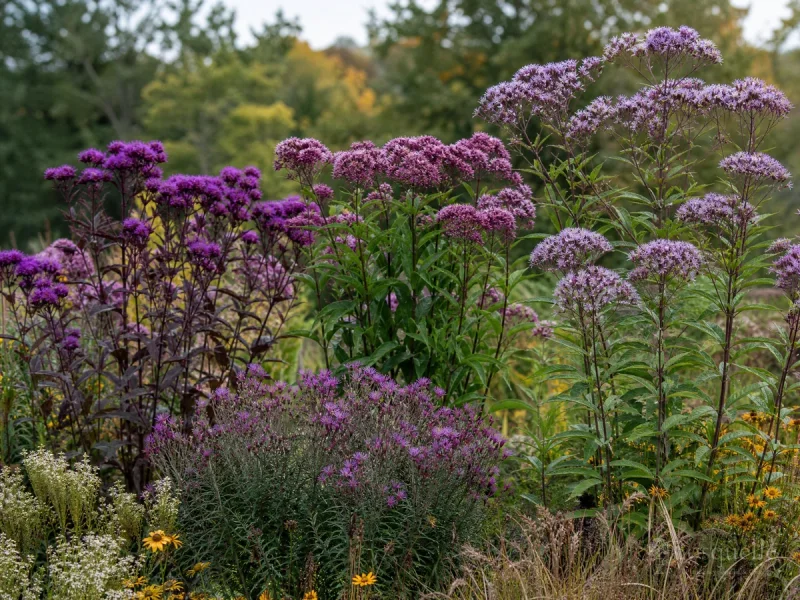
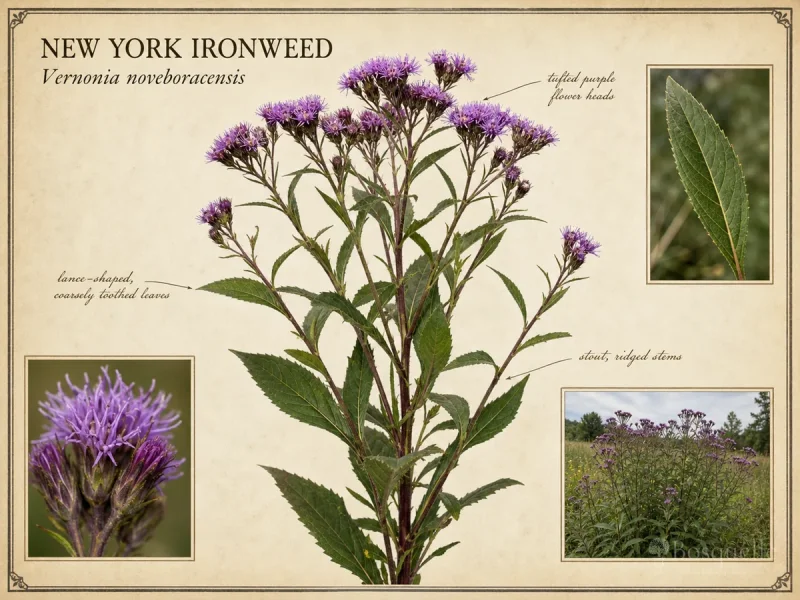
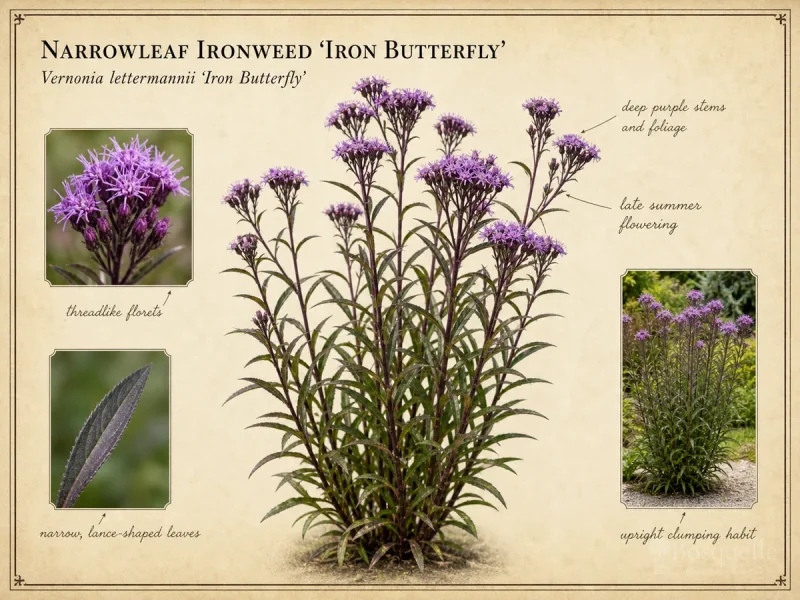
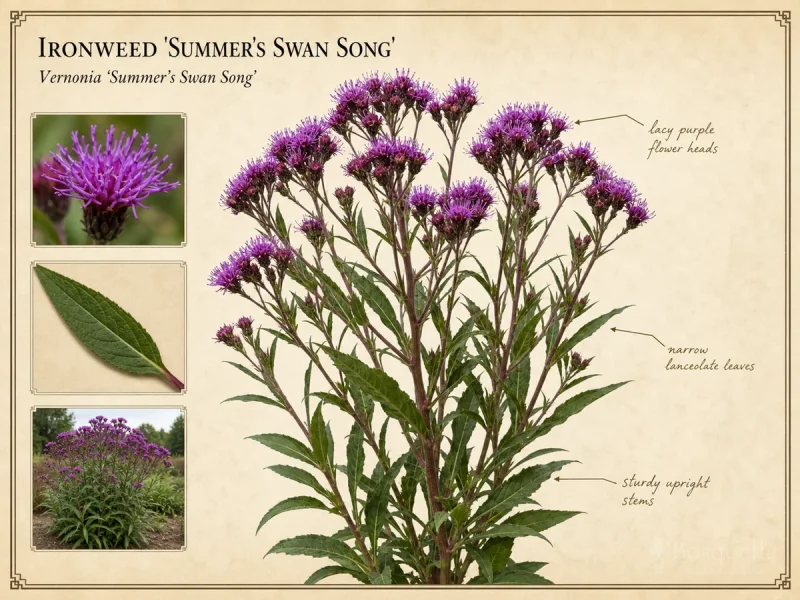
Ironweed is a sun perennial of moist open ground — meadows, stream edges, and rain gardens are its natural home. Full sun delivers the densest bloom; shade makes a lanky clump that flops onto its neighbours. Keep the soil moist through the season. [1] New York ironweed wants moist to average soil and reaches five to eight feet. The compact Iron Butterfly cultivar of V. lettermannii tolerates drier, leaner sites — it grows only two to three feet tall. [2]
Is ironweed deer resistant?
Yes. Deer and rabbits avoid it because the foliage tastes bitter from alkaloids and flavonoids. That same bitterness makes it a weed in pastures but a low-maintenance choice in a garden.
Water in a dry spell — most species are not drought plants
Established clumps of New York ironweed and giant ironweed still need water when the top few inches of soil dry out. Lower leaves yellow and drop if the bed stays dry. Iron Butterfly tolerates more drought once rooted in, but all ironweed flowers best in consistently moist ground.
- Clear the site of weeds and work compost into the planting hole, especially in lean soil.
- Dig a hole twice the width of the root ball and place the crown at soil level, no deeper.
- Backfill with the original soil, tamp gently, and water thoroughly until the soil is moist to root depth.
- Space plants two to four feet apart — taller species need the wider end of that range as the clump matures.
- Water whenever the top few inches dry during the first season, then as needed in dry spells once established.
Cut stems back by half in late spring to control height
Ironweed can reach five to eight feet or taller, and stems on a large clump will lean on neighbouring plants by late summer. The Chelsea chop in late May or early June — before buds form — reduces final height, thickens the stems, and adds more flower branches at the tips. [3]
- Wait until stems are about half their expected height, typically mid- to late May.
- Cut every stem back by one-third to one-half with clean, sharp shears or hedge trimmers.
- For a staggered bloom effect, cut the front-row stems by half and leave the back row untouched — front stems bloom a few weeks later than the back ones.
- Leave the cut clump in place. New lateral branches emerge within two to three weeks and produce a bushier, more self-supporting plant.
Do not pinch or cut after mid-June — buds form in summer and a late cut delays bloom past the peak butterfly season. Leave spent flower heads standing after bloom ends; the fluffy seed heads feed goldfinches and sparrows through autumn and winter. Cut all stems to the ground in late winter or early spring as new shoots emerge from the base. [4]
When should I cut ironweed back?
Cut stems back by half in late May or early June, before buds appear — this is the Chelsea chop. Then cut all stems to the ground in late winter or early spring just as new shoots push up.
Not Joe-Pye weed — and not blazing star
Ironweed is easy to confuse with other tall purple natives at the garden center. Joe-Pye weed is How to Grow Joe-Pye Weed — it carries leaves in whorls, has a vanilla-scented pink dome, and belongs to Eutrochium. Shop tags still say Eupatorium. Ironweed carries deep violet heads on branched tips and its leaves are alternate, not whorled. Check the tag before buying. Blazing star is How to Grow Blazing Star — Liatris, an unbranching spike that opens top-first, not a branched flat-topped cluster. All three bloom in late summer and attract butterflies, so verify the scientific name on the label.
How tall does ironweed get?
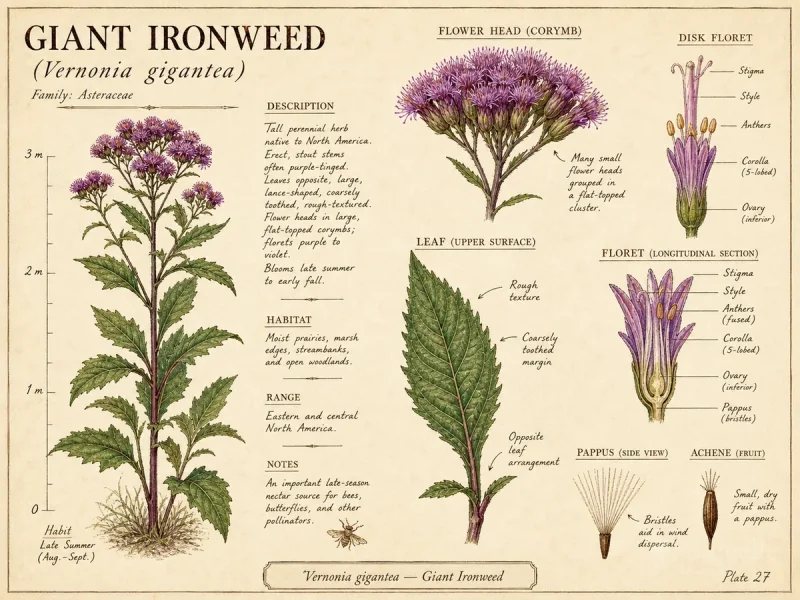
It depends on the species. New York ironweed reaches five to eight feet. Giant ironweed can hit ten feet. The compact Iron Butterfly cultivar of narrowleaf ironweed stays two to three feet tall. Chelsea chop in late spring reduces final height on any of them.
Plant ironweed in full sun and moist soil, give each clump room to spread, and cut stems back by half in late May so they do not lean by August. Leave the seed heads for birds after bloom, then cut everything to the ground in late winter before new shoots appear.
FAQ
Can I grow ironweed in a pot?
Most ironweed species grow too tall and wide to stay upright in a pot and will topple in wind. If you want to try, choose a compact selection such as Iron Butterfly, use a heavy ceramic or terra-cotta pot with large drainage holes, and plan to water daily — sometimes twice a day in heat — to keep the soil moist.
How do I grow ironweed from seed?
Sow seed directly in fall — bare soil in the prepared spot, barely covered, and let winter provide the cold stratification the seed needs. Germination is low, so sow thickly. Seedlings appear in spring and will not usually flower until the second year. Alternatively, refrigerate seed in moist perlite for 30 to 60 days, then sow in flats in early spring.
Does ironweed self-seed?
Yes. Leave the fluffy seed heads for birds through winter and you will see seedlings the following spring. Deadhead spent blooms before the seed disperses if you want to limit spread in a small garden.
Related guides
Recommended plants

References
- [1] NC State Extension Gardener -
https://plants.ces.ncsu.edu/plants/vernonia-noveboracensis/ - [2] Gardener’s Path -
https://gardenerspath.com/plants/flowers/grow-ironweed/ - [3] Mt. Cuba Center -
https://mtcubacenter.org/chelsea-chop/ - [4] Chicago Botanic Garden -
https://www.chicagobotanic.org/plant-evaluation/ironweeds
This note is part of Vernonia Guides.
More first-season notes by plant are gathered in How to Grow Guides.
Updated: Reviewed by Bosquelle Editors