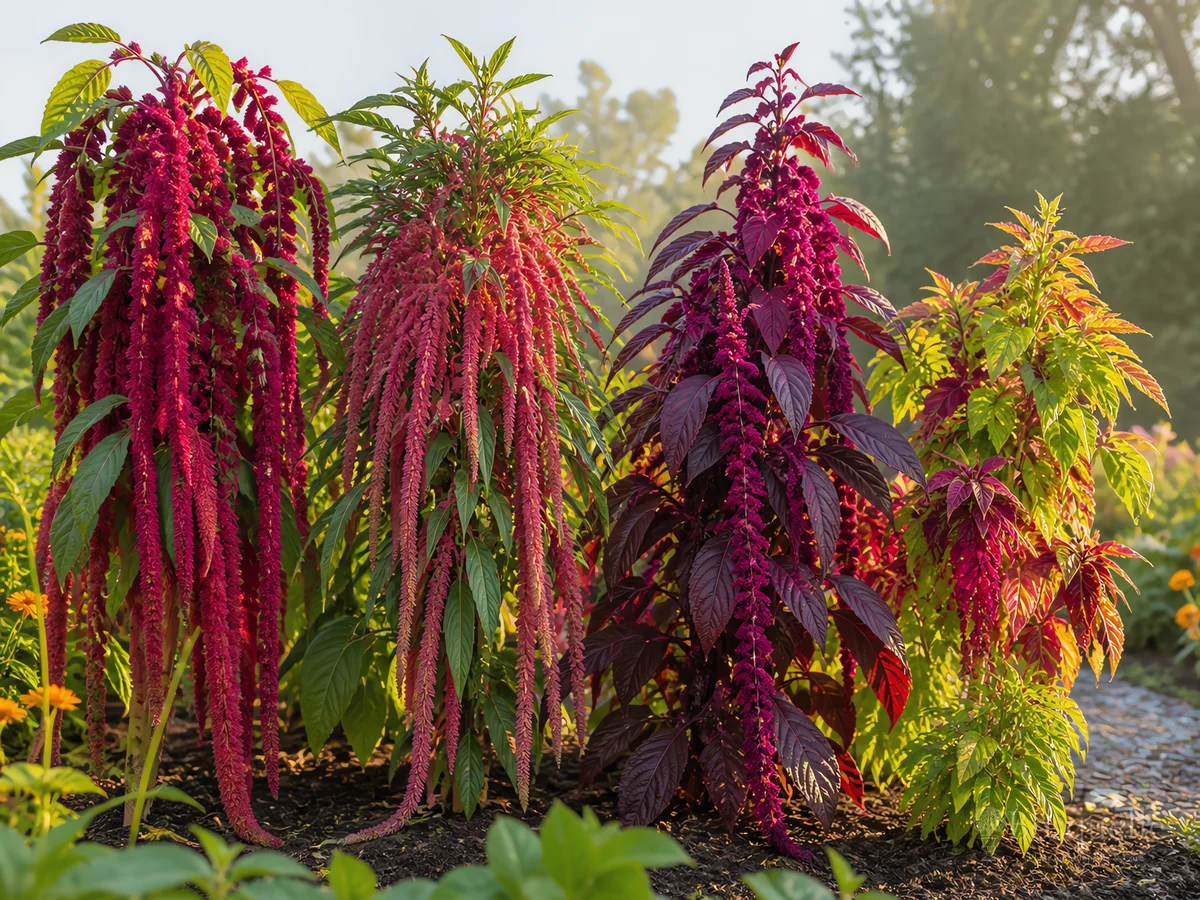
Grow amaranth in full sun and summer warmth, on soil that drains. Love-lies-bleeding is Amaranthus caudatus.

Give it full sun, warmth, and soil that drains
| Factor | Recommended | Avoid |
|---|---|---|
| Sun | Full sun for amaranth | Do not grow it in deep shade |
| Soil | Average ground that drains after rain | Do not leave the roots in standing water |
| Water | Keep the soil evenly moist until the plant is established, then water when the top two inches are dry | Do not keep the bed soggy after the roots are down |
| Warmth | Wait until nights stay warm; growth is strongest between about 70 and 85°F | Do not rush it into cold, wet soil |
| Feed | A light feed on poor ground, if any | Do not pile on nitrogen fertilizer |
Amaranth is a heat-loving annual. Give it a full day of sun and soil that drains after rain. [1] Growth stalls in cold, wet ground, then the stems fill out once summer arrives. Water so the first weeks stay evenly moist, then let the top two inches dry before you water again. [2] [3] A bed that bakes all afternoon still needs that first even moisture, because a severe dry spell makes the plant flower early and cut the leaf crop short. Average ground beats a rich, soggy strip. love-lies-bleeding wants that same sun and drain. Leaf kinds and grain kinds share the heat, but you buy them for different harvests — pick the kind on Types of Amaranth. [4] If you only have a patio, keep a compact plant in a container on Amaranth in Pots.
Does amaranth need full sun?
Yes. Give it a full day of sun. Shade makes a thin plant with poor color and few seed heads.
How often should I water amaranth?
Keep the soil evenly moist until the plant is established, then water when the top two inches are dry. Do not leave the roots in standing water.
Not celosia — and not globe amaranth
Cockscomb is Celosia, a different genus with dense, fused crests — see How To Grow Celosia. Globe amaranth is Gomphrena, with round, clover-like heads — see How to Grow Globe Amaranth. Those are not this plant. Amaranthus has loose plumes, dangling tassels, or showy leaves.
A low bedding plant sold as Joseph's coat is often Alternanthera, not Amaranthus. Chenille plant is Acalypha — see How to Grow Chenille Plant. Cattail is Typha — see How to Grow Cattail. Weedy pigweed is a relative you pull, not a garden crop.
Is amaranth the same as celosia?
No. Amaranth is Amaranthus, with loose plumes or tassels. Celosia has dense, fused crests. They share a family, not a genus.
Is globe amaranth the same as amaranth?
No. Globe amaranth is Gomphrena. Amaranthus has plumes, tassels, or colored leaves, not round clover-like heads.
If the plants stay small and pale, move them into more sun and let the soil drain.
FAQ
Is amaranth a perennial or an annual?
Treat it as an annual. Frost kills the plant. Sow fresh seed each spring. It can self-sow in warm gardens, so pull extra seedlings you do not want.
Is Joseph's coat the same plant?
Joseph's coat is a shop name for Amaranthus tricolor, the leaf kind. A low bedding plant with the same name is often Alternanthera, which is not this genus.
Will deer leave amaranth alone?
This catalog does not flag amaranth as deer resistant. Do not count on it as a deer-proof planting.
Is amaranth drought tolerant?
Once the roots are down it handles a short dry spell better than a soggy bed. Keep the first weeks evenly moist. A long dry stretch makes it flower early.
Related guides
Recommended plants



References
- [1] NC State Extension Gardener -
https://plants.ces.ncsu.edu/plants/amaranthus-caudatus/ - [2] NC State Extension Gardener -
https://plants.ces.ncsu.edu/plants/amaranthus-tricolor/ - [3] UF/IFAS Extension -
https://ask.ifas.ufl.edu/publication/HS1407 - [4] BBC Gardeners' World Magazine -
https://www.gardenersworld.com/how-to/grow-plants/how-to-grow-amaranthus/
This note is part of Amaranthus Guides.
More first-season notes by plant are gathered in How to Grow Guides.
Updated: Reviewed by Bosquelle Editors