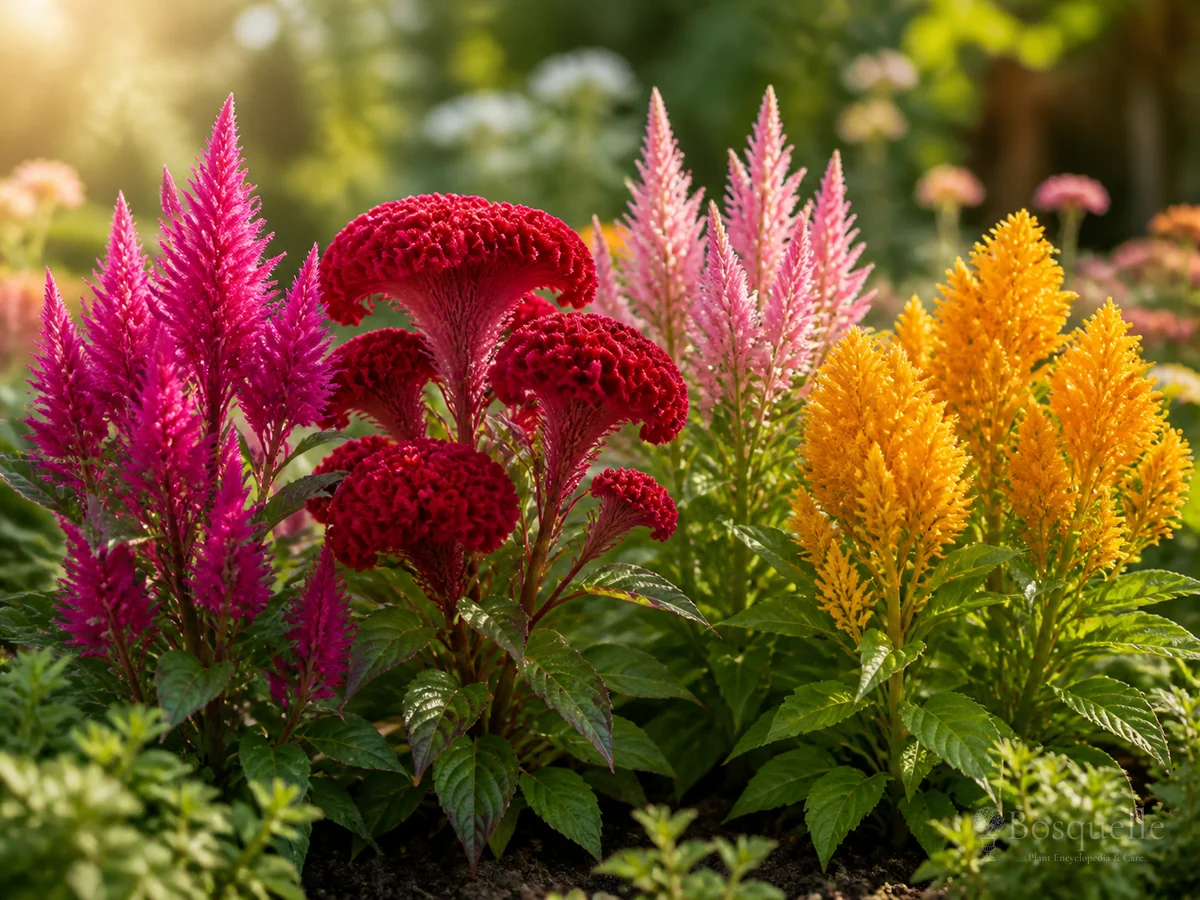
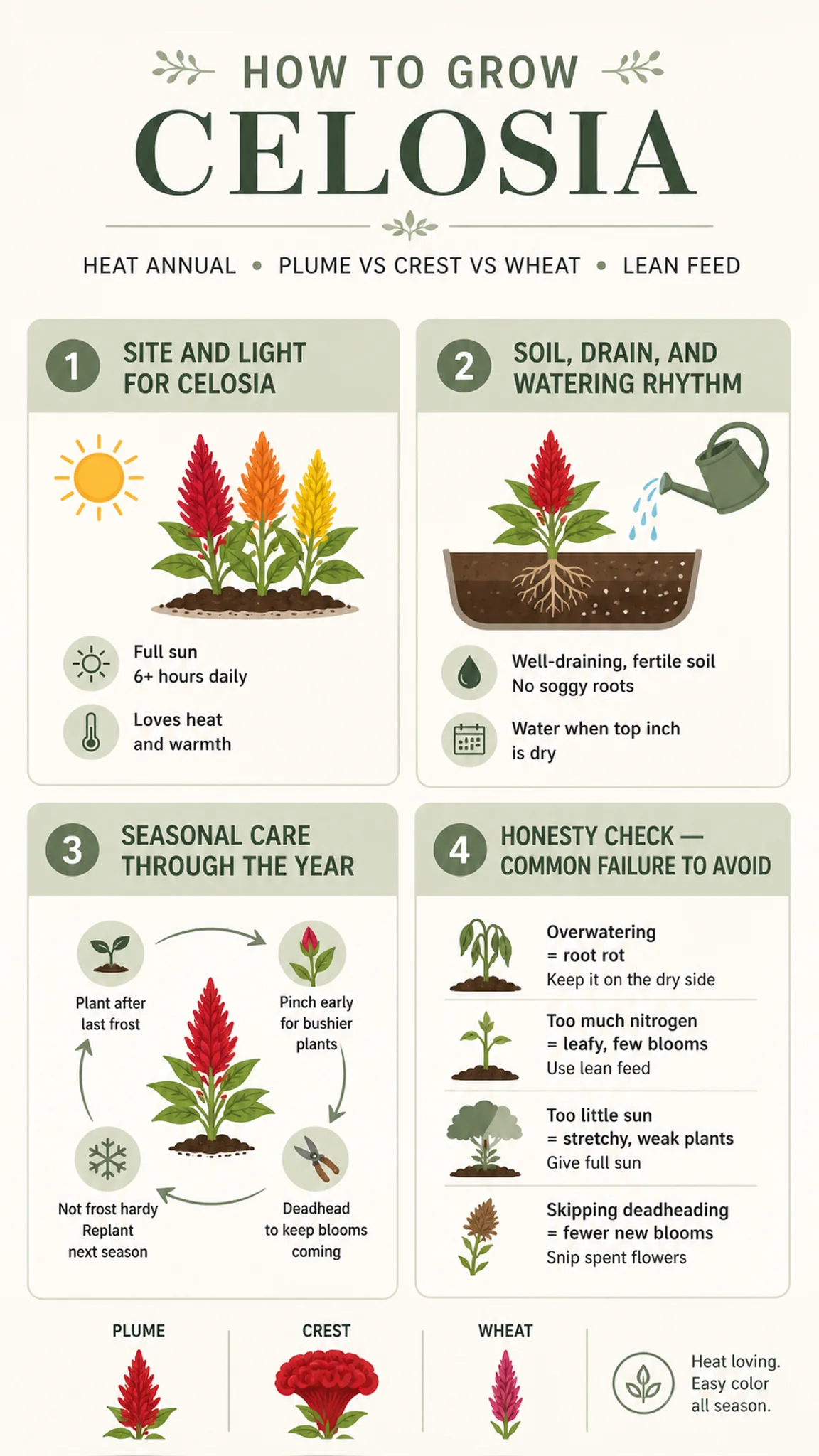
Celosia is a heat-loving annual. Plant it after frost, in full sun and well-drained soil. Keep moisture even, not soggy. Color is strongest in long summer warmth. Frost ends the plant.
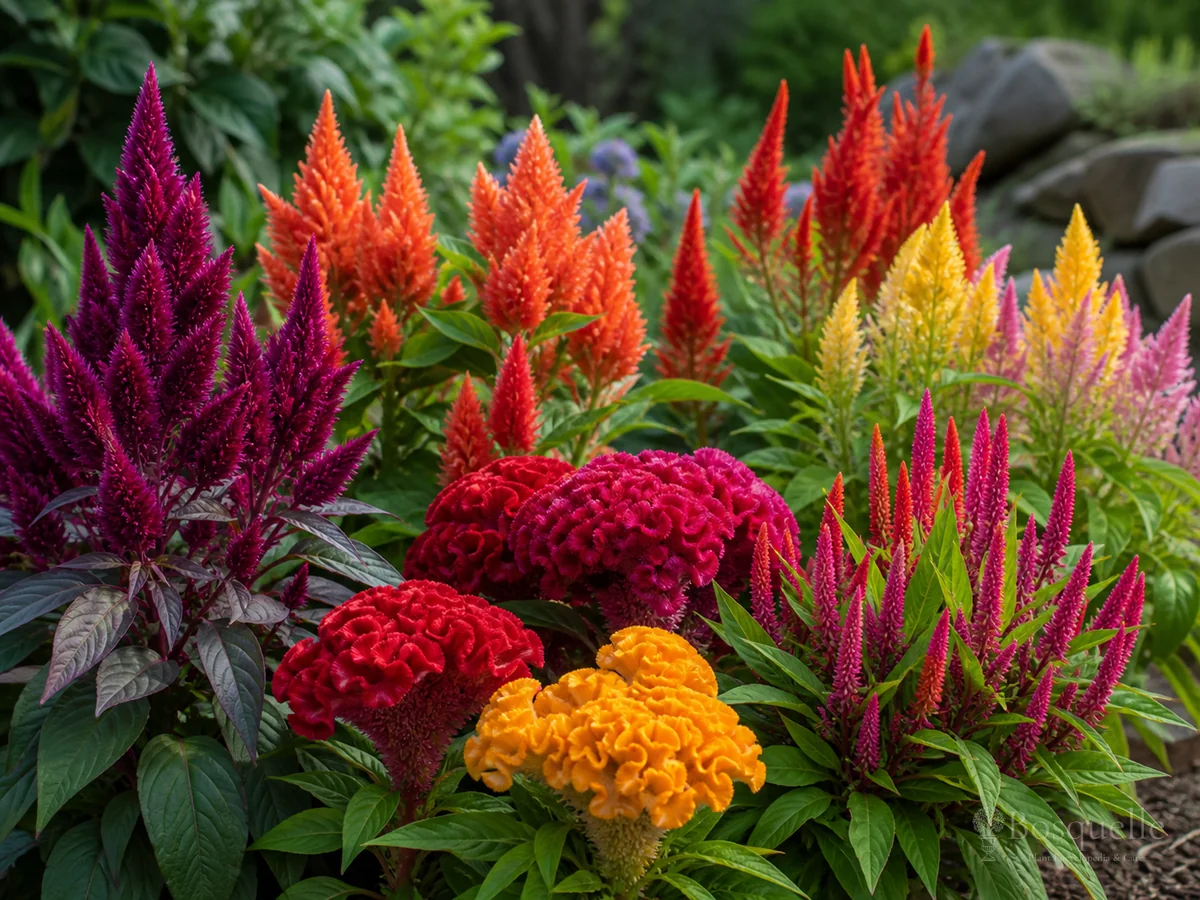
Plume, cockscomb, and wheat types share that calendar. Form changes the silhouette, not the need for sun. This is not amaranth grown for grain, and it is not a hardy perennial.
Full sun, heat, and drainage
| Factor | Recommended | Avoid |
|---|---|---|
| Light | Six to eight hours of direct sun | Shade that keeps plants green and soft |
| Season | Warm-season annual after frost | Treating it as a hardy crown that returns |
| Soil | Well-drained loam with compost in the top layer | Cold, sealed wet clay that sits all spring |
| Water | Even moisture; let the top inch dry | A swamp at the crown or a baked crust |
Celosia colors in heat. Cool, shady beds stretch stems and delay the head. A south or west bed that drains is the usual site. Wind is fine if the soil does not dry to dust every afternoon.
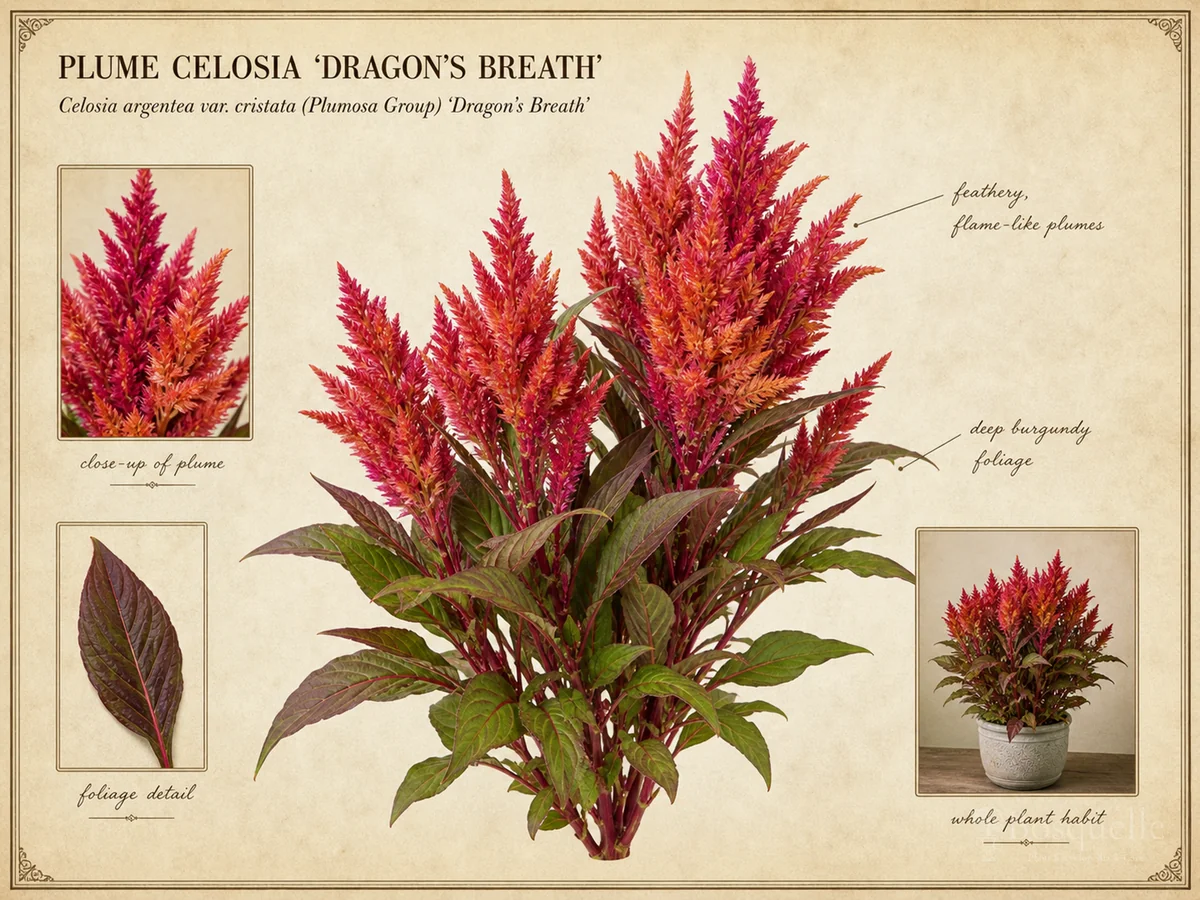
Example: Dragon's Breath and Tornado Red want the same sun and warmth. One is a feathery plume. The other is a dense cockscomb. Form is a types-page choice. Shade still fails both.
Average garden soil is enough if water can leave. Work compost into the top few inches. Do not pack a manure pit under the crown. Soft, lush growth flops and colors poorly. In heavy clay, raise the bed or plant in a deep pot rather than a cold sticky hole.
Browse plume, crest, and wheat on Types of Celosia before you buy by color alone.
Height still belongs on the tag. Compact bedding plumes sit at the front. Taller plume selections and heavy crests belong where a stake can hide. Do not plant a three-foot crest in a six-inch trough and blame the genus.
A windy open corner is fine if the soil holds moisture. Dry wind plus a sandy bed is how pots and front edges crisp by noon. Group plants so they shade each other’s soil, not each other’s heads.
Water, feed, and the after-frost calendar
Water when the top inch of soil is dry, then water at the base until the root zone is wet. Let it drain. Overhead water at night on a dense cockscomb holds rot. Morning sun that dries the head helps after a storm.
In a heat wave, pots and sandy beds dry fast. Check them daily. A midday wilt that recovers by evening can be heat, not drought. A wilt that stays at dusk with dry soil needs water. Do not keep a saucer of stale water under a pot all week.
Feed is modest. A balanced fertilizer at planting, or a diluted liquid every four to six weeks, is enough in average soil. Extra nitrogen makes leaves at the cost of color. Do not try to force a green plant in shade with more feed.
Plant after frost when nights stay mild and the soil has warmed — often when the ground is about 55°F or warmer. Indoor seedlings need a real harden-off. Timing and the hole live on Planting Celosia.
Mulch lightly after the soil is warm to hold moisture. Keep mulch off soft stems. Pull crowding weeds so air can move through the foliage.
Seedlings damp off in cold, wet media. That is a start problem, not a fertilizer problem. Warm the tray, give air, and water less often once they are up. Outdoor plants in cold clay show the same stall: yellow, slow, then rot at the crown.
Humid summers still need drainage. Celosia likes heat. It does not like a sealed puddle. Water at the soil, not a nightly overhead spray on crests. If leaf spot shows, thin the block and keep foliage drier overnight.
Deadhead, cut stems, and pinch
Cut or deadhead when the head has full color. Strip lower leaves on cut stems and stand them in clean water. Plume and wheat types are usually cut when about half the flowers are open. Crests are cut when the center has filled but the edge has not browned.
Deadheading spent heads keeps the bed tidy and can push side shoots, especially on plume types. Leave a few late heads only if you want seed to try. Named series often do not come true. Buy named plants next year if you need the same color.
Pinch is optional. Cut-flower growers often pinch plume and crest types about two weeks after transplant to get more, smaller heads. If you want one large cockscomb, do not pinch the first bloom. Wheat types often branch without pinching. Follow the habit you bought.
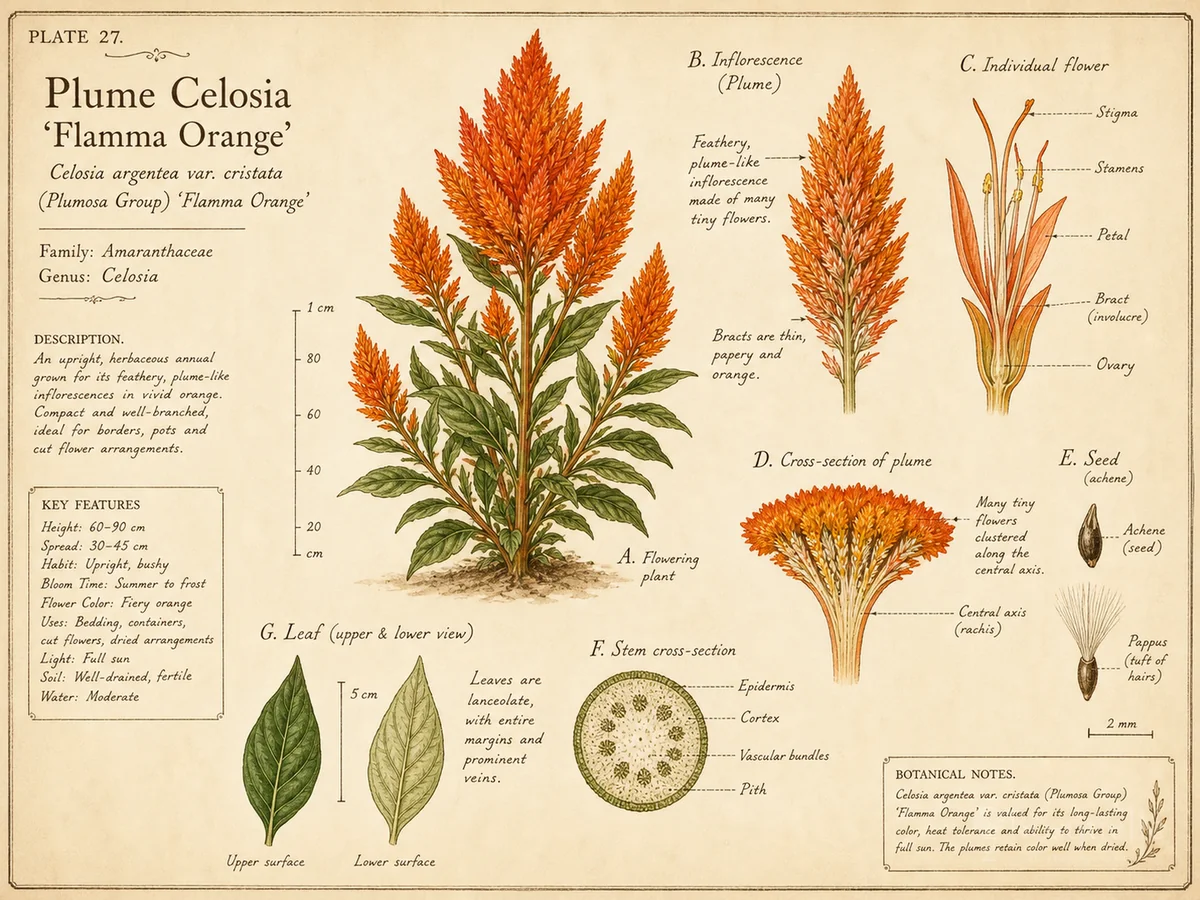
Tall crests such as Tornado Red may need a stake as the head gains weight. Plumes such as Fresh Look Gold and Flamma Orange usually stand if they had sun and were not overfed. After a storm, shake water out of a dense crest and check for soft spots.
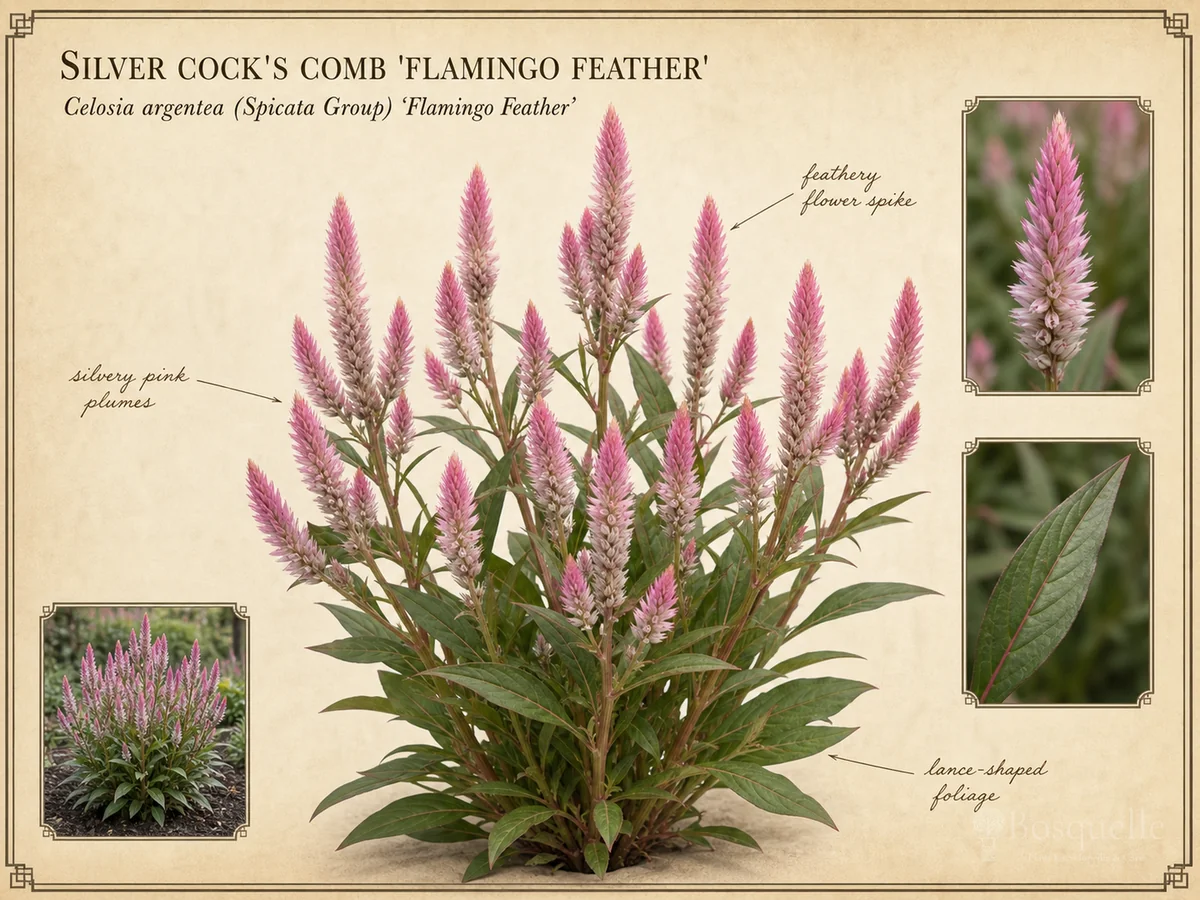
Flamingo Feather and Asian Garden are the narrower wheat line. They still want sun and even moisture. They do not rewrite the annual calendar.
For dried bunches, cut on a dry morning when color is fully on and hang the stems in a dark, airy place. Crests and many plumes hold shape. Late harvest that has already set seed shatters in the house. Leave two or three leaves on a fresh-cut stem so it can still take water in the vase.
Do not strip a plant to a bare stick for one bouquet. Cut some stems and leave enough foliage that the plant can still make side shoots. A bald plant in August is a cutting mistake, not a heat fail.
Crests, pots, and what celosia is not
Dense cockscombs rot in wet, crowded foliage. Give them more space than a tight plume block. Site them where morning sun dries the head. Lime crests such as Cramer's Lemon Lime and orange crests such as Orange Queen Improved share that rain habit. Color does not change it.
Pots work when they are deep, drained, and in full sun. Shallow bowls cook roots and tip tall plumes. Use a potting mix, not packed garden clay. Empty the saucer. Beds often grow a fuller plant than a cramped pot — that is normal, not a fertilizer fail.
Celosia is not love-lies-bleeding or grain amaranth, even when a plume looks similar from the road. It is not zinnia. It is not a salvia that returns from a woody base. Replant or reseed each warm season.
Aphids and mites show up on soft, stressed growth. Strong sun and even water reduce that. Leaf spot likes crowded wet leaves — thin for air. Deer may browse; do not buy on a resistance myth.
Some gardeners eat young leaves. This page is ornamental care, not a kitchen guide. Keep pets from chewing showy heads if that is a worry in your house.
Partners that share this heat and sun live on Celosia Companion Plants. If a bed stays cool and shady, pick another annual.
When nights cool in fall, color dulls and frost blackens the plant. Cut what you want for a dry bunch, then clear the bed. Do not dig for a crown that was never promised.
If plants stayed green all summer, the usual causes are shade, a cold start, or youth. Move next year’s plants into sun and wait for heat. Replacing a starved clump without changing light repeats the same fail.
Indoor overwintering under strong light is an experiment, not the default. Most gardeners start fresh plants each warm season. If you try a pot indoors, keep it bright and on the dry side of even. Soft growth in a dim room invites aphids.
Volunteers that appear next summer are a bonus only if you still want that form. Named series drift. Pull what you do not want while they are small. Do not let a mystery mix rewrite a planned plume block.
When two instincts compete — chase every series color versus master one form in sun — master the form. Color is easy to swap next year. A shade bed and a cold start waste the whole season.
Keep a short note: form, cultivar, and plant date. Next year that note beats buying the wrong silhouette because last summer’s photo was only a color blob. If neighbors ask why yours colored and theirs stayed green, the answer is usually sun hours and a warm plant-out, not a secret feed.
When heat finally arrives, resist panic fertilizer. Color comes from sun and maturity more often than from another soluble feed. Watch the form you chose do its job — torch, comb, or thin spike — and cut when the color is fully on.
Soil without a ritual is enough: drained, in sun, with compost in the top layer. Celosia is not asking for a weekly fertilizer schedule. In pure sand, steady water matters more than fancy feeds. In sticky clay, raise the bed rather than forcing a cold hole.
FAQ
Is celosia an annual or a perennial?
Treat it as a warm-season annual in most U.S. gardens. Frost ends the plant. Replant next year.
How often should you water celosia?
Water when the top inch is dry, then soak the root zone and drain. Do not keep the crown soggy.
When should you plant celosia?
After frost, when nights stay mild and soil has warmed. See Planting Celosia for the hole and spacing.
Does celosia need fertilizer?
A light feeding is enough. Extra nitrogen makes soft growth and weaker color.
Why is my celosia wilting?
Heat wilt that recovers by evening can be normal. Wilt that stays at dusk with dry soil needs water. Collapse after a cold night is chill damage.
How much sun does celosia need?
Six to eight hours of direct sun. Shade keeps plants green and delays the head.
What is the difference between plume and cockscomb?
Plume is feathery. Cockscomb is a dense crested head. See Types of Celosia.
Can I grow celosia in pots?
Yes in a deep, drained pot in full sun. Beds often make a fuller plant than a cramped container.
Should I deadhead celosia?
Yes for a tidy bed and more bloom on many plume types. Cut for the vase when color is fully on.
Does celosia come back every year?
Not as a hardy crown in most climates. Volunteers from seed are an experiment, not a guarantee.
Related guides


Recommended plants



This note is part of Celosia Guides.
More first-season notes by plant are gathered in How to Grow Guides.
Updated: Reviewed by Bosquelle Editors