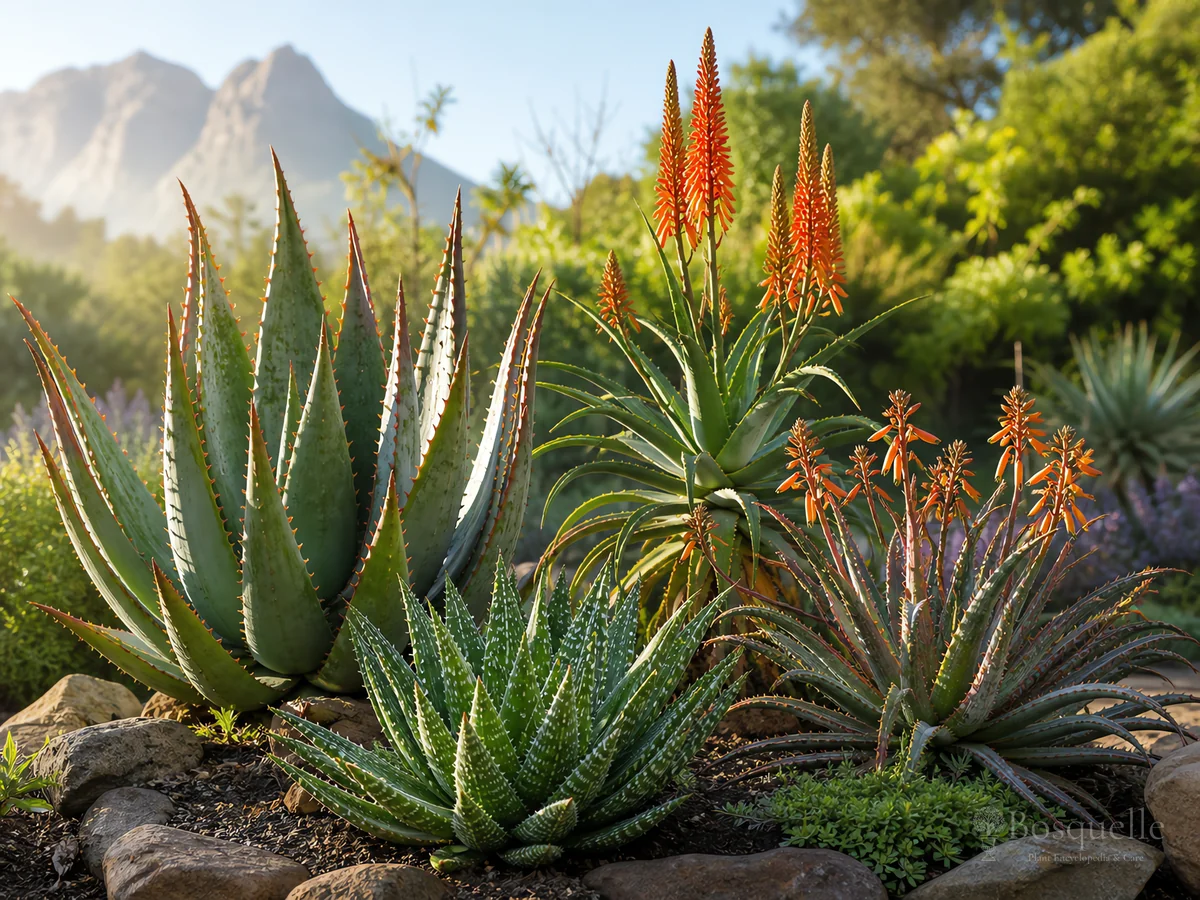
Grow aloe in bright light, in mix that drains, and water when the mix is dry. Aloe vera is the usual shop name.
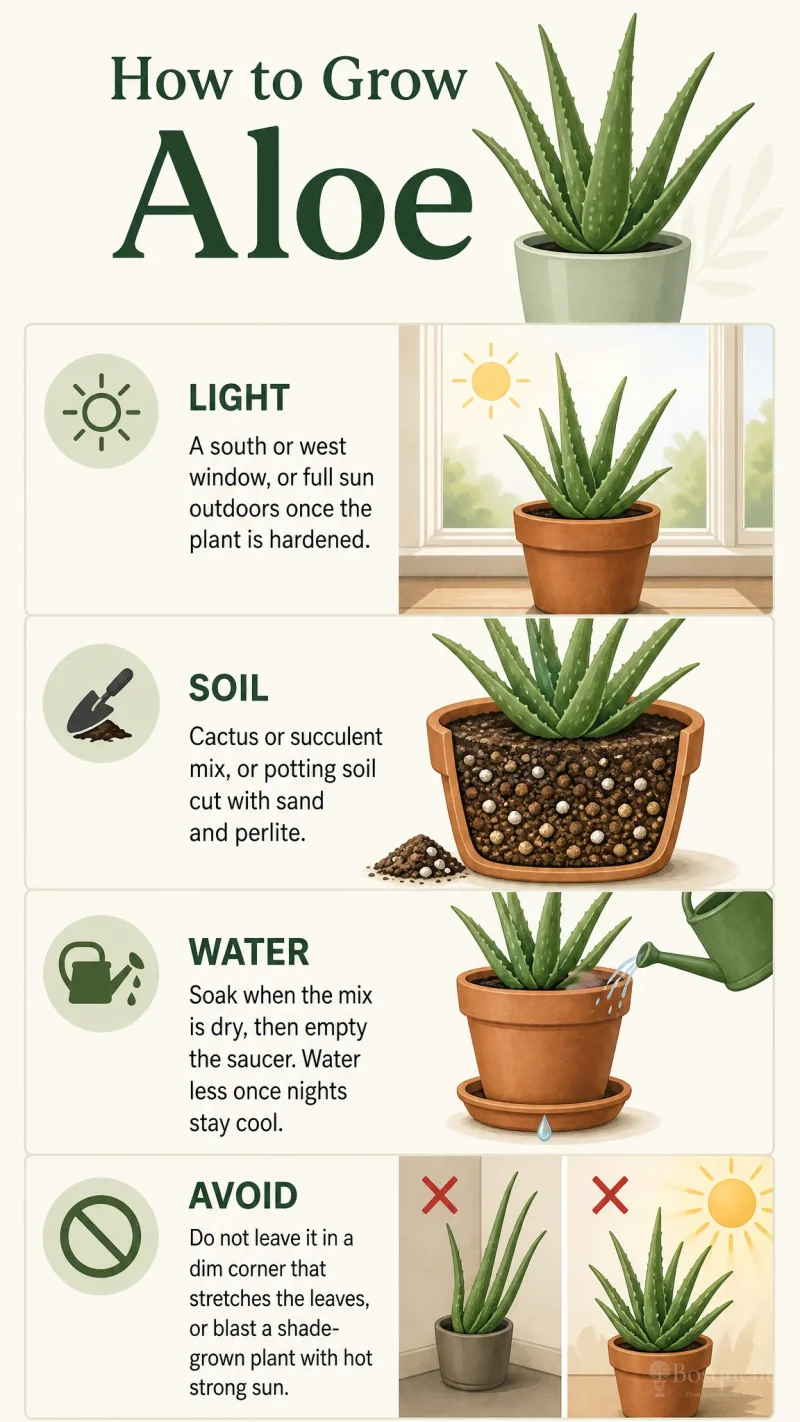
Give it bright light, mix that drains, and water when dry
| Factor | Recommended | Avoid |
|---|---|---|
| Light | A south or west window, or full sun outdoors once the plant is hardened | Do not leave it in a dim corner that stretches the leaves, or blast a shade-grown plant with hot glass sun |
| Soil | Cactus or succulent mix, or potting soil cut with sand and perlite | Do not use peat-heavy houseplant mix that stays wet for days |
| Water | Soak when the mix is dry, then empty the saucer. Water less once nights stay cool | Do not pour on a calendar while the mix is still damp, or leave the pot sitting in water |
| Frost | Bring a pot inside before a freeze. Ground only where frost is rare | Do not leave it on an unheated porch, or on a windowsill that drops below about 50°F |
Aloe stores water in the leaves. Mix that drains, then dries, is the site. Wet mix rots the crown faster than a missed watering. [1] A cactus mix, or potting soil cut with sand and perlite, is the usual start. [2] Match mature size on Types of Aloe.
- Set the plant in a south or west window, or in sun outdoors after you harden it. Rotate the pot so one side does not stretch. [3]
- Use cactus mix. Clay dries faster if your room stays damp.
- Water deeply when the mix is dry, then dump the saucer. Do not water on a calendar while the mix is still damp.
- Cut extra water in fall. Once nights stay cool, wait longer between soakings so the leaves do not stay wet.
- Bring a tender plant in before a freeze. Most kinds will not take frost. Keep the room above about 50°F. [4] That movable pot is on Aloe in Pots.
- Pull a fully brown lower leaf at the base. Do not cut a healthy rosette to shape it.
How often should I water aloe?
When the mix is dry, then wait until it is dry again. Water less once nights stay cool.
Does aloe need full sun?
It needs bright light. A south or west window is the usual indoor slot. Harden it before all-day outdoor sun.
Can aloe take a freeze?
Most kinds cannot. Use a pot you can move. Tree aloes stay in the ground only where frost is rare.
Summer heat is not the hard part. Extra water in a dim room rots the roots. A large tree aloe still wants the same dry mix as a windowsill plant.
Set the crown just above the mix, not in a wet hole
Plant from a nursery pot in spring or early summer, when the plant is growing. Set the crown so the lowest leaves sit just above the mix. A deep hole backfilled with rich soil holds water against the stem.
- Confirm Aloe on the tag — not agave, not haworthia.
- In frost-free ground, dig no deeper than the nursery pot and a little wider. Skip a winter plant-out into cold, wet soil.
- Slide the root ball out. Set it so the lowest leaves sit just above the mix. Do not bury the crown.
- Backfill with gritty soil, not a peat pocket. Wait a few days before the first soak so any torn roots dry.
- Space to the mature width on the tag. A tree aloe needs a wide bed. A gel plant fits a sill.
How deep do I plant aloe?
No deeper than the nursery pot. The lowest leaves sit just above the mix so water does not pool in the crown.
When should I plant aloe?
Spring or early summer, while it is growing. Skip a winter plant-out into cold, wet mix.
Not an agave, and not a haworthia
Aloe is a succulent in the asphodel family, not a cactus. It has no areoles. “Aloe cactus” on a shop search is the same plant with the wrong word.
Agave leaves are fibrous and often end in a hard spine. Most agaves bloom once, then that rosette dies. Aloe leaves are softer and hold gel, and the plant blooms more than once. Offsets at the base keep the clump — How to Propagate Aloe. A. vera is the gel plant people mean by aloe vera, not an agave sold as American aloe.
Haworthia stays small, often with leaf windows or white bumps, and it takes less light. Gasteria has thicker tongue-shaped leaves. Neither is a substitute care tag for this genus.
Is aloe a cactus?
No. It is a succulent rosette, not a cactus. Same dry-mix idea, different plant.
Is aloe the same as agave?
No. Aloe leaves are softer and hold gel. Agave leaves are fibrous and usually more armed. Most agaves flower once, then that rosette dies.
Is aloe vera a different plant?
No. Aloe vera is the usual shop name for one species in this genus. It is not a second plant.
Bright light, cactus mix, and water when dry. Bring a tender plant in before a freeze.
FAQ
Does aloe die after it flowers?
No. Aloes bloom more than once. That rosette keeps growing. Pups at the base are extra plants, not replacements for a spent mother.
Can I harvest gel from the leaves?
Only from a mature outer leaf on vera, and only as a home plant, not as medical advice. Do not eat the plant. Keep pets from chewing leaves.
Is aloe safe around pets?
The sap can upset a stomach if eaten. Keep cats and dogs from chewing the leaves.
Do I need to prune aloe?
No yearly cut. Pull a dead lower leaf if it is loose. Do not cut a healthy rosette to shape it.
What about mealybugs?
White fluff at the base is a pest job. Wipe what you can and isolate the pot. Wet, crowded plants are hit most often.
Can a tree aloe live on a windowsill?
Not at maturity. A tree or candelabra aloe needs landscape room. A gel plant or a compact rosette fits a sill.
Related guides


Recommended plants





References
- [1] South Dakota State University Extension -
https://extension.sdstate.edu/aloe-vera-houseplant-how - [2] Penn State Extension -
https://extension.psu.edu/aloe-a-hardy-houseplant - [3] NC State Extension -
https://plants.ces.ncsu.edu/plants/aloe/ - [4] University of New Hampshire Extension -
https://extension.unh.edu/blog/2019/01/what-should-i-know-about-growing-aloe-home
This note is part of Aloe Guides.
More first-season notes by plant are gathered in How to Grow Guides.
Updated: Reviewed by Bosquelle Editors