After a spring rain, those short stubby orange horns on a small redcedar gall are already sending spores to the hawthorn, so cut the galls you can reach before they swell, prune any hawthorn twigs that are already spotted or thickening, and if you still want a clean ornamental, start a labeled protectant when the buds break, not after the canopy has gone yellow in June. Cedar-hawthorn rust is the fungus Gymnosporangium globosum. It cannot finish its life on hawthorn alone, and it cannot finish on juniper alone, so it spends about two years in a small woody gall on eastern redcedar or another juniper, then a wet stretch of spring on hawthorn leaves, and sometimes on apple, crabapple, pear, quince, or serviceberry.
People call those short orange fingers stubby horns once they see them after rain. Those horns are still this rust. On the hawthorn the useful sign is a bright yellow-orange leaf spot that picks up tiny black dots, then a ring of tubes on the underside, longer than the tubes of cedar-apple rust. One ugly June rarely kills the tree. Long dangling orange noodles on a golf-ball gall belong to a different rust, and a hawthorn fruit that sprouts orange hairs is usually cedar-quince rust, not this leaf job.
Cut the small galls. Spray the hawthorn before bloom, not after the leaf turns yellow
Once the hawthorn leaf is painted yellow, that infection is already done, so a bottle in July cannot rewind the spot. The useful job this season is to cut next spring’s spore load on the small juniper galls you can actually reach, and to coat new hawthorn leaves while those galls are still wet and orange, because that is the only window the fungus uses to jump from cedar to hawthorn. Spores from the hawthorn leaf do not infect the next hawthorn leaf. They blow back to a juniper, so raking hawthorn leaves the way you would for apple scab does not break this cycle.
Walk eastern redcedar and other junipers in late winter, before the first warm rain, and prune the small brown galls — pea-sized to about half an inch, often flattened against the twig — while they are still dry. Cut a few inches of twig behind the gall and bag it, because a gall left in the grass can still swell when it wets up, and unlike cedar-apple rust these small galls often throw horns for more than one spring. Cutting every gall on your own tree helps the hawthorn in the same yard. It will not save that hawthorn if the neighbor’s fence row is full of galled redcedar, because the wind can carry spores a mile or more, and most backyard infections still start within a few hundred feet. Do not take down a healthy screen of cedars hoping the woods two miles off will go quiet.
If the hawthorn is a susceptible ornamental you still care about, a labeled protectant has to start when the buds just break, before bloom, and keep going through petal fall and about a week after, while the juniper galls are still throwing orange jelly after rain. Most home products coat the surface rather than move inside the leaf, so rain washes them and you spray again on the label interval, shorter when the week stays wet. Stop when the galls stay dry and shriveled for good, because the cedar has finished sending spores for the year. Skip an all-purpose fruit mix during bloom if the insecticide in that bottle will hit bees you still need. Read the hawthorn or apple line on the label, and whether the product is for ornamentals only, because some myclobutanil mixes are sold for ornamentals only and those are not an eating-fruit program. A kitchen baking-soda mix is not a labeled hawthorn program, and it can burn the leaf. Neem that you already sprayed on a yellow canopy will not rewind the spot.
On the hawthorn itself, prune twigs that are already spotted, swollen, or dying back, because this fungus can thicken a green shoot, and bag those cuttings with the juniper galls. Do not count on raking every spotted leaf as the numbered finish. Cockspur, Washington, and Winter King skip most of this calendar; a downy hawthorn that yellows every wet May does not.
- Confirm. After rain, short stubby orange horns swell from a small brown gall on juniper, often flattened on the twig. On hawthorn, look for yellow-orange spots with tiny black dots and, later, tubes up to about an eighth of an inch under the leaf. Long dangling noodles, or a hawthorn fruit already sprouting orange hairs, is a different job.
- Prune reachable small galls in late winter, before they swell, and prune spotted or thickening hawthorn twigs. Destroy the cuttings. Do not count on that cut if galled redcedar stands upwind for a mile.
- Do not plant a susceptible hawthorn against an eastern redcedar. A few hundred feet helps. Clearing every cedar in the county is not a backyard job.
- On a high-value susceptible hawthorn, a labeled protectant from bud break through about a week after petal fall, while the galls are still gelatinous after rain. Stop when the galls dry for the season. Skip a July rescue spray on spots that are already there. Cockspur, Washington, and Winter King skip most of this calendar; downy hawthorn does not.
How do I get rid of cedar-hawthorn rust?
You cannot take yellow spots off a leaf that already has them. Cut reachable small galls on juniper before they swell in spring rain, prune spotted hawthorn twigs, keep a susceptible hawthorn away from eastern redcedar, and on a high-value tree start a labeled protectant when the buds break, not after the leaf turns yellow.
When do I stop spraying for cedar-hawthorn rust?
When the juniper galls stay dry and no longer throw jelly after rain, usually once the weather turns consistently hot and dry, or about a week after petal fall if the galls have already shriveled. Spots already on the leaf do not need a rescue spray. Next year’s coat starts again when the buds break.
A two-mile cedar wipe is not a backyard job
The fungus needs a juniper to survive the winter, so gardeners keep hearing that the only cure is to fell every eastern redcedar within two or even fifteen miles. Commercial orchards have tried host wipeouts, and even they cannot keep a landscape full of ornamental junipers off the wind. Spores travel several miles, and a few infections have been logged farther than that, but most backyard spots still start within a few hundred feet of a galled tree, so moving a new hawthorn well away from your own redcedar is worth doing, and leaving the neighbor’s windbreak alone is the honest backyard finish.
On the juniper itself the small gall is usually looks, not a death sentence. The twig beyond it seldom dies, which is one reason these galls are easy to miss until they throw orange after rain. A young plant covered in galls can look decorated in a wet May, but a mature redcedar almost always lives. Prune the galls you can reach if the orange week bothers you, or if you are trying to spare a hawthorn in the same yard. A spray program on the cedar from June to September is an orchard leftover, not the numbered job on a home screen planting. Do not replace a healthy redcedar with another juniper that still hosts this fungus and then call the hawthorn cured.
Do I have to cut down my cedar trees?
No. Spores can travel a mile or more, so felling every redcedar in the neighborhood is not a backyard cure. Cut the small galls you can reach, and do not plant a susceptible hawthorn against your own juniper.
A hawthorn that yellows in June can still live
Cedar-hawthorn rust is not a lethal disease on a healthy hawthorn, apple, or redcedar, even when a wet spring paints the canopy yellow-orange and some leaves drop in a dry July. Live with an ornamental if the ugly month does not bother you, water it through drought so the wood does not go into winter weak, and spend the pruners on the juniper galls and any thickening hawthorn twigs rather than fogging a canopy of spots that are already finished. Several years of heavy leaf drop on a very susceptible hawthorn can shrink next year’s bloom and leave the tree more open to winter injury, so a downy hawthorn that yellows every wet May is a candidate to replace if you want a canopy you will actually look at.
Fruit infection on this rust is uncommon. A firm haw with a small orange mark is usually still a haw; wash it and cut or peel the marked skin if you were going to eat it anyway. A fruit already covered in orange hairs or tubes is more often cedar-quince rust, and that crop is already done for looks. Planting a resistant hawthorn is the long job that skips most of the spray calendar. Cockspur, Washington, and Winter King are the names garden centers actually stock for this fungus. Resistant is not a promise against fire blight or a different rust, and a galled redcedar next to the new tree still sheds spores, so the spacing still matters.
Will cedar-hawthorn rust kill my hawthorn?
Rarely on a healthy hawthorn, apple, or redcedar. Heavy leaf drop for several wet years can weaken bloom and invite winter injury on a very susceptible hawthorn. A mature juniper almost always lives with the small galls.
Short stubby horns on a small gall, and tubes under the hawthorn leaf, confirm this rust
Look at the juniper first after a warm spring rain, because that is when the disease is obvious from the street. A mature gall is brown to dull red, round or a little flattened on the twig side, about an eighth to half an inch across — smaller and less regular than a cedar-apple golf ball. Wet weather makes short, blunt, darker orange horns push out of raised bubbles on that gall. The horns shrink when they dry, then swell again the next time it rains, sometimes several times in one spring, and the same small gall often throws horns again the next year. After it finally dries out for good it can still hang on the twig, but it is done sending spores.
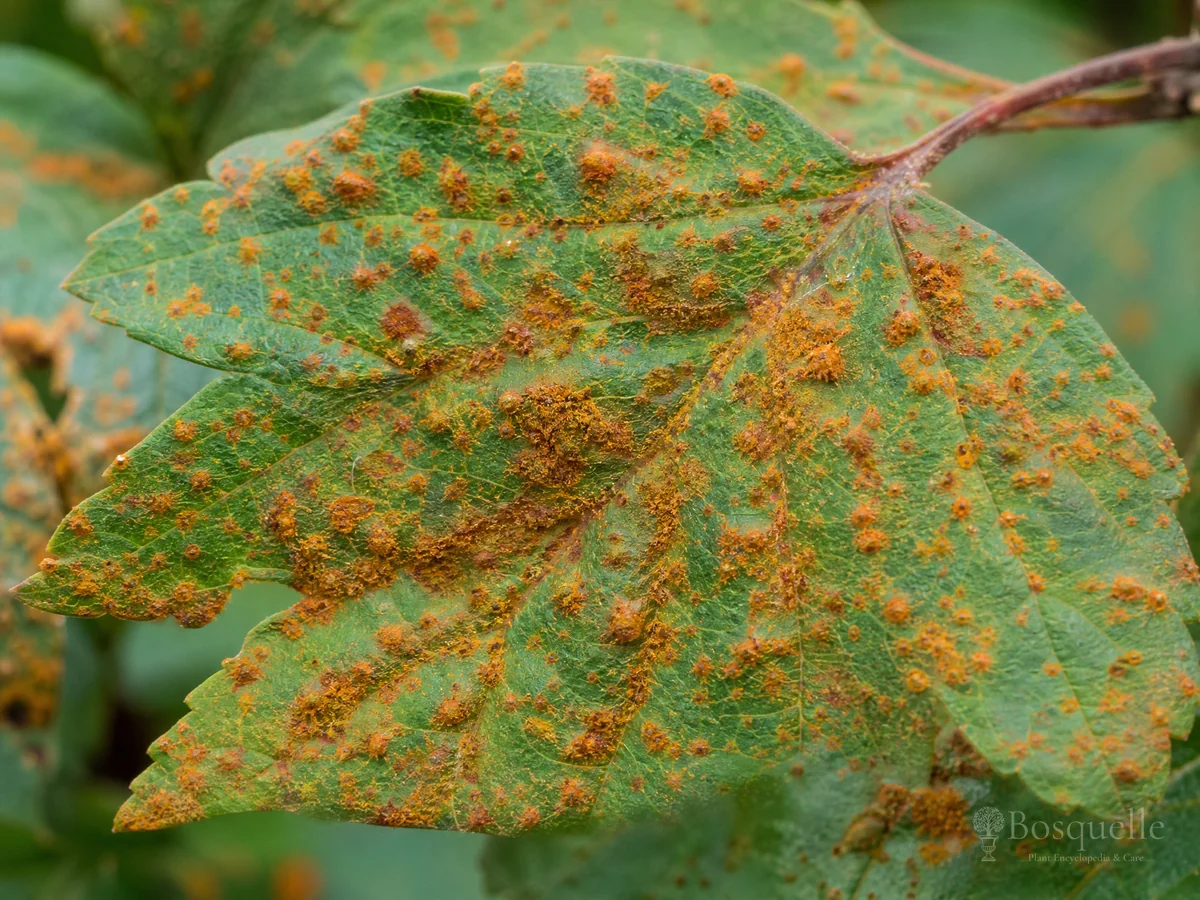
On hawthorn, tiny yellow spots show on the upper leaf a few weeks after infection, usually around bloom. They turn yellow-orange, often with a reddish edge, and pick up a stipple of tiny black dots. By midsummer the underside under each spot grows a ring of tubes, up to about an eighth of an inch long — longer than the short fingers of cedar-apple rust — and those tubes fray at the tip when they shed powdery orange spores toward the juniper. Fruit and green shoots pick this fungus up less often; when they do, the shoot can thicken and a young twig can die. New galls on juniper take until the next year to show, and they do not throw horns until the spring after that, so the whole loop is about two years. There is no second round of hawthorn-to-hawthorn infection.
| Where you see it | What it is | Try this |
|---|---|---|
| Short stubby orange horns on a small brown gall, often flattened on the twig, after rain | Cedar-hawthorn rust on juniper | Cut reachable galls in late winter, before they swell — they may work more than one spring |
| Yellow-orange hawthorn leaf spots with black dots, then longer tubes underneath | Cedar-hawthorn rust on hawthorn | Spray was due at bud break; a July bottle will not rewind the spot |
| Thickened green hawthorn shoot or a rare fruit blister | Cedar-hawthorn rust on twig or fruit | Prune the spotted wood; do not spray to rewind it |
| Long orange noodles on a larger dimpled gall | Cedar-apple rust leftover | See cedar-apple rust — not this hawthorn-before-bloom prune |
| Spindle swelling on a juniper twig; orange ooze from bark; spiky hawthorn fruit | Cedar-quince rust leftover | A different fungus; prune the swollen wood, do not copy this leaf spray |
| Olive-green velvety leaf spots, then corky fruit | Apple scab leftover | See apple scab — rake leaves; this is not the juniper-gall job |
| Shoot tip bent like a shepherd’s crook; blackened leaves cling | Fire blight leftover | See fire blight — not a rust spray |
What does cedar-hawthorn rust look like?
On juniper, a small brown gall, often flattened on the twig, throws short stubby orange horns after a warm spring rain. On hawthorn, yellow-orange leaf spots with tiny black dots, then tubes up to about an eighth of an inch on the underside. Fruit and green shoots are hit less often.
Long orange noodles are cedar-apple rust. Spiky fruit is usually quince rust
A larger, rounder gall on juniper, with long, thin, tangerine horns that look like noodles or tentacles after rain, is cedar-apple rust. That fungus hits apple and crabapple hardest, and the gall usually throws horns for one spring and then dies. Confirm the gall, then see that disease. Do not paste its apple-at-pink calendar onto this hawthorn job. Cedar-quince rust does not make a small round gall. It swells a juniper twig into a spindle and oozes orange from cracks in the bark, and on hawthorn it spikes the fruit and cankers young twigs. There is no separate quince-rust URL here, so prune the swollen juniper wood and the spiky fruit, and do not copy this hawthorn-leaf spray onto a canopy whose leaves are still green while the haws look orange and hairy.
Olive-green velvety spots with a fringed edge, often along a vein, then corky brown patches on fruit, are apple scab. That fungus winters in last year’s apple and crabapple leaves, not in a juniper gall, so the job there is rake and a green-tip spray, not cutting stubby horns. Brown leaf spots on hawthorn without orange tubes can be Fabraea leaf spot, a different leftover with no URL here; it does not throw jelly from a cedar gall. A young shoot that wilts, blackens, and bends over like a shepherd’s crook, with leaves that cling as if scorched, is fire blight. That is a bacterium. Quince-rust twig dieback can look a little like it, so check for orange tubes before you treat a rust as blight. White powder on new shoots in dry heat is powdery mildew, a different leftover. Indian hawthorn in a foundation bed is a different plant, not this Crataegus rust.
Is cedar-hawthorn rust the same as cedar-apple rust?
No. Cedar-apple rust makes a larger gall with long orange noodles and hits apple hardest. This rust makes a smaller gall with short stubby horns and hits hawthorn hardest, and the small gall often throws horns for more than one spring. See cedar-apple rust if the horns look like tentacles.
Related reading
- Cedar-apple rust — larger galls with long orange noodles; apple and crabapple take the worst of it.
- Apple scab — olive-green velvet and corky fruit that winter in fallen apple leaves, not in a juniper gall.
- Fire blight — a blackened shepherd’s-crook shoot, not an orange leaf spot.
- Powdery mildew — white film on new shoots in dry heat, not wet-weather rust.
FAQ
Can I eat hawthorn fruit with rust spots?
If the haw is firm and only lightly marked, wash it and cut away the skin. Fruit already covered in orange hairs or tubes is more often cedar-quince rust, and that crop is already done for looks. Do not eat a haw that split and then went soft or moldy.
Will raking hawthorn leaves stop cedar-hawthorn rust?
No. Spores from the hawthorn leaf infect juniper, not the next hawthorn leaf. Raking still helps if you also have a leaf-spot disease that winters in fallen leaves, but it is not the rust job. Cut juniper galls, and protect new hawthorn leaves at bud break.
Does baking soda or neem oil get rid of cedar-hawthorn rust?
A kitchen baking-soda or dish-soap mix is not a labeled hawthorn program, and it can burn foliage. Neem is not a substitute for a protectant timed to the orange galls. Sanitation on the juniper, a resistant hawthorn, or a product labeled for rust on hawthorn is the real job.
Will it come back next year?
The small gall you see this spring was infected about two years ago, and this summer’s hawthorn spots will start new galls on juniper that will not throw horns until the spring after next. The gall you leave on the juniper may also throw horns again next spring. Cutting this year’s galls and protecting the hawthorn at bud break still cuts the load you can reach.
Are the orange horns dangerous to people or pets?
They are a plant fungus, not a mushroom to eat and not an insect that bites. Keep pets from chewing the jelly if it bothers you, and wash hands after pruning galls. The worry is the hawthorn canopy, not a sting.
Related diseases



Related pests





Updated: Reviewed by Bosquelle Editors