
Wood type before tools
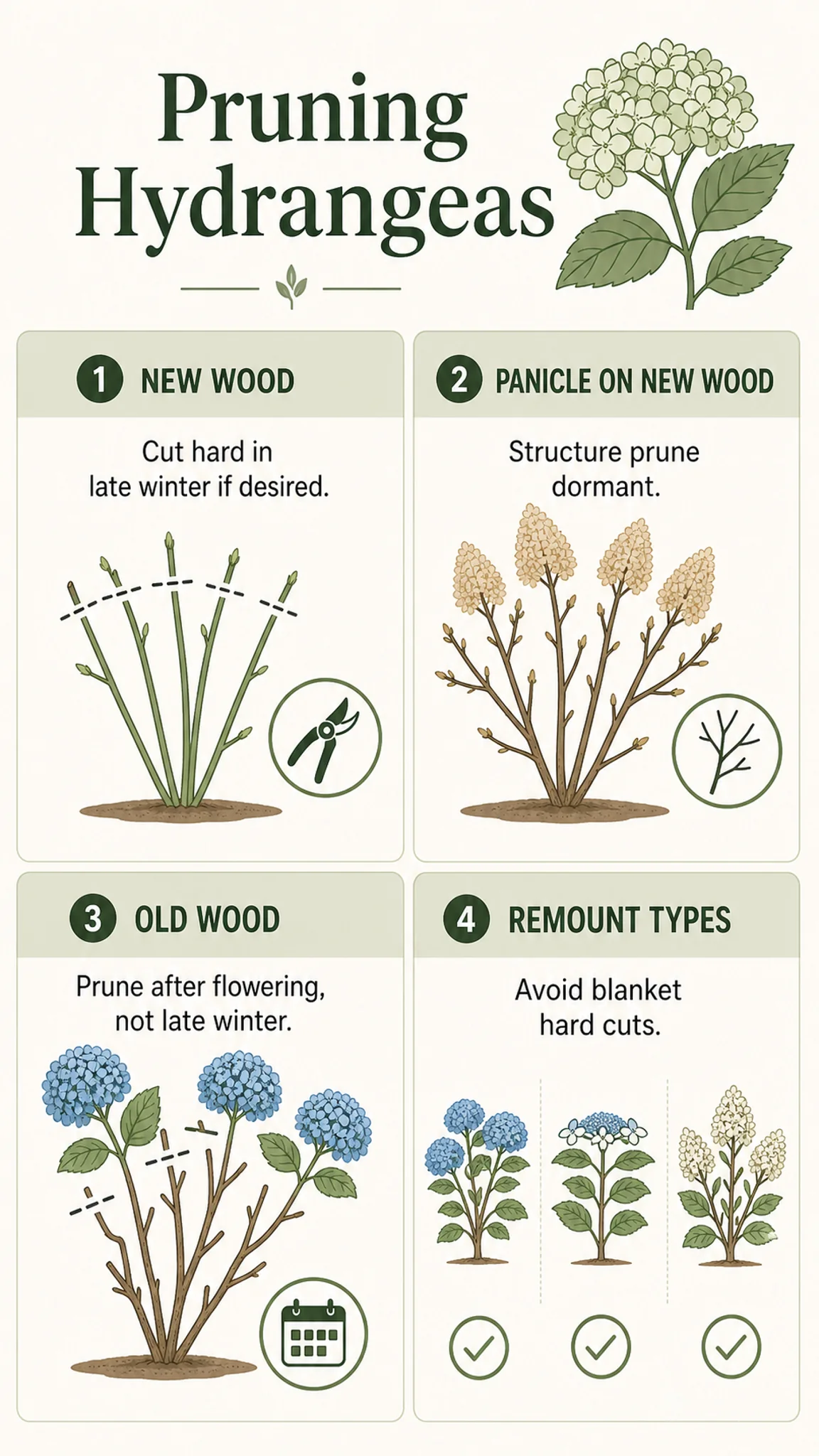
Confirm species group on Types of Hydrangeas before you cut. The table below is the timing spine — not a copy of the full care pillar.
If you already cut hard and bloom vanished: you likely pruned on the wrong calendar. Wait a season, re-sort species, and follow the matching window below — do not repeat the same February renovation on an old-wood mophead.
| Species group | Bloom wood | Main prune window |
|---|---|---|
| Smooth (arborescens) | New wood | Late winter / early spring before strong growth |
| Panicle (paniculata) | New wood | Late winter / early spring; thin for size |
| Bigleaf (macrophylla) | Often old wood (some remount) | After flowering; avoid hard late-winter cuts on classic mopheads |
| Oakleaf (quercifolia) | Old wood | Light tidy after bloom; leave next year's buds |
| Climbing (anomala) | Old wood | Train first; prune lightly after flowering |
Tools and timing overview
Use sharp bypass secateurs for stems, loppers for thicker wood, and clean tools between plants. Timing follows bloom wood — not a single “late winter for everything” calendar.
New-wood pruning for Annabelle and Limelight
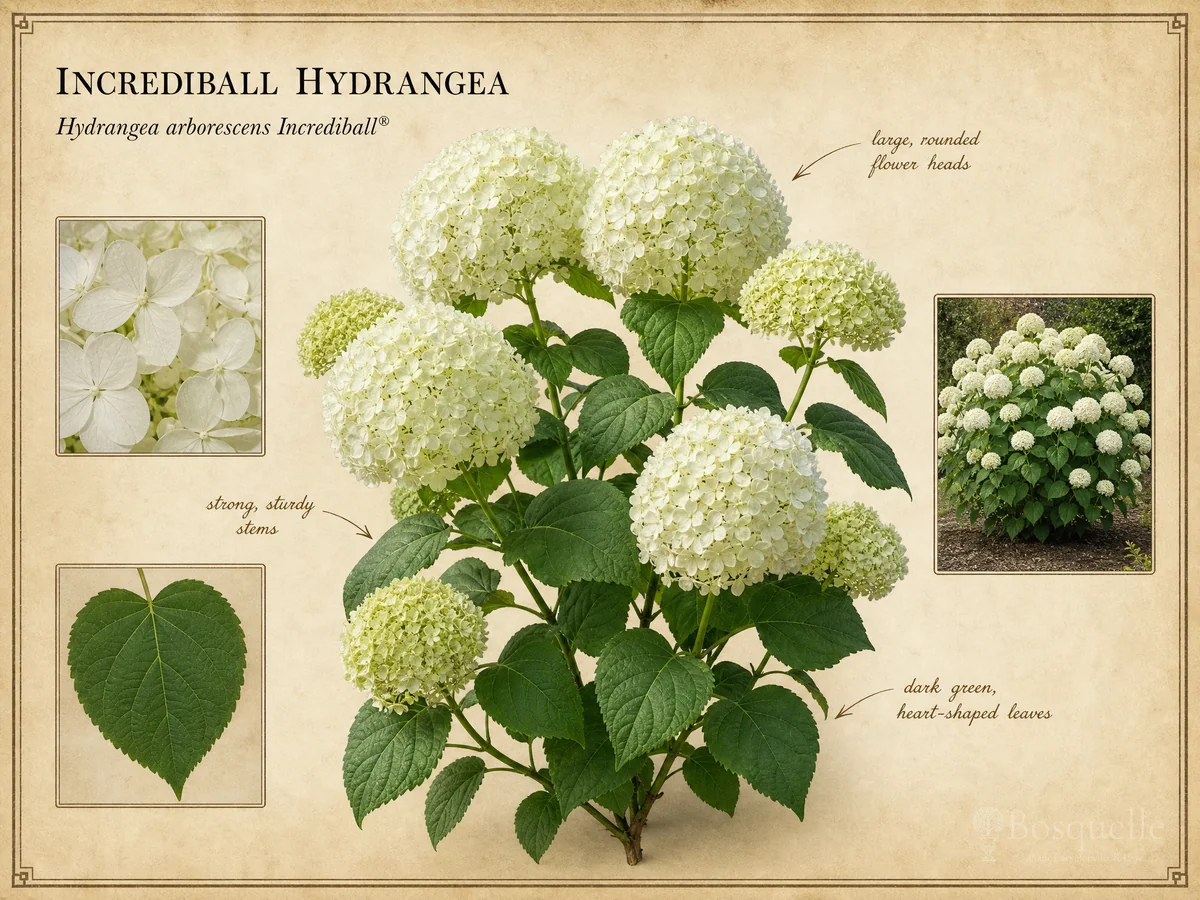
Smooth hydrangeas such as Annabelle and panicles such as Limelight flower on the current season's growth. In late winter or early spring you can remove dead wood, thin weak stems, and shorten the framework — even fairly hard on vigorous smooth types — without sacrificing the coming flush. Leave a sturdy base of older stems if you want height; cut harder for a denser, shorter mound.
Old-wood pruning for Nikko Blue and oakleaf types
Classic mopheads such as Nikko Blue and oakleafs such as Munchkin set flower buds on last year's stems. A hard late-winter cut removes those buds. Instead: remove dead or weak wood anytime; deadhead or reshape lightly after the main summer flush, cutting just above plump buds that will carry next year. Winter bud kill is a siting and shield problem — see Hydrangea Care in Winter — not a reason to prune harder in February.
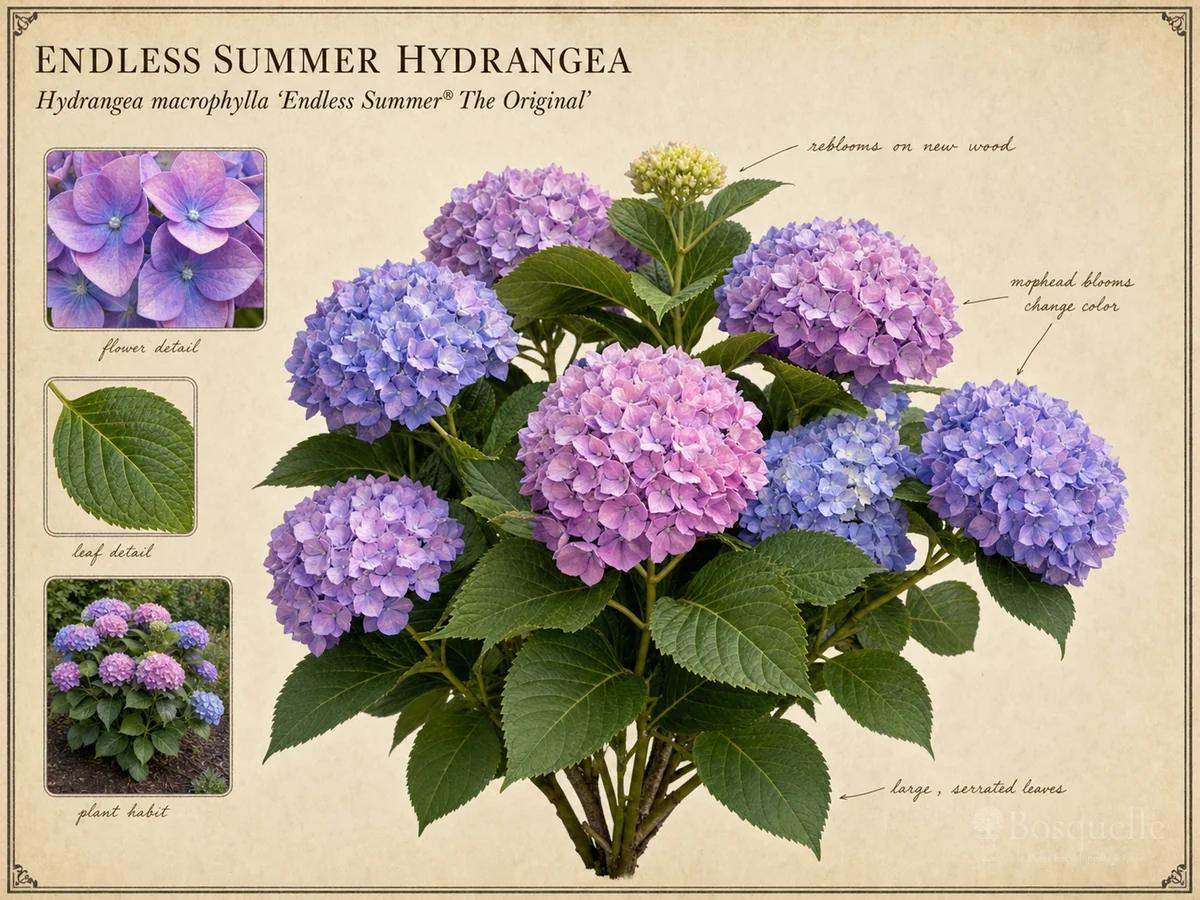
Remounting bigleafs like Endless Summer
Some bigleaf cultivars such as Endless Summer can flower on new wood after old-wood buds are lost. That is a cultivar-specific trait, not a free pass to treat every mophead like a panicle — and not proof the plant is freeze-proof in cold gardens. When in doubt, prune after flowering and verify the cultivar on its profile.
Training climbing hydrangeas
Climbing Hydrangea needs a sturdy wall, fence, or tree trunk and time to cling. Prune lightly after flowering to keep the framework; do not shear like a hedge in late winter. Plan the support before planting day.
Renovation without guessing
Overgrown new-wood types can be renewed over one or two dormant seasons. Overgrown old-wood types renew more slowly — remove a few of the oldest stems at the base after bloom rather than cutting the whole shrub to the ground in one winter. Shared growing rules remain on How to Grow Hydrangeas.
Identify bloom wood first, cut on the matching calendar, and keep shared growing rules on the care pillar.
FAQ
Can I prune all hydrangeas in late winter?
No. New-wood types (smooth, panicle) yes; classic old-wood mopheads and oakleafs need after-bloom timing or you risk next year's flowers.
Why didn't my Nikko Blue bloom after I pruned?
Likely old-wood buds were removed or winter-killed. Prune after flowering next time and shield buds before the next cold winter.
I pruned and lost next year's bloom — what now?
Stop repeating the same cut. Confirm species on Types of Hydrangeas, shield buds next winter if needed, and wait — remounting types may recover on new wood; classic mopheads need patience.
Where is full hydrangea care?
On How to Grow Hydrangeas — this guide only covers prune timing by species.
Related guides



Recommended plants






This note is part of Hydrangea Guides.
More pruning timing notes by plant live in Pruning Guides.
Updated: Reviewed by Bosquelle Editors