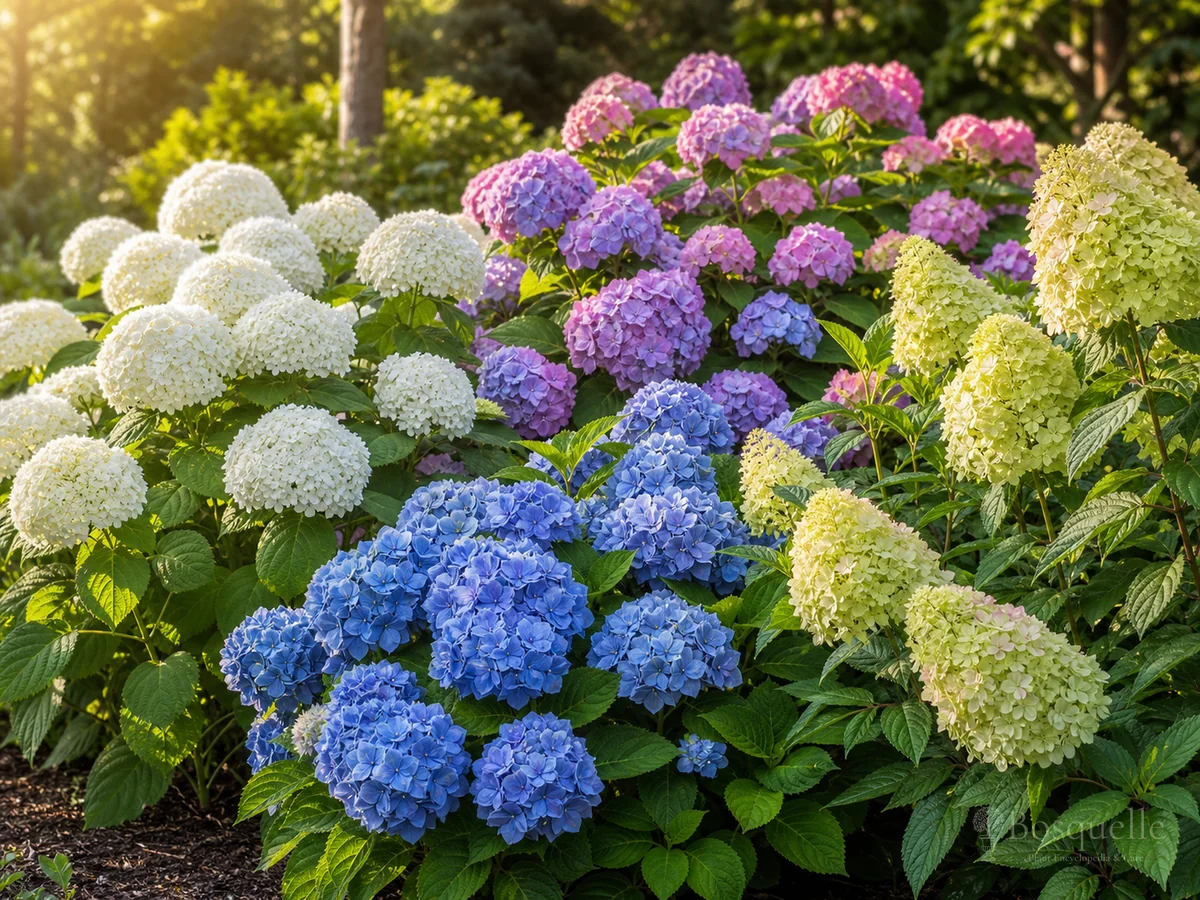

Old wood or new wood — identify before you prune
- Light: many bigleaf types prefer morning sun and afternoon shade; panicle types often take more sun if soil stays moist. Deep shade cuts blooms.
- Soil: rich, moist but well drained — soggy winter feet and bone-dry summers both fail hydrangeas.
- Water: deep and steady in the first seasons; large leaves wilt fast in heat without a soak.
- Feed: modest spring feed plus organic mulch; excess nitrogen makes leaves at the expense of flowers.
- Prune: timing follows species — old wood vs new wood — see Pruning Hydrangeas.
Species and bloom wood before you prune
The most expensive hydrangea mistake is one late-winter cut applied to every label in the nursery. Before you snip, decide which group you own:
| If your hydrangea is… | Bloom wood | Prune frame on this page | Open next |
|---|---|---|---|
| Smooth (arborescens) such as Annabelle | New wood | Can renew in late winter | Pruning Hydrangeas |
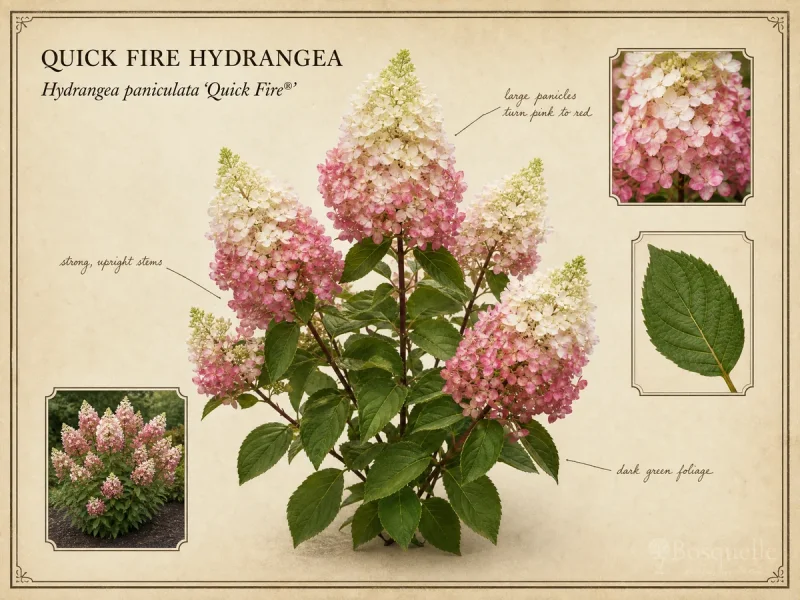
| Panicle (paniculata) such as Limelight | New wood | Structure-prune dormant season | Pruning Hydrangeas |
| Classic mophead / lacecap bigleaf | Often old wood | Deadhead after flush; no hard February cut | Pruning Hydrangeas + Winter Care |
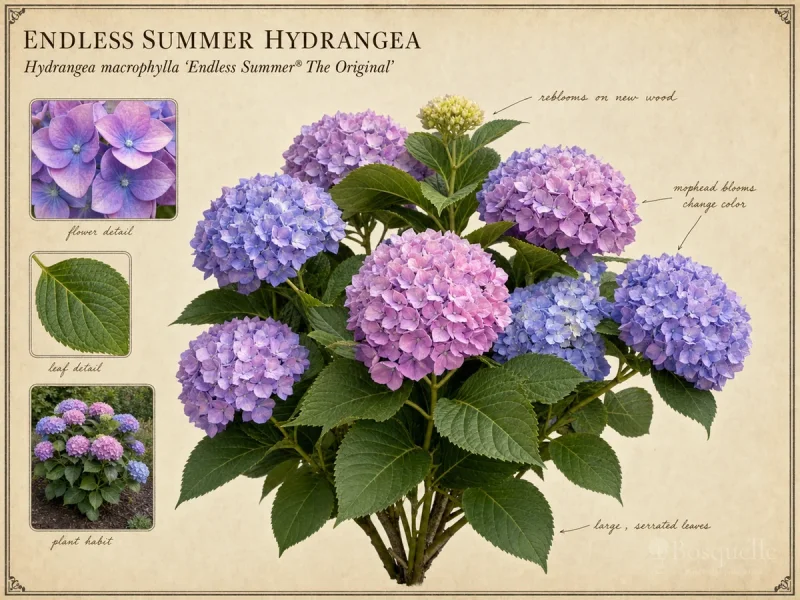
| Remounting bigleaf such as Endless Summer | Mixed — cultivar-specific | After-bloom tidy; verify profile | Types of Hydrangeas |
If you already pruned hard and lost next summer's bloom, wood type was probably wrong — not your watering. Confirm species on Types of Hydrangeas before you cut again.
Site, soil, and frost risk
Choose a spot with morning light and shelter from harsh afternoon scorch for mopheads such as Nikko Blue, and more open sun for panicles such as Limelight if you can water them consistently. Leave roughly 60–90 cm between shrubs so air moves and roots do not fight.
In heavy clay, raise beds or improve structure with organic matter so water does not pond. In sandy ground, add compost so moisture does not flash away. Mulch 5–7 cm of organic matter — keep mulch a hand's width off stems so the crown stays dry.
Frost and bud risk: classic mophead buds form on last year's stems. A late spring frost can wipe the coming flush even after a mild winter — this is a normal risk, not a sign you did something wrong. In colder gardens, favour new-wood bloomers such as Annabelle and panicles when old-wood mopheads are risky; protect buds on exposed mopheads rather than hard-pruning in panic. Remounting cultivars such as Endless Summer can flower on new wood after bud loss, but they are not freeze-proof mopheads — confirm each cultivar on its profile.
Planting
Hydrangeas arrive container-grown or (less often) bare-root. Plant when soil is workable — not frozen, waterlogged, or in hard drought.
- Hole and mix. Dig a hole twice as wide as the root ball. Mix native soil with compost. Set the crown at the same depth it grew in the pot.
- Backfill and water. Firm gently, water deeply, then mulch — keep mulch off the stems.
- First season. Do not let the root zone dry out while plants establish; wilting leaves in heat are an immediate soak cue.
Watering
Water at the base — drip lines or a soaker hose beat overhead spray. Keeping foliage dry cuts leaf-spot pressure while roots still get a deep drink. Large leaves lose moisture quickly in wind and heat. In the first growing seasons, soak regularly in dry weather so roots train downward — deep soaks, not daily misting.
Wilt diagnostic: leaves that droop in heat and perk within about half an hour after a soak usually needed water. Persistent brown leaf edges and drop on wet soil more often signal over-watering or poor drainage — not “more hose.”
Established in-ground hydrangeas still need deep water in hot dry spells. Sandy soils and windy sites drink faster; clay holds longer but still needs drainage. Container hydrangeas dry much faster — see Hydrangeas in Containers.
Feeding and fertilizer
Hydrangeas respond to an annual organic mulch and, on poor soils, a modest spring fertiliser. Feeding will not fix deep shade or waterlogged roots. Many shrubs bloom better slightly underfed than nitrogen-pushed into leaf at the expense of flower.
- Early spring as growth starts: sprinkle a balanced or shrub fertiliser around the drip line, water in if dry, then mulch. Follow product labels.
- Avoid late soft growth in cold winters — ease off nitrogen late so wood can harden before frost.
Bloom colour and soil pH (bigleaf facts)
On many Nikko Blue-style H. macrophylla cultivars, flower colour shifts with aluminium availability and soil pH: more acidic conditions often favour blue tones; more alkaline conditions favour pink. If you are chasing blue, prefer a feed that is not phosphate-heavy — excess phosphate can lock aluminium out of reach. White flowers and many panicle/smooth types do not play the same colour game — Limelight and Annabelle will not turn blue with a single dose of amendment. Changes take time and are not a substitute for correct light and water. Confirm cultivar behaviour on the plant profile.
Getting more blooms
- Light and vigor: deep shade cuts flower count before any fancy prune tip will help.
- Match prune to wood: new-wood types such as Annabelle recover from a late-winter cut; old-wood mopheads lose next year's bloom if you cut hard at the wrong time — see Pruning Hydrangeas.
- Remounting bigleafs such as Endless Summer can flower on new wood after bud loss, but they still need the right site and winter care — a marketing name is not a hardiness guarantee.
- Deadhead faded heads when tidy — on old-wood types stop above the plump buds that will carry next year's flowers.
Seasonal rhythm and what next
- Dormant / late winter: structure-prune new-wood types; leave old-wood buds alone; check ties on climbers.
- Spring: feed, mulch, water new plantings through dry spells; watch late frosts on mophead buds.
- Summer: deep water in drought; afternoon shade for scorch-prone bigleafs; enjoy panicle colour change on types like Limelight.
- Autumn: ease nitrogen-heavy feeding; leave faded heads for winter interest if you like; prepare cold-site protection for old-wood types.
A dedicated winter-protection checklist lives on Hydrangea Care in Winter.
After your first good flush: edge the shade border with Hydrangea Companion Plants, shortlist a compact cultivar on Compact Garden Hydrangeas, and follow the container guide if the plant moves to a patio — Hydrangeas in Containers.
Pets and household safety
Hydrangeas are generally a low toxicity concern for dogs and cats compared with many common garden plants — but do not encourage chewing leaves or flowers, and keep fertiliser and fresh mulch out of reach. Supervise curious pets near new plantings; mechanical nibbling is the main risk, not a wellness non-toxic houseplant myth.
Pests and diseases (basics)
Expect powdery mildew, leaf spot, and occasional aphids in many temperate gardens. Start with culture: spacing, morning sun that dries foliage, water at the base, and cleanup of infected leaves.
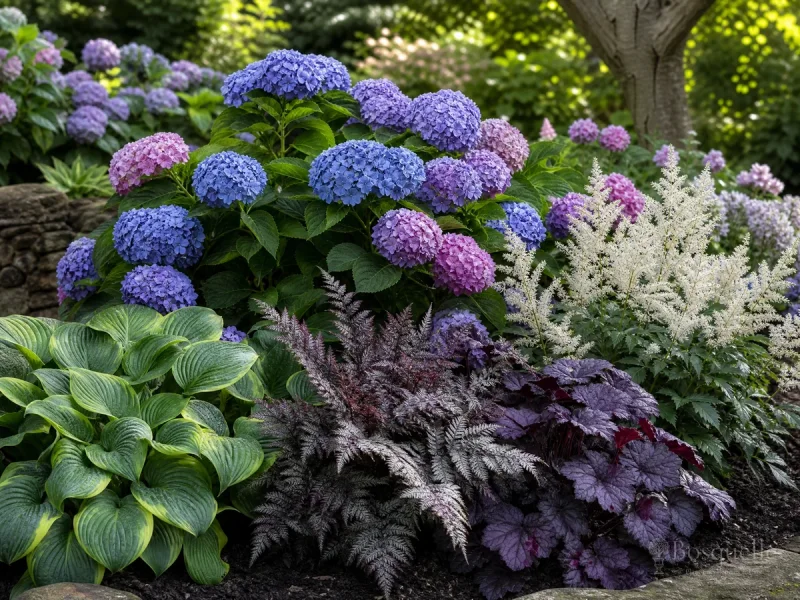
Hydrangea companion plants can support a healthier shade-edge bed with clear jobs — they are not a magic spray substitute.
Growing hydrangeas in containers?
Compact cultivars can live in pots, but containers change watering and make roots colder in winter — pot winter is not ground insulation. For pot size, compost, watering cadence, and overwintering steps, use Hydrangeas in Containers.
Common mistakes
- Deep shade or soggy soil; frequent light watering instead of deep, infrequent soaks.
- One prune calendar for every species — check wood type first, or the flowers will not appear.
- Expecting panicles or smooth whites to shift blue/pink like mopheads.
- Treating remounting marketing as freeze-proof mophead hardiness.
- Treating container winter like in-ground insulation.
Choosing species first? See Types of Hydrangeas for a decision matrix — then return here for shared growing rules.
Match light and moisture to the type, feed modestly, match prune to species and bloom wood, and expect some frost bud loss in cold years — that is normal, not a mistake. Child guides below extend this pillar — they do not replace it with duplicate full-care clones.
FAQ
I pruned and lost next year's bloom — what happened?
You likely cut an old-wood mophead or oakleaf on a new-wood calendar, or winter-killed buds were already gone. Confirm species on Types of Hydrangeas and open Pruning Hydrangeas before the next cut.
Are hydrangeas safe around dogs and cats?
Generally low toxicity concern — but do not encourage chewing leaves or flowers. Keep fertiliser out of reach and supervise curious pets.
Why didn't my mophead bloom?
Often a late freeze killed old-wood buds, or a hard late-winter prune removed them. Check species group on Pruning Hydrangeas and confirm cultivar behaviour on the profile.
Can I change flower colour?
On many bigleaf types, colour responds to soil pH and aluminium availability over time — not overnight. Prefer a low-phosphate feed when chasing blue. Whites and most panicle/smooth types do not shift the same way.
Do hydrangeas need full sun?
It depends on the group. Many bigleaf mopheads prefer morning sun and afternoon shade. Panicles such as Limelight often take more open sun if soil stays moist. Deep shade cuts blooms on every type.
How much sun do hydrangeas need?
Aim for a few hours of direct light with relief from harsh afternoon scorch for bigleafs; give panicles more sun only when you can water them consistently every week. More light raises water need.
Are hydrangeas perennial?
Yes — garden hydrangeas are woody deciduous shrubs that return each year when hardy for your site. They are not annual bedding.
Do all hydrangeas need the same prune?
No. Shared care is light, moisture, and hygiene. Old-wood vs new-wood timing differs by species — open the pruning guide.
Care worked — what next?
Edge the bed with companions, shortlist a compact cultivar for tight spaces, shield old-wood buds before winter, and keep pots on the container guide — we stay with you after the first flush.
Are hydrangeas toxic to people or pets?
Yes — all parts contain cyanogenic glycosides that cause vomiting and nausea if ingested. Toxic to dogs, cats, and horses. The flowers and buds are most commonly ingested. Wash hands after handling cut stems.
Why are my hydrangea leaves turning yellow?
Most commonly overwatering or poor drainage. On acid-loving types (H. serrata, H. macrophylla) yellowing can signal iron chlorosis from soil pH too high — treat with ericaceous fertiliser and sequestered iron. Late-season older-leaf yellowing is normal.
Related guides



Recommended plants



This note is part of Hydrangea Guides.
More first-season notes by plant are gathered in How to Grow Guides.
Updated: Reviewed by Bosquelle Editors