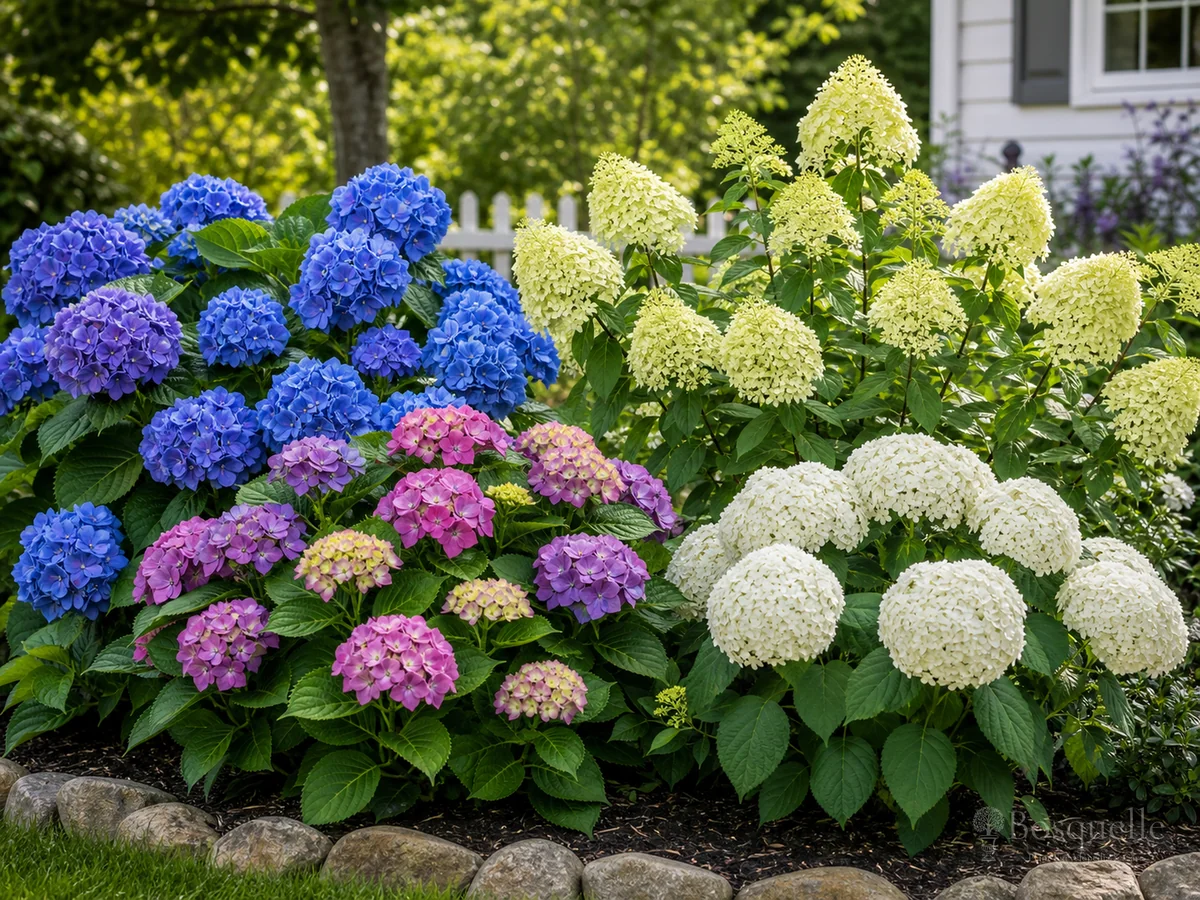
Mophead gardeners, panicle gardeners, and cold-garden smooth mound gardeners are not shopping the same hydrangea. Nikko Blue and Limelight share a genus and not a prune or winter-bud contract — species matters more than flower colour.
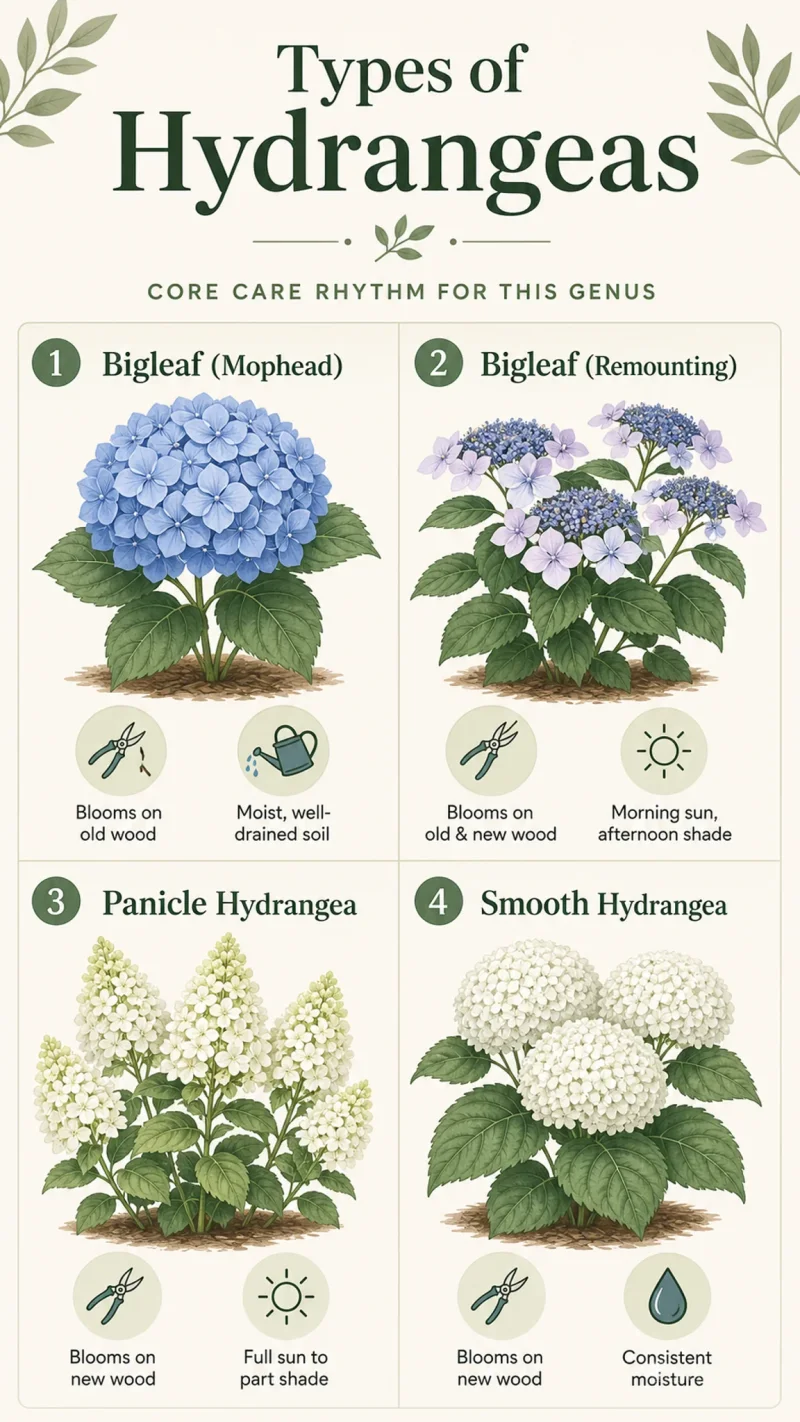
Name your gardener persona, then browse all 96 garden hydrangeas by species. Shared care and old/new wood prune timing stay on How to Grow Hydrangeas and Pruning Hydrangeas — Types only sorts persona to catalog band.
Which hydrangea gardener are you?
- Cold-garden reliable person — smooth (arborescens) such as Annabelle, or panicle such as Limelight.
- Part-shade mophead person — bigleaf (macrophylla) such as Nikko Blue; after-bloom prune and winter bud protection.
- Autumn foliage person — oakleaf (quercifolia) such as Munchkin.
- Wall / tree climber person — climbing (Climbing Hydrangea) with a support plan.
- Patio / compact person — Bobo → Compact Garden Hydrangeas.
Mophead vs panicle — same genus, different rules
| Trait | Bigleaf mophead | Panicle |
|---|---|---|
| Bloom wood | Often old wood — winter bud risk | Usually new wood — hard spring OK |
| Sun comfort | Part shade typical | More sun-tolerant cones |
| Colour shopping | pH / cultivar trait — not a Types bucket | Cultivar colour on the profile |
Know your USDA hardiness zone before you pick a type of hydrangea that will take your winter. Type your ZIP below.
2023 USDA ZIP listings (PRISM / USDA-ARS). Find Your USDA Hardiness Zone · Official USDA map.
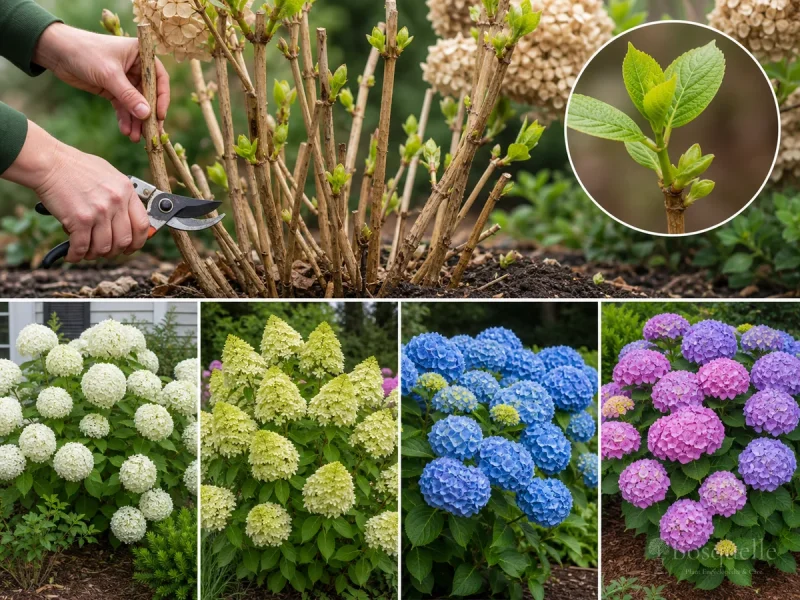
Nikko Blue fails the panicle prune calendar. Limelight fails when you expect mophead winter-bud loss instead of a hard prune. If you pruned the wrong group, stop cutting until you re-ID here, then open Pruning Hydrangeas.
Persona checklist before you plant
- Cold reliable mounds → smooth (Annabelle)
- Sun cones → panicle (Limelight)
- Classic mophead → bigleaf (Nikko Blue)
- Autumn foliage → oakleaf (Munchkin)
- Wall height → climbing (Climbing Hydrangea)
- Patio scale → compact (Bobo) → Hydrangeas in Containers
Session-end check: can you name species persona — cold smooth, sun panicle, part-shade mophead — before choosing by flower colour? Nikko Blue and Limelight share a genus, not a prune or winter-bud contract.
Wrong hydrangea buys that look like a types decision
Nikko Blue pruned like Limelight: mopheads often bloom on old wood — late-winter panicle cuts remove mophead buds. Re-group here, then open Pruning Hydrangeas.
Blue chip without species ID: pH / cultivar colour is not a Types bucket — species and prune comfort come first.
Climbing Hydrangea without a support plan: wall climber needs structure — not a mophead border default.
Bobo for a back-border screen: compact scale lives on Compact Garden Hydrangeas — not a panicle height substitute.
What each species group actually buys
Smooth hydrangeas: Hydrangea arborescens — rounded white (or pink) heads on new wood. Reliable in colder bands when buds of old-wood types are at risk. Annabelle is the cold-garden reliable mound.
Panicle hydrangeas: Hydrangea paniculata — cone-shaped flower heads on new wood. Generally sun-tolerant and pruneable in late winter. Limelight owns sun cones and hard spring prune comfort.
Bigleaf / mophead & lacecap: Hydrangea macrophylla — mopheads and lacecaps. Many bloom on old wood (or rebloom on both); confirm the cultivar before a hard late-winter cut. Nikko Blue is the classic mophead path — prune it after bloom, not in late winter.
Oakleaf hydrangeas: Hydrangea quercifolia — oak-shaped leaves, summer bloom, strong autumn foliage. Typically flower on old wood. Munchkin brings strong autumn foliage colour.
Climbing (anomala): Hydrangea anomala (often subsp. petiolaris) — woody climbers that cling to walls and trees; plan a sturdy support and old-wood bloom timing. Climbing Hydrangea needs a wall or tree support plan.
Trade-offs before you buy
Winter bud loss on old-wood mopheads is a normal species trait, not a fertilizer fix. Panicles tolerate more sun but still want moisture through establishment. Shared care on How to Grow Hydrangeas.
Mountain / serrata lacecaps prefer cooler shadier sites than classic mopheads — open that band before copying Nikko Blue culture. Reblooming macrophylla marketing does not turn a mophead into a panicle prune calendar. Oakleaf autumn foliage is the job — not a blue-mophead substitute.
Match persona to a catalog band
- Cold reliable mound → smooth (Annabelle)
- Sun cone → panicle (Limelight)
- Part-shade mophead → bigleaf (Nikko Blue)
- Autumn leaf → oakleaf (Munchkin)
- Wall / tree → climbing (Climbing Hydrangea)
- Patio compact → A8 / containers (Bobo)
- Prune timing → Pruning Hydrangeas
Mountain / serrata lacecaps prefer cooler shadier sites than classic Nikko Blue mopheads — open that band before copying macrophylla culture. Reblooming bigleaf marketing does not turn a mophead into panicle prune timing. Oakleaf Munchkin buys autumn foliage — not a blue-mophead substitute.
Tag shorthand — species before blue chip
- Macrophylla / mophead / lacecap → old-wood risk band
- Paniculata / limelight class → new-wood cone band
- Arborescens / Annabelle class → smooth cold band
- Quercifolia / oakleaf → autumn foliage band
- Petiolaris / climbing → support-plan band
Reblooming bigleaf marketing does not turn a mophead into panicle prune timing — species first, colour second.
When the species catalog feels overwhelming, filter by persona first — smooth cold mound, panicle sun cone, bigleaf part-shade, oakleaf autumn leaf, or climbing wall. Two or three profile reads inside one band beat scrolling all 96 hydrangeas before old/new wood prune timing is set on Pruning Hydrangeas.
Full catalog by species (96)
Groups use species signals we can defend — not invented blue/pink Types buckets. Open a card for hardiness, sun, and height.
How to use the bands: name persona first, then open two or three cultivars inside that species — not all 96 at once. Mophead shoppers confirm old-wood prune. Panicle shoppers confirm sun site.
Bigleaf / mophead & lacecap (47)
Hydrangea macrophylla — mopheads and lacecaps. Many bloom on old wood (or rebloom on both); confirm the cultivar before a hard late-winter cut.
Panicle hydrangeas (21)
Hydrangea paniculata — cone-shaped flower heads on new wood. Generally sun-tolerant and pruneable in late winter.
Oakleaf hydrangeas (11)
Hydrangea quercifolia — oak-shaped leaves, summer bloom, strong autumn foliage. Typically flower on old wood.
Smooth hydrangeas (9)
Hydrangea arborescens — rounded white (or pink) heads on new wood. Reliable in colder bands when buds of old-wood types are at risk.
Mountain / serrata (5)
Hydrangea serrata — lacecap-style mountain hydrangeas; often prefer cooler, shadier sites than bigleaf types.
Climbing (anomala) (1)
Hydrangea anomala (often subsp. petiolaris) — woody climbers that cling to walls and trees; plan a sturdy support and old-wood bloom timing.
Other Hydrangea in library (2)
These Hydrangea entries do not yet match a stronger species keyword in our classifier — open the profile for cultivar notes.
Where care, prune, and pots live
Site, water, and species facts: How to Grow Hydrangeas. Old-wood vs new-wood timing: Pruning Hydrangeas. Patio and compact scale: Hydrangeas in Containers. Low-mound shortlist: Compact Garden Hydrangeas.
After you name species persona, wanting Nikko Blue to look like Limelight does not turn it into a mophead prune calendar — species first, colour second. Types sorted old/new wood comfort; winter bud loss stays on Care and Prune.
When the species catalog feels wide, filter by persona: cold mound opens smooth; sun cone opens panicle; part-shade opens bigleaf. Two profile reads beat scrolling all 96 hydrangeas before the first cut.
Name the gardener persona — mophead, panicle, smooth, oakleaf, climbing, or compact — browse the matching species group, then grow with the shared care pillar.
FAQ
Is a panicle the same as a mophead?
No. Panicles (paniculata) usually bloom on new wood and tolerate more sun; mopheads are typically bigleaf types with different prune timing.
I pruned and lost bloom — was it the wrong type?
Often yes. Old-wood mopheads need after-flush cuts, not late-winter panicle pruning. Re-group here, then open Pruning Hydrangeas.
Why isn't this grouped by flower colour?
Colour is a cultivar / chemistry trait on many bigleafs. We group by species and prune comfort we can defend.
Where do I grow the hydrangea I picked?
How to Grow Hydrangeas for shared care; Pruning Hydrangeas for timing; Hydrangeas in Containers for pots.
Related guides



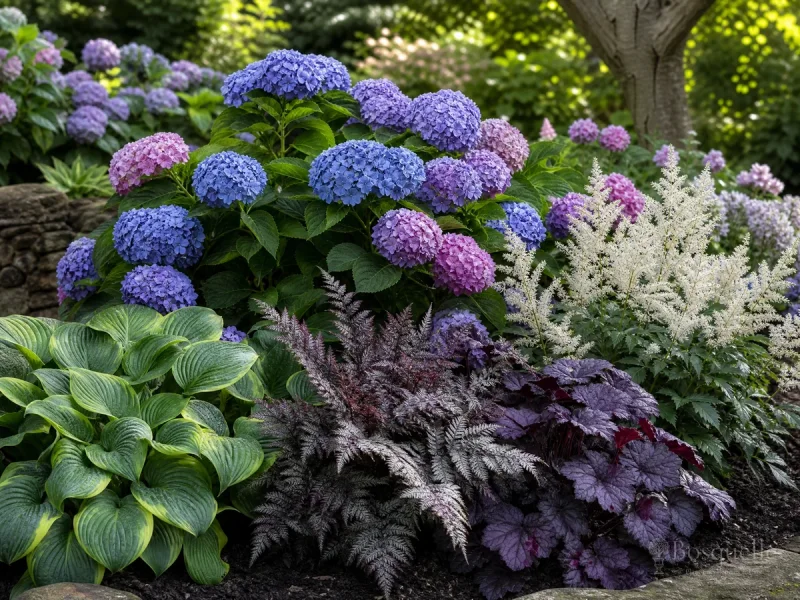

This note is part of Hydrangea Guides.
More type comparisons by plant are gathered in Types of Plants Guides.
Updated: Reviewed by Bosquelle Editors