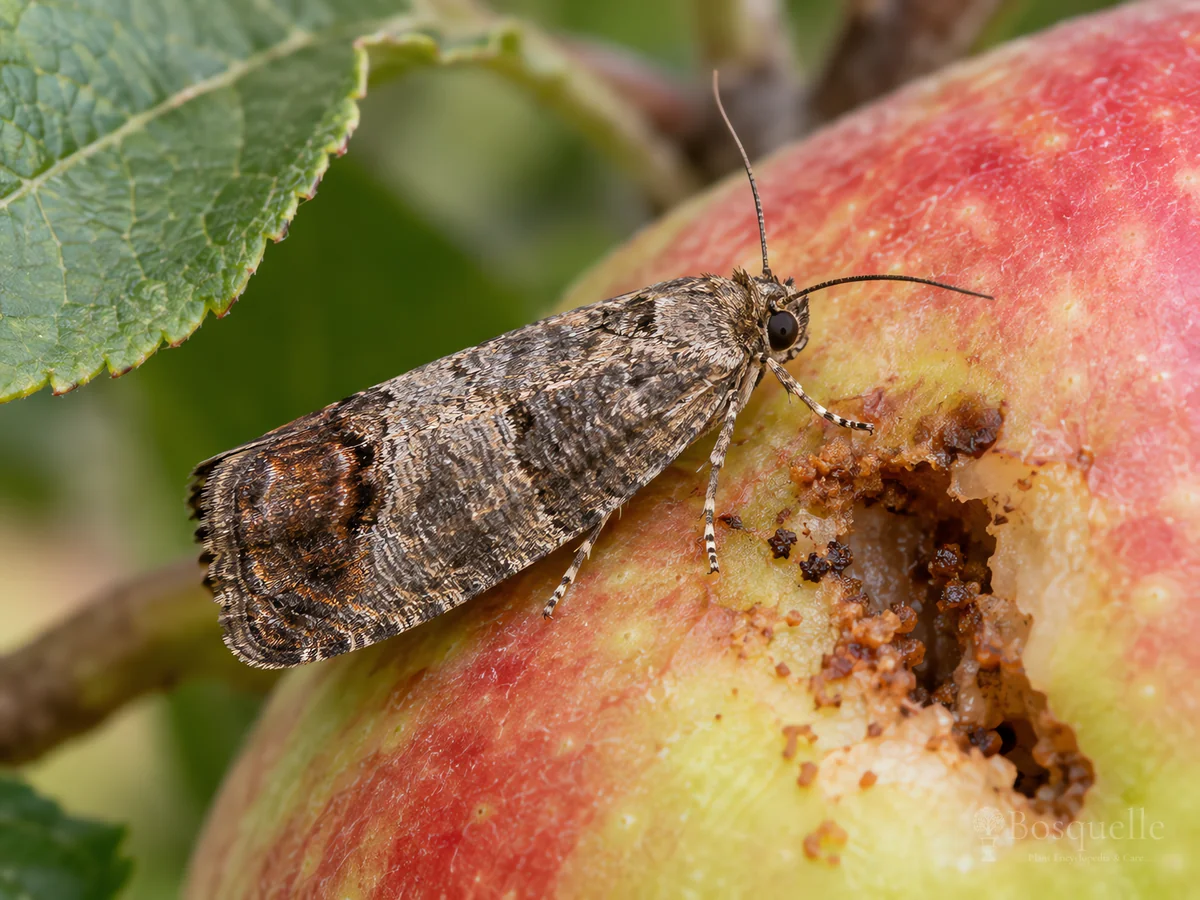
Cut an apple with a crumbly brown hole. A pink worm with a brown head that tunnels to the seeds is codling moth. Pickup the drops. Hang a pheromone trap to time the hatch. Bag the keepers when fruit is still small. A spray will not kill the worm already in the apple.
Codling moth is a small gray moth. Gardeners call it the worm in the apple. The adult holds mottled gray wings like a tent, with a copper patch at the tip. The larva is a cream to pink caterpillar with a brown head and true legs. It bores into apple, pear, and English walnut. It is not a houseplant insect.
- Cut a sting. A tunnel to the core with sawdust frass confirms it.
- Pickup drops. Do not home-compost live fruit.
- A bottle will not kill the larva already inside.
Pickup wormy fruit; a spray will not kill the larva already in the apple
Once the caterpillar is in the core, a foliar spray does not reach it. This year's job is to pull infested fruit before the larva crawls out, then keep the next hatch off the keepers.
- Confirm. Look for a tiny mound of reddish brown frass on the skin, often at the blossom end or where two apples touch. Cut the fruit. A tunnel to the seeds, sawdust frass in the cavity, and a cream to pink caterpillar with a brown head and legs are this moth.
- Pickup drops every week from late spring through harvest. Pick off fruit on the tree that already shows a sting. Trash, cook, freeze, or solarize in a sealed bag. Do not home-compost live fruit. Larvae leave the apple and pupate in bark, debris, or the top of the soil.
- Hang a pheromone trap at bloom, high on the outer canopy. Check it. The catch times the hatch. It does not finish the moths by itself.
- Bag keepers after you thin to one fruit per cluster, when apples are still about a half inch to an inch across. Spray only at hatch, while the larva is still outside, and only if you will repeat. Fail if a bottle on a wormy apple is the whole plan.
On a smooth trunk, a corrugated cardboard band can catch larvae crawling down to pupate. Wrap the corrugations toward the bark. Check every week or two and crush what you find. Bands help. They do not replace pickup.
Should I compost dropped apples?
Not in a home pile while larvae are alive. Trash, cook, freeze, or solarize in a sealed bag. Municipal hot compost is a different job.
Cut the apple: a tunnel to the core with sawdust frass
The adult is about a half to three-quarters of an inch, mottled gray, and hard to see on bark. Males show a copper or bronze band at the wing tip. Moths fly at dusk when evenings are warm. The female lays small, disc-shaped eggs on fruit or nearby leaves. The young larva feeds on the skin for a short time, then bores in. A shallow sample hole that did not reach the core is a sting. A full entry leaves crumbly reddish brown frass at the hole.
The larva grows to about half to three-quarters of an inch, cream then pink, with a distinct brown head, three pairs of true legs, and extra prolegs. It feeds in the seed cavity. When it is full, it chews an exit, drops or crawls, and spins a cocoon under loose bark or in debris. Two flights are common. Warm regions get more. The second flight often ruins more fruit than the first.
| Where you see it | What they are | Try this |
|---|---|---|
| Hole with sawdust frass; tunnel to the seeds; pink worm with a brown head and legs | Codling moth | Pickup; bag keepers; time a hatch spray |
| Dimple on the skin; brown trails in the flesh; core often left; maggot has no legs | Apple maggot | See apple maggot — not this moth |
| Wilted shoot tip on peach or apple; fruit tunnel that skips the core | Oriental fruit moth | Different moth; not this core feeder |
| Crescent cut on young fruit soon after bloom | Plum curculio | Different beetle; not this moth |
| Tiny flies around a kitchen bowl or trash | Vinegar fruit fly | Not the orchard |
What do codling moths look like?
The larva is cream to pink, with a brown head and legs, up to about three-quarters of an inch. The adult is a mottled gray moth with a copper patch at the wing tip.
That maggot is not this moth
Look for legs. Codling moth larvae have them, plus a brown head. Apple maggot has none. It leaves winding brown trails in the flesh and often leaves the core. Photos online often label this moth's damage as apple maggot. If the flesh is trail-brown and the seeds are still there, see apple maggot. Do not hang a red sticky sphere here and call it done.
Oriental fruit moth is a smaller tortricid. First it flags a succulent shoot tip. Later it tunnels fruit in a wandering line and usually skips the seeds. It has an anal comb on the last segment; this moth does not. There is no separate page for that insect. Treat flagged peach shoots as a different job.
A crescent scar on young fruit just after bloom is plum curculio, a snout beetle, not this moth. Tiny flies on a ripe bowl in the kitchen are vinegar flies. A molasses jug hung for this moth is not their trap either.
How do I tell codling moth from apple maggot?
Codling moth has a brown head, legs, and a tunnel to the seeds with sawdust frass. Apple maggot has no legs and usually leaves the core. See apple maggot for that fly.
Hang a pheromone trap to time the flight, not to finish the moths
A sticky wing or delta trap baited with a female scent lure catches males. Hang it at bloom, high in the outer canopy, and check it every few days at first, then weekly. One trap times the flight on a home tree. Clean stuck moths. Replace the lure when the maker says, often after four to eight weeks. Tweezers or gloves keep the lure off your hands, so you do not smear scent on the rest of the tree.
The first steady catch, plus warm evenings, is the start of egg lay. Hatch follows about a week later in cool weather, and sooner in heat. Ask your local extension for the degree-day cue in your county. Do not build a climate table from a California chart and spray on that date here.
A vinegar and molasses jug catches some moths. It does not replace the pheromone trap, and it will not finish a heavy flight. A red sticky sphere is apple maggot's trap, not this one.
Do pheromone traps get rid of codling moths?
No. A home trap catches males so you can time the hatch. It is not a finish. Bag fruit, pickup, or a hatch spray still do the work.
Does apple cider vinegar kill codling moths?
A vinegar and molasses jug can drown some moths. It will not stop a worm already in the apple, and it is not this moth's main trap. Hang a pheromone trap to time the flight.
Bag the keepers when fruit is still small
Bagging is the one nonchemical method that can stand alone on a small tree. Thin to one undamaged fruit per cluster. When apples are about a half inch to an inch across, four to six weeks after bloom, slip a No. 2 paper lunch bag over the fruit. Cut a two-inch slit in the bottom fold so the stem seats, then staple the mouth shut. Leave the bag on until harvest, or pull it two or three weeks early if you want more color and will watch late stings.
Bag what you can reach. Unbagged fruit still feeds the next flight, so keep picking stings off those apples. Nylon mesh footies that work on apple maggot often fail here; the young larva can crawl through the mesh. Clear sandwich bags trap heat and moisture. Short-stem apples such as Gravenstein are hard to seal. Fail if bags go on after the first stings already show.
Do nylon mesh bags stop codling moth?
Often not. A young larva can crawl through mesh that stops apple maggot. A paper lunch bag sealed at the stem is the usual home bag.
Spray only at hatch, while the larva is still outside
A labelled spray hits the young larva in the day or two after hatch, before it bores in. Time it off the trap catch, or off the first new stings on the fruit. Do not spray during bloom. Bees are still on the flowers. Spinosad is the usual home material. Repeat about every ten days through that hatch, often three times per flight, and mind the days-to-harvest number. Codling moth granulosis virus is narrower. It must be eaten, so coverage has to be on the fruit before the larva tunnels. Weekly passes are the usual cadence. A light horticultural oil can help coverage. Skip oil as a bloom spray.
Kaolin clay paints fruit a dull white and makes egg lay and entry harder. Recoat after rain. Wash it off at harvest. It does not kill the larva inside. Broad sprays such as carbaryl kill more than this moth and can drop young apples if you use them too soon after bloom. Skip the brand aisle if you have not hung a trap or picked up drops yet.
Related reading
- Apple maggot — legless maggot, brown trails in the flesh, core often left.
FAQ
Can I eat an apple that had a codling moth worm?
Cut out the tunnel, the frass, and any brown, soft, or moldy flesh. Sound flesh is fine to eat or cook. Heavy, mushy fruit is trash. Do not store wormy fruit hoping it stays sound, and do not make sauce from apples that are brown inside.
Will codling moths kill the tree?
No. They ruin fruit. The tree lives. Pickup, bags, and timed sprays are for next year's apples, not to save a dying trunk.
Do codling moths bite people?
No. The moth lays eggs on fruit. The larva feeds in the apple, not on skin.
Will a neighbor's unsprayed apple keep sending moths?
Yes. Adults can fly in from a nearby apple, pear, or English walnut. Pickup and bags still protect the fruit you can reach. You cannot finish a whole block from one backyard.
Related pests



Related diseases




Updated: Reviewed by Bosquelle Editors