
Look at the top of the birch. If the crown is thinning and dying while the lower branches still leaf out, that is the usual start of bronze birch borer. Peel bark on a dead limb. Winding galleries packed with sawdust, or a small D-shaped hole, confirm it. A spray on the leaves will not reach those larvae.
The adult is a slender bronze beetle, about three-eighths to half an inch long. It is native. The larva is cream, legless, and flat-headed, with two spines at the tail. It tunnels under the bark and cuts off water to the top of the tree. European white birch and other white-barked landscape trees take this hardest. River birch is rarely hit.
- Dieback starts at the top and works down.
- If more than half the crown is dead, take the tree down.
- Water the trees you mean to keep. Prune infested wood in fall.
If more than half the crown is dead, take the tree down
Larvae already in the wood have girdled those branches. A bottle will not grow a new crown. Once more than about half the canopy is dead, treatments fail. Take the tree down. If you wait, adults emerge in late spring and find the next birch.
Chip the wood, or cut it into logs and solarize it under clear plastic. Burn it locally where that is allowed. Do not stack it as firewood for a neighbor, and do not haul it to another yard. Adults chew a D-shaped hole out of a log the same way they leave a standing trunk. Fail if the plan is to leave a half-dead white birch standing until next June.
How do I get rid of bronze birch borer?
If more than half the crown is dead, take the tree down and chip or solarize the wood. If the crown is still mostly there, water deeply, prune infested wood in fall, and only then consider a labeled soil drench. A leaf spray will not reach the larvae.
Can I save a birch with bronze birch borer?
Only if dieback is still early and the tree can still move water. Once more than about half the canopy is dead, take it down. Watering a half-dead crown will not rewind girdled wood.
Water the birch you mean to keep
This beetle does poorly in a vigorous tree. Birch roots sit shallow. In a hot lawn they dry out, then the top wilts, then the beetle finds the stress. Deep-water through dry weather, about every week or two in a drought, so the whole root zone is wet. Mulch two to four inches over the roots. Keep mulch off the bark. Keep the mower off the trunk.
Do not fertilize a birch that is already declining. Extra feed raises the demand for water. Nearby birch that still look fine are worth watering too, because adults move from a dying tree. Water is the job. A foliar spray is not.
D-shaped holes and a dead top confirm this beetle
The first sign is yellowing and thinning in the upper crown, then dead twigs about three-quarters of an inch to an inch across. Raised, bumpy, or zigzag ridges on thin bark are callus over galleries. Peel a dead limb. You should see winding tunnels packed with sawdust. The larva is cream, about three-quarters of an inch, with a flattened front and two dark spines at the tail. Adults leave a smooth D-shaped hole about an eighth of an inch across, usually high in the tree, in late spring.
The adult itself is easy to miss. It feeds a little on leaf edges and is gone in a few weeks. Confirm the holes or the galleries, not a bronze glint on the driveway. Top-down dieback alone is not enough. Drought can look the same until you find the D or the tunnels.
| Where you see it | What it is | Try this |
|---|---|---|
| Crown dying from the top down; D-shaped hole; raised ridges; sawdust galleries | Bronze birch borer | If more than half the crown is dead, take the tree down; otherwise water and prune in fall |
| Top wilt, no holes, no galleries under the bark | Drought or root stress | Water deeply; confirm again after a soak |
| Brown blotches scattered through the leaves; larva between the skins | Birch leafminer | See birch leafminer — not this borer |
| D-shaped holes on an ash, not a birch | Emerald ash borer | Different insect, different tree |
| Same D-holes and top dieback on oak | Twolined chestnut borer | Oak job, not birch |
What does bronze birch borer damage look like?
The top of the birch thins and dies first. Look for raised ridges on thin bark and a small D-shaped exit hole. Peel a dead limb. Winding galleries packed with sawdust confirm it.
Scattered brown leaves are birch leafminer
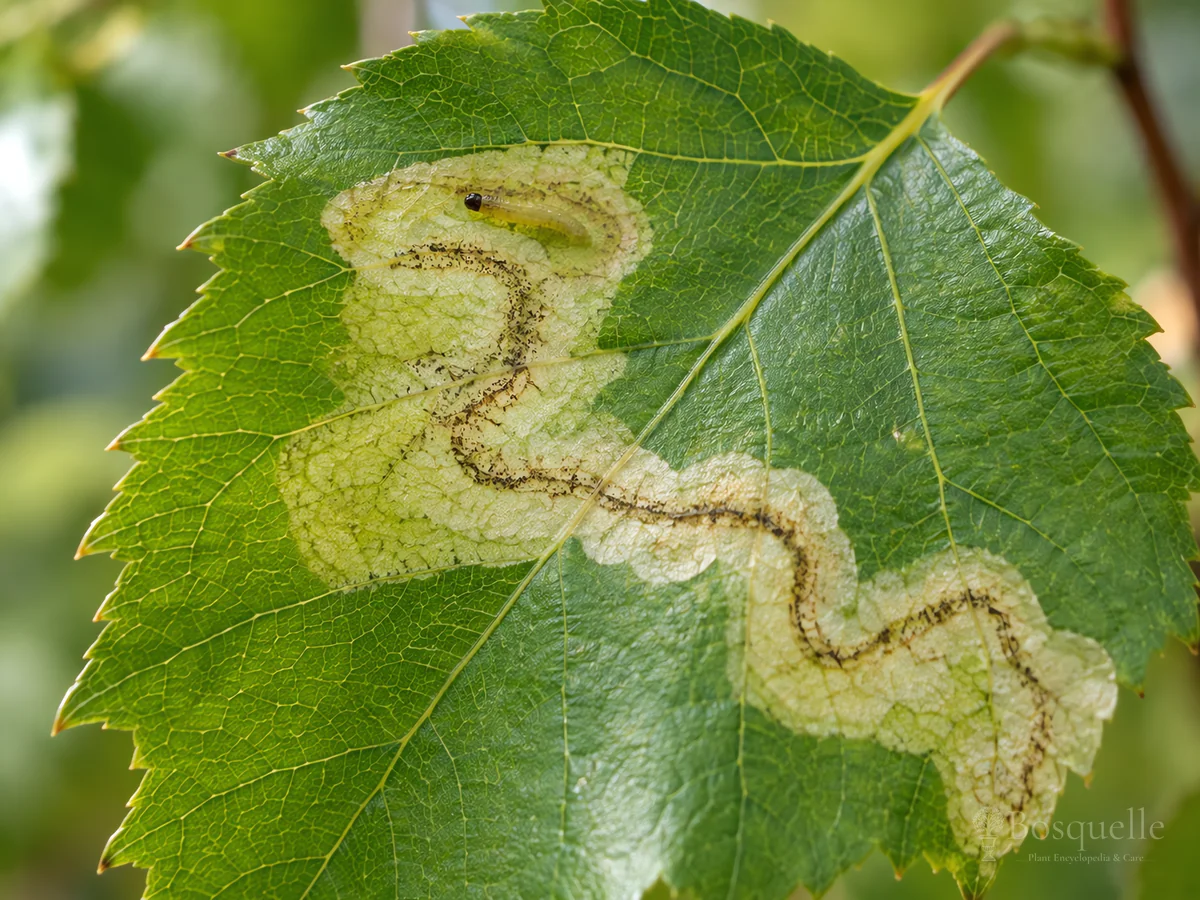
Birch leafminer browns leaves that are still attached, in blotches scattered through the crown. Hold a blotched leaf to the light. A flat larva and black specks sit between the two skins. That is a sawfly inside the leaf, not a beetle in the wood. See birch leafminer. Do not run that pinch or spray here, and do not treat a blotched canopy as this borer.
Drought wilts the top the same way this beetle does. Peel bark. If there are no galleries and no D-shaped holes, water the tree and watch. Emerald ash borer also leaves D-shaped holes. Those are on ash. This insect infests birch. A catch-all “borers” label does not tell you which wood is dying.
Is it birch leafminer or bronze birch borer?
Leafminer browns leaves in scattered blotches. This beetle kills from the top down and leaves D-shaped holes in bark. See birch leafminer for the blotch. Do not treat a blotched canopy as this borer.
Prune infested wood in fall, not while beetles fly
Cut dead and infested limbs once you can see them, well below the galleries, and get that wood off the lot. The clean window for the rest of the pruning is late fall through March, when adults are not flying. Fresh cuts in June into September release odors that draw egg-laying females. Skip a summer shaping cut on a susceptible birch.
Hazard limbs can come off whenever they are unsafe. That is not a license to thin the whole crown in July. Dispose of what you cut the same way you dispose of a removed tree. A pile of prunings under the next birch is a brood pile.
When should I prune a birch with bronze birch borer?
Cut infested wood in fall through March. Skip shaping cuts from June into September, when adults fly and fresh cuts attract them. Get the wood off the lot.
A soil drench only works while the tree can still move water
Larvae under bark are out of reach of a soap, an oil, or a foliar mix. A labeled soil drench for ornamental trees, often with imidacloprid, can reach larvae if the tree is still taking up water and the dieback is still early. Apply after the catkins finish, so bees are not working birch pollen on the same day. Water after you drench. A large tree can take months to move the product to the top.
A leaf-spray bottle with the same active ingredient will not soak the galleries. Trunk injections are a licensed-applicator job. Skip the brand aisle as the plan. If more than half the crown is already dead, skip the drench and take the tree down. Fail if the finish is a kitchen mix on a girdled white birch.
Plant river birch next
River birch is the usual replacement. It is rarely attacked. European white birch, Himalayan birch, and other white-barked Asian or European trees are magnets, even when they look healthy at planting. Native paper, gray, yellow, and sweet birch hold up better when they are watered, and they still die in a hot, dry lawn.
Site the new tree where roots stay cool and moist. The east side of a building is kinder than a south or west wall. Heritage is a river birch with lighter bark if you wanted white stems. Do not plant another European white birch in the hole you just cleared.
Is river birch resistant to bronze birch borer?
Yes. River birch is rarely attacked. European white birch and other white-barked European and Asian trees are the usual losses. Plant river birch in the hole you just cleared.
Confirm the holes, then water, prune, or remove
- Confirm the beetle. Top-down dieback plus a D-shaped hole, or sawdust galleries under the bark. Blotched leaves are a different insect.
- If more than half the crown is dead, take the tree down. Chip, solarize, or burn the wood locally. Do not move it as firewood.
- If the crown is still mostly there, deep-water through dry weather. Mulch the roots. Do not fertilize a declining tree.
- Prune infested wood in fall through March. Skip a June shaping cut.
- A labeled soil drench is last, after bloom, only while the tree still moves water. Nearby healthy birch are worth watering too.
Related reading
- Birch leafminer — scattered brown blotches inside the leaf, not a dead top and D-shaped holes.
- How to grow birch — cool, moist roots; river birch for heat; this beetle on a stressed white-barked tree.
FAQ
Does neem oil kill bronze birch borer?
Not once the larva is under the bark. Oil and soap need contact on a soft insect. This job is water, fall pruning, removal, or a labeled systemic on a tree that still moves water.
Will dish soap kill bronze birch borer?
No. A kitchen mix on the leaves does not reach larvae in the wood, and it can burn foliage. It is not a labeled treatment for this beetle.
Do bronze birch borers bite people?
No. Adults nibble birch leaves. Larvae stay under bark. The harm is to the tree, not to you.
Is this the same as emerald ash borer?
No. Both leave D-shaped holes. Emerald ash borer kills ash. This beetle kills birch. Confirm the tree before you treat.
Can I use the wood as firewood?
Burn it locally if that is allowed, or chip or solarize it. Do not haul infested birch to another yard. Adults still emerge from a log pile.
Should I wrap the trunk?
No. The first attacks are high in small crown wood, not at the lawn. Wrap does not stop egg-laying in the top. Water and a correct prune window matter more.
Related pests



Related diseases




Updated: Reviewed by Bosquelle Editors