
Choose by winter, not by the shop word carnivorous. Cape sundew is the strap-leaf beginner that often stays awake in a warm lit tray. Alice's sundew is the compact subtropical rosette with the same distilled-water rules. Roundleaf sundew is the northern bog paddle that needs a cool rest. A Venus flytrap is a tray mate. It is not a type here.
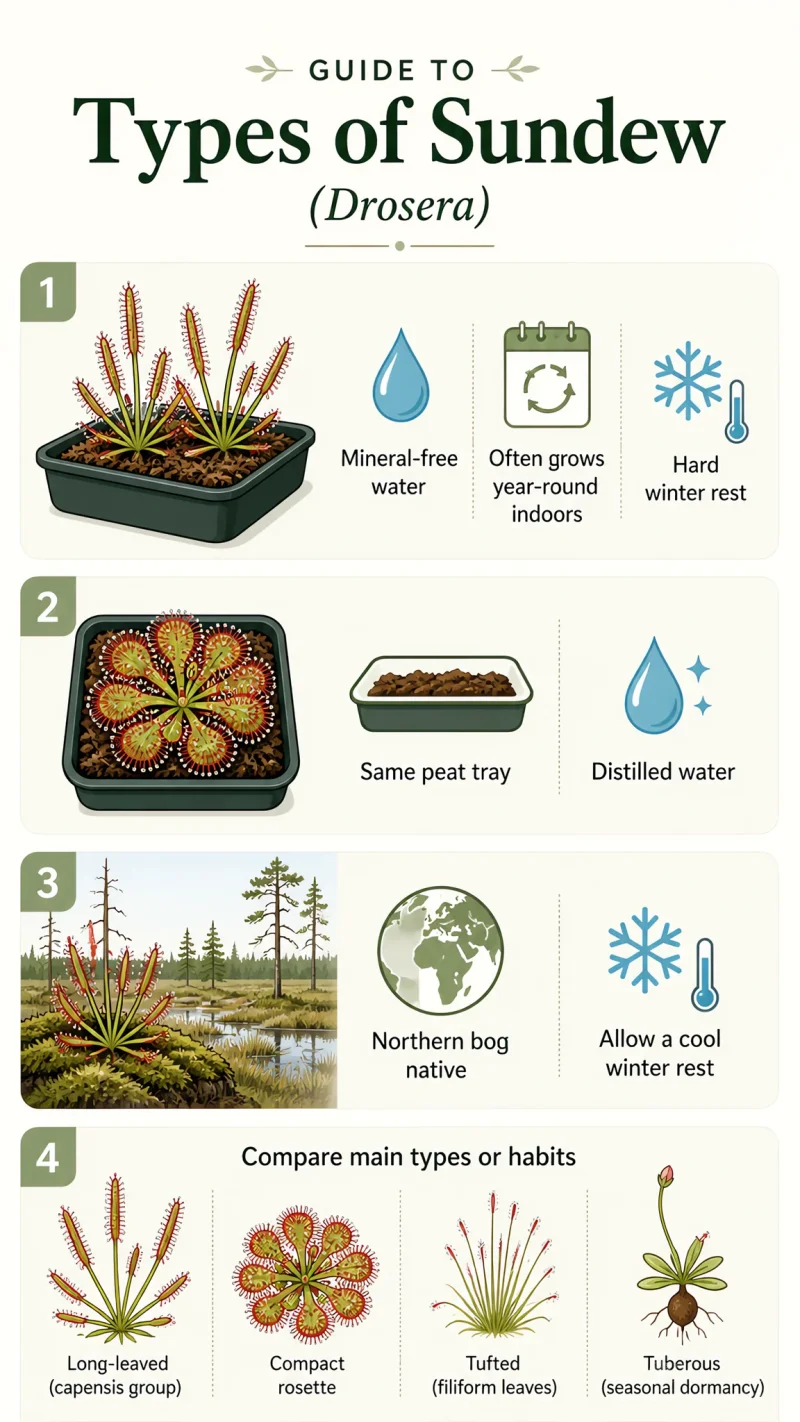
Choose by winter rest vs a warm beginner tray
| Factor | Recommended | Avoid |
|---|---|---|
| Warm room, strong light, no winter chill | Cape sundew | Buying roundleaf as a desk plant |
| Same water, a tight low rosette | Alice's sundew | A huge hanging basket meant for cape |
| Cool, still-moist winter | Roundleaf sundew | A heater and a year-round warm sill |
| Hinged trap, not sticky dew | Venus flytrap as a tray mate | Treating a flytrap as a sundew type |
Know your USDA hardiness zone before you pick a type of drosera that will take your winter. Type your ZIP below.
2023 USDA ZIP listings (PRISM / USDA-ARS). Find Your USDA Hardiness Zone · Official USDA map.
Three questions finish the buy. Can you keep a plant cool and still moist for a few winter months? Do you want a strap-leaf that grows almost year-round indoors? Do you want a tight rosette that stays small on the same peat tray?
Write those answers before you pay. Specialist lists put D. rotundifolia with the temperate resters and D. capensis / D. aliciae with subtropical plants that do not need that rest. Cape can keep growing indoors with warmth and light, or rest if you keep it quite cold — do not freeze it on purpose. Care after you choose lives on How to Grow Sundew — distilled water and peat first.
- Warm room, strong light, no planned winter chill → cape sundew.
- Same water and light, but you want a flat compact rosette → Alice’s sundew.
- You can give a cool, still-moist winter and you want a native bog look → roundleaf sundew.
- Hinged trap, not sticky dew → Venus flytrap. Not a type here.
What is the difference between cape and roundleaf sundew?
Cape (D. capensis) is a South African strap-leaf often kept warm year-round. Roundleaf (D. rotundifolia) is a northern bog native that wants a cool winter rest. Same distilled water and peat — different winter.
Wrong buys that look like a types page: a flytrap sold as “the sundew”; a pitcher plant in the same four-inch pot as if they were one species; a fifty-name list of spatulata and binata we do not hold. Match sticky dew first, then winter.
Cape, Alice, and roundleaf
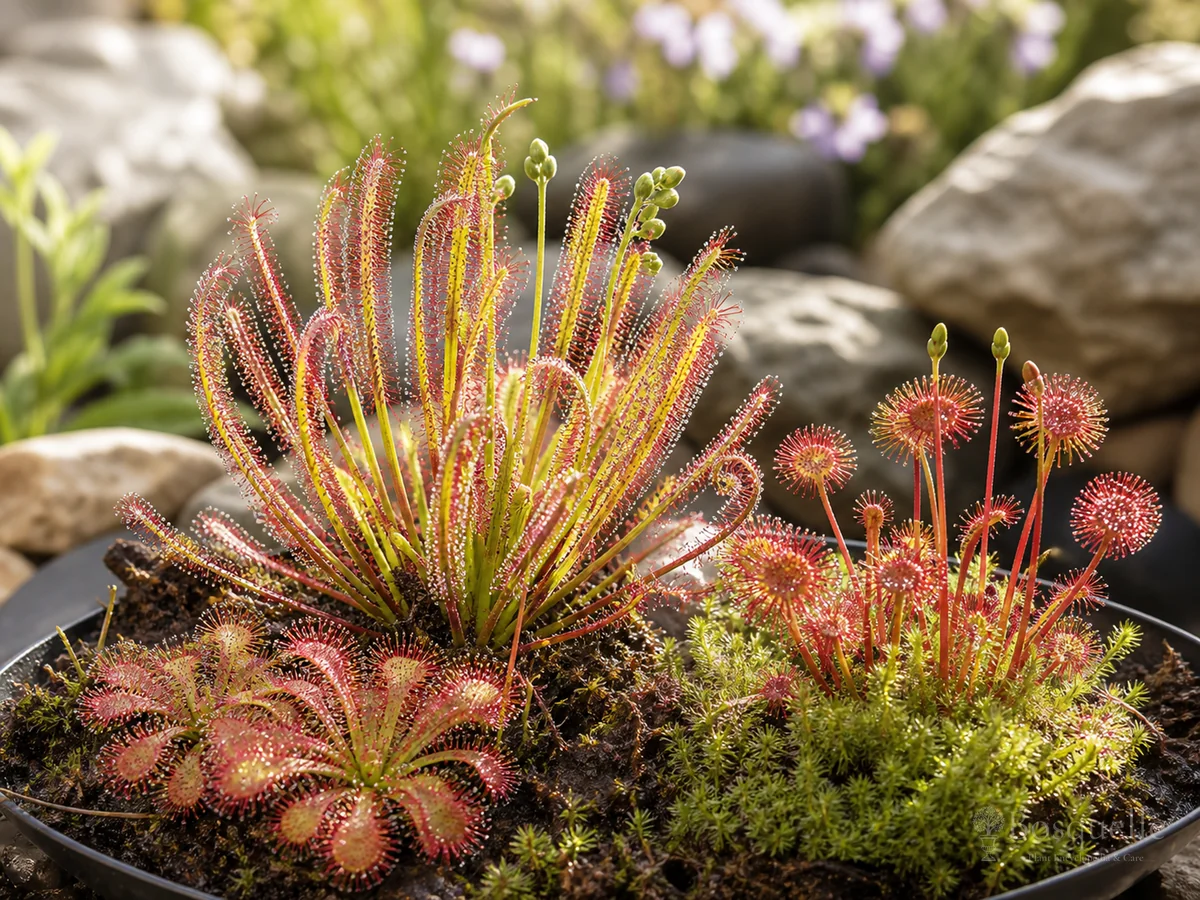
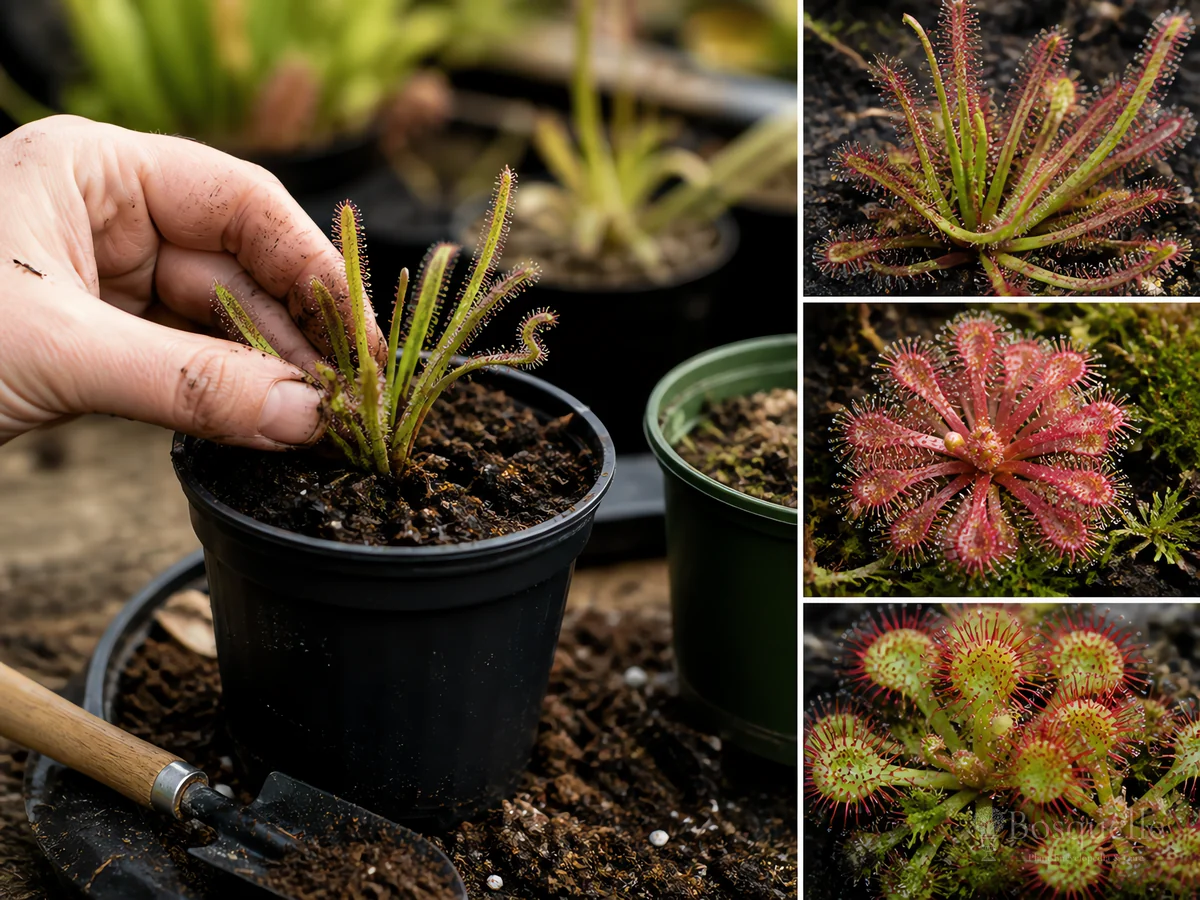
Cape sundew (Cape sundew) — oblong sticky leaves, pink flowers on tall stalks, the usual beginner indoor or mild-winter outdoor sundew. Fast, often suckering at the base. Often grown without a hard winter dormancy when kept warm and lit. Shop “typical,” “narrow,” or “red” forms are still this species — D. capensis — not extra catalog plants.
Alice’s sundew (Alice's sundew) — a tighter, wedge-leaf rosette for the same mineral-free peat-tray rules. Treat light and water like other subtropical sundews unless your nursery states a rest. Slower and more compact than cape; not a different water recipe. Latin: D. aliciae.
Common / roundleaf sundew (Roundleaf sundew) — circumboreal bog native with round sticky leaves. Full sun to partial. Distilled or rain water. Allow winter dormancy. Temperate growers keep it cool (about 40–55°F at night) and water less, still never bone-dry. Buy nursery stock. Never wild digs. Latin: D. rotundifolia.
If two pots look identical, read the Latin. Strap leaves that lengthen as the plant ages are cape. A geometric low rosette is usually Alice. Round paddles on thin stalks are roundleaf. If the clerk says they all get the same care, ask whether this one sleeps in winter. That is how roundleaf dies in a hot apartment.
After you choose, the water job is still distilled peat. Cape does not get tap because it is “tougher.” Roundleaf does not get fertilizer because it is “native.” Grow the plant you paid for on How to Grow Sundew.
Cape can scramble a short stem with age. Alice stays a low rosette. Roundleaf hugs the peat. Do not buy cape for a thimble dish meant for one Alice, and do not buy roundleaf for a windowsill that never drops below room temperature.
“Common sundew” on this site is rotundifolia. “Cape sundew” is capensis. “Alice’s sundew” is aliciae. Match those names to the three live plants, not to a hundred-species list.
A cool garage that stays above freezing can rest roundleaf if the peat never goes bone-dry. That same garage is a gamble for cape you meant to keep growing. Do not buy roundleaf as a desk plant next to a heater. Do not buy cape for a bog you plan to ice over because carnivores sleep.
If the pot is a mixed carnivorous starter with no Latin, assume nothing. Ask which plant needs winter. If they cannot say, you are guessing — and guessing is how a temperate paddle dies beside a strap-leaf that wanted a lamp. Finish the buy, then grow the water job on How to Grow Sundew.
Not types — flytrap, pitcher, extra Drosera names
Venus flytrap is a hinged trap in the same bog tray, not a sundew leaf. Pitcher plants are tubes. Both can share mineral-free water. Neither is a card here. If the tag says Dionaea or Sarracenia, you left this genus.
Shop lists are long. D. spatulata, binata, filiformis, pygmy gemmae, and king sundew (regia) exist in specialist culture. We do not inventory them. Pygmy and tuberous leaves are the wrong clone job — that is still not a reason to invent cards. If the Latin is missing and the plant is a hinge, a pitcher, or a fern, you are not here.
Leaf cuttings and a cape flower stalk live on How to Propagate Sundew. A tired peat pot lives on How to Repot Sundew.
Gift photos lie. A grocery carnivorous mix with one flytrap and a dying sundew is two genera. A backlit strap leaf with long tentacles is cape. A tiny round paddle in a mossy cup is often roundleaf — and it still wants winter. Match the leaf, then the winter you actually have.
Cape and Alice can share a warm tray. Roundleaf still needs winter. Do not force one calendar on all three. A huge hanging basket is not a sundew job.
FAQ
What are types of sundew?
This catalog has three: cape (strap-leaf beginner), Alice’s (compact subtropical rosette), and roundleaf (northern bog that wants winter rest). A flytrap is not a type.
Is Alice’s sundew harder than cape?
Same distilled water and peat. Alice stays more compact and can be slower. Cape is the usual first plant.
Do I have to chill cape sundew?
No. Keep it warm and lit, or it may rest if you keep it very cold — do not freeze it on purpose.
Can roundleaf live indoors year-round like cape?
It still wants a cool rest. A warm windowsill all winter is cape’s job, not roundleaf’s.
Is a Venus flytrap a sundew?
No. Sticky dew vs a hinged trap. They can share a bog tray. They are not the same plant.
Why don’t you list spatulata or binata?
Shop lists are long. We do not invent extra catalog plants. Grow extras like their group: subtropical tray or temperate rest, distilled peat.
Are red or narrow cape forms different species?
No. They are still D. capensis. Same water and light. Not extra cards here.
Can I mix all three in one tray?
Cape and Alice can share a warm tray. Roundleaf still needs winter. Do not force one calendar on all three.
Related guides


This note is part of Drosera Guides.
More type comparisons by plant are gathered in Types of Plants Guides.
Updated: Reviewed by Bosquelle Editors