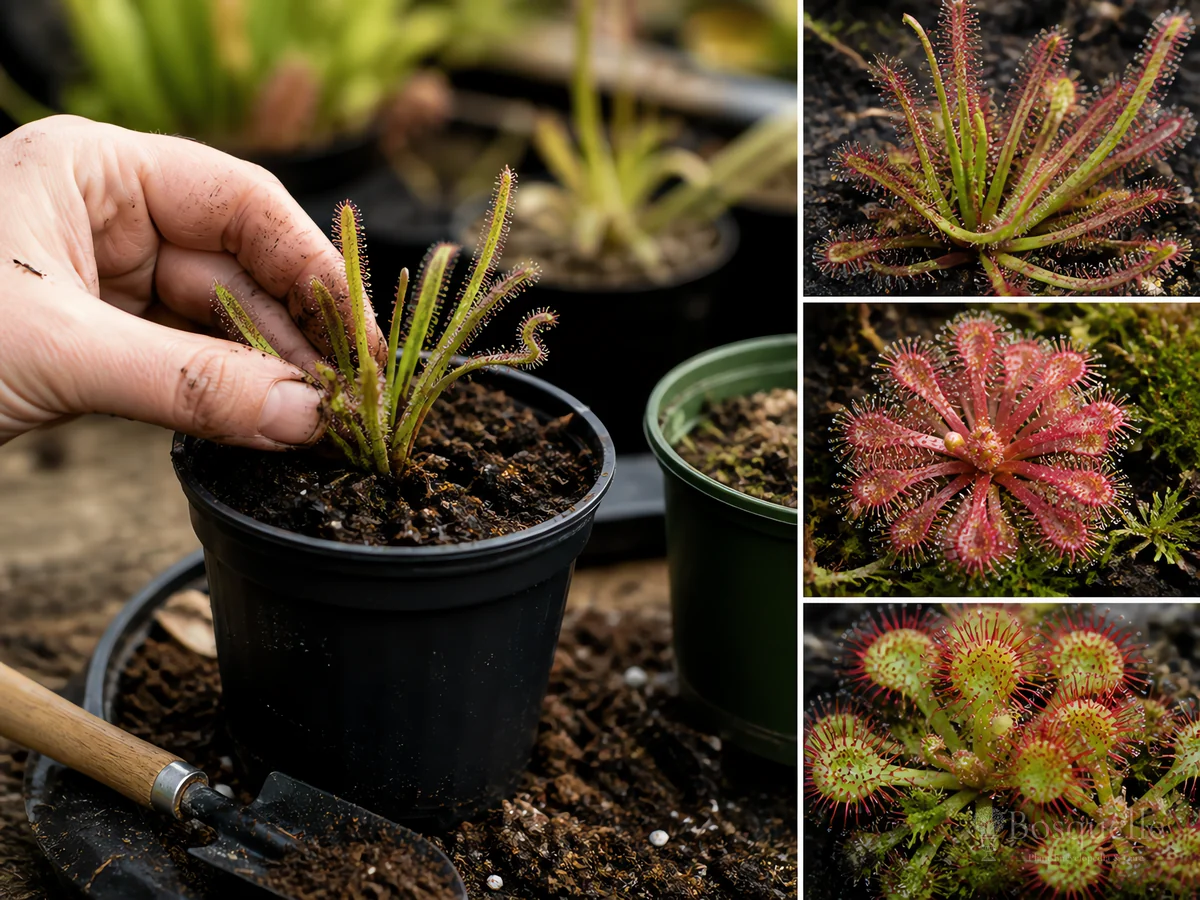
A sundew leaf in distilled water can make plantlets. Take a fully open, dewy blade in vigorous growth, float it tentacle-side up in pure water or press it onto wet peat, and wait.

Roundleaf is slower and less reliable from a leaf — seed and a real winter rest are the temperate path.
A dewy leaf in distilled water or on wet peat
| Factor | Recommended | Avoid |
|---|---|---|
| Leaf | Fully open, lots of dew, from active growth | An old brown blade or a rest-season paddle |
| Water strike | Distilled or RO in a small jar, tentacles up | Tap water, even if you change it daily |
| Peat strike | Very wet peat or sphagnum under a dome | A dry surface or fertilized mix |
| Not this | Cape or Alice leaf; young cape flower stalk | A flytrap leaf or pygmy gemmae we do not hold |
Take the best three or four leaves, fully open, with lots of dew, while the plant is growing. Cut on the petiole — the non-dewy stalk — with a clean blade. Tentacles face up. Tap water in the jar kills the cutting before it starts.
- Water strike: about half an inch of distilled or reverse-osmosis water in a small jar or tube, sealed. Change the water if it clouds.
- Peat strike: lay the leaf on very wet peat/sand or sphagnum, partly in contact, under a bag or dome at high humidity.
- Not this: tap water, fertilized mix, a flytrap leaf, or a pygmy gemma we do not hold.
Can I propagate sundew from a leaf cutting?
Yes for cape and Alice’s — float a dewy leaf tentacle-side up in distilled water, or press it onto wet peat. Roundleaf is less reliable from a leaf. Never tap water.
Why a leaf instead of seed? Clones match the parent. Seedlings vary. Leaf plantlets often mature faster than seed. Seed still works — sow cape on the surface of moist mix and do not cover it. Seed is slow, mossy, and easy to lose in algae. The leaf is the clone.
Cape also clones from a flower stalk and from suckers at the base. Cut a young scape before it is in full bloom, or take a rooted sucker when you already have the plant out. Stalk sections can yield more plantlets than one leaf.
Roundleaf does not get the same easy-stalk reputation — do not steal a cape tutorial onto a temperate paddle and expect the same speed.
Pygmy gemmae and tuberous sundews are other jobs. Those thin leaves tend not to sprout. We do not hold those plants. Do not buy a gemma tutorial and apply it to Cape sundew.
Cape flower stalk, then wait and pot the plantlets
- Take the leaf while growth is strong. Rinse off trapped insects.
- Float tentacle-side up in distilled water, or press onto wet peat.
- Give bright light, not a roast — lamps about a foot away, or shade.
- Wait weeks. Pull only leaves that go fully brown and slimy.
- Move plantlets onto peat or sphagnum. Keep a mineral-free tray.
- Harden humidity slowly. Full sun and water stay on How to Grow.
Label the jar with the date and the Latin. It will feel like nothing is happening. The date on the tape is how you know you are waiting, not failing. Cloudy water gets changed. A sealed jar of tap water gets thrown out.
If you are already unpotting a crowded cape, you can also split basal suckers into fresh grit. That day can share How to Repot Sundew. Do not strip every root off a leaf plantlet the way you would tease a houseplant ball.
How long until sundew leaf cuttings make plants?
Often weeks to a few months. Expect little in the first month. Fast species can pop in the second; others hang on much longer. Keep any leaf that is still green or red.
Which plant to clone: cape is the easy teacher. Alice takes the same leaf method. Roundleaf may be happier from seed or from a nursery division than from a single paddle. Full care — sun, tray, no tap — lives on How to Grow Sundew.
A young cape flower stalk, kept wet like a leaf, often yields plantlets along the stem. Cut it before the flowers open fully. Do not treat a roundleaf scape as the same easy job.
What fails a sundew clone
- Tap water in the jar — minerals, then slime.
- Tentacles down — the leaf cooks against glass or sits wrong-side up.
- A dry peat surface — the leaf dries before it sprouts.
- Hot sealed sun — cooked cuttings, not plantlets.
- Giving up at week two — the wait is slow.
- A flytrap leaf in the same jar — different genus, different clone.
Success looks like tiny rosettes on the old leaf, then roots in peat — not a glass of meat water and not a tray of rotting orchid stalks. This is a Drosera leaf in pure water or on bog mix.
Throw the mush. Start clean distilled water if the jar smells sour. Do not add fertilizer to help. Do not use a soap spray on the mother the week you take leaves. Shade the cuttings; the mother still wants sun and a distilled tray.
If nothing sprouts after months and the leaf is toast, try again with a better dewy blade, or sow surface seed for cape. Patience on a slow leaf beats a second tap-water experiment.
Root pieces can work for cape under humidity. Leaf in pure water is the beginner clone. We do not treat thick-root species we do not hold. Choose the plant first on Types of Sundew.
FAQ
Can I use a flower stalk?
Cape often yes — a young scape, kept wet like a leaf. Roundleaf is not the same easy-stalk plant.
Do I need rooting hormone?
No. Distilled water or wet peat and time. Hormone is not the sundew leaf method.
Should the humidity dome stay sealed forever?
Until plantlets exist, keep humidity high. Then vent. Hot sun under plastic cooks the leaf.
Can I propagate in winter?
Take leaves in vigorous growth. A temperate roundleaf in rest is the wrong moment. Cape in a warm lit tray can still grow.
Will seed come true?
Seedlings vary. A leaf is a clone of the parent you already like.
Can I float the leaf in tap water if I change it daily?
No. Use distilled or RO. Changing tap does not remove the minerals.
Do plantlets need bugs right away?
No. Get them into peat and light first. Insects come once they have dew.
What about root cuttings?
Living root pieces can work for cape under humidity. Leaf in pure water is the beginner clone.
Why did the leaf turn brown?
Tap water, dry air, heat, or an old tired blade. Try a dewy leaf from active growth in distilled water.
Related guides


Recommended plants


This note is part of Drosera Guides.
More notes on making another plant live in Propagating Guides.
Updated: Reviewed by Bosquelle Editors