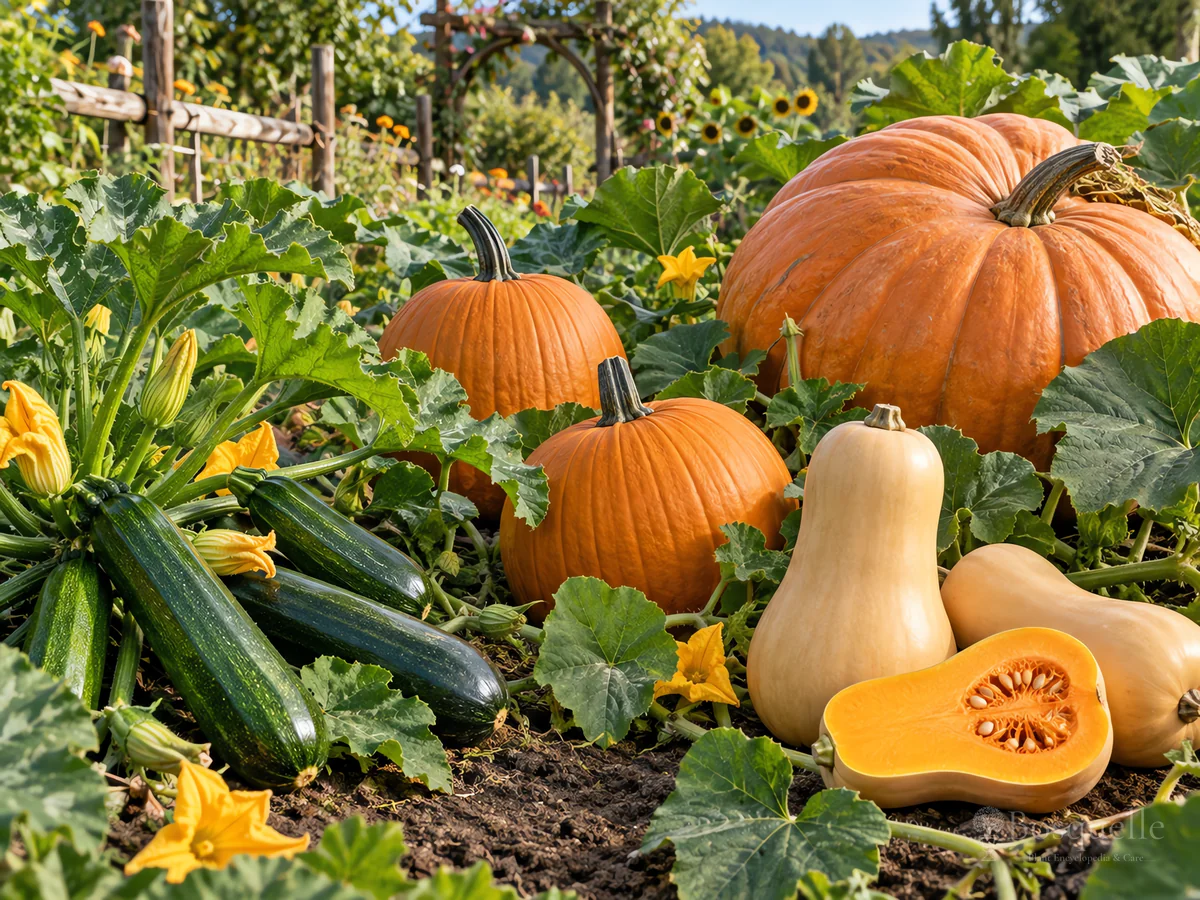
Choose squash by when you eat the fruit. Summer types come off young. Pumpkin, butternut, and Hubbard-type winter squash stay on until the rind is hard.
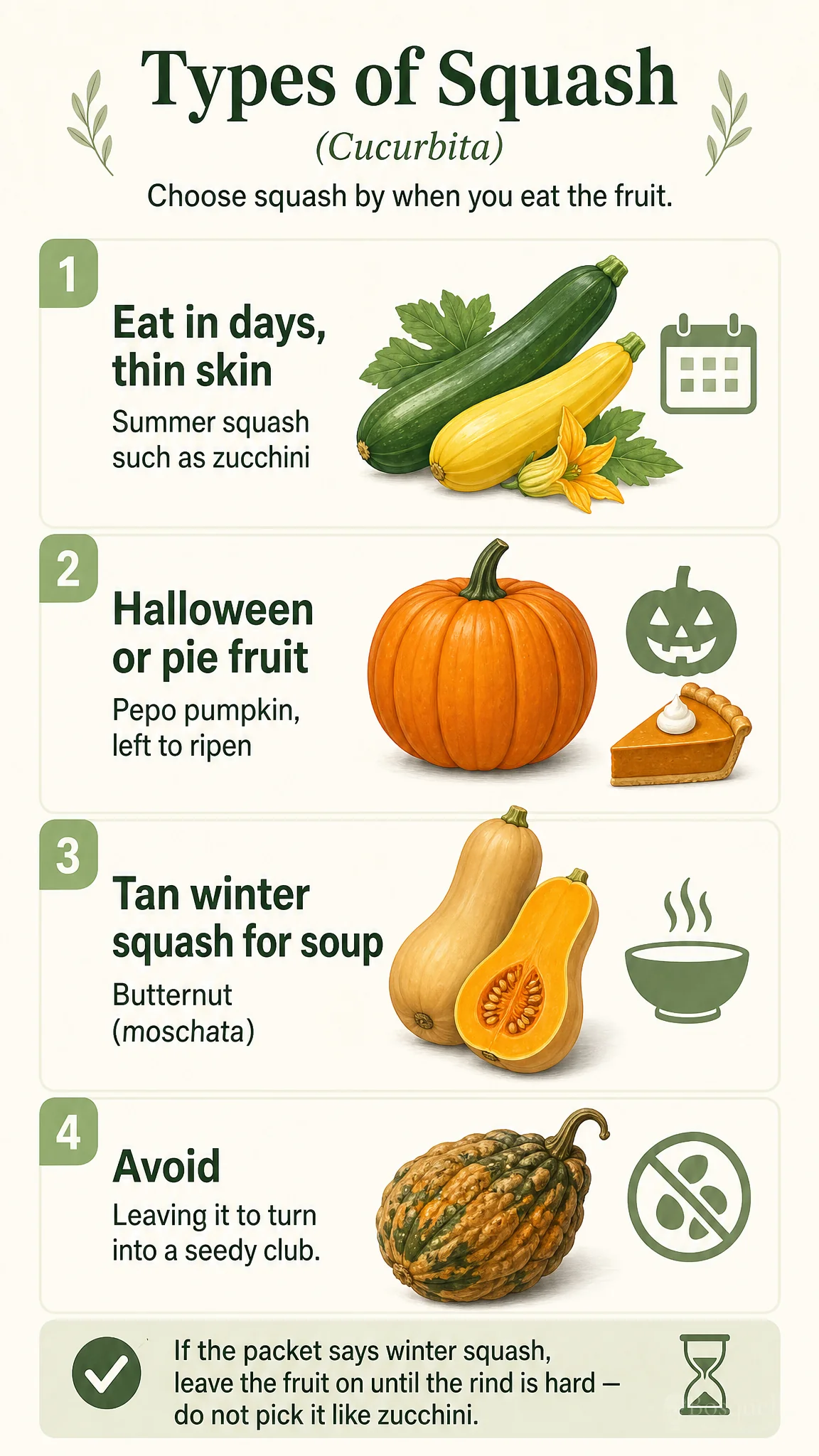
Choose summer squash, pumpkin, butternut, or Hubbard-type winter squash
| Factor | Recommended | Avoid |
|---|---|---|
| Eat in days, thin skin | Summer squash such as zucchini | Leaving it to turn into a seedy club |
| Halloween or pie fruit | Pepo pumpkin, left to ripen | Picking a jack-o-lantern at zucchini size and expecting storage |
| Tan winter squash for soup | Butternut (moschata) | Buying a butternut walnut tree by that name |
| Long-keeping heavy fruit | Maxima Hubbard or buttercup types | Trellising a 15-pound fruit |
Know your USDA hardiness zone before you pick a type of cucurbita that will take your winter. Type your ZIP below.
2023 USDA ZIP listings (PRISM / USDA-ARS). Find Your USDA Hardiness Zone · Official USDA map.
Read the packet for summer or winter, then for species. Zucchini and many pumpkins are both C. pepo; the harvest stage is the fork. [1] [2] Sun and the summer pick stay on How to Grow Squash.
What is the difference between summer and winter squash?
Summer squash is picked immature, with thin edible skin. Winter squash and pumpkin are left until the rind is hard, then stored.
Browse by kind
Summer squash (zucchini)
zucchini is the usual summer crop: eat the fruit while the skin is still tender. Yellow crookneck and scallop types are the same pepo job.
Pumpkin
pumpkin is Cucurbita pepo left to ripen. Jack-o-lantern types are stringy; pie types are smaller and sweeter. This is not a zucchini pick.
Butternut and moschata winter squash
butternut squash is Cucurbita moschata. Tan skin, long storage, and a different species from pepo. Not a butternut walnut.
Hubbard-type winter squash
winter squash in this catalog is Cucurbita maxima — Hubbard, buttercup, and giant pumpkin types. Fruit is heavy; grow it on the ground.
Pick the group, then the packet. Shop names such as pattypan, spaghetti, or acorn are extra pepo kinds, not extra plants in this catalog. [3]
Pumpkin is winter fruit — not a second zucchini, and not a cucumber
pumpkin is pepo left to ripen. zucchini is pepo picked young. Cucumber is a different genus. [4] Do not buy a cucumber packet expecting a pumpkin crop, and do not treat a butternut walnut as this plant.
Are zucchini and pumpkin the same plant?
They are often the same species, Cucurbita pepo, used at different harvest stages. Butternut is moschata. Hubbard types are maxima.
Is butternut squash a pumpkin?
It is a winter squash in Cucurbita moschata. Some cooks use it like pumpkin. It is not a walnut tree.
If the packet says winter squash, leave the fruit on until the rind is hard — do not pick it like zucchini.
FAQ
Are pattypan and spaghetti squash listed as their own plants?
No. Those are extra pepo kinds. Choose summer or winter first, then the packet. They are still squash, not a new genus.
Can I grow ornamental gourds from this page?
Hard-shell ornamental gourds may be Cucurbita pepo or another genus. Treat them as winter fruit if they are Cucurbita, not as zucchini.
Related guides


References
- [1] University of Minnesota Extension -
https://extension.umn.edu/vegetables/pumpkins-and-winter-squash - [2] Oregon State University -
https://horticulture.oregonstate.edu/oregon-vegetables/squash-pumpkin-and-winter - [3] Utah State University Extension -
https://extension.usu.edu/yardandgarden/research/summer-and-winter-squash-in-the-garden - [4] Clemson Cooperative Extension HGIC -
https://hgic.clemson.edu/factsheet/summer-squash/
This note is part of Cucurbita Guides.
More type comparisons by plant are gathered in Types of Plants Guides.
Updated: Reviewed by Bosquelle Editors