
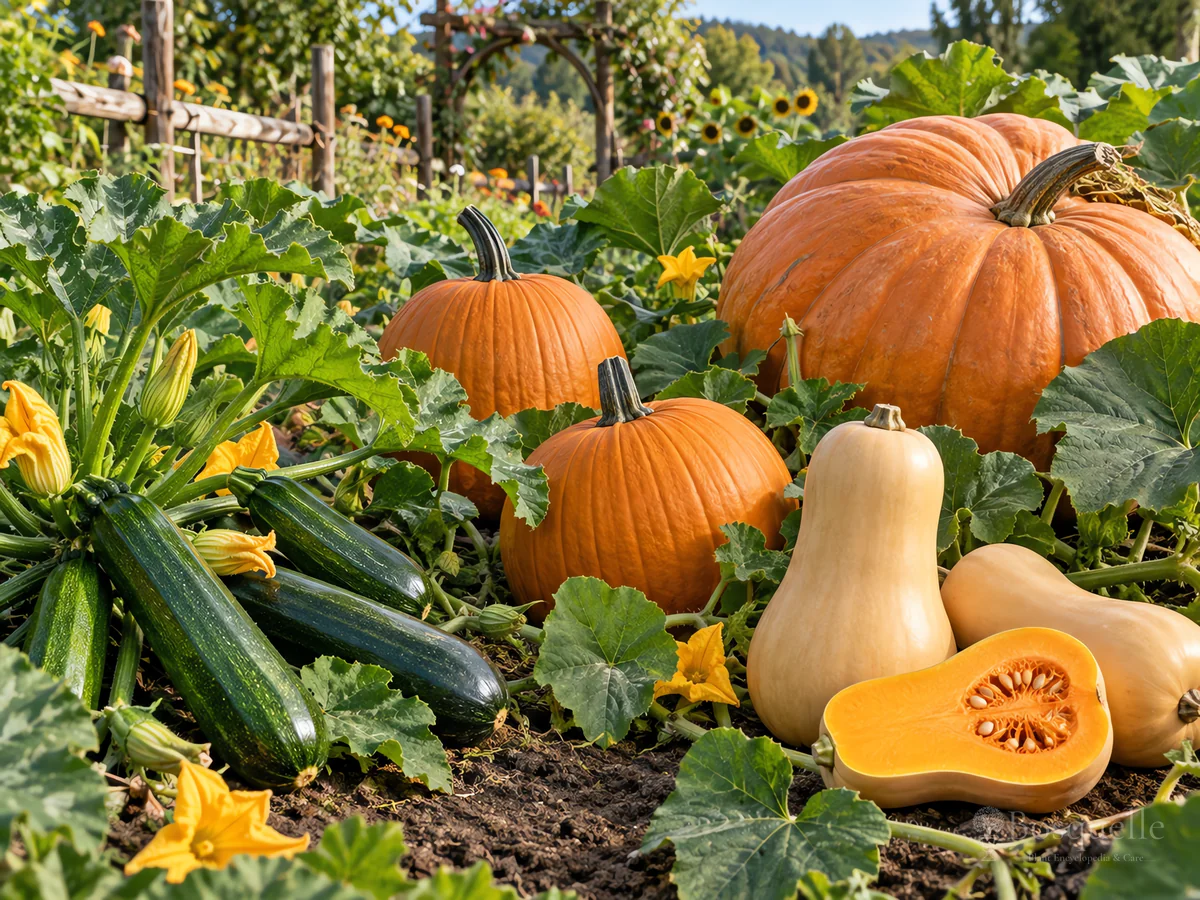
Grow squash in full sun and warm, well-drained ground. Squash here means Cucurbita — zucchini, pumpkin, butternut, and Hubbard-type winter squash — not cucumber or a luffa sponge.
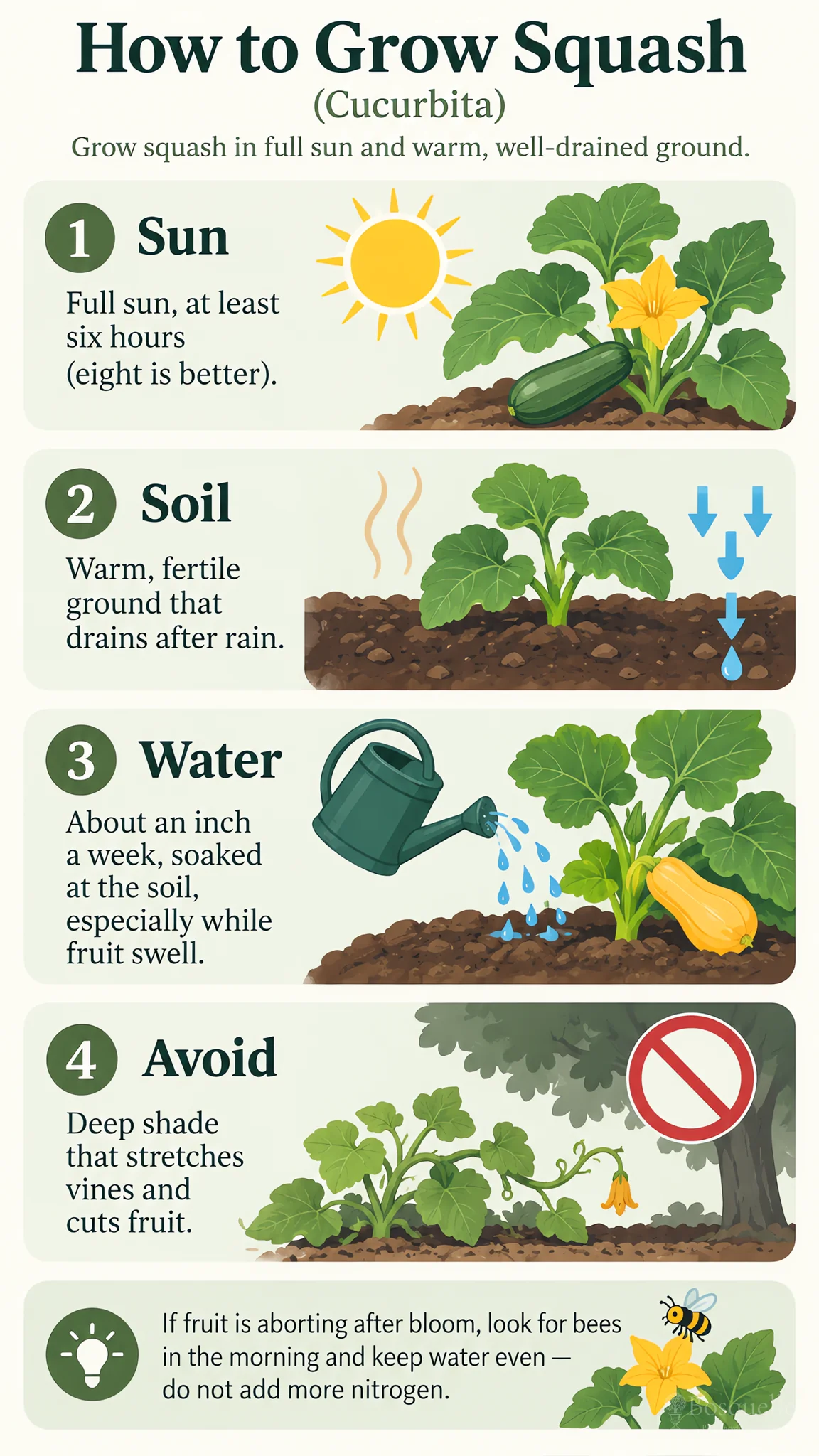
Give them full sun, warm ground, and even water while fruit sets
| Factor | Recommended | Avoid |
|---|---|---|
| Sun | Full sun, at least six hours (eight is better) | Deep shade that stretches vines and cuts fruit |
| Soil | Warm, fertile ground that drains after rain | Cold, wet soil that rots seed and invites root rot |
| Water | About an inch a week, soaked at the soil, especially while fruit swell | A dry spell at fruit set, or a sprinkler that keeps leaves wet all night |
| Flowers | Leave covers off once blooms open so bees can reach female flowers | Leaving row cover on through bloom, then wondering why fruit abort |
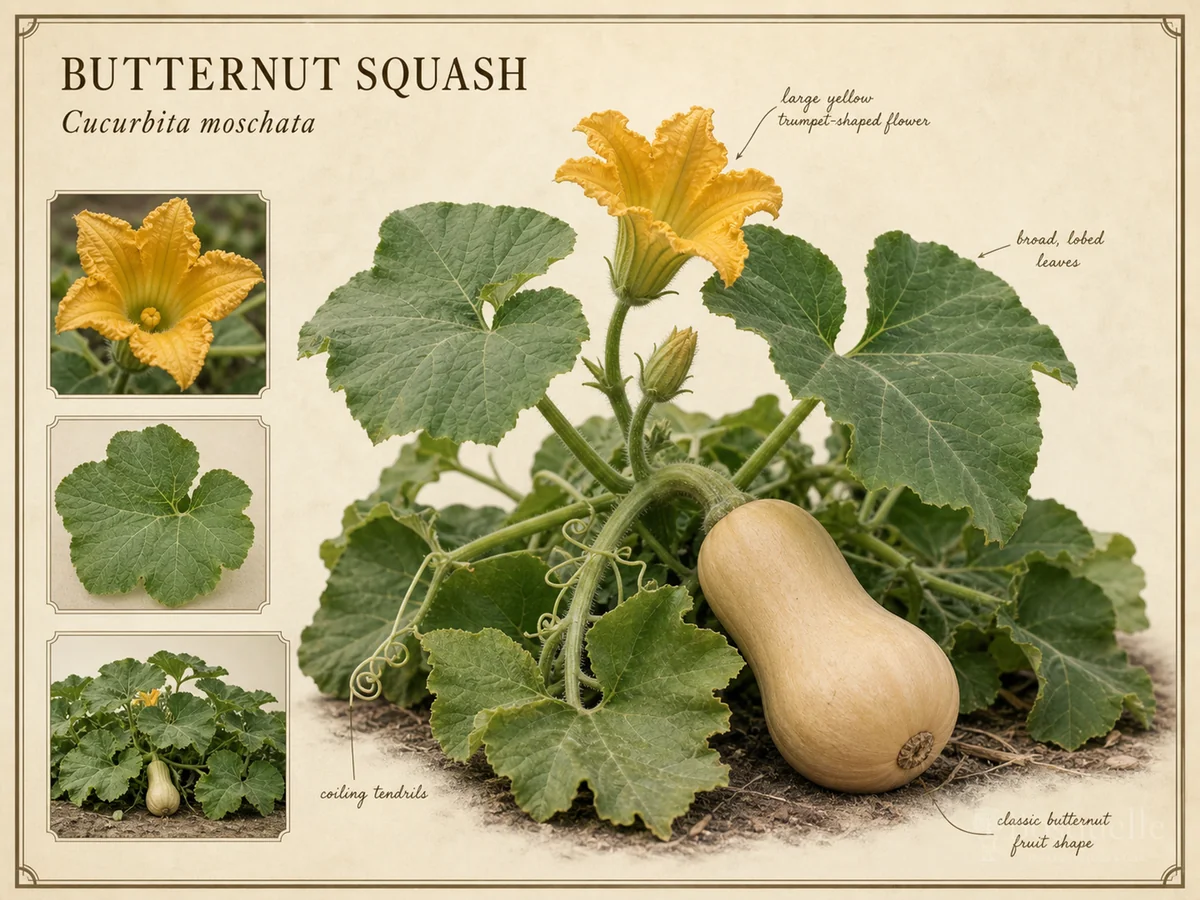
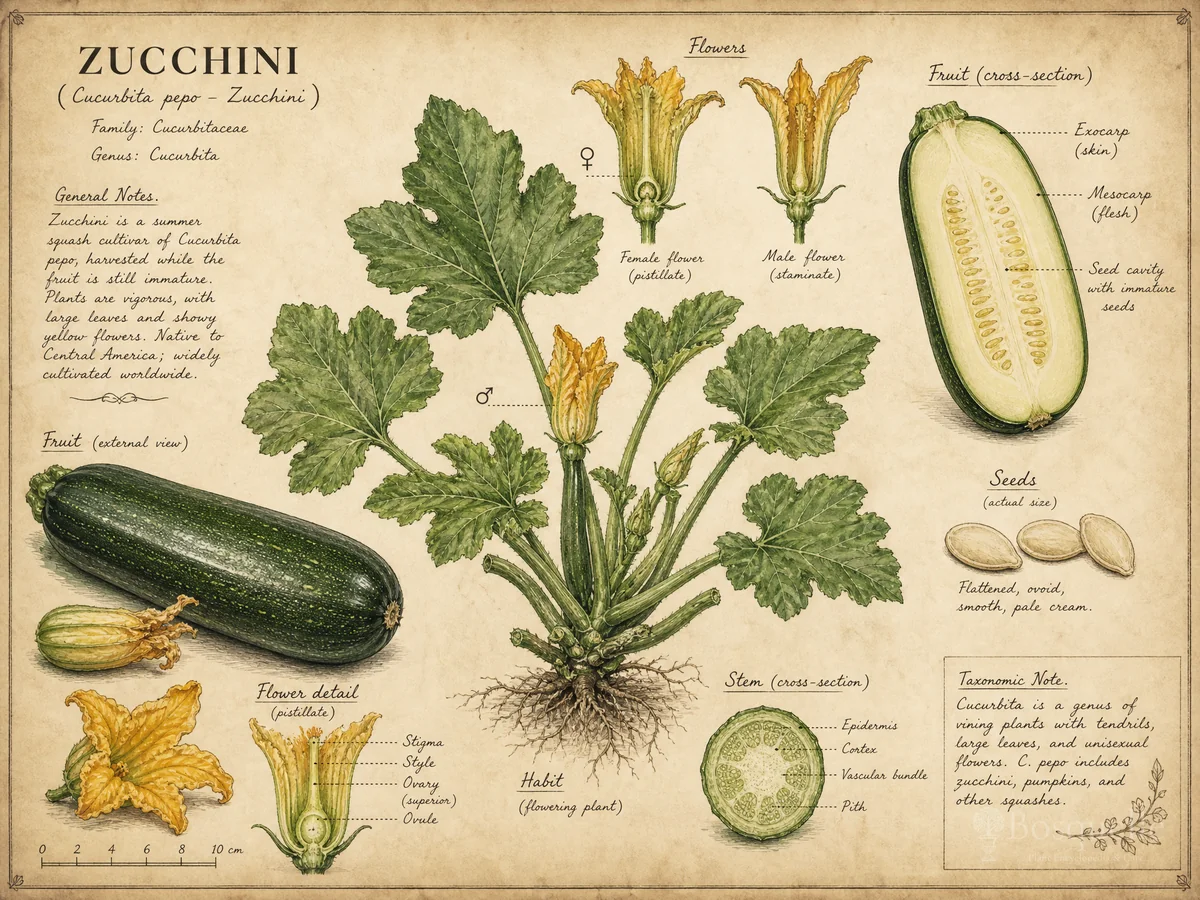
Squash is a heat crop. Plants stall in cold soil and die in a light frost. Give zucchini, pumpkin, and butternut squash the same sun and even moisture while flowers and fruit form. [1] [2] Soak the soil thoroughly, then let the surface dry a little. Water at the base so the leaves stay dry. [3] The first flowers are almost always male — a plain stem with no swelling behind the bloom. Female flowers have a tiny fruit behind the petals. Bees must move pollen; if bees are scarce, pick a male flower in the morning and brush the pollen onto the female stigma. Match summer, pumpkin, butternut, or Hubbard-type on Types of Squash.
Grow bush zucchini in a large pot only if you have no bed
Use a draining pot of at least 5 gallons, about 16 to 18 inches wide, and a bush summer type. Fill with potting mix, set it in full sun, and water whenever the top inch is dry — pots dry faster than beds. Long winter vines belong in the ground.
Thin crowded lower leaves — leave the main stem
You do not have to prune squash the way you prune a tomato. If the canopy sits on wet soil, open it so air can move.
- Leave the main stem. That is the vine that feeds the fruit.
- Cut the lowest leaves that rest on wet ground, close to the stem, with clean pruners.
- Stop once you can see the base of the plant. Do not strip more than about a third of the leaves at one time.
- Small-fruited vines can climb a trellis. Heavy pumpkin and Hubbard fruit stay on the ground.
How much sun do squash plants need?
Full sun, at least six hours. Eight hours is better for a full crop.
Why did the first squash flowers fall off?
The first flowers are usually male, so no fruit forms. Female flowers open later. Cold rain or a closed row cover can also stop pollination.
Pick zucchini and summer squash young, and keep picking
A summer squash left on the vine until it is baseball-thick turns seedy, and the plant slows new flowers. Pick young fruit often so the plant keeps producing.
- Start checking a few days after the female flowers open (often about 50 to 55 days from sowing for zucchini).
- Pick zucchini at about 6 to 8 inches long, while the skin is still glossy. Pick crookneck and straightneck types at about 1½ to 2 inches across. [4]
- Cut or twist the fruit off with a bit of stem so you do not tear the vine.
- Harvest every day or two in warm weather. Remove oversized fruit even if you will not eat it, so the plant keeps setting.
Winter squash and pumpkin stay on the vine until the rind hardens. That cut, cure, and store sequence is on Harvesting Squash.
When is zucchini ready to pick?
When it is about 6 to 8 inches long and still glossy. Larger fruit is edible but seedy, and it slows the next set.
Not cucumber or luffa — and not a butternut tree
Cucumber and melon are Cucumis. Watermelon is Citrullus. Luffa is a different vine grown for a sponge. Bottle gourd is Lagenaria. A butternut tree is a walnut, not butternut squash. Those plants are not Cucurbita care.
Is pumpkin a kind of squash?
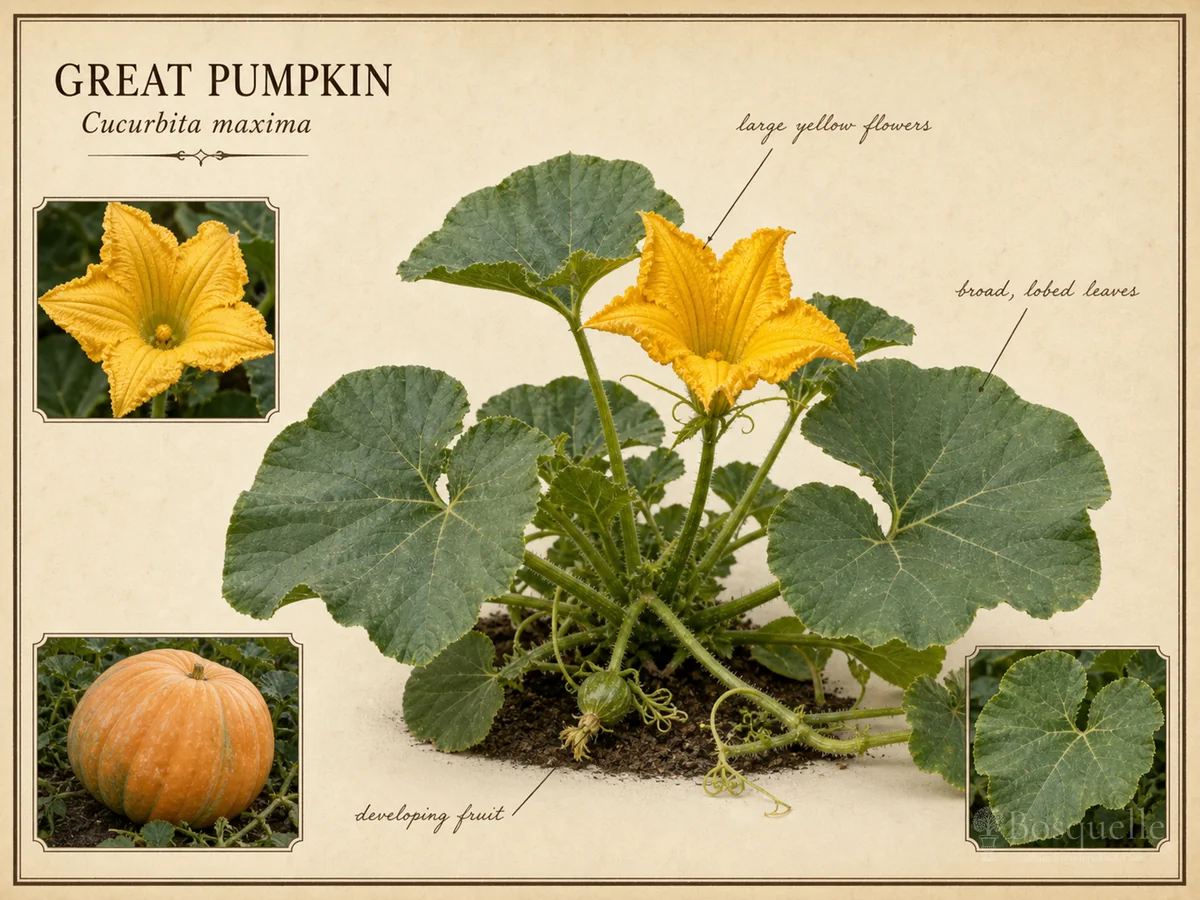
Yes. Pumpkin is Cucurbita, usually pepo, grown for a hard-rind fruit. Zucchini is the same species picked young as summer squash.
If fruit is aborting after bloom, look for bees in the morning and keep water even — do not add more nitrogen.
FAQ
Do squash plants come back next year?
Garden squash is a frost-tender annual. Frost ends the crop. Save seed only from an open-pollinated type if you want to sow again — hybrids will not come true.
Can I plant squash with corn and beans?
The old Three Sisters planting uses corn, pole beans, and a long winter vine that shades the ground. Bush zucchini does not fill that job.
What is eating my squash vines?
Squash bugs and squash vine borers are common. Identify the insect first, then follow a pest page for control.
Why is the blossom end of the fruit rotting?
Blossom-end rot on summer squash is usually uneven water, so the plant cannot move enough calcium into the fruit. Keep moisture even and mulch once the soil is warm.
Related guides


Recommended plants

References
- [1] Clemson Cooperative Extension HGIC -
https://hgic.clemson.edu/factsheet/summer-squash/ - [2] University of Minnesota Extension -
https://extension.umn.edu/vegetables/growing-summer-squash-and-zucchini - [3] University of Minnesota Extension -
https://extension.umn.edu/vegetables/pumpkins-and-winter-squash - [4] Utah State University Extension -
https://extension.usu.edu/yardandgarden/research/summer-and-winter-squash-in-the-garden
This note is part of Cucurbita Guides.
More first-season notes by plant are gathered in How to Grow Guides.
Updated: Reviewed by Bosquelle Editors