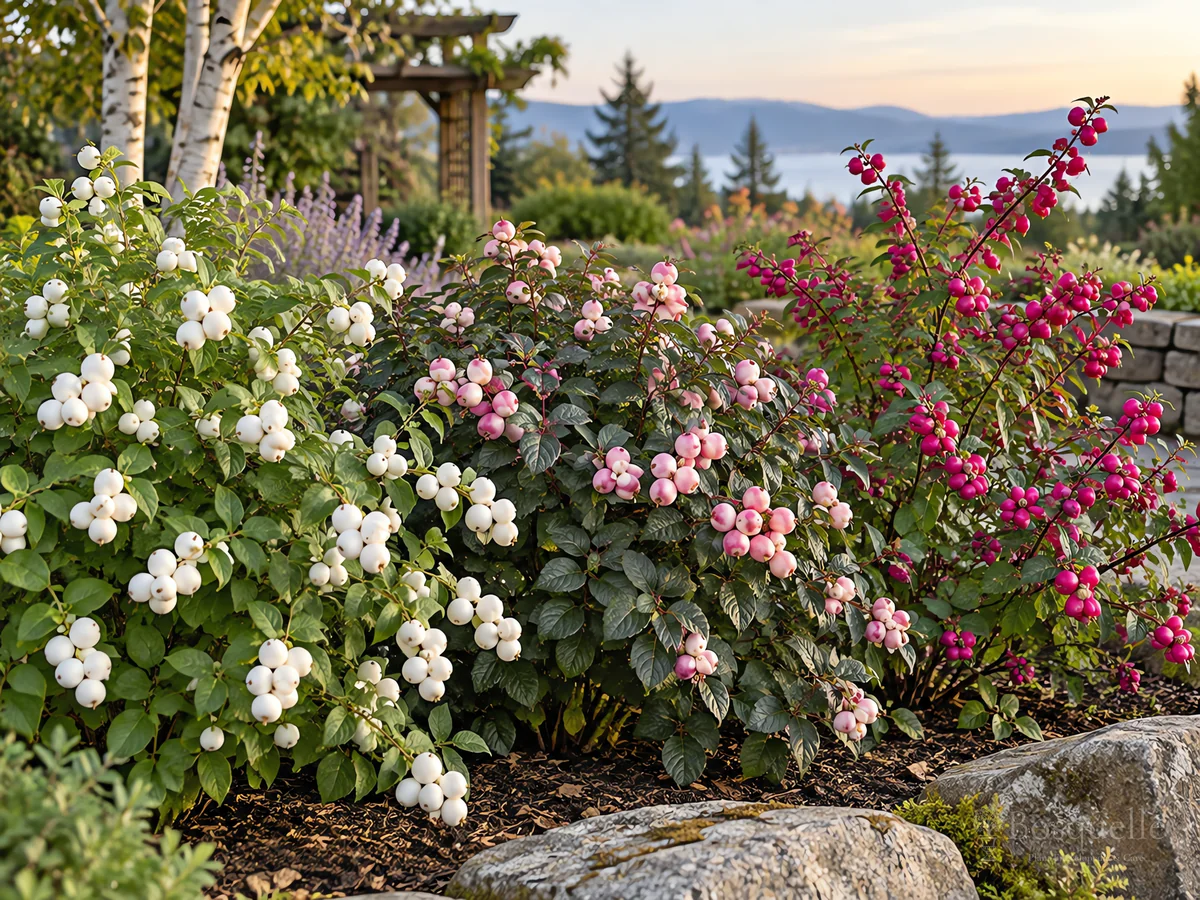
Choose snowberry by fruit and habit: white clusters on an upright shrub, a low Hancock spreader, or pink-purple coralberry. We list those three.
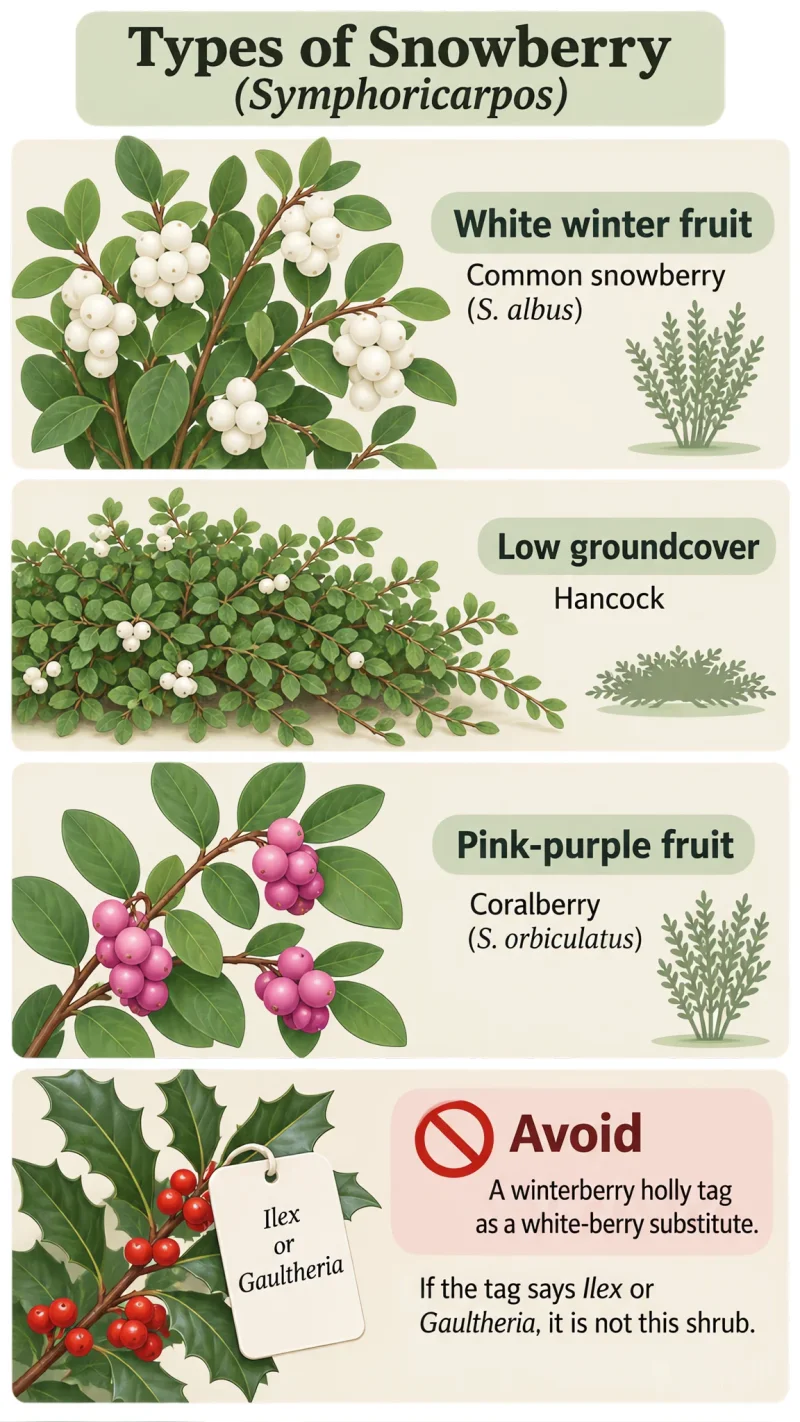
Choose white snowberry, Hancock, or coralberry
| Factor | Recommended | Avoid |
|---|---|---|
| White winter fruit | Common snowberry (S. albus) | A winterberry holly tag as a white-berry substitute |
| Low groundcover | Hancock | Treating the low plant as a two-foot globe that will not run |
| Pink-purple fruit | Coralberry (S. orbiculatus) | One isolated plant if you need a heavy fruit crop |
Know your USDA hardiness zone before you pick a type of symphoricarpos that will take your winter. Type your ZIP below.
2023 USDA ZIP listings (PRISM / USDA-ARS). Find Your USDA Hardiness Zone · Official USDA map.
Read the Latin on the tag. White-fruited common snowberry is S. albus. The pink-purple shrub is S. orbiculatus — shops also call it Indian currant or buckbrush. [1][2] Hancock is a Chenault hybrid used as a low spreader, not a third watering calendar. The two species are often mixed up in the nursery. Fruit color and height are the fast check: white and taller versus pink-purple and lower.
Snowberry vs coralberry?
Both are Symphoricarpos. Common snowberry carries white fruit. Coralberry carries pink-purple fruit and is also colonial. Coralberry fruit often wants more than one strain.
How tall does snowberry get?
Common snowberry is often three to six feet. Coralberry is often two to four feet. Hancock stays about one to two feet tall and spreads much wider.
What is Hancock snowberry?
A low Chenault selection used as groundcover — short in height, wide in spread, with coral-flushed fruit.
Browse by kind
Common snowberry
S. albus is common snowberry — typically three to six feet, with white fruit that hangs after the leaves drop.
Hancock snowberry
‘Hancock’ stays about one to two feet tall and spreads as a groundcover, with fruit flushed coral-pink.[3]
Coralberry
S. orbiculatus is coralberry: pink-purple fruit on a lower, arching shrub. Fruit set often wants more than one genetic strain.
Not snowberry — winterberry holly
- Winterberry holly (Ilex verticillata) is a deciduous holly with red berries. It wants wet-acid ground and a male pollinator. It is not Symphoricarpos. Do not buy winterberry when you wanted white snowberry clusters.
- Creeping snowberry in the wintergreen group (Gaultheria) is a low edible groundcover, not this sucker shrub. Oregon State also lists S. mollis as a spreading snowberry — a different species, not a fourth catalog card here. [4]
- Dessert “snow berry” recipes are food, not this ornamental shrub. The fruit on these stems is not a snack.
Is winterberry the same plant?
No. Winterberry is Ilex, a holly. Snowberry is Symphoricarpos. Red holly berries and white snowberry clusters are different shrubs.
If the tag says Ilex or Gaultheria, it is not this shrub. Read the Latin before you plant.
FAQ
Do we list Proud Berry as an extra kind?
No. Proud Berry, Magic Berry, and similar shop mixes are other selections, not extra catalog cards. The three jobs here are white snowberry, Hancock, and coralberry.
Is Magic Berry a fourth care job?
No. Color mixes stay on the same sun and sucker calendar as the three kinds we list.
Is Indian currant a different plant?
No. Indian currant is another common name for coralberry (Symphoricarpos orbiculatus), not a currant bush.
Related guides


References
- [1] NC State Extension Gardener -
https://plants.ces.ncsu.edu/plants/symphoricarpos-albus/ - [2] NC State Extension Gardener -
https://plants.ces.ncsu.edu/plants/symphoricarpos-orbiculatus/ - [3] Gardenia.net -
https://www.gardenia.net/plant/symphoricarpos-chenaultii-hancock-snowberry - [4] Oregon State Landscape Plants -
https://landscapeplants.oregonstate.edu/plants/symphoricarpos-albus
This note is part of Symphoricarpos Guides.
More type comparisons by plant are gathered in Types of Plants Guides.
Updated: Reviewed by Bosquelle Editors