
Grow snowberry as a suckering shrub for winter berries in soil that is not waterlogged. Shops also list coralberry. Plan the thicket edge before the first season of new shoots.

Full sun to part shade, and soil that is not waterlogged
| Factor | Recommended | Avoid |
|---|---|---|
| Light | Full sun to part shade; fuller sun for a heavier berry crop | Deep shade with sparse fruit |
| Soil | Almost any ground that is not permanently wet | A boggy hole with no drain |
| Habit | A thicket you can edge, or a bank you want covered | A tight foundation bed with no sucker plan |
| Fruit | Ornamental winter berries | Eating the berries as a snack crop |
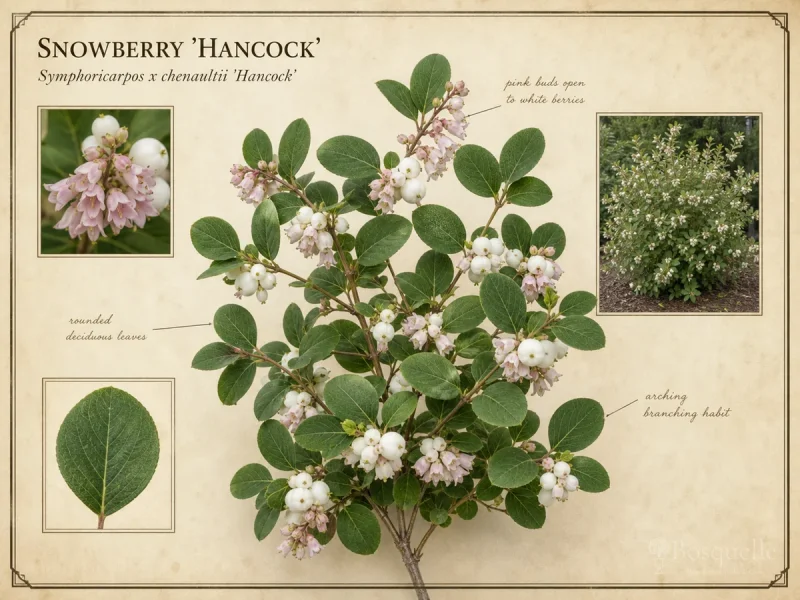
Snowberry is a deciduous shrub that takes poor soil, clay, and dry spells once it is established, as long as water does not sit at the crown. [1] Fruit is showiest in fuller sun. Part shade still grows the plant; the berry crop is thinner. The white or pink clusters hang after leaf drop, and many birds leave them until late winter, so the stems stay a winter feature. [2] Water through the first season so roots take hold. After that, missed waterings fail less often than a soggy crown. Site it where you can see the winter stems — a bank, a hedge line, or the back of a mixed border — not in a spot that stays flooded after rain.
Are snowberries edible?
Treat them as ornamental. The fruit can cause vomiting or diarrhea if eaten. Do not use them as a dessert berry.
How much sun do I need for berries?
Full sun gives the heaviest crop. Part shade is fine for foliage, with fewer berries.
Prune in late winter, and pull suckers at the edge
Flowers and fruit form on new wood, so a late-winter or early-spring cut does not steal the berry crop. Foliar disease plus vigorous suckering is the real maintenance bill, not a fussy watering calendar. [3]
- In late winter or early spring, cut out dead wood and thin crowded stems so air can move through the clump.
- To renew a tired thicket, cut stems hard — even close to the ground — then let new shoots come from the base. [4]
- Where the colony must stop, pull or shovel suckers at that edge each year. On a bank, let them run.
- If leaves show white powder or blotches, open the canopy and keep irrigation off the foliage. Powdery mildew, anthracnose, rust, and berry discoloration are common in humid weather; this is airflow, not a missing spray schedule.
Does snowberry spread or sucker?
Yes, often vigorously. That is useful on a bank or as wildlife cover. In a tidy bed, edge the rhizomes or the colony will widen.
Why does my snowberry get mildew?
Powdery mildew and other leaf diseases are common in humid, still air. Thin crowded stems and avoid overhead water. See the powdery mildew hub if a spray is warranted.
If suckers cross the path, pull them at the edge you marked — do not wait for a second shrub to appear in the lawn.
FAQ
Can I grow snowberry in a pot?
Only as a holding pot. Use a large draining container until you plant it in the ground. A sucker thicket does not stay a patio shrub.
What else can I plant nearby?
Other tough sun-to-part-shade shrubs that accept average soil — ninebark, dogwood, or a mixed native hedge. Leave a path so you can edit suckers.
What pests hit snowberry?
Leaf diseases are the usual problem — mildew and anthracnose — and those are airflow jobs on this page. If aphids appear, see the aphids hub.
Is snowberry good for wildlife?
Yes for cover and for fruit later in winter. Many birds ignore the white berries at first, so the stems stay showy into the cold months.
Related guides


Recommended plants


References
- [1] NC State Extension Gardener -
https://plants.ces.ncsu.edu/plants/symphoricarpos-albus/ - [2] Missouri Botanical Garden -
https://www.missouribotanicalgarden.org/PlantFinder/PlantFinderDetails.aspx?taxonid=278944 - [3] Illinois Extension -
https://web.extension.illinois.edu/shrubselector/detail_plant.cfm?PlantID=450 - [4] Oregon State Landscape Plants -
https://landscapeplants.oregonstate.edu/plants/symphoricarpos-albus
This note is part of Symphoricarpos Guides.
More first-season notes by plant are gathered in How to Grow Guides.
Updated: Reviewed by Bosquelle Editors