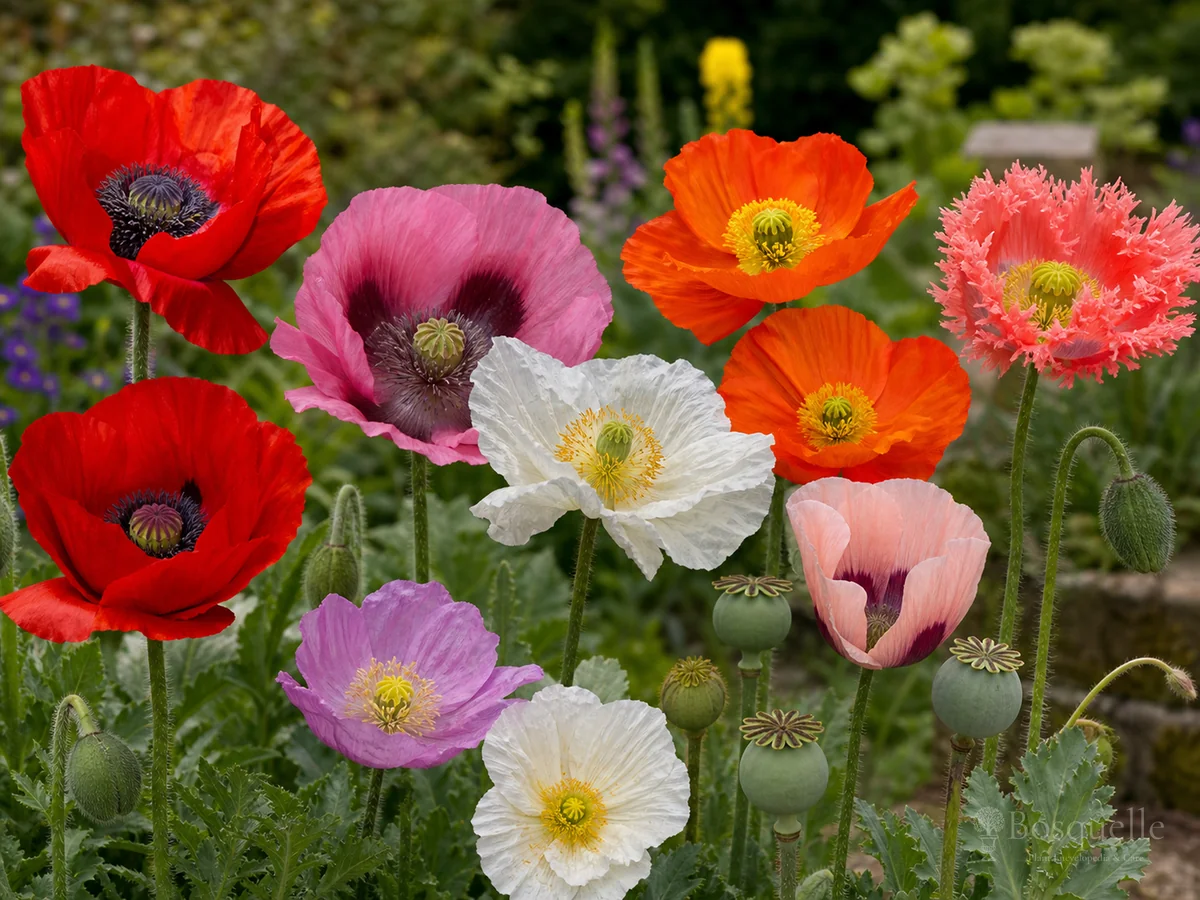
Choose a poppy by lifespan first: oriental perennial, Iceland cool-season, or a true annual. California poppy is a different genus.

Choose oriental, Iceland, or annual first
| Factor | Recommended | Avoid |
|---|---|---|
| Oriental | Hardy perennial clump; plan the summer hole | Treating the July bare patch as death |
| Iceland | Cool-season color; sow again when heat wins | Expecting a decades-long crown |
| Annual | Direct sow; leave pods if you want volunteers | Buying it as a returning oriental |
Know your USDA hardiness zone before you pick a type of papaver that will take your winter. Type your ZIP below.
2023 USDA ZIP listings (PRISM / USDA-ARS). Find Your USDA Hardiness Zone · Official USDA map.
Lock lifespan first, then pick a plant in that group. [1] Flower color is not a type. Annual versus perennial is the useful split, and Iceland sits between them as a cool-season plant rather than a second oriental. [2]
What is the difference between oriental and Iceland poppies?
Oriental poppy is a hardy perennial with a summer rest. Iceland poppy is a short-lived, cool-season plant, often grown as an annual.
Kinds we hold
Oriental poppy
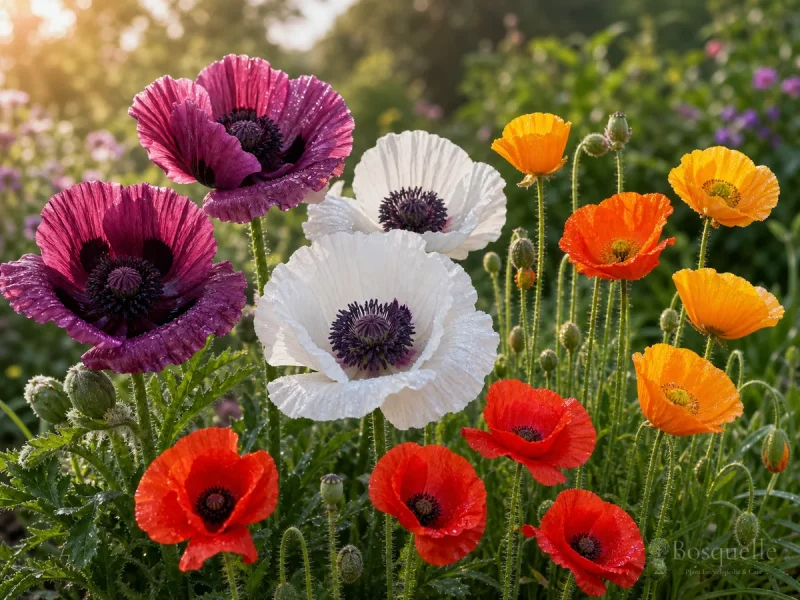
Oriental clumps such as ‘Patty’s Plum’ and ‘Royal Wedding’ are the long-lived border poppy. Huge late-spring cups, then the foliage goes. [3]
Iceland poppy
Iceland types such as ‘Champagne Bubbles Orange’ want cool weather. Treat them as a short-lived perennial or a cool-season annual, not as a second oriental.
Annual poppy
True annuals such as P. rhoeas, ‘Ladybird’, and breadseed ‘Lauren’s Grape’ finish in one season and often self-sow if you leave pods.
Other Papaver
Remaining Papaver in this group. Check lifespan on each listing before you expect a returning crown.
Site and watering stay on How to Grow Poppies. Sow stays on Growing Poppies from Seed.
Not types — California poppy and Himalayan blue
- California poppy (Eschscholzia californica) — same family, different genus. Drought-tolerant, finely cut blue-green foliage, often used on hot dry ground. [4] Do not run Papaver transplant rules onto it as if they were one plant.
- Himalayan blue poppy (Meconopsis) — cool, moist woodland culture, often acid soil. It is not a sunny, lean-soil Papaver, and a nursery tag that only says blue poppy is not enough.
- Pink, red, orange, white — flower color, not a type card.
Is California poppy a type of Papaver?
No. California poppy is Eschscholzia californica. Shop that genus. Papaver is oriental, Iceland, and the true annuals.
Pick oriental, Iceland, or a true annual. California poppy is Eschscholzia, not a Papaver type.
FAQ
Is the Himalayan blue poppy a Papaver?
No. It is Meconopsis. Cool, moist shade — not the sunny Papaver bed.
Are Shirley poppies a separate class?
They are selections of Papaver rhoeas — true annuals. Same direct-sow rule as corn poppy.
Is breadseed poppy the same as oriental poppy?
No. Breadseed is Papaver somniferum, a true annual. Oriental is P. orientale, a perennial clump.
Do all Papaver self-sow?
Annuals often do if pods ripen. Named oriental seedlings will not match the parent flower.
Where does Welsh poppy sit?
Papaver cambricum is in this catalog as other Papaver. It is not oriental, Iceland, or a field annual.
Related guides



References
- [1] NC State Extension -
https://plants.ces.ncsu.edu/plants/papaver/ - [2] Old Farmer's Almanac -
https://www.almanac.com/plant/poppies - [3] Missouri Botanical Garden -
https://www.missouribotanicalgarden.org/PlantFinder/PlantFinderDetails.aspx?taxonid=250197 - [4] NC State Extension -
https://plants.ces.ncsu.edu/plants/eschscholzia-californica/
This note is part of Papaver Guides.
More type comparisons by plant are gathered in Types of Plants Guides.
Updated: Reviewed by Bosquelle Editors