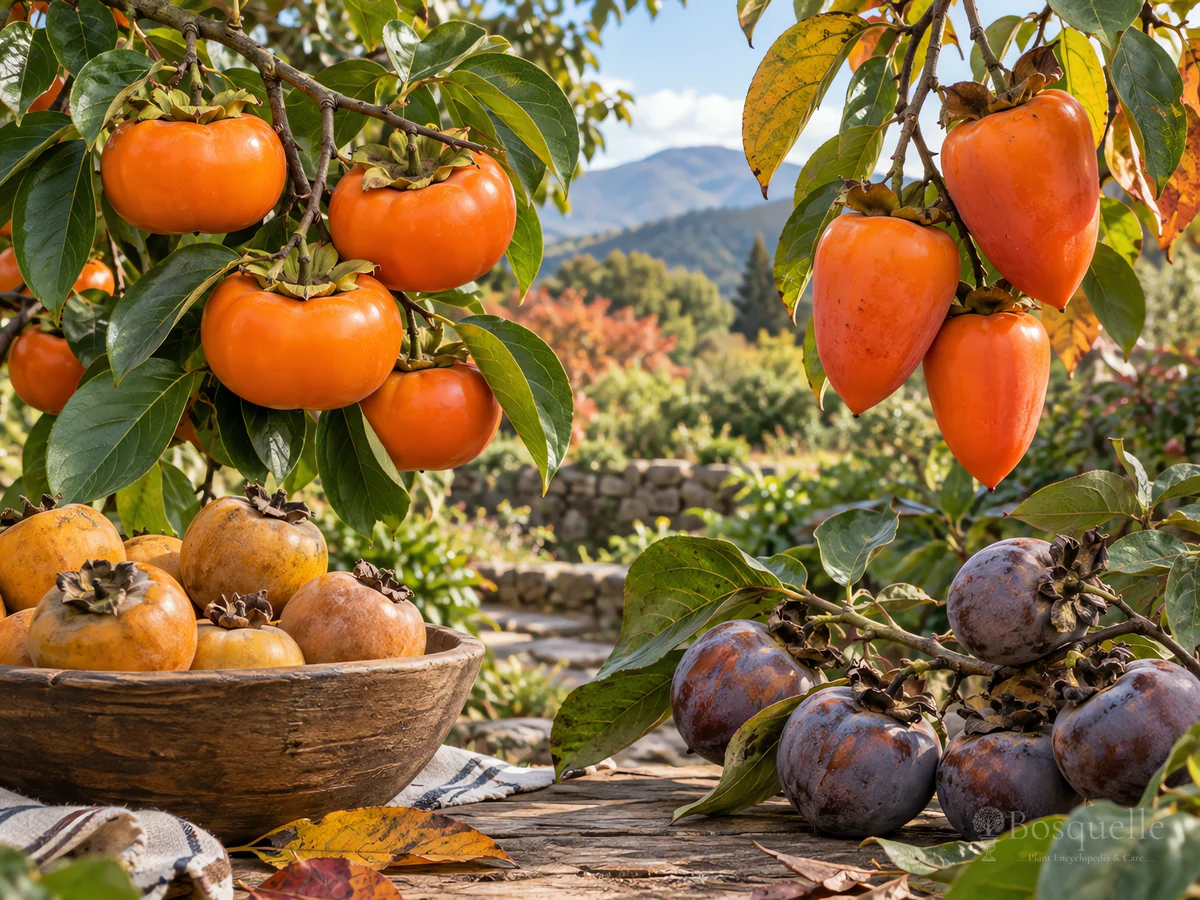
Choose a Fuyu you can eat firm, an astringent Hachiya, or a native American tree. Texas persimmon is not a second American persimmon.
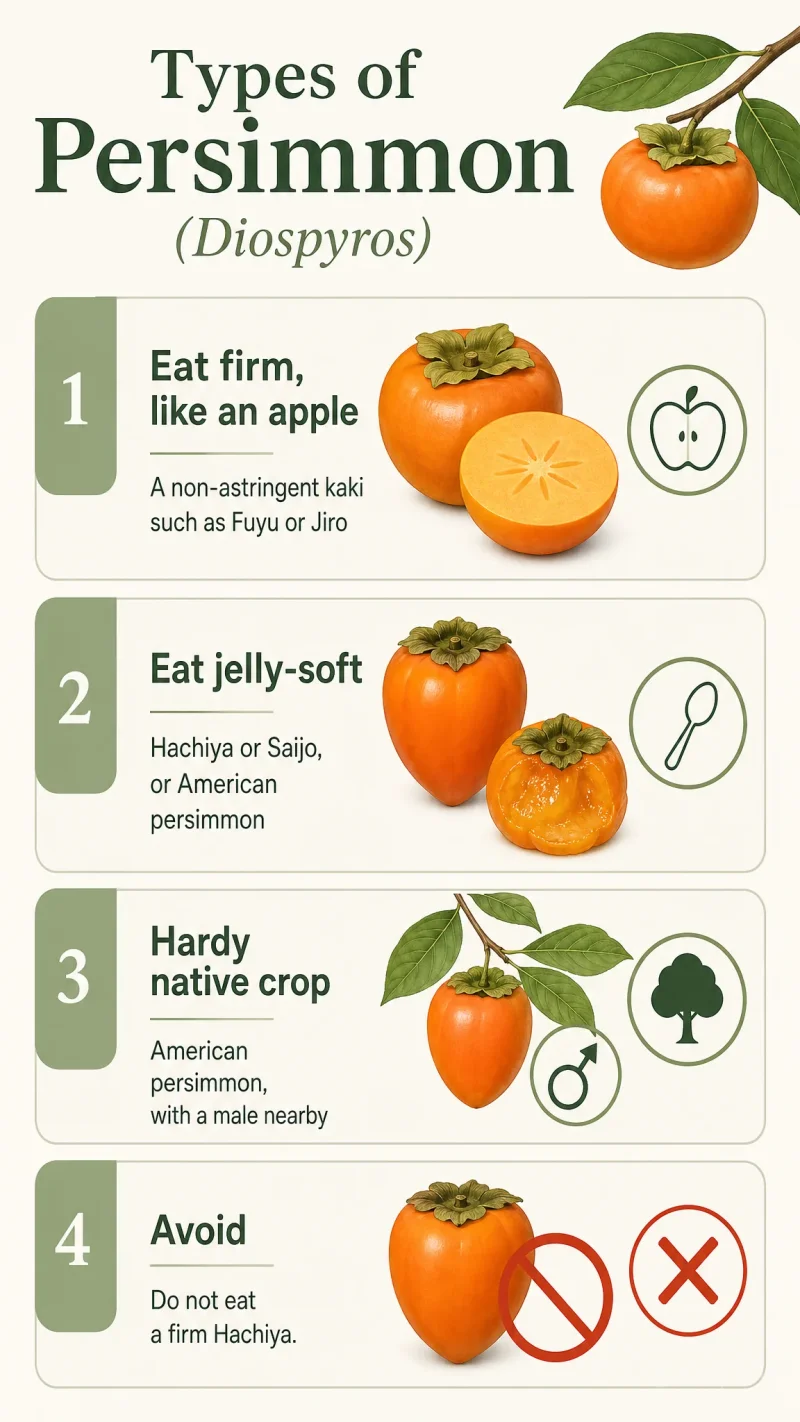
Choose a Fuyu you can eat firm, an astringent Hachiya, or a native American tree
| Factor | Recommended | Avoid |
|---|---|---|
| Eat firm, like an apple | A non-astringent kaki such as Fuyu or Jiro | Do not eat a firm Hachiya |
| Eat jelly-soft | Hachiya or Saijo, or American persimmon | Do not treat Hachiya as a Fuyu you can slice firm |
| Hardy native crop | American persimmon, with a male nearby | Do not plant one lonely female and expect a crop |
| Southwest small tree | Texas persimmon for bark and black fruit | Do not trust a tag that calls texana American persimmon |
Know your USDA hardiness zone before you pick a type of diospyros that will take your winter. Type your ZIP below.
2023 USDA ZIP listings (PRISM / USDA-ARS). Find Your USDA Hardiness Zone · Official USDA map.
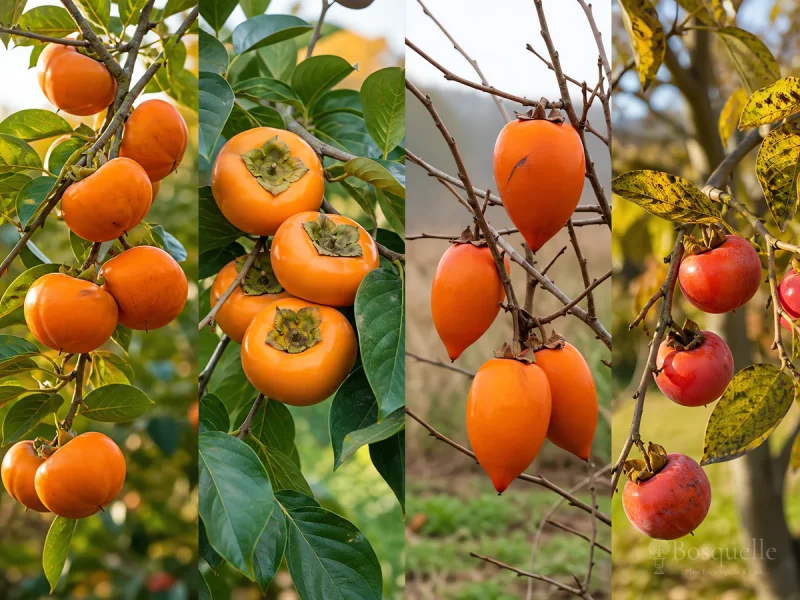
Read astringent or non-astringent on the tag, not only the cultivar name, then pick that kind. [1] Fuyu-class fruit is squat and edible while firm. Hachiya is pointed and must go soft. [2] American persimmon is a different species: smaller fruit, usually a male and a female tree. [3] Texas persimmon is a fourth class, not a renamed American tree. [4]
Which kind of persimmon should I plant?
Fuyu or Jiro if you want to eat fruit firm. Hachiya if you will wait until it is soft. American persimmon if you want the hardy native.
Do I need two persimmon trees to get fruit?
Most named kaki set some fruit alone. American and Texas persimmon are usually male or female, so you need both for a crop.
Browse by kind
Non-astringent Asian persimmons
Fuyu and Jiro are squat fruit you eat firm. Oriental persimmon is the Japanese species behind this class. Sun and water stay on How to Grow Persimmon.
Astringent Asian persimmons
Hachiya is the acorn-shaped grocery fruit. Saijo sits here too. Wait until the flesh is jelly-soft.
American persimmon
American persimmon is the hardy native with smaller fruit. Most trees are male or female, so you need both for a crop.
Texas persimmon
Texas persimmon has peeling pale bark and inch-wide black fruit. It is not Diospyros virginiana.
Pick the group, then the cultivar. Extra shop names are not extra kinds. Izu, Tanenashi, Meader, Prok, and Gailey show up in other lists but are not cards here; treat a named non-astringent kaki as the Fuyu class if you grow one.
Not black sapote — and Texas persimmon is not American persimmon
Black sapote is the tropical chocolate-pudding fruit. It is not a Fuyu and it is not in this catalog. Sharon fruit is a market name for Fuyu-class fruit, not a fifth species. The catalog title on Texas persimmon sometimes says American persimmon — trust the Latin Diospyros texana.
Is Texas persimmon the same as American persimmon?
No. American persimmon is Diospyros virginiana. Texas persimmon is Diospyros texana, with small black fruit.
If you wanted fruit you can slice firm, buy Fuyu — Hachiya will not eat like that, and black sapote is not this tree.
FAQ
Is Sharon fruit a Fuyu?
Sharon fruit is a market name for non-astringent kaki, usually Fuyu-class. Grow it with the eat-firm group.
Is Saijo a Fuyu?
No. Saijo is astringent. Wait until it is jelly-soft, like Hachiya.
Is Izu in this catalog?
No. If you already own Izu, grow it with the non-astringent group. It is not a second keep-alive.
Related guides


References
- [1] NC State Extension -
https://plants.ces.ncsu.edu/plants/diospyros-kaki-fuyu/ - [2] NC State Extension -
https://plants.ces.ncsu.edu/plants/diospyros-kaki/ - [3] NC State Extension -
https://plants.ces.ncsu.edu/plants/diospyros-virginiana/ - [4] Lady Bird Johnson Wildflower Center -
https://www.wildflower.org/plants/result.php?id_plant=dite3
This note is part of Diospyros Guides.
More type comparisons by plant are gathered in Types of Plants Guides.
Updated: Reviewed by Bosquelle Editors