
Fork the lily programme before colour: trumpet and species stems are not the same contract as compact patio forms — and none of them are daylilies. Regale and Pixie share Lilium and not a staking or pot plan.
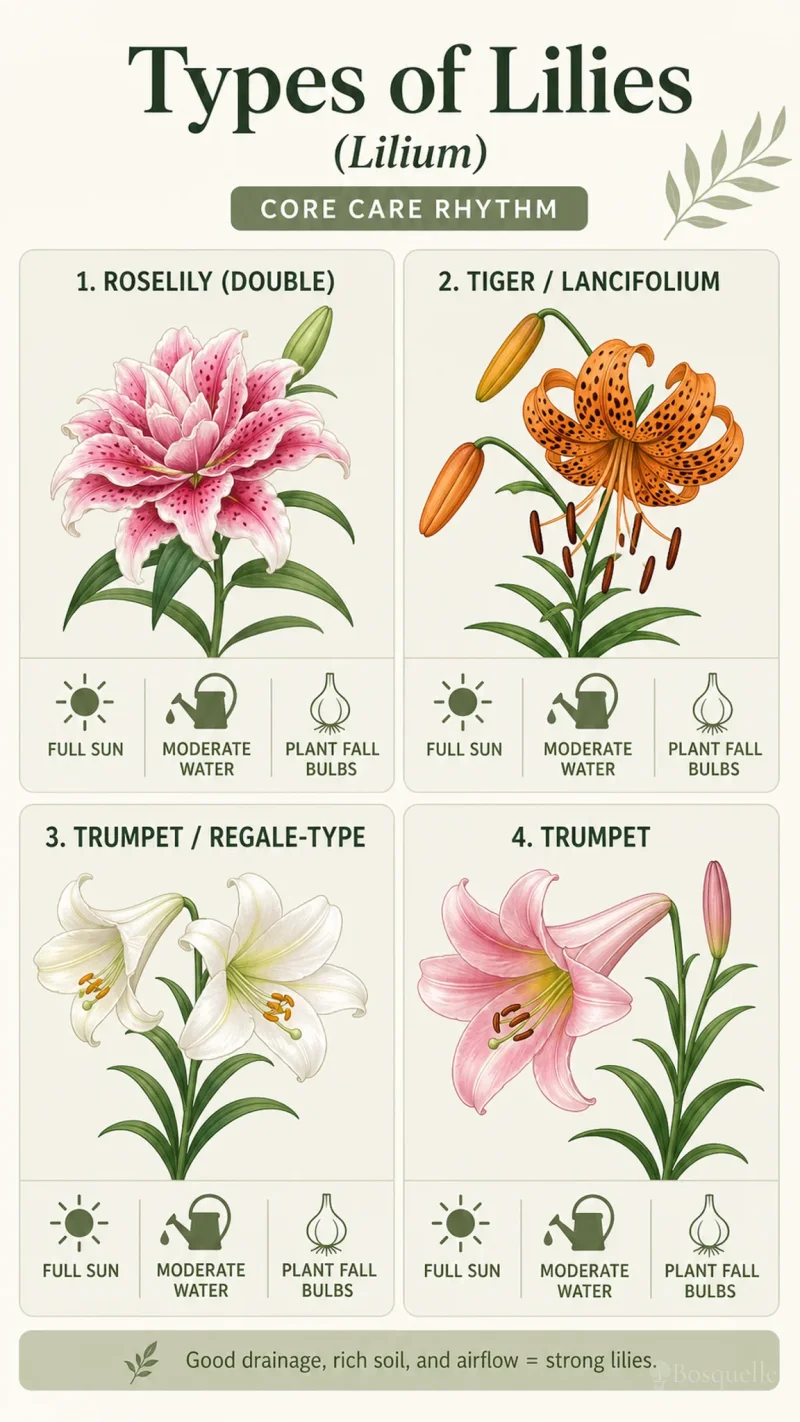
Cool shaded roots with sun heads is the shared Lilium law — height and series change the site plan, not the deep-plant contract. Daylily is a different genus entirely.
Name the fork, then browse 106 garden lilies. Deep planting and cool roots stay on How to Grow Lilies. Sort fork before paint on every bulb bag.
Fork first — tall trumpet / species vs compact / patio
| Stake | Tall trumpet / species path | Compact / patio path |
|---|---|---|
| Height job | Border stems, usually needs staking | Front edge, pot volume |
| Typical faces | Regale, African Queen, martagon, tiger | Pixie and dwarf series |
| Wrong buy | Expecting patio dwarfs | Expecting vase-length trumpets |
| Not this genus | Daylily (Hemerocallis) — different plant entirely | |
Know your USDA hardiness zone before you pick a type of lily that will take your winter. Type your ZIP below.
2023 USDA ZIP listings (PRISM / USDA-ARS). Find Your USDA Hardiness Zone · Official USDA map.
If you want long fragrant trumpets, stay with Regale, African Queen, or Easter-style White Heaven. If you want front-edge height, open compact forms such as Pixie and Lilies in Containers.
Series cues after the fork
- Roselily doubles — Roselily Aisha: pollen-light novelty; still Lilium, still deep plant.
- Tiger / lancifolium — Tiger Lily Splendens: spotted recurved stems; stake tall rows.
- Martagon / species — Martagon Album: turk’s-cap look; needs lean, sharp drainage.
- Garden hybrid — Casa Blanca, Muscadet: unlabeled border classics when Oriental/Asiatic ATTR is missing.
Why we refuse Oriental/Asiatic Types buckets
Marketing labels are not a reliable ATTR on every catalog row. Unlabeled hybrids stay in garden hybrid. Colour is a cultivar choice after series and height are named.
Scent near a path is a shortlist job — open Fragrant Garden Lilies after you pick a series, not as a substitute for the fork.
Session-end check: can you name tall trumpet vs compact patio vs species martagon — and reject daylily as Lilium — before you match colour? If not, stay on this page until the fork is clear.
Wrong lilium buys that look like a types page
Pixie expecting trumpet length: Pixie and dwarf series own front edges — not vase stems like Regale or African Queen.
Daylily sold as true lily: Hemerocallis is a different genus with day-long blooms. If the tag only says “lily,” open the scientific name.
Oriental/Asiatic bucket without ATTR: we refuse invented marketing divisions — Casa Blanca and Muscadet stay garden hybrid when catalog ATTR is thin.
Scent from any lily face: fragrance is a shortlist job on Fragrant Garden Lilies — not every trumpet or Roselily row perfumes a path.
Cool roots and height fork
| Fork | Root zone | Staking |
|---|---|---|
| Tall trumpet / species | Cool shaded roots, sun heads | Often required on exposed sites |
| Compact / patio | Same deep-plant rule, smaller scale | Usually none |
| Martagon / turk's-cap | Lean drainage, dappled lean | Natural arching stems |
| Roselily doubles | Deep plant; pollen-light novelty | Mid-height stake if windy |
Tiger Lily Splendens and Martagon Album show true-species traits — spotted recurve and turk's-cap form change the silhouette, not the deep-bulb contract shared across Lilium. Roselily Aisha trades pollen load for fuller faces — still true lilies, still cool-foot planting.
Reading the bulb label
“Asiatic / Oriental mix” without cultivar names hides height and scent variance — sort fork first. “Lily mix” is not a daylily packet — check Latin.
When to open the catalog
You are ready to browse when you can assign trumpet, compact, Roselily, tiger, martagon, or garden-hybrid fork — and you reject daylily as Lilium. Until then, stay on the fork tables above.
Group blurbs below use series and species cues — not invented Oriental/Asiatic ATTR buckets. White Heaven and Regale share trumpet scale but differ on scent and timing notes on the profile.
Deep planting and cool-root method stay on the care pillar — Types prevents buying Pixie when you wanted Regale stem length.
Roselily doubles such as Roselily Aisha stay true Lilium with a pollen-light trade — still deep plant, still needs cool roots, still not a daylily. Martagon turk's-cap form is a true-species trait, not a patio dwarf substitute.
Compact patio lilies and tall trumpet rows share the same deep-planting rule — only stake volume and head height change at checkout.
Trumpet and martagon forks share Lilium — neither is Hemerocallis or Zantedeschia on a careless tag.
Full catalog by group (106)
Groups use Roselily / tiger / trumpet / longiflorum / martagon-species / compact / garden-hybrid signals. Open a card for hardiness, sun, and height.
Roselily (double) (7)
Roselily doubles carry pollen-light double blooms and a compact garden silhouette — treat them as Lilium still needing deep planting and drained sun.
Tiger / lancifolium lilies (4)
Tiger and lancifolium lilies bring recurved spotted blooms on tall stems — plant deep, stake in wind, and expect stem roots above the bulb.
Trumpet and regale-type (3)
Trumpet and regale-type lilies open long fragrant trumpets on tall stems — full sun, deep planting, and a stake in exposed sites.
Longiflorum / Easter-type (2)
Longiflorum and Easter-type lilies carry pure trumpet whites on sturdy stems — classic cut-flower form with the same Lilium depth rule.
Martagon and species lilies (32)
Martagon and species lilies (turk’s-cap and wild-type epithets) often prefer leaner sites and light shade at the feet — still plant deep with drainage.
Compact and dwarf lilies (5)
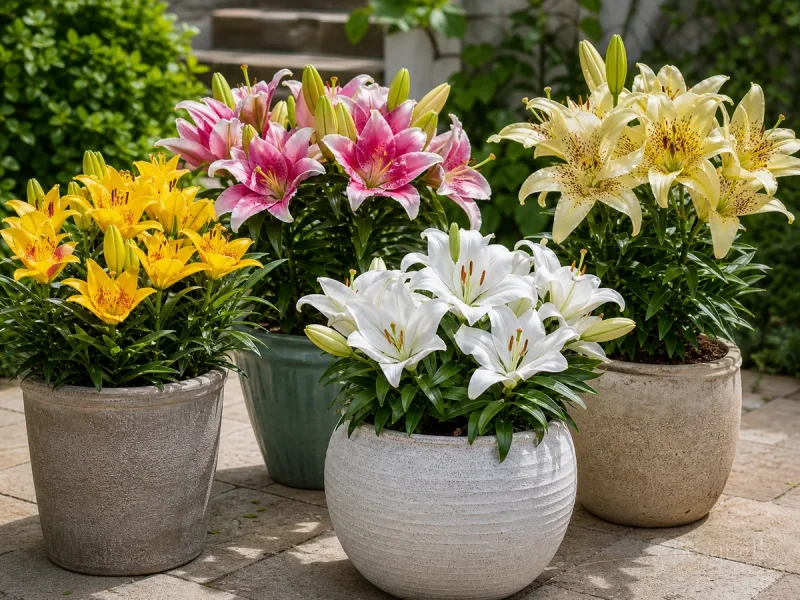
Compact and dwarf lilies (Pixie / dwarf cues, or catalog max height ≤ 0.70 m) suit pots, patio edges, and front-of-border pockets.
Garden hybrid lilies (53)
Garden hybrid lilies are the default unlabeled border cohort — including unnamed Asiatic/Oriental/OT rows we will not invent ATTR buckets for. Grow with the shared Lilium care pillar.
Shared care lives on How to Grow Lilies. Depth and timing live on Planting Lily Bulbs.
Depth check — finish choosing lilium
Session-end check: name the lilium choose fork in one sentence — class, habit, or season job — before colour. If you cannot, stay on the fork until the contract is clear.
Wrong buys: mixed trays hiding two culture rules; florist faces sold as hardy landscape plants; colour-series labels when you needed hardiness or height class. Refuse the pretty tag until the type matches your site.
How to use the bands: pick the fork first, then open two or three faces inside that band — not the whole catalog at once. Cards shortlist after the contract; they are not a second care manual.
Fork tall trumpet/species from compact patio forms first, reject daylily as Lilium, name the series cue, browse the matching group, then grow with the shared care pillar — fork before paint on every lily bag in the spring bulb display now.
FAQ
Is a Roselily the same as a daylily?
No. Roselilies are double Lilium. Daylilies are Hemerocallis — a different genus with a different care sheet.
Why isn’t this grouped by Oriental or Asiatic?
Those marketing labels are not a reliable ATTR on every row. Unlabeled hybrids stay in garden hybrid; we group by series and height cues we can defend.
Compact lily or trumpet for a patio pot?
Prefer compact / dwarf forms such as Pixie. Tall trumpets need a deeper pot and usually a stake — see Lilies in Containers.
Where do I grow the lily I picked?
How to Grow Lilies for shared care; Planting Lily Bulbs for depth and timing; Lilies in Containers for pots.
Related guides



This note is part of Lily Guides.
More type comparisons by plant are gathered in Types of Plants Guides.
Updated: Reviewed by Bosquelle Editors